
Readings for the Twenty Fifth Sunday after Pentecost (Year A) Proper 28 – Track 2
This sermon was preached at Christ Episcopal Church in Eureka CA on Sunday November 19, 2023.
There’s a saying attributed to the Sufi tradition, “Abundance can be had simply by consciously receiving what has already been given.” This wisdom invites us to practice gratitude, a discipline that helps us to see and attend to the ten thousand things that go right each day, the ten thousand gifts that are lavished upon us each moment, which we so often overlook: every breath we breathe, every moment we share, the gift of waking up this morning and enjoying a simple sip of hot coffee or tea. In Thornton Wilder’s beloved play Our Town, one of the main characters Emily Webb dies during childbirth at age 26 and then asks to relive one more day of her earthly life. She is given this opportunity and, as she relives one particular day (her 12th birthday), she realizes the overwhelming beauty of each ordinary moment and she sees how oblivious humans so often are to the wonder that is all around them. She finally cannot bear it anymore and says, “I can’t. I can’t go on. It goes so fast. We don’t have time to look at one another. I didn’t realize. So all that was going on and we never noticed. Take me back — up the hill — to my grave. But first: Wait! One more look. Good-bye, Good-bye world. Good-bye, Grover’s Corners…Mama and Papa. Good-bye to clocks ticking…and Mama’s sunflowers. And food and coffee. And new ironed dresses and hot baths…and sleeping and waking up. Oh, earth, you are too wonderful for anybody to realize you.” Then she looks at the Stage Manager (who is the Narrator of the play) and asks him, “Do any human beings ever realize life while they live it – every, every minute?” And the Stage Manager answers, “No.” (pause) “The saints and poets, maybe—they do some.”[1] According to Thornton Wilder, the saints and poets might be the only ones who realize the beauty of life while they live it. That’s because they practice rigorously the discipline of staying awake to the blessings and wonder of each moment, they practice gratitude, and they express that gratitude through generosity.

Today’s reading from the prophet Zephaniah reminds us how tempting it is to turn a blind eye to God’s blessings and fall into despair and to even dread this life in the face of catastrophic ruin and devastation, darkness and gloom, which also confront us frequently, sometimes in our own lives and certainly in humanity’s collective life. Today’s Psalm reminds us of our failures, our fragility and perhaps mistakes we’ve made and missed opportunities in this fleeting life. But Paul, in his letter to the Thessalonians (the earliest Christian text we have) urges us not to fall into despair as others do, but to wake up and pay attention to the blessings that are all around us. And in this morning’s parable of the talents, Jesus shows us what it looks like to wake up to God’s blessings and to live a life of gratitude and generosity. He does this by contrasting a life of gratitude with a life marked by fear and dread. The first two servants receive several talents from their master. Now a talent is a measurement of weight for gold or silver; and one talent was about 40 kilograms or about 90 pounds. So, a talent is an enormous amount of money, probably equivalent to about a million dollars today. The first two servants who receive talents from their master behave as if their master is a generous and joyful giver of blessings and riches who wants them to take risks and to invest in relationships of mutual sharing and benefit. This becomes clear in the parable when the master rewards them for their profit and ingenuity and says to them both, “Enter into the joy of your master.” Enter into the joy of your master. They experienced their master as joyful, as one who delighted in them and who took joy in them; and they understood the abundance that was lavished upon them as an expression of their master’s joy, which was meant to be shared and multiplied among others.

The last servant, however, did not experience his master as joyful and generous even though he was still given about a million dollars. He failed to notice the abundance he was given and the potential for that abundance to grow through sharing with others. He believed his master to be harsh and punishing and so he dug a hole and hid his master’s gifs in the ground. In Matthew’s Gospel, Jesus consistently urges us not to hide the gifts we have been given. Remember in the Sermon on the Mount when Jesus refers to his followers as the Light of the world. The light that God has generously given each of us is not to be hidden under a bushel but placed on a lampstand to give light to all in the house, to shine and to share with others, so that others give glory to God in heaven and enter into the joy of the master; so that others wake up to God’s blessings, rather than dread this life in the fear of scarcity and ruin.
When we dread this life in the fear of scarcity (which we are so often tempted to do), we can easily fall through the downward spiral through which the last servant falls. We can start thinking of God as a harsh and punitive and unjust deity who “reaps where he does not sow and gathers where he does not scatter seed” (Matthew 25:24), a harsh god who sees us as wicked and lazy and worthless slaves. And when we start falling down that hole, we enter into the darkness of jealousy and envy, where there is indeed weeping and gnashing of teeth. We begin to think that everyone else has more than us. And we fail to see the abundance that is right in front of us. We see that psychology of scarcity play out in this parable. It’s not that God is a harsh master who condemns us to hell for not making enough money. Certainly not! Jesus is showing us the spiritual and psychological consequences of dreading this life in the fear of scarcity and believing in a cruel and crooked God who thinks that we are wicked and lazy slaves.
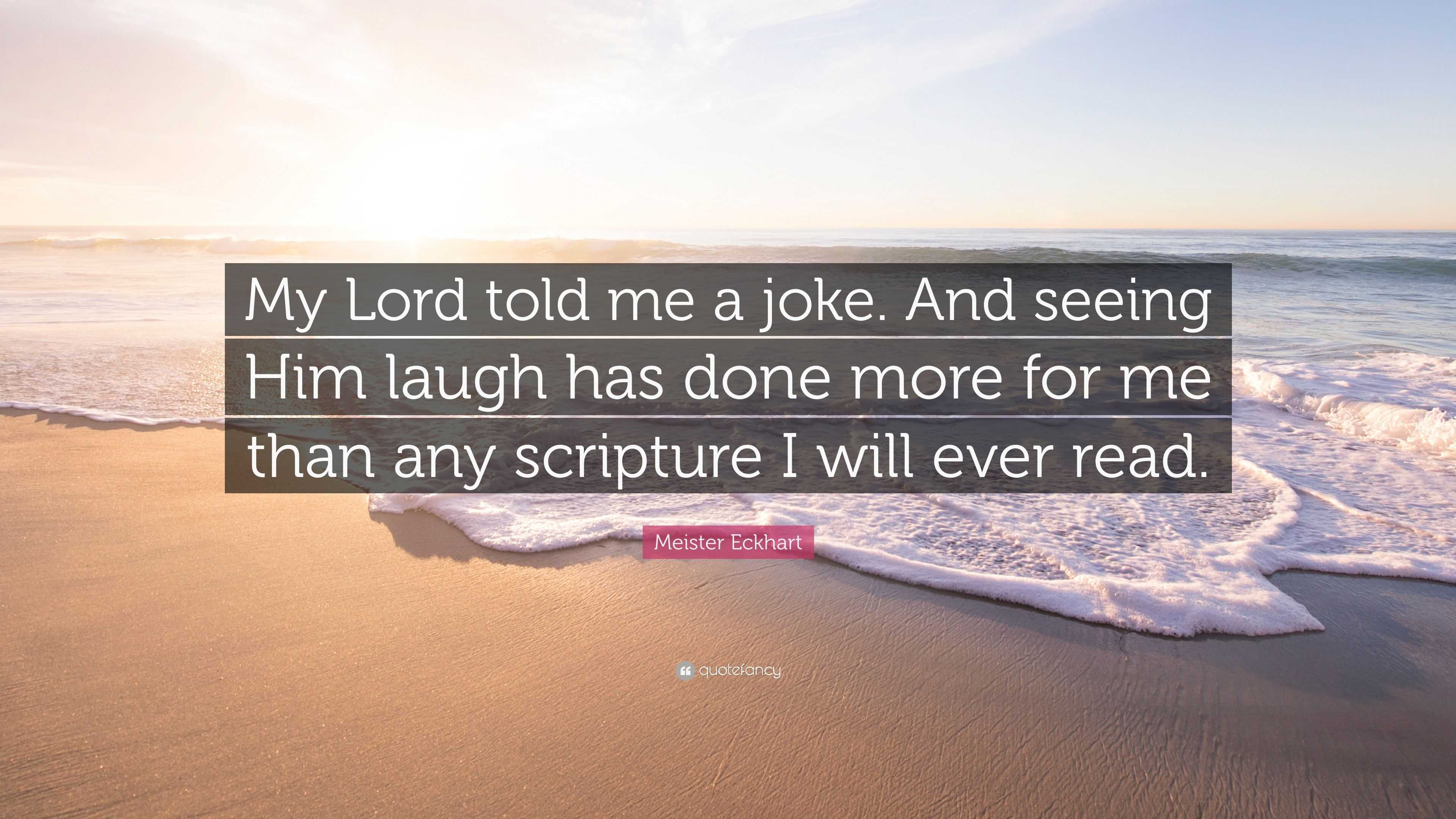
At the same time, Jesus shows us the spiritual and psychological benefits of receiving the abundance that has already been given and of believing in a God who is joyful and generous, who delights in us and who is proud to call us his own. Jesus shows us the psychological and spiritual benefits of giving thanks and waking up to the wonder of each moment and experiencing God as joyful. Whatever joy we experience is a mere drop in the ocean of God’s joy. There’s a short poem by medieval German Christian mystic Meister Eckhart titled “He Told Me a Joke” which captures this Joyful God Theology: “My Lord told me a joke. And seeing Him laugh has done more for me than any scripture I will ever read.”[2] I love imagining God as one who wants to share a joke and then has enough levity to laugh at his own joke. That image helps shift my theology.
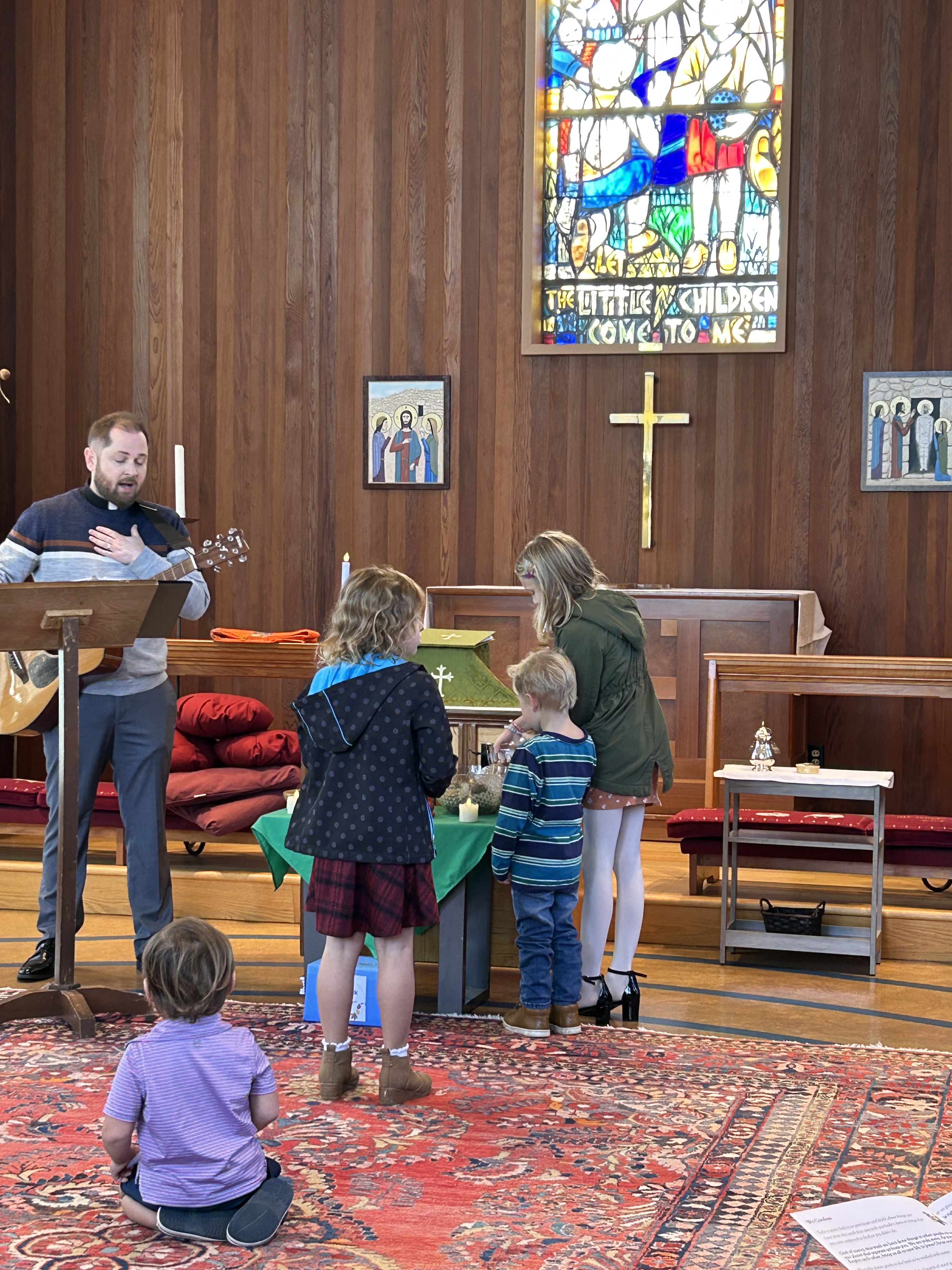
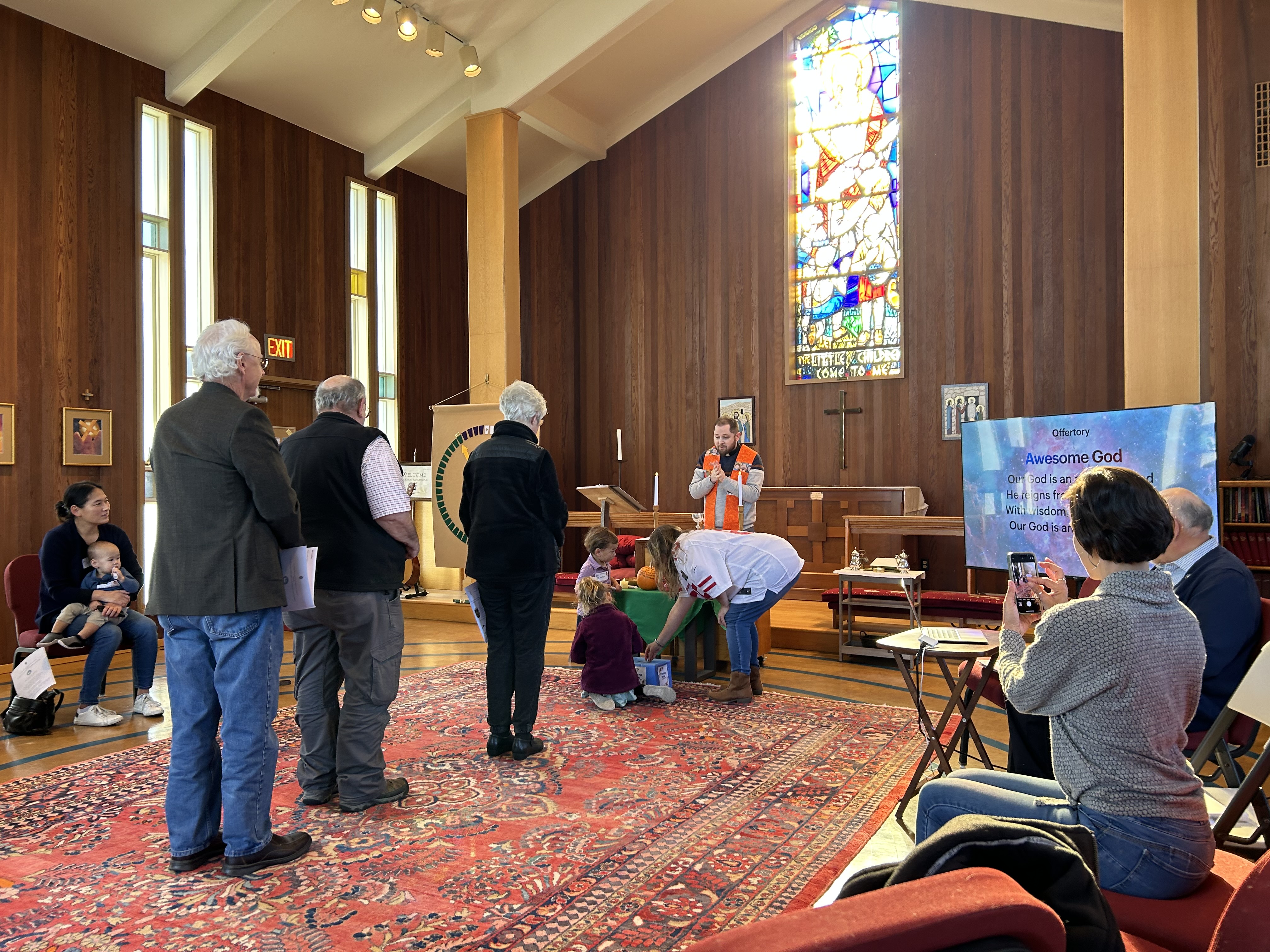
And then look at that troubling line: “For all those who have, more will be given, and they will have an abundance; but from those who have nothing, even what they have will be taken away” (Matthew 25:29). That is disturbing if we look at it merely from an economic perspective. We are aware of the disturbing truth that the rich do indeed seem to get richer while the poor get poorer, but if that’s the entire message then it does not align with everything else Jesus says in the Gospels about the poor. “Blessed are the poor in spirit for theirs is the kingdom of heaven” (Matthew 5:3). If we look at this in a deeper way, in a spiritual and psychological way, we see that those who are living into that truth that abundance can be had simply by receiving what has already been given, then you see that you already have so much. Each of you have so much. With that perspective, we tend to be more aware when more blessings come our way. Whereas if you’re living a life of dread and scarcity and thinking “I don’t have anything!” then even those things that you do have might slip away, leaving you feeling even worse than before. “For all those who have, more will be given, and they will have an abundance; but from those who have nothing, even what they have will be taken away.” This is speaking to a deep spiritual truth. In fact, this just happened today before Joy Mass. We knew several families weren’t going to be here today due to travel and sickness. We were expecting just one family and I was tempted to feel like that wasn’t enough, like things were scarce. But then I said, “No, no! Listen to the sermon you just preached. This is awesome! Let’s celebrate the abundant presence of those who are with us, even if it’s just one child. Even if it’s just one other person. That’s still abundance.” And then what happened? We had about ten children show up. I’m not saying I manifested that, but I’m saying that our attitude is a huge factor in how we perceive our reality.
So, during this stewardship season, we have an opportunity to enter more fully into the joy of the master. We have an opportunity to heed the invitation to share and multiply the abundance that has already been given. We express our gratitude for God’s gifts by letting God’s generosity flow through us and by giving back to God, who gave us everything in the first place.
There is no better investment in the world than an investment in the church because the church, in all its imperfections, is still the vehicle through which God chooses to embody His love in Jesus Christ, the church is the embodiment of the joy of the master. And when you give to Christ Church, you are also feeding the hungry, providing shelter for the unhoused, supporting foster children locally and vulnerable children around the world. You are helping to transform the human race into the human family. You are refusing to dread this life in the fear of scarcity and choosing to worship our most joy-filled and generous God.
At Diocesan Convention this year, our keynote speaker Lisa Kimball (Professor of Lifelong Christian Formation at VTS) quoted the former Archbishop of Canterbury, who was asked about the purpose of church. Rowan Williams said, “The purpose of the church is to form people into the kinds of people who can receive the gifts God wants to give” and, I would add, to receive the gifts God has already given. In other words, the purpose of the church is to root us in abundance, which can be had by receiving what has already been given and by receiving what God wants to give you right now as you practice gratitude and generosity. So, I urge you to give generously to Christ Church, more so than you have ever given before of your time, talent, and treasure; and then be prepared to experience and receive the gifts God wants to give and enter into the joy of your master. Amen.

[1] Thornton Wilder, Our Town: A Play in Three Acts (New York: HarperPerennial, 2003), 108.
[2] Meister Eckhart, Love Poems from God: Twelve Sacred Voices from the East and West, translated by Daniel Ladinsky (New York: Penguin Books, 2002), 99.




 DANIEL DeFOREST LONDON