
Readings for the Twenty Fourth Sunday after Pentecost (Year A) Proper 27 – Track 2
This sermon was preached at Christ Episcopal Church in Eureka CA on Sunday November 12, 2023.
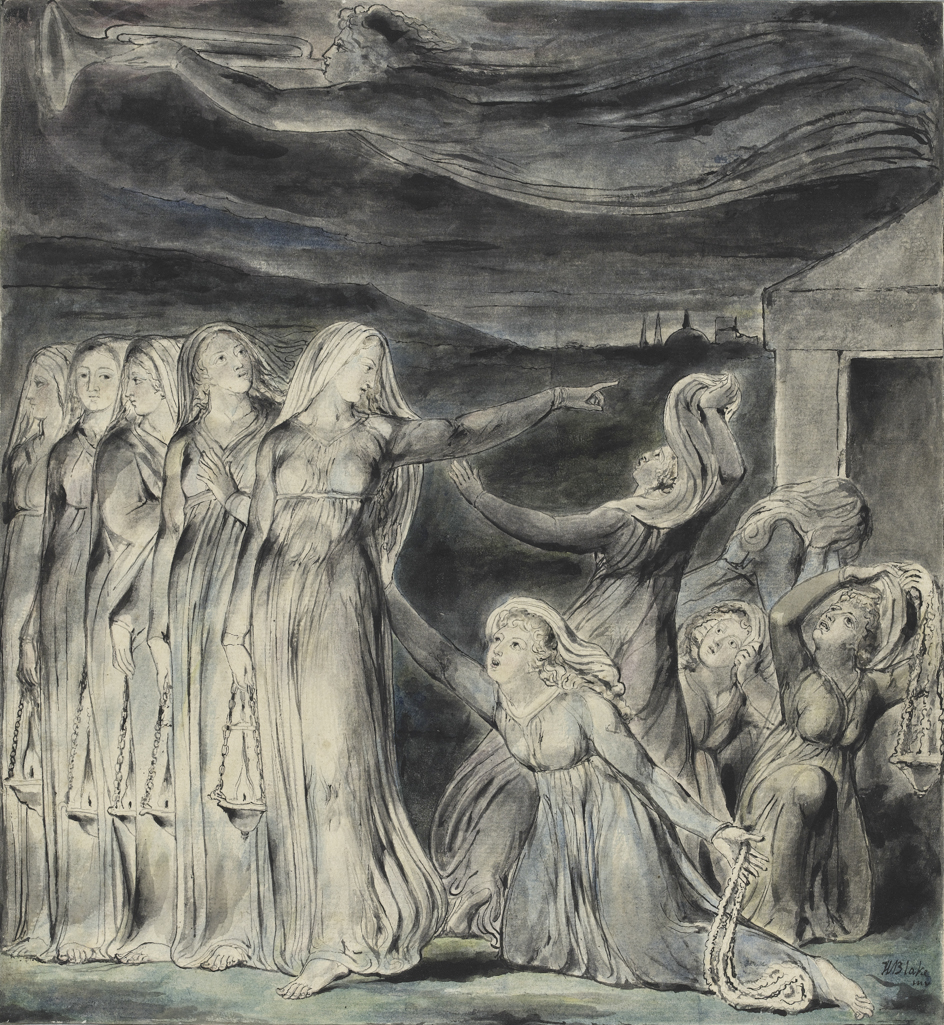
I do not like this parable, this parable of the ten bridesmaids. More specifically, I don’t like when I try to interpret it the way most Christians have interpreted it for centuries. I don’t like it when it’s allegorized, when it’s made it into an allegory in which the wedding banquet represents heaven, the bridesmaids represent humanity, the bridegroom represents Jesus, and the oil represents good deeds or charity or compassion. If the wedding banquet is heaven, then I’m not sure I want to go there. I’m not sure I want to go to a wedding party where my companions refuse to share their oil with me and send me off to buy more and then the bridegroom (who was significantly late in the first place) denies even knowing me when I try to get back in. And if the oil represents good deeds or charity or compassion or God’s love, then why can’t it be shared with those who ask? This is when preachers say that the oil represents one’s own personal relationship with God, one’s own personal experience of the indwelling of the Holy Spirit, but can’t that also be shared with others, especially when others ask for it? Isn’t that what evangelism is all about? Sharing our experience of God?
Jesus’s conclusion is also confusing. He says, “Keep awake,” but didn’t all the bridesmaids fall asleep in the first place? The foolish and the wise? Maybe the message is simply that we need to be prepared. Jewish New Testament scholar Amy-Jill Levine says, “If the only conclusion we draw from this [parable] is, ‘Be prepared’ (thus turning the first five virgins into Boy Scouts), Jesus has wasted his time.”[1] I listened to countless sermons on this parable, looking for some new insight or helpful perspective and they all made me dislike the parable even more. I have several books on the parables of Jesus, but most of them ignore this parable or talk about it only tangentially, as Amy-Jill Levine does. Like the five bridesmaids who have the door shut in their face and ask the groom to let them in, I have felt shut out of the meaning this parable, asking Jesus to open it up for me. In the parable, the groom says, “I do not know you.” In my prayers, I hear Jesus say, “You know me; and you know I have something to say to you and to Christ Church in this parable.”
I do know Jesus, even though I will spend the rest of eternity growing in intimacy with and knowledge of hm. I also know that Jesus was Jewish and therefore must be understood in his Jewish context. It helps having a Jewish wife who is also a scholar of Second Temple Judaism; and she invited me to think about this parable in the light of First and Second Maccabees. For those who don’t know, First and Second Maccabees are books of the Apocrypha or Deuterocanonical books of the Bible, which tell the story of Hanukkah.[2] The Jewish holiday of Hanukkah, which we know Jesus himself celebrated (John 10:22), commemorates the rededication of the temple of Jerusalem in the year 164 BC after it had been desecrated by the Syrian King Antiochus Epiphanes who splattered pig’s blood on the altar. When the Jews reconsecrated the sacred space, they needed to follow the instructions of the Torah and light the temple candelabra, the menorah.[3] However, they could not find any oil because the temple had been so ransacked by the Syrians. No oil. Eventually they found a tiny bit of oil, but they knew it would only keep the candelabra lit for a couple hours at most. And then the great miracle of Hanukkah occurred. The tiny bit of oil kept the lights of the menorah lit all through the night and then all through the next day and then the next night and next day. And the lights of the menorah remained lit for eight days, giving the people plenty of time to purify more oil. That’s why Jews celebrate Hanukkah to this day because that little bit of oil was enough.[4]

While reflecting on a small amount of oil, Archdeacon Pam reminded me of the story of the Prophet Elisha and the poor widow who needed to pay off her deceased husband’s debts, but her only possession a tiny jar of oil. Elisha told her to gather all the empty vessels in town and pour her tiny bit of oil into them. Miraculously, she was able to fill up hundreds of vessels with that oil, giving her more than enough to pay off her husband’s debts (2 Kings 4:1-7). That little bit of oil proved to be enough, even more than enough.
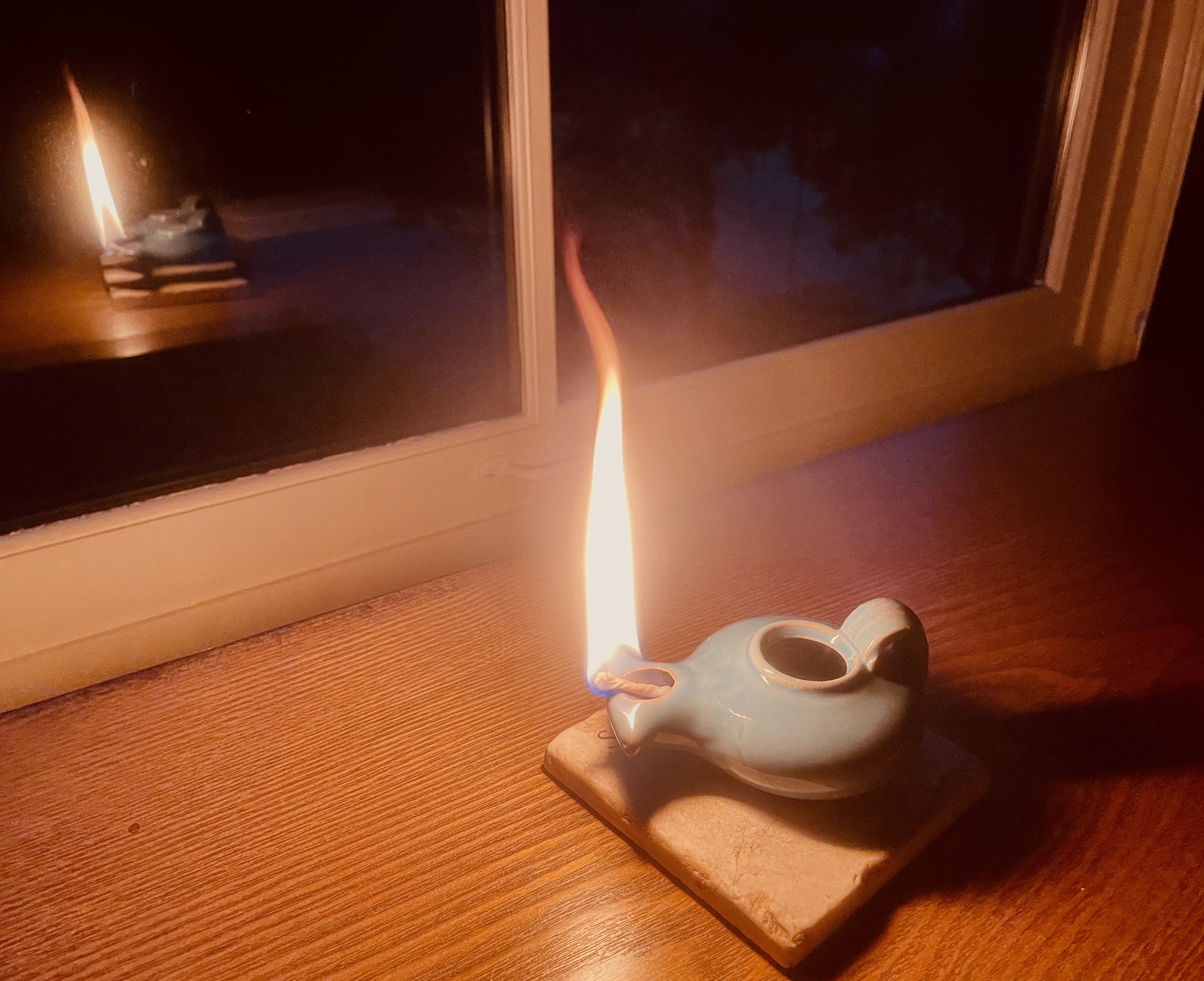
These stories of mere drops of oil becoming seeds for miraculous abundance were stories that Jesus’s listeners knew well, stories that Jesus and his disciples grew up hearing. So, with these stories in mind, I turn again to Jesus’s parable of the bridesmaids. Jesus says the foolish bridesmaids took their lamps, but no oil. Clearly, Jesus is saying that they brought no extra oil, no flasks of oil as the wise virgins did. An oil lamp without oil is like a battery-powered flashlight without a battery, it’s not going to produce any light. They’re foolish but they’re not that foolish. We know this because the foolish say later that their lamps are going out. There would be no light to go out if there was no oil at all. So, the foolish bridesmaids had a little bit of oil, but they feared it was not enough to last, even though the Jewish tradition revels in stories of the lasting power of a tiny bit of oil. Perhaps their great folly was not forgetting to bring extra oil but refusing to believe that they already had enough and then leaving the party at the most important time.
Earlier in Matthew’s Gospel, Jesus’s disciples urge Jesus to send away the crowds to buy food (just as the “wise” bridesmaids sent away the foolish to buy more oil), but Jesus says, “They don’t need to go away. You feed them. We have enough. It looks like a tiny bit, just five loaves and two fish, but just watch. It will be enough” (Matthew 14:13 – 21). Although our translation has Jesus saying in the conclusion, “Keep awake,” the original Greek is watch (gregoreite)! Watch, because you don’t know how long God will make your little bit of oil will last. You don’t know the day nor the hour. Now I’m starting to like the parable.
Episcopal author Debie Thomas, who also struggled with this parable, but arrived at a similar conclusion, wrote, “The fatal mistake the five ‘foolish’ bridesmaids make is that they leave…they ditch the scene at its most crucial moment and go shopping, depriving themselves of a wonderful celebration and depriving the bridegroom of their companionship, support, and love on his special day.” She says, “This is a point I want to press into, because I understand the foolish bridesmaids’ rationale in this narrative moment. I get how hard it is to stick around when my ‘light’ is fading and my reserves are low. I get what it’s like to scramble for perfection, to insist on having my ducks in a row before I show up in front of God or the church or the world. After all, it’s scary and vulnerable-making to linger in the dark when my pitiful little lamp is flickering, my once-robust faith is evaporating, and my measly, leaky flask is filled with nothing but doubt, pain, grief, and weariness. Only a bridesmaid who trusts [that God works some of his best miracles with just a drop of oil] will find the honesty and courage to stay.”[5]
So that’s the message of the parable for us today. You have enough. You are enough. Even though you might feel small, even though you might feel like you’re running on fumes, like you have no more gas in your tank, or not enough money in your bank, you have enough. When we see small, God sees all, all he needs to work his miraculous power in our lives. Just watch. When we see small, God sees all. I preached these same words five years ago exactly, on a different set of readings[6] and it was the same day that we as a church not only helped raise $800,000 for the Episcopal Church in Cuba but we also raised thousands-of-dollars-worth of gift cards for the victims of the devastating fire in Paradise CA, all because of a small note I received from Anna Smithler, who used to live in Paradise. During this stewardship season, we are invited to trust that we have enough, enough to give to God who gave us everything in the first place, enough to give to those in need, enough to keep the lights on and the candles lit in this church. You have enough oil in your lamp. Don’t give up. Don’t leave. Stay and watch what God will do. Amen.
[1] Amy-Jill Levine, Short Stories by Jesus: The Enigmatic Parables of a Controversial Rabbi (San Francisco: HarperOne, 2015), 280.
[2] Hanukkah patterned after Festival of Tabernacles (2 Maccabees 1:9). Josephus refers to Hanukkah as the Festival of Light (Jewish Antiquities 12:325).
[3] The reason we light candles in church today is because God commanded his people to light candles in the temple and to keep them burning continually. See Exodus 27:20 and Numbers 8:1-4.
[4] The Hanukkah miracle is not recorded in the Books of First and Second Maccabees. The Hanukkah miracle was described by the Rabbis in the Babylonian Talmud, specifically Tractate Shabbat 21b.
[5] Debie Thomas, Into the Mess & Other Jesus Stories: Reflections on the Life of Christ (Eugene OR: Cascade, 2022), 162 – 163.
[6] https://deforestlondon.wordpress.com/2018/11/22/when-we-see-small-god-sees-all/

 DANIEL DeFOREST LONDON