
Readings for the Fourth Sunday of Easter (Year A)
This sermon was preached at Christ Episcopal Church in Eureka CA on Good Shepherd Sunday April 30, 2023.

The dominant image found within the earliest Christian art of the ancient catacombs in Rome, Sicily, and Naples is not the image of the cross or crucifix which later dominated Roman Catholic art but rather the image of the Good Shepherd, an image that “vividly expressed, in childlike simplicity, what is essential to Christians of all creeds, the idea of Christ and his salvation, as the only [true] comfort in life and death. The Shepherd…suggest[s] the recovery of the lost sheep, tender care and protection, the green pasture and fresh fountain.”[1]
Arthur P. Stanley, former dean of Westminster Abbey and canon of Canterbury Cathedral, asked rhetorically, “What was the popular Religion of the first Christians? It was…the Religion of the Good Shepherd. The kindness, the courage, the grace, the love, the beauty of the Good Shepherd was to them, if we may say so, Prayer Book and Articles, Creeds and Canons, all in one. They looked on that figure, and it conveyed to them all that they wanted.”[2] The Reverend Kay Rohde, a priest who grew up in this parish, said she learned all that she needed to know about God from this window, this image of the Good Shepherd, which was the dominant image for the early Christians.
The first time I preached on Good Shepherd Sunday here at Christ Church was the weekend after our Celebration of New Ministry, right after I was installed as rector. Over the years, I have stressed how this image of the Good Shepherd is the biblical response to the question of suffering, how the Good Shepherd calms the violence within us as St. Francis calmed the violent wolf of Gubbio, how the Good Shepherd speaks to each of us tenderly by name if we take the time to listen. This image has so much to offer us; and this year I feel invited to reflect upon the theme of “finding pasture,” a theme I touched upon four years ago on Good Shepherd Sunday, right after returning from Iona in Scotland, where I saw many sheep enjoying green pastures. This year, our celebration of the Good Shepherd falls on a Sunday in which we begin to pivot towards Sabbatical. In a little less than a month, I will begin a three-month sabbatical that will include time in England, Italy, France, the East Coast of the US, and New Zealand, where I’ll probably see more sheep than I saw in Scotland. This Sunday and next Sunday, we’ll have opportunities to ask specific questions about the Sabbatical after services.
Sabbatical is a biblical practice. It’s a way of obeying some of the most ancient and important commandments in our Scriptures and it’s a way of emulating Christ who took time away for rest and prayer; and it’s a way of imitating God who rested on the seventh day after creation. The Sabbatical provides an opportunity for us all to find pasture. What do I mean by that?
At night, the shepherd keeps his flock safe in the sheepfold, which was a stone enclosure with one gate or entryway. Sometimes the shepherd himself would sit or lie down along the entry way if there was no gate, thus functioning as the gate himself, which is why Jesus identifies as both the shepherd and the sheep gate. During the daytime, the shepherd leads his flock to green pastures and still waters where they can be nourished and refreshed. He doesn’t keep them on a leash like I have to do with my Yorkies; rather he gives them a wide berth as he lets them find pasture. He lets the sheep explore what brings them life, nourishment, refreshment, and even excitement and adventure. They just need to remain within the reach, not of his staff, but of his voice. And, of course, the sheep know the shepherd’s voice well and can distinguish his voice from all other voices, including other shepherds.
The Good Shepherd mosaic at the Galla Placidia mausoleum in Ravenna depicts six sheep finding pasture. Two are reclining in the grass by fresh spring water, another two are exploring the rugged terrain and finding shade under palm fronds, while another two stand beside the Good Shepherd who seems to be alternately petting them both. They are each finding nourishment and refreshment from God’s good creation, but they are all looking at the Good Shepherd, attentive to his movements and especially his voice.

During this time of Sabbatical, I invite you to find pasture by exploring new ways of receiving spiritual nourishment and refreshment. If you worship at the 8 AM service, maybe try worshipping at the 10:30 AM service or vice versa or both. Maybe try participating in Centering Prayer on Tuesday nights. Maybe try inviting a friend to church. Maybe try praying Morning and Evening Prayer each day. If you’re travelling during this time, make an effort to worship at another Episcopal or Anglican church and tell us what you learned from that experience.
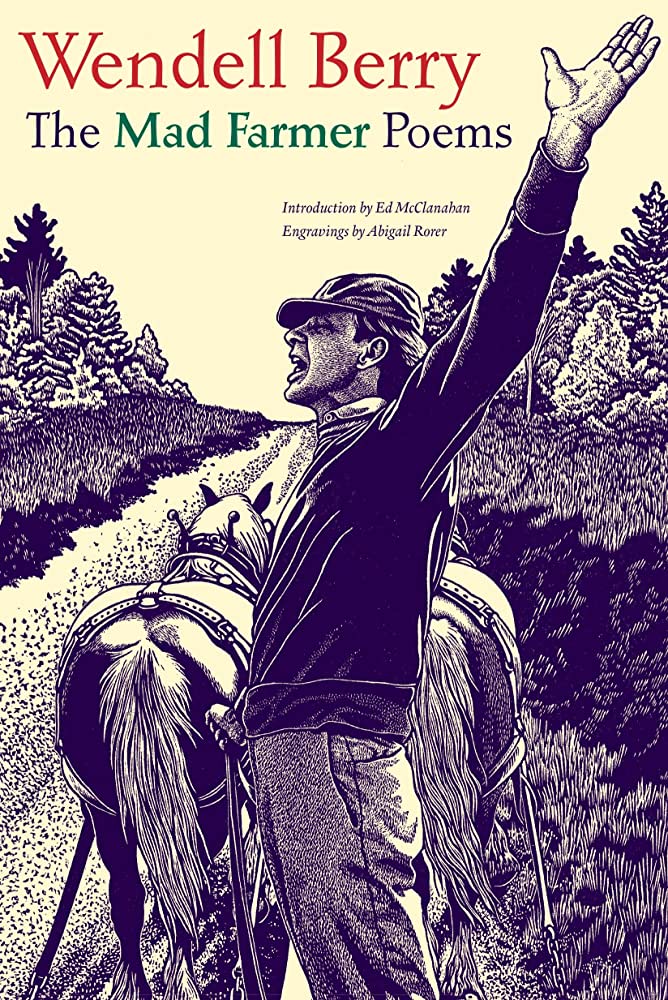
In the book Clergy Renewal, the authors invite us all to find pasture by finding “a place to wander with God, to be reachable by the Spirit, to be part of a community, and to be in relationship with other people on their journey.”[3] One seminary professor advised a former student who was given a six-month sabbatical to “Go to Venice with your wife and sit on the plaza until something comes to you.” Or as poet and environmentalist Wendell Berry says in his poem titled “The Mad Farmer Liberation Front”: “friends, every day do something that won’t compute. Love the Lord. Love the world. Work for nothing…Love someone who does not deserve it….Ask the questions that have no answers….Plant sequoias…Laugh. Laughter is immeasuerable…Go with your love to the fields. Lie easy in the shade. Rest your head in her lap. Be like the fox who makes more tracks than necessary, some in the wrong direction. Practice resurrection.” Finding pasture might mean staying home and just reading or working in the garden or walking in the park. I invite you, as individuals but especially as a community, to find pasture by experimenting and exploring what brings you life and nourishment, and share your experiences and ideas with Mother Lesley, who will be your good Shepherd while I’m away along with the senior warden, the deacons, Pastor Jeri and the vestry. And as you do this, remember to always keep your eyes on the Good Shepherd and keep listening to his voice. I wonder where the Shepherd might lead you. I wonder what new pastures you’ll find.
[1] Philip Schaff, History of the Christian Church (1859; repr., Peabody, MA: Hendrickson, 2002), 2:308.
[2] Arthur P. Stanley, “Study of Ecclesiastical History,” in Lectures on the History of the Eastern Church (n.d.), p. 283; quoted in Philip Schaff, History of the Christian Church (1859; repr., Peabody, MA: Hendrickson, 2002), 2:308, n. 1.
[3] A. Richard Bullock and Richard J. Bruesehoff, Clergy Renewal: The Alban Guide to Sabbatical Planning (Lanham MD: Rowman & Littlefield, 2000), 22.

 DANIEL DeFOREST LONDON