
Readings for the Feast Day of F. D. Maurice
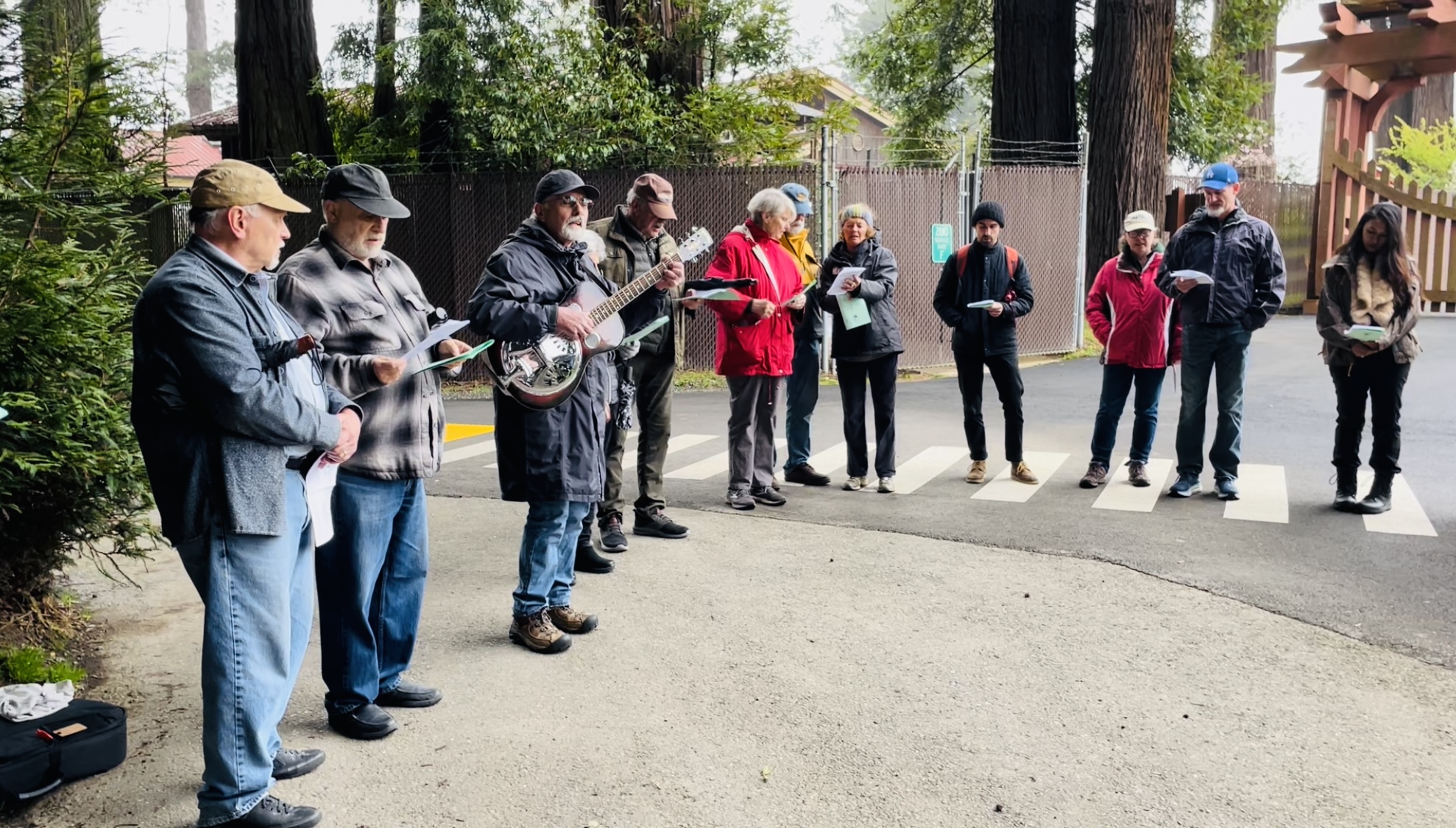
This reflection was shared at Sacred Saunter Outdoor Eucharist on Saturday April 1, 2023 at Sequoia Park in Eureka.
Today’s Gospel concludes with Jesus saying to Pilate, “Everyone who belongs to the truth listens to my voice.” After this, Pilate asked Jesus, “What is truth?” A good question, but unfortunately Pilate seemed too satisfied with the cleverness of his question to stick around for an answer. He asked the question and then left. If he stuck around and listened, he may have likely heard Jesus say, “I am the way, the truth and the life” (John 14:6).
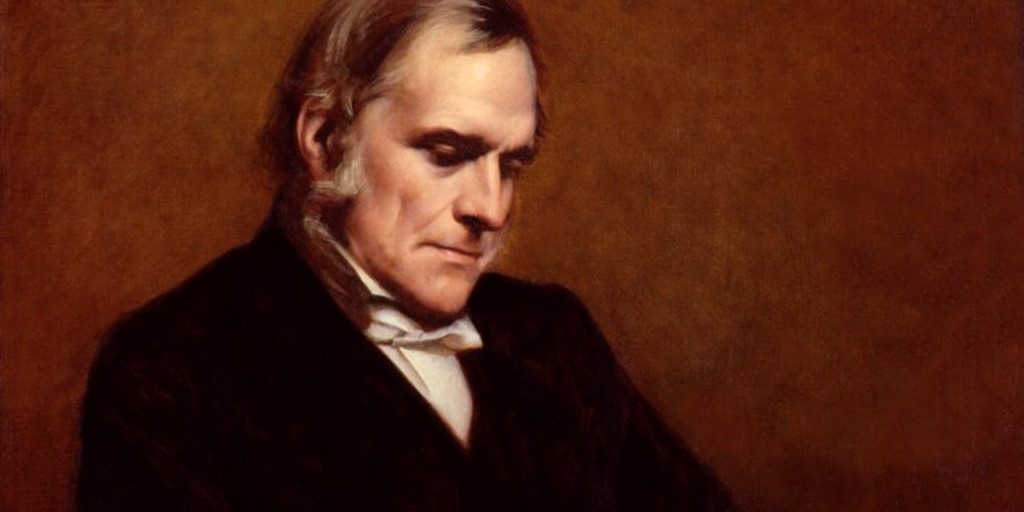
According to the Episcopal Calendar of Saints, today (April 1st) is the feast day of Anglican theologian F. D. Maurice, who spent his whole life trying to listen carefully to Jesus and trying to bring Christ’s kingdom here on earth as it is in heaven.
In his attempt to bring God’s kingdom on earth, Maurice became the founder of the Christian Socialist Movement, a movement in England that focused on economic justice and radical, but non-violent, social reform. Maurice described the movement as the endeavor to engage with both “the unchristian Socialists and the unsocial Christians.” Maurice is one of the main reasons why Socialism in England doesn’t have the same anti-Christian overtones it’s had in many other countries, like our own. Many people in the US think of godless communism when they hear the word “Socialism.” Not so in England. Maurice argued that “Christianity is the only foundation of socialism and that a true socialism is the necessary result of a sound Christianity.”
As he continued listening for divine truth, he began to reimagine the meaning of the Cross, not as a means for appeasing God’s wrath, but as an expression of God’s eternally open-armed love for humanity, inviting us to experience atonement (at-one-ment) with him. He also argued that the moral teachings within Scripture equip us with the hermeneutical tools to interpret and critique other parts of Scripture that portray God as violent or vindictive, as he appears to be in our reading from Numbers. According to Maurice, the fact that we find this portrayal of God troubling is evidence that the deeper ethical teachings of the Bible have taken root within us.
In Maurice’s most famous book titled The Kingdom of Christ, he investigated the causes and cures of Christian divisions. As someone who grew up Unitarian and later became an Anglican priest, Maurice believed that each Christian denomination upheld an important truth, which he called its “positive principle.” He believed that the source of Christian division is the tendency of denominations to move from a message of “we affirm our truth” to “we deplore your errors” thus basing their membership not on the positive principle but on negative principles. Maurice said, “A man is most often right in what he affirms and wrong in what he denies.”
Maurice’s legacy has served as a helpful guide in ecumenical conversations especially in his identification of the following signs of Christian unity which all denominations share: the Sacraments (Baptism and Eucharist), the Scriptures, the Creeds, and the Historic Episcopate (a spiritual lineage traced back to the Apostles). He understood Baptism not as a sacrament that makes one become a child of God, but rather as a sacrament by which one reveals and claims their identity as a child of God. Because he did not subscribe to the popular view of hell as a place of eternal punishment, he was dismissed from his professorial chair at King’s College in London in 1853.
F. D. Maurice kept listening for divine truth and although some considered him foolish in his day, his ideas ended up becoming mainstream and dominant among many Episcopalians and progressive Christians today. Similarly, Christ’s talk of truth was dismissed as foolish by Pilate, who proved to be the fool by failing to listen to him. On this April Fool’s Day, may we listen carefully to divine truth, like F. D. Maurice, even at the risk of sometimes appearing foolish, knowing that the real fool is the one who fails to listen.




The Kingdom of God is justice and peace and joy in the Holy Spirit
Come, Lord, and open in us the gates of your Kingdom

 DANIEL DeFOREST LONDON