
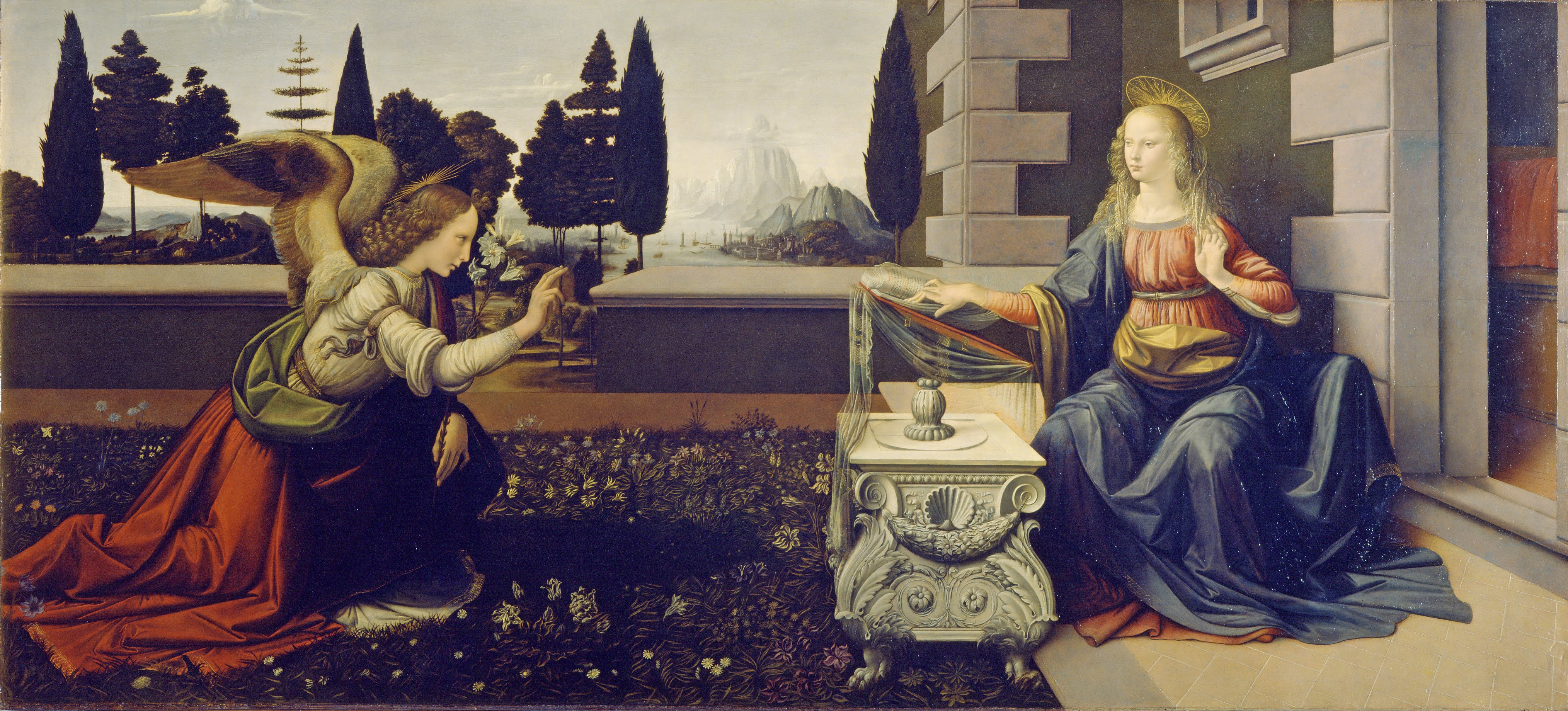
This sermon was published in “Seasonal Journal” – Lent / Easter 2023 (Grace and St. Stephen’s Episcopal Church, Colorado Springs, CO 80903), 31-32.
The Rev. Dr. Daniel DeForest London serves as the rector of Christ Episcopal Church in Eureka, CA. He earned his BA in English and Religious Studies at Westmont College in Santa Barbara and his master’s degree at Fuller Theological Seminary while worshiping at All Saints Episcopal Church in Pasadena, where he was confirmed by Bishop Chester Talton. Father Daniel was ordained to the priesthood by Bishop Mary Glasspool at St. John’s Cathedral in Los Angeles in 2014 and completed his PhD in Christian Spirituality at the Graduate Theological Union in Berkeley, CA in 2016. He is the author of Theodicy and Spirituality in the Fourth Gospel (Fortress Academic, 2020) and The Cloud of Unknowing Distilled (Apocryphile Press, 2021), as well as several other publications in edited volumes and journals. He teaches courses on Celtic Spirituality, English Mysticism, World Religions, Christian Ethics, and Anglican Identity for the Church Divinity School of the Pacific and the Episcopal School for Deacons. He has been trained and certified as a Forest Therapy Guide by the Association of Nature and Forest Therapy and enjoys incorporating the wisdom of forest therapy while leading outdoor Eucharists called “Sacred Saunters” and exploring the redwoods with his wife Dr. Ashley Bacchi, a historian, and their two Yorkies, Gubbio and Seabury.
The Feast of the Annunciation and the Power of the Incarnation:
A Sermon Preached by Fr. Daniel London at the Episcopal Church of the Redeemer, San Rafael, CA
One of the first things I picked up from the Episcopal Church was saying, “The Lord be with you,” a call-and-response practice mostly unknown to the evangelical communities within which I grew up. I love this salutation and have come to appreciate all of its variations. Although we, like most Episcopalians respond to the “Lord be with you” by saying, “And also with you,” many other Episcopalians, as well as Roman Catholics, respond by saying, “And with thy spirit.” At the church where I was confirmed in Pasadena (All Saints Episcopal Church), we would say, “God dwells within you” and then respond, “And also within
you.” When I took a youth group to see The Last Jedi, a Star Wars film, I was told that you can identify a Jedi as an Episcopalian if they respond to the phrase, “May the Force be with You” by saying, “And also with you.”
This ancient greeting is known as “Dominus Vobiscum,” which is Latin for “The Lord be with
you.” It became an official church salutation in the sixth century, when the Council of Braga in Portugal decreed that bishops and priests should salute the people with “Dominus Vobiscum” and the
people respond, “Et cum spiritu tuo.” Although its ecclesiastical use probably dates back to apostolic
times, we will see that its use as a greeting is even older still.
Today’s Gospel [Luke 1:26-38] describes the Annunciation of Our Lord Jesus Christ to the Blessed Virgin Mary, an event portrayed by countless artists, including Leonardo Da Vinci, Raphael, and El Greco. This event is so significant to the church that it actually has its own feast day, called “Lady Day” by the Church of England, and is appropriately celebrated on March 25th, nine months before Christmas Day. This important event begins when the Angel Gabriel appears and says to Mary, “The Lord be with you.” Mary’s response to this greeting is fascinating. The text says, “She was much perplexed by his words and pondered what sort of greeting this might be” (Luke 1:29).
Now I like to say that if Mary had grown up in the Episcopal Church, she would have been less bewildered by this greeting and would have responded, “And also with you” or “And with thy spirit.” Instead, she pondered what sort of greeting this might be. Now we use this greeting often, during the sursum corda at the beginning of the Eucharistic prayer, before praying the Collect of the Day, and sometimes when we need to quiet a room full of Episcopalians. But I wonder how many of us actually consider the meaning of this greeting that we so often use and which has almost come to define us as Episcopalians and Anglicans? So I invite us to ponder more deeply, along with Mary, what sort of greeting this might be, especially in light of the Annunciation.
Gabriel’s greeting in Greek is ὁ κύριος μετὰ σοῦ (prn. ha kyrios meta soo), which translated literally is “The Lord with you,” The Lord “meta” you. Prepositions in Greek are packed with multiple meanings. “Meta” can mean “beside, with, along with, after, among, or behind.” So it would not be too much of a stretch to translate the phrase as “The Lord is within you,” which would be especially appropriate for Mary since tradition understands the time of the Annunciation as the moment of conception, which is why Annunciation Day is celebrated nine months before Christmas Day. So we can understand this greeting (“The Lord be with you”) as a profound proclamation of the Incarnation.
Gabriel continues, “Do not be afraid, Mary, for you have found favor with God. Behold, you will conceive in your womb, and bring forth a son, and will call his name ‘Jesus.’ He will be great, and will be called the Son of the Most High.” Now it is a challenge for us to make sense of the Virgin birth in our post-Enlightenment age, but it helps to remember that the authors here are communicating a theological truth more than any scientific fact. Religious author Karen Armstrong calls theology a “species of poetry.”
When the Gospel authors wrote about the Virgin birth, they were using this “species of poetry” to proclaim the power of the Incarnation, which held a particular message for Mary and also holds a message for us. That message is that “God is with you. Furthermore, God is within you. And God is doing something inside of you right now. You might not feel it right now. In fact, you might feel confused right now (as Mary most likely did), but I want you to know that God is at work within you. And you will give birth to something beautiful, something that will change the world eternally for the better.” That was the message for Mary and that is the message for us. And this message of the Incarnation is inherently proclaimed in the Dominus
Vobiscum, meaning “The Lord be with you.” Every time we say this to one another we are making a
bold assertion of the Presence of God here and now, among us and within us. We are proclaiming the
Incarnation within each of us, in what the Collect calls “the mansions of our hearts” [BCP: 212].
In our Collect [BCP: 212], we pray that “Christ, at his coming, may find in us a mansion prepared for himself.” Ever since I prayed this prayer with you a year ago, I have continued to return to this image of the mansion, inviting us all to make room for others in the mansions of our hearts. It is by making room for others in our hearts that we are making more room for God, who has stamped his image on every human being.
We collectively share a spirit of welcome that respects the dignity of every human being because every human being is made in the image of God and every human heart is potentially a mansion for Emmanuel. By taking the promise of God’s incarnate Presence within us seriously and prayerfully, we allow God to grow something beautiful within us. And in doing so, we echo Mary’s whispered words of wisdom at the Annunciation: “Let it be to me according to your Word” [Luke 1:38]. In this way, we come to see our hearts as homes for the divine, as mansions for the One called Emmanuel, who is “God with you and God with me and God with us.”


 DANIEL DeFOREST LONDON