
Readings for the Last Sunday after Epiphany (Year A)
This sermon was preached at Christ Episcopal Church Eureka on Sunday February 19, 2023.
Last Sunday, I concluded my sermon with the hope that our eyes may be open to see the uncreated light of God shining all around us. I recently learned a word for this uncreated light of God: the word is “Taboric,” which means comparable to or pertaining to the Transfiguration of Christ, traditionally believed to take place on Mount Tabor, where Jesus’s face shines like the sun. On the Mount of the Transfiguration, Christ’s face beams with the “Taboric” light of God. Taboric light existed before the light of the sun and other stars, which were created on the fourth day. Taboric light also existed before the light that was created on the first day of creation, when God said, “Let there be light” because Taboric light is the eternal and uncreated light of God. This is the light we reference every Sunday when we confess Christ as “eternally begotten of the Father, God from God, Light from Light, true God from true God, begotten, not made.”

Now I should be careful what I ask for when I hope that we all see this light because this is also the light that temporarily blinded Saul with its brilliance on his journey to Damascus (Acts 22:6-11). This Taboric light is so bright that some human eyes perceive it as darkness. In our reading from Exodus, Moses perceived this devouring fire of Taboric light as a cloud of darkness. Patristic theologian St. Gregory of Nyssa described the cloud as a “luminous darkness” and explained that Moses experienced a “seeing that consists in not seeing, because [the God whom he sought] transcends all knowledge, being surrounded on all sides by incomprehensibility as by a kind of darkness.” The luminous darkness of the Taboric light has been described throughout church history by theologians such as the Syrian Pseudo-Dionysius, the English author of The Cloud of Unknowing, and the Spanish mystic St. John of the Cross, who wrote about the Dark Night of the Soul. Since the Taboric light of God is often perceived as darkness to human eyes, these theologians suggested that there may be sometimes seasons in our lives which seem to be shrouded in darkness but are in fact awash with the overwhelming and dazzling brilliance of divine light.
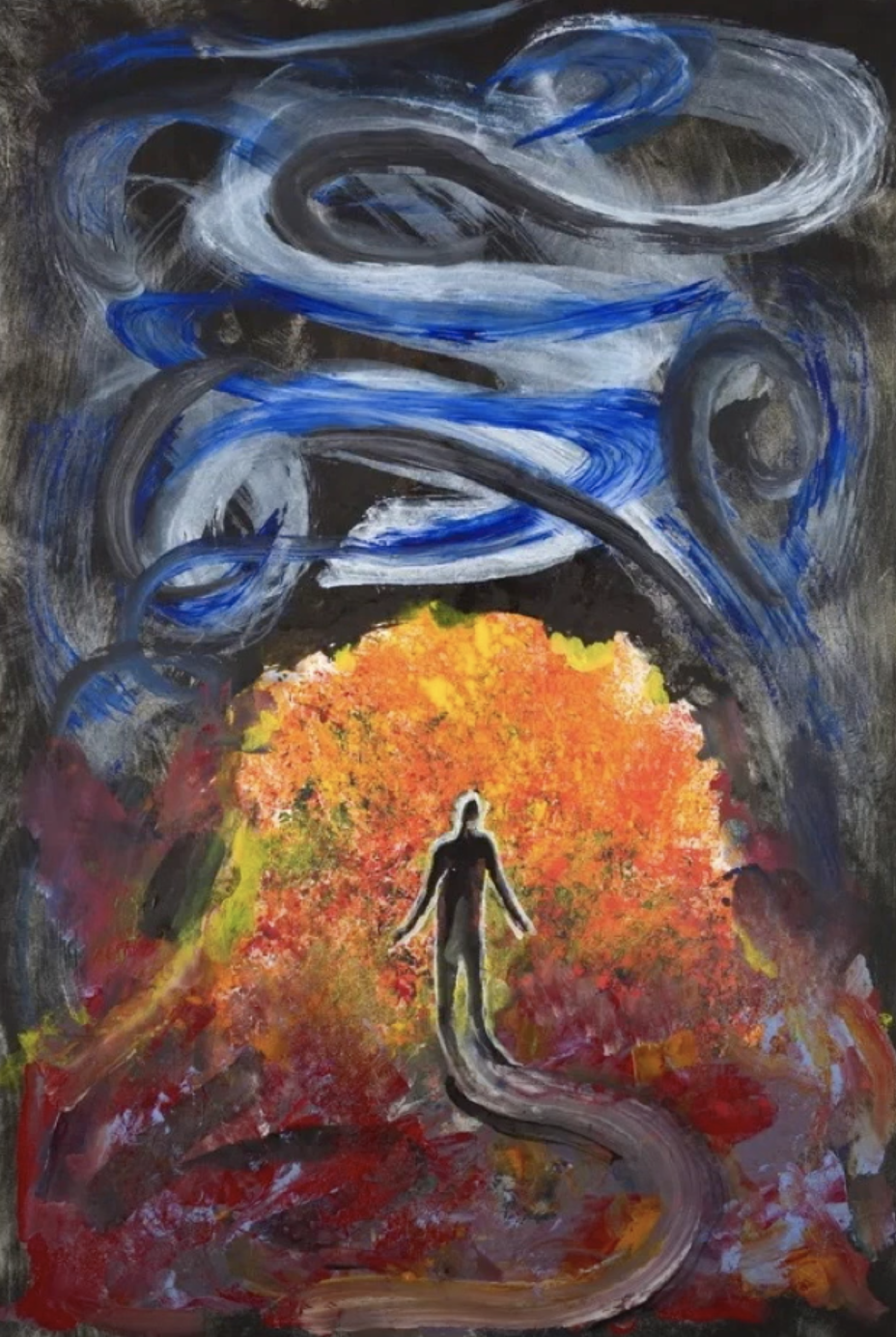
I invite you to reflect on a time in your life which felt like a season of darkness and uncertainty at the time, but in retrospect turned out to be a season of blessing, bathed in holy light. I’m personally thinking about when I first graduated college and moved to Pasadena without a job and without any clear plan for my future, let alone any clear plan for paying my next month’s rent. I felt a bit lost in a cloud of darkness, but in retrospect I feel like God was shining his Taboric light upon me, guiding me towards my new spiritual home in the Episcopal Church.
Some of us might feel like we are in a personal season of darkness and uncertainty right now. If so, I invite us to consider the possibility that what might feel like darkness may actually be the bright Taboric Light. In Exodus 20, the people of Israel are terrified by the thunderous power of the Taboric Light on Mount Sinai, the Sinaic Light. However, Moses urges them not to be afraid and then, the Scriptures say, he “drew near to the thick darkness where God was” (Ex 20:21). On this last Sunday after the Epiphany, I invite us to not run away from what feels like darkness and uncertainty in our lives because sometimes that thick darkness is exactly where God is dwelling, and if we draw near, like Moses, to the darkness, we may discover ourselves bathed in God’s uncreated light.
O God, your only begotten Son revealed his glory upon the holy mountain: Grant to us that we, beholding by faith the Taboric light of your countenance, may be strengthened to bear our cross and face our seasons of darkness, and be changed into his likeness from glory to glory; through Jesus Christ our Lord. Amen.


 DANIEL DeFOREST LONDON