
The Sermon on the Mount: Expressions of the Inexpressible Name
Readings for the Sixth Sunday after Epiphany (Year A)
This sermon was preached at Christ Episcopal Church Eureka on Sunday February 12, 2023.
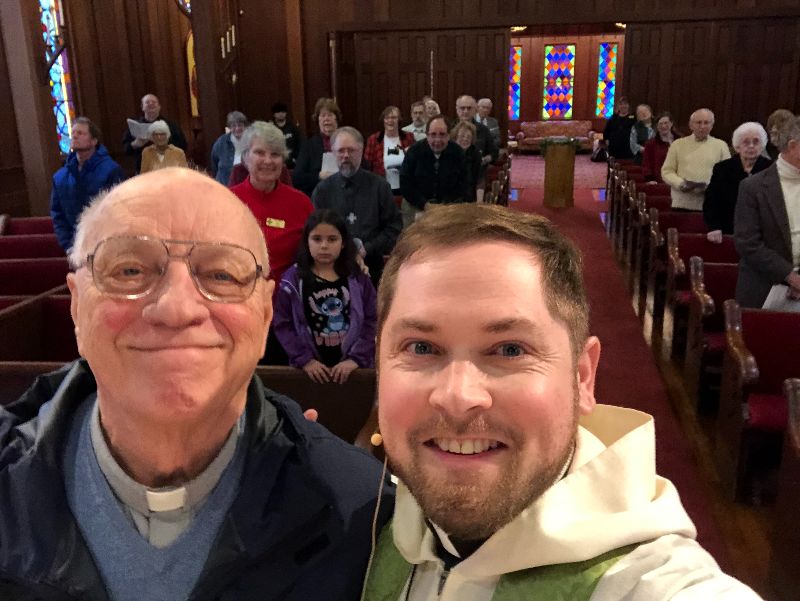
This last Thursday, our dear friend Fr. David Shewmaker passed on to his eternal reward while deep in prayer. In the letter I sent out to the congregation on Thursday night, I included links to a video of Fr. David’s teachings on prayer, which I recommend watching.[1] In one of his teachings, he talks about the inexpressible Name of God, which paradoxically is expressed through all of creation and through each of us, specifically through our breath.[2] We are all expressions of the inexpressible Name of God.
Why is the Name of God inexpressible? The Jewish sages taught the people to “make a fence around the Torah,” not a literal fence, but a figurative fence.[3] What does that mean? It means that in order to ensure we do not break any of God’s commandments, it would be wise to make more commandments so that we do not even come close to breaking God’s commandments. It’s like the circle around this altar. One way to make sure we don’t desecrate the altar is by not even stepping into this circle, which creates a kind of fence around the altar. Apparently one of my predecessors insisted that only clergy can step inside this circle. Although I certainly don’t uphold that rule, it comes from a desire to make a fence around what is sacred.
In order to make sure that they never break the third commandment (“Do not take the LORD’s name in vain” Ex 20:7), many Jewish people have decided to never use God’s name at all, lest it be used in vain. That is their way of creating a fence around that commandment. So as a result, we actually don’t know how to pronounce the name of God in Hebrew. We don’t know how to express God’s name. When Jewish people read the tetragrammaton, they say “Adonai” or “Ha Shem” or “G-d” or even “Heaven.” We see this same strategy being employed by Matthew in the first Beatitude, when Jesus says, “Blessed are the poor in spirit, for theirs is the kingdom of heaven” (5:3) while in Luke’s version, Jesus says “the kingdom of God” (Luke 6:20). Matthew, who is the most Jewish of the Evangelists, is more careful when it comes to using the name of God. Matthew is making a fence around the Torah. And this is exactly what Jesus is doing in the Sermon on the Mount. He’s creating a fence around the commandments and by doing so, he gets to the heart of the commandments.
Jesus says, “You have heard it was said, ‘Do not murder,’ but I tell you, do not even be angry with your brother or sister” (Matt 5:21). Do not even cultivate those feelings, which so easily become seeds of destruction. Learn to let go of your anger and resentment. Remember holding any resentment is like drinking rat poison and waiting for the rat to die. It’s not very effective. If we’re always letting go of our anger and resentment, we remove the temptation to commit any violence or murder.
Then Jesus offers a teaching that is baked into our liturgy. He says, “Before you bring your offering to the altar, make peace and reconcile with your brother or sister” (5:23 – 26). We do this every Sunday. What do I say here after our confession and before we collect our offerings for the altar? I say, “The Peace of the Lord be always with you” and then I invite you to make peace and to reconcile with your neighbors before we collect the offering for the altar. We have our priorities straight, knowing that God cares more about the health of the community than about the wealth of the community. We don’t use our offerings to curry favor with God or to get God on our side in a debate.
When it comes to adultery, Jesus creates a fence around this commandment by teaching us not to look at anyone with lust (5:27). And then he uses this disturbing language about cutting off the hand and gouging out the eye (5:28-30). Please do not do that. Jesus is using hyperbole here, as the rabbis are wont to do. He’s trying to get our attention and to help us to take seriously the consequences of lust. When we look at another human body purely as an object for our selfish pleasure, we are committing a form of mutilation both to ourselves and to others. Remember, we are all expressions of the inexpressible God, made in the image of the ineffable One, temples of the Holy Spirit. When we look at other bodies purely as objects for selfish pleasure, we are desecrating the Name of God.
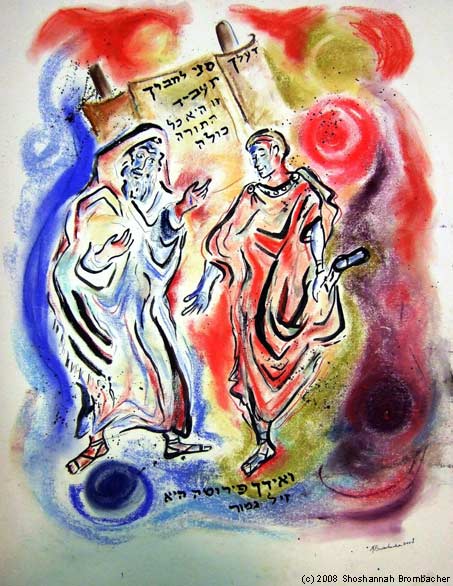
Now Jesus’s teachings on divorce are tricky. He says, “Anyone who divorces his wife, except on the ground of unchastity, causes her to commit adultery; and whoever marries a divorced woman commits adultery” (5:31 – 32). Our former bishop was twice divorced.[4] I have officiated weddings between people who have been previously divorced. Does that mean our diocese and I sanction adultery? No. It’s important to look at the context of Christ’s teachings. Once again, he is creating a fence, but this time it’s a fence of protection around the most vulnerable people. During Jesus’s day, there were two major rabbinic schools: the school of Rabbi Shammai and the school of Rabbi Hillel. Shammai was generally the conservative rabbi while Hillel was the liberal, with whom we often associate Jesus. But in this case, Jesus agrees with Rabbi Shammai. Shammai insisted that the only grounds for a man to divorce his wife is infidelity while Hillel said that a man could divorce his wife “for any cause whatsoever.”[5] During this time, wives generally could not divorce their husbands, but if a man could divorce his wife for whatever reason he wanted (be it overcooking dinner or just losing interest in her), then the woman would be always vulnerable to divorce, which would lead to social ostracism and economic destitution. So, here Jesus is using the Torah to create a protective fence around the most vulnerable people women. Fortunately, women today in our context are not in the same socially vulnerable situation, but the principle still stands.
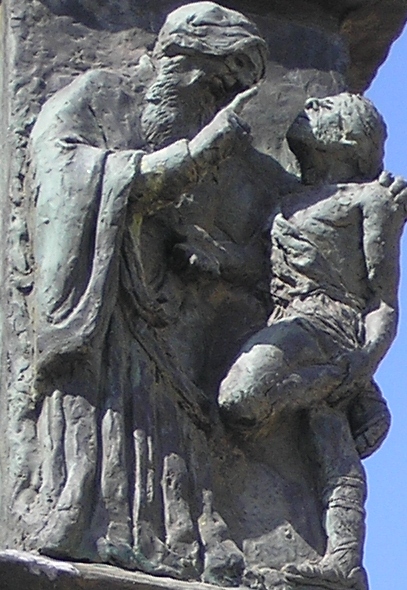
Finally, oaths. One way to make sure that we never break a vow made in God’s Name is to never make a vow in God’s Name at all. However, we are still tempted to swear by everything but God: heaven, earth, the temple, Jerusalem, our own heads. Jesus says, “Don’t do that. Let your ‘yes’ be yes and your ‘no’ be no” (5:37). And as he elaborates, he sounds like the true Jewish mystic that he is, explaining that God is in everything, God’s Name has been sealed on all of creation so whatever you choose to swear by you are still swearing by God’s Name. You and I (and all of creation!) are expressions of the inexpressible Name of God.[6]
So may we revere each other and all of creation with the same reverence that our Jewish brothers and sisters have for the Name of God; and by cultivating this reverence, may we learn to let go of our anger, our resentment, our lust, our fickle behaviors, and our dishonesty, and may our eyes be open to see the uncreated light of God shining all around us. Amen.
[1] Fr. Shewmaker practiced regularly Centering Prayer for almost 50 years.
[2] David Shewmaker, “Prayer Life & Intimacy with God (Part Two),” January 3, 2021, https://www.youtube.com/watch?v=LKyY59vvCAs 11:44: “The early Hebrews had a tradition of not saying that word [YHWH] out loud. Well, if you are taught forms of meditation, they will tell you once you have heard that sacred word, you should not say it out loud again. So, it’s interesting that that was an instruction of ancient times.”
[3] Mishnah Avot 1:1
[4] https://www.washingtontimes.com/news/2006/jul/14/20060714-105227-2708r/
[5] Josephus, Antiquities, IV. Viii. 23. https://www.jewishencyclopedia.com/articles/5238-divorce
[6] The 13th century Jewish mystic and Kabbalist Rabbi Jacob Sheshet of Gerona writes about the heavens (the throne of God) and the earth (God’s footstool) as spiritually connected to the very letters of God’s Name, the tetragrammaton (YHWH). See “the Holy Throne and the Commandments” in The Early Kabbalah, ed. Joseph Dan, trans. Ronald C. Kiener (Mahwah NJ: Paulist Press, 1986), 133 – 134. Also, according to Isaiah, “Thus says the LORD [YHWH]: Heaven is my throne, and the earth is my footstool” (Isaiah 66:1).

 DANIEL DeFOREST LONDON