
Readings for the Feast of the Holy Name
This sermon was preached at Christ Episcopal Church Eureka on the Feast of the Holy Name on Sunday January 1, 2023.
Happy New Year! And Happy Feast of the Holy Name of Our Lord Jesus Christ! It is not that often that the Feast of the Holy Name falls on a Sunday. The last time was 2017 and the next time will be 2034, so let’s relish this opportunity to receive all the blessings that this day has to offer, blessings that can sustain us throughout the new year.
The focus of this feast is often more on the Name of Christ and less on his circumcision, which is understandable. The name of Jesus has tremendous spiritual power. In Hebrew, the name is Yeshua, which means “salvation.” It’s an abbreviated form of Joshua or Yehoshua, which means “God is salvation.”[1] And the English translation of Yeshua remains powerful. Fourteenth century English mystic Richard Rolle wrote frequently in Latin, but he always preferred to use the English name for Jesus. In a letter he wrote to a nun, he said, “I’ll give you one piece of advice: don’t neglect his name, ‘Jesus.’ Meditate on it in your heart night and day as your personal and precious treasure. Love it more than your life. Root it in your mind…devote your love to this name ‘Jesus,’ which means ‘salvation.’ No evil thing can have any living-space in that heart where ‘Jesus’ is faithfully kept, because it chases out devils and destroys temptations and turns away all wrongful anxieties and purifies the mind.”[2] There’s just something about that name, Jesus; a name full of blessing.
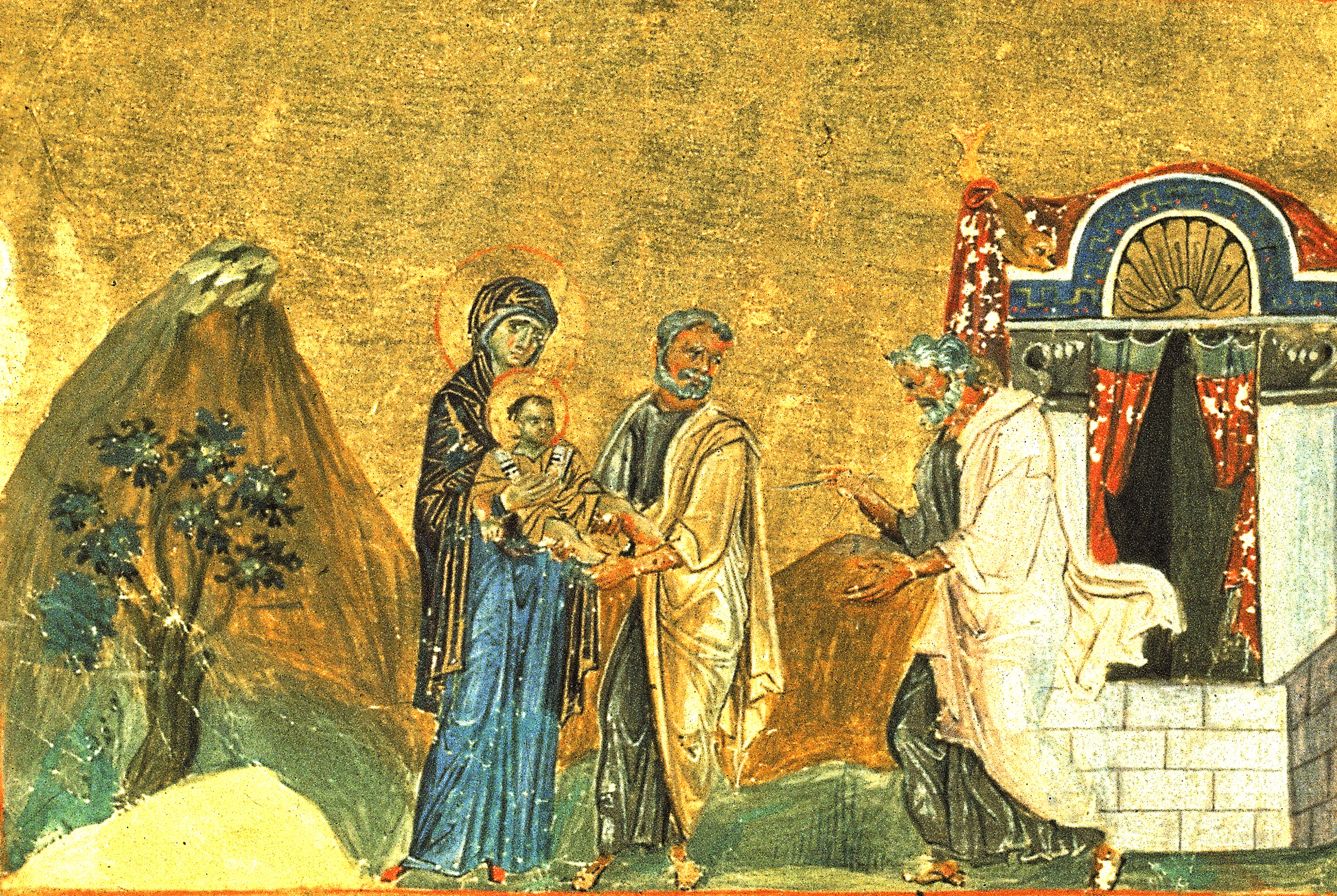
There is also blessing to be found in reflecting on the circumcision of Christ. Our 1928 prayer book refers to this day as the feast of the Circumcision.[3] Luke says, “After eight days had passed, it was time to circumcise the child” (Luke 2:21). According to Leviticus, Jewish boys are to be circumcised eight days after being born, which is why we celebrate this feast eight days after Christmas.[4] This feast reminds us that God became incarnate among us in the body of a Jewish boy who observed the Torah. As Paul says in Galatians, “God sent his Son, born of a woman, born under the Torah” (Galatians 4:4). God became incarnate among us in the body of a Jewish boy who went to temple, who attended synagogue, and who was frequently on the receiving end of the great priestly blessing, which we heard read this morning from Numbers. This is the blessing that I use most often because it is the blessing that God told priests to use: “May the Lord bless you and keep you. May he make his face to shine upon you and be gracious to you. May he turn his countenance upon you and give you peace.”
When I pray this blessing, I usually raise my hand or sometimes both hands, which is a biblical posture (or asana) because we read also in Luke of Jesus, the great high priest, lifting his hands when he blessed his disciples at the Ascension: “he lifted up his hands and blessed them. While he was blessing them, he…was taken up into heaven” (Luke 24:50-51). This practice of raising the hand in a blessing has roots that seem to go all the way back to our reading from Numbers. What is the last line in our reading from Numbers? “So they shall put my name on the Israelites, and I will bless them” (Numbers 6:27). Here we come full circle back to the blessing of the Name.
When an artist creates something that they’re proud of, what does the artist do? The artist put their name, their signature, on their masterpiece. When you receive the priestly blessing, God is putting his name, his signature, on you and sealing you forever as his beloved masterpiece of which he is so proud. And if anything has the name of God upon it, it cannot be discarded. It is forever cherished.
Although we don’t know for sure how young Jesus experienced the priestly blessing as a child, we do get a hint from a very surprising and unlikely source. And that is from Leonard Nimoy who played Spock in Star Trek. Any Trekkies among us? As a Jewish boy like Jesus, Leonard Nimoy attended synagogue and he shared this story about this one day when five prayer leaders stood on the bimah (the chancel), covered themselves their tallit (prayer shawl) and began shouting. Leonard’s father told him not to look and he noticed everyone else was covering their eyes with their hands or their prayer shawls or facing the other way. So Leonard covered his eyes and the shouting and wailing grew louder and more discordant, but he started hearing them shouting out the priestly blessing in Hebrew: Yevarekhekha Adonai veyishmerekha ( יְבָרֶכְךָ יְהוָה, וְיִשְׁמְרֶךָ). And then young Leonard peaked and saw the men with their heads still covered, but their hands outstretched towards the congregation like this: put hands in shape of the Hebrew letter Shin. And Leonard remembered being overwhelmed by the power and mystery and magic of that experience. It stayed with him.
So, when he was an adult playing Spock in Star Trek and there was an episode when he meets other Vulcans, he suggested to the director that they have a special Vulcan greeting, akin to humans shaking hands. The director said, “Ok, what do you have in mind?” And Leonard said how about we make this sign with our hand? And the director said, ok. And the rest is history. Over fifty years later, Trekkies are still making this sign to one another while saying, “Live Long and Prosper,” which is a kind of pop culture blessing, but most have them have no idea that they are blessing each other with the sign of the ancient Hebrew priestly blessing.

This shape made by the hand is the shape of the Hebrew letter Shin, which is the first letter in the word Shalom which means peace, Shaddai which is an ancient name for God, Shekinah which is the name for the presence of God among us, and it’s also the letter in the holy name Yeshua.
So, on this feast of the Holy Name, this feast of the Circumcision of Christ, and this New Year’s Day, may you live long and prosper and may you find hope and comfort and peace in knowing that God has put his signature upon you as his beloved masterpiece and that God will cherish you as his own forever.
יְבָרֶכְךָ יְהוָה, וְיִשְׁמְרֶךָ

[1] So Jesus’s name is almost equivalent to the modern name “Josh,” which is how comedic author Christopher Moore refers to him in his hilarious and irreverent novel Lamb: The Gospel According to Biff, Christ’s Childhood Pal (William Morrow, 2004).
[2] Richard Rolle, “The Commandment,” Richard Rolle: The English Writings, ed. and trans. Rosamund S. Allen (Paulist Press, 1988), 150 – 151.
[3] The Collect for the Circumcision of Christ: “Almighty God, who madest thy blessed Son to be circumcised, and obedient to the law for man; Grant us the true circumcision of the Spirit; that our hearts, and all our members, being mortified from all worldly and carnal lusts, we may in all things obey thy blessed will: through the same thy Son Jesus Christ our Lord. Amen.” 1928 Book of Common Prayer, p. 105.
[4] “On the eighth day the boy is to be circumcised” Leviticus 12:3

 DANIEL DeFOREST LONDON