
Readings for the Fourth Sunday of Advent (Year A)
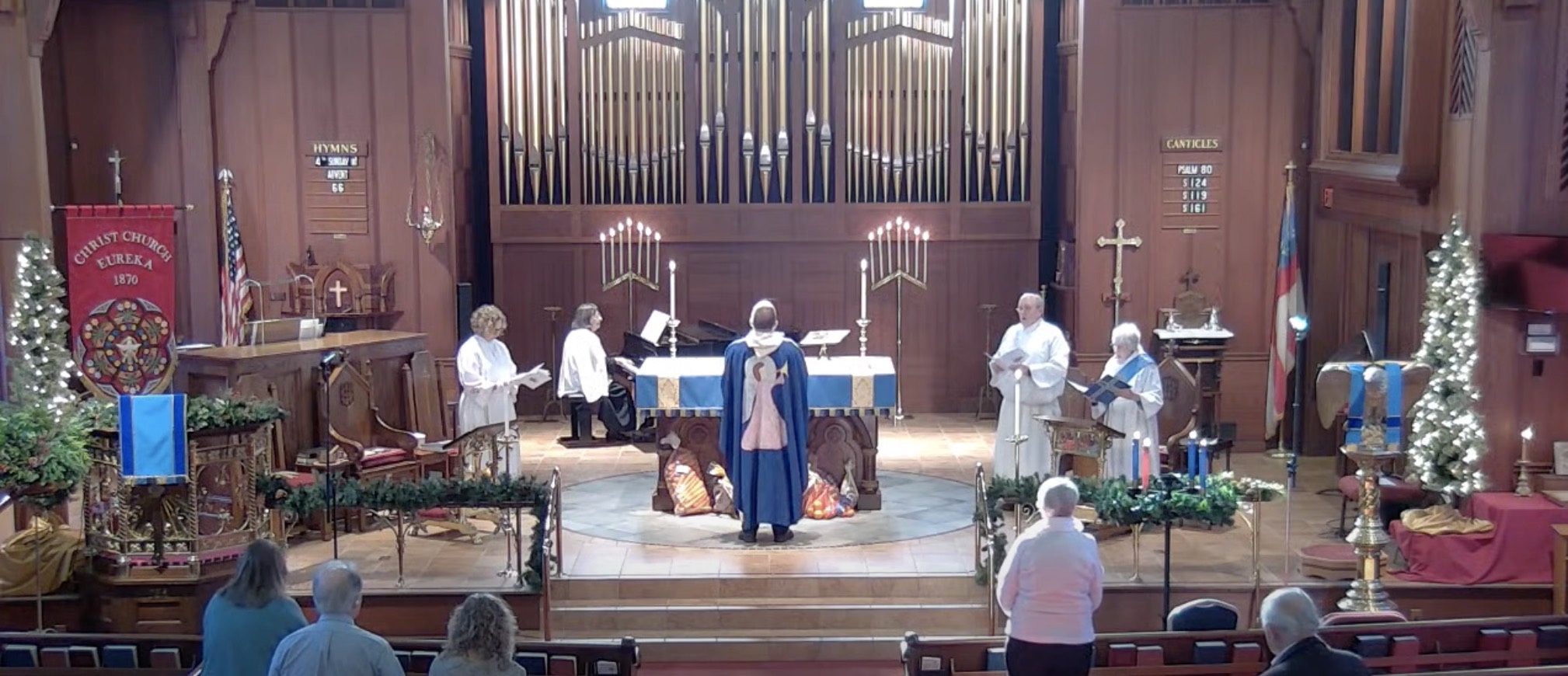
This sermon was preached at Christ Episcopal Church in Eureka CA on December 18, 2022.
Worship bulletin here: Fourth Sunday of Advent

As we hear once again the beloved Christmas stories about the birth of the Christ child, it’s easy for us to miss the messiness of the predicament in which Joseph and Mary found themselves. “Before they lived together, Mary was found to be with child.” This would be tremendously shameful news for both Mary and Joseph, especially since Joseph knew that he wasn’t the one responsible. Joseph could have publicly exposed and shamed Mary, which would have shamed him as well, but it would have utterly destroyed Mary and the child, who would live the rest of their lives in humiliation and squalor, if they survived at all. But Joseph, Matthew says, was “a righteous man…and planned to dismiss her quietly.” Unfortunately, this decision still would not bode well for Mary; an unwed mother in first-century Palestine would still be a social pariah. What would you do if you were Joseph and your fiancé was pregnant with a child that was not yours? This is a very messy and difficult situation; and Joseph is trying to do the best he can in the circumstances.
Joseph was named after the great dreamer in Genesis, Jacob’s beloved son who became Pharaoh’s righthand man, thanks to his ability to understand and interpret dreams. This is the same “Joseph” referenced in the first verse of our psalm: “Hear, O Shepherd of Israel, leading [the tribe of] Joseph like a flock” (Psalm 80:1). So, like his namesake, Joseph receives a dream in which an angel appears to him and says, “Joseph, son of David, do not be afraid to take Mary as your wife. She will conceive a child and you will name him Jesus and he will fulfill the prophecy of Isaiah, the prophecy of the child who is ‘Emmanuel’ which means ‘God is with us.’”
In other words, the angel says, “I know this is a messy situation, but God is with you in this mess. God is at work in the mess. [In fact, God seems to have orchestrated this apparent mess!] And God will lead you, like a shepherd, through the mess. God is with you. Are you with him?” That’s the message of today’s sermon and that’s the message of Christmas and the Incarnation: God is with you in the mess. Are you with God?
Are you with God? That’s the question that the prophet Isaiah asks Joseph’s great great great (x12) grandfather King Ahaz in our Hebrew Scripture reading. Ahaz is the young king of Judah and he also finds himself in a messy and terrifying situation as the northern kingdoms of Israel and Syria are joining forces to attack his kingdom of Judah. Instead of an angel, he has a prophet approach him and urge him to pray to God for a sign. Regrettably, Ahaz rejects the prophet’s advice and hides behind a veneer of piety, saying, “I will not put God to the test by asking for a sign.” This response clearly upsets Isaiah, who understands God as one who wants us to be fully honest and authentic with him and not to hide behind false piety. In the first chapter of Isaiah, the prophet hears God say, “Come, let us argue it out!” (1:18). Isaiah tells King Ahaz boldly, “Your majesty, your false piety is annoying to me and to others and frankly, it’s annoying to God. But God still loves you and God will give you a sign anyway. The sign will be a child named Immanuel, which means ‘God is with us’ And by the time the child comes of age, the two kingdoms that are now causing you so much fear and dread will essentially be nonexistent. God is with you in the mess and God will see you through this mess. And God wants you to be authentic with him amid the difficulties and not to run away and hide behind false piety and self-righteousness.”

Isaiah wants King Ahaz to be with God the way King David was with God. King David is all over the readings today. Every reading refers explicitly to King David except for the Psalm, which is traditionally believed to be written by David. Isaiah speaks to the “House of David.” Paul describes Jesus as “descended from David.” And how does the angel address Joseph in the Gospel? Joseph, Son of David!

David’s life was a mess, but he was a man after God’s own heart. He remained with the God who is with us in our mess and who will see us through. According to Leonard Cohen, David knew the “secret chord that pleased the Lord”: I heard there was a secret chord that David played and it pleased the Lord, but you don’t really care for music, do you? It goes like this: the fourth, the fifth, the minor fall and the major lift, the baffled king composing Hallelujah. And even when it all goes wrong, I’ll stand before the Lord of song with nothing on my tongue but Hallelujah.” The “secret chord” is the commitment to stay with God amid the hills and the valleys, in the highs and lows, in the mansions and in the mess. David did not run away from the messes he often found himself in and he did not hide behind false piety and self-righteousness, as King Ahaz seemed to do. When the angel calls Joseph the “Son of David,” he’s calling him to be like his forefather and to not run away from this difficult and messy situation, but to trust that God is with him (Immanuel) and God will see him through. Joseph might not always like the situation and he might get upset, as some later Christian stories suggest (including the story that inspired the Cherry Tree Carol which we will hear). We also might not always like the situations we find ourselves in, but that’s ok, as long as we remain authentic like King David and committed to the God who is with us in our difficulties and who will lead us through the mess, like the Shepherd of Israel leading Joseph like a flock, into the light of God’s countenance. Amen.

 DANIEL DeFOREST LONDON