
Readings for the Sixteenth Sunday after Pentecost (Proper 21 – Year C – Track 1)
Jeremiah 32:1-3a, 6-15
Psalm 91:1-6, 14-16
1 Timothy 6:6-19
Luke 16:19-31
This sermon was preached at Christ Episcopal Church in Eureka CA on September 25, 2022

Jesus said, “Blessed are you who are poor, for yours is the kingdom of God” (Luke 6:20) and “Woe to you who are rich, for you have already received your comfort” (Luke 6:24). In this morning’s Gospel, we see this teaching of Christ portrayed in story format, in a parable that highlights the great chasm that exists between the financially wealthy and poor, a chasm that might surprise us. The purpose of this parable is not so much to romanticize the lives of people living in poverty or to condemn those who enjoy a degree of wealth and affluence, but rather to arouse compassion and to envision a community without chasm. The Greek word for chasm is simply chasma so if there are fans of The Clash here this morning, you can call this homily “Rock the Chasma.”
Speaking of The Clash, we see a clash in chasms within this parable. In the earthly existence of the rich man and Lazarus, we see a great chasm of economic disparity in which the rich man enjoys sumptuous meals every day and is decked out in purple and fine linen while poor Lazarus longs to eat the crumbs from the rich man’s table like the dogs who end up licking his sores. In the afterlife, however, we see a different chasm, a chasm of spiritual disparity in which Lazarus enjoys the riches of resting in Father Abraham’s loving embrace while the rich man suffers the fiery torments of Hades. And according to Father Abraham, it is the spiritual chasm of the afterlife that is permanent and fixed and cannot be crossed.
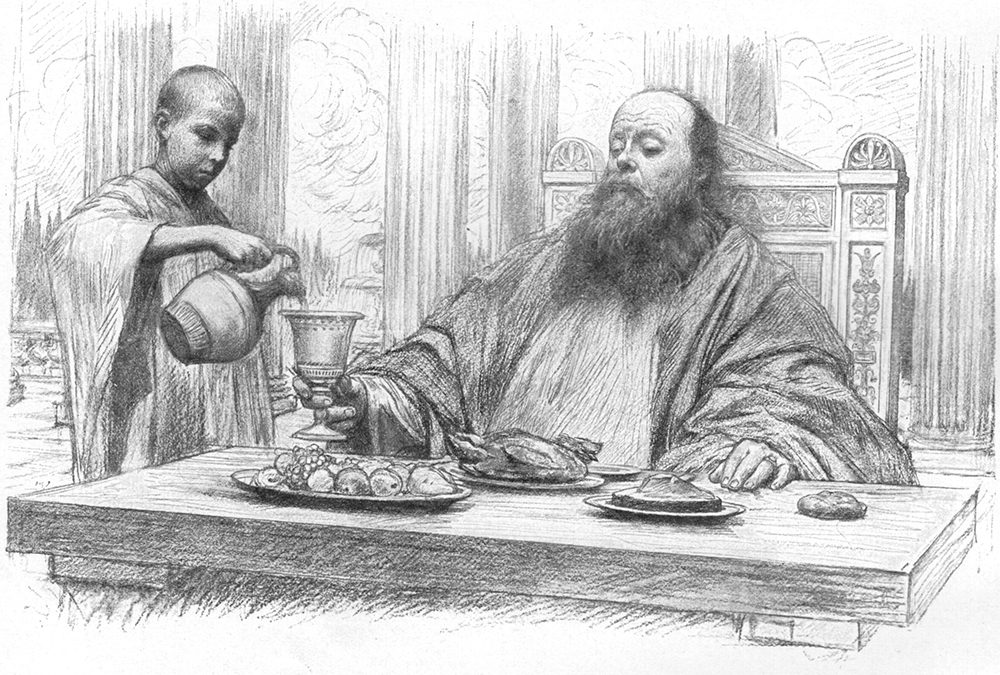
When we learn about the earthly existence of the rich man and Lazarus, our hearts ache with compassion for poor and sick Lazarus who can’t even enjoy crumbs with the dogs. But then when we read about the afterlife of these two, perhaps we’re stirred with compassion for the rich man who seems to be eternally damned to the fires of hell without any hope for relief or any hope for the eternal welfare of his family? Woe to you who are rich indeed, if this is your eternal destiny, if this is our eternal destiny!
So, what is Jesus doing here in this parable? He is obviously arousing within us compassion for the poor, but he is also trying to arouse within us compassion for the wealthy, for the wealthy people who fail to use their affluence to bridge the chasm of economic disparity in this life because their destiny will be far worse than any earthly suffering.
I remember a clergy colleague telling me that, after working for several years in Marin County, one of the most important things she learned was that the wealthiest one percent of Americans are the true lost sheep whom the Good Shepherd leaves the 99 to save. When I first heard this, it came across as being more provocative rather than truthful, but the more I think about it, the more it seems to resonate with Christ’s teachings in the Gospel of Luke and with Paul’s exhortation in his letter to Timothy, when he says, “Those who want to be rich fall into temptation and are trapped by many senseless and harmful desires that plunge people into ruin and destruction. For the love of money is a root of all kinds of evil, and in their eagerness to be rich some have wandered away from the faith and pierced themselves with many pains” (1 Timothy 6:7-8).
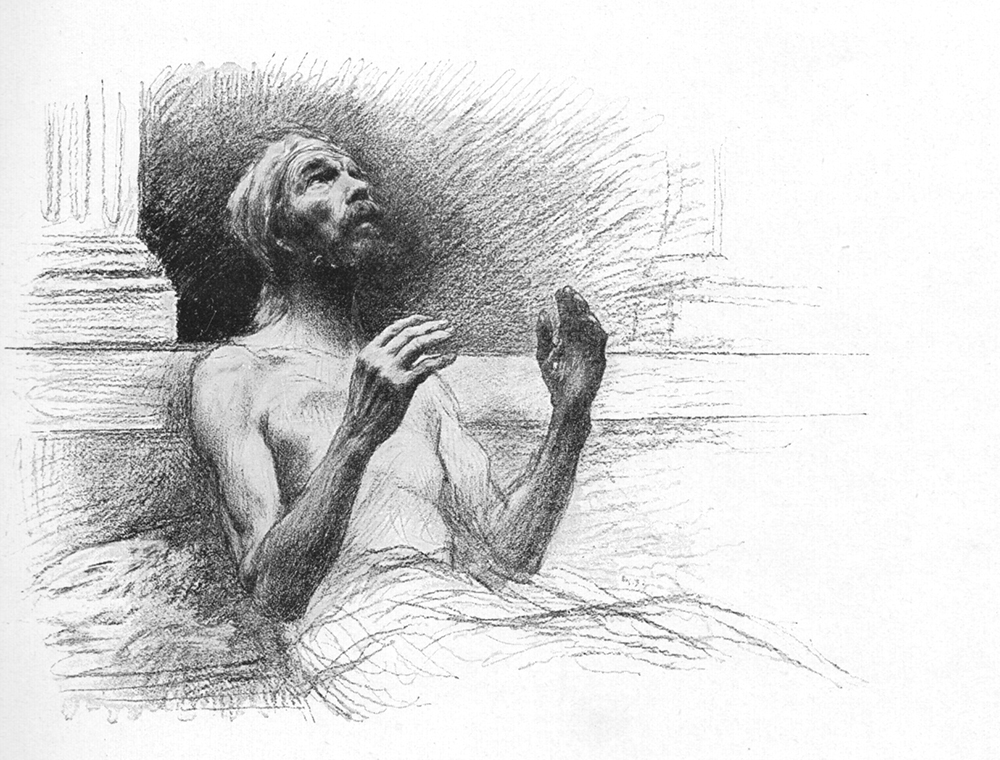
The rich man in the parable has more than enough but he fails to share even crumbs with this sick, poor man at his gate. How lost must he be! How lost in his own narcissism and self-preservation and dragon-hoarding greed. The chasm described in the afterlife between the rich man and Lazarus might also function as a metaphor for the spiritual reality that exists between the wealthy and poor in this life. How many billionaires go to sleep in their warm beds with their stomachs full (in one of their many homes), but feel tormented by the unquenchable fire of greed, always craving more and never experiencing any lasting satisfaction or relief? And how many poor people go to sleep on the streets, cold and starving, but spiritually rich and full, giving thanks to God for the smallest of things, even the dog that came by and comforted them with a kiss, like the dogs who licked the sores of Lazarus?
Again, the purpose of the parable is not to romanticize the poor and condemn the rich, but to arouse compassion for both and to envision a community without chasm. This is a tall order indeed for us in the United States where the wealthiest one percent own 40% of the entire nation’s wealth.[1] One doesn’t have to be socialist or anti-capitalist to be astounded and disturbed by the gaping chasm of economic disparity in our country, a chasm that has only grown wider since the pandemic.
What would Paul say to someone who has a billion dollars? Or 200 billion dollars? Paul, who calls us to be content with food and clothing, says, “When it comes to those who in the present age are rich, command them not to be haughty, or to set their hopes on the uncertainty of riches, but rather on God who richly provides us with everything for our enjoyment. They are to do good, to be rich in good works, generous, and ready to share, thus storing up for themselves the treasure of a good foundation for the future, so that they may take hold of the life that really is life.”
Wealth brings with it many temptations and traps, but when used for God’s glory, it becomes a powerful tool in building a community without chasm. Over the last several years, a member of our community has struggled severely with illness and financial challenges. There sometimes seemed to be a wide chasm between this church community and this person, who sometimes had to sleep on the streets. This last week, members of this church who had been working to help her for years finally arrived at a common solution with her, deciding that the best next step towards her health would be for her to reunite with her mother and sister in Buffalo NY. So, members of the church gave generously of their resources to pay for her flight and to send her off on her way; and this last Friday morning she arrived safely in Buffalo, where she is getting the help she needs. When it came to our collective response to God’s beloved child Latanya Jacob, Christ Church Eureka ultimately chose to be a community without chasm. We helped Latanya and she helped us. Every Sunday, Latanya would attend both services and always offer a prayer of gratitude for the opportunity to worship here, and I will miss reading those prayers. Some mornings I wondered if anyone was more grateful to be here than her.
In this life, may we work towards a community without chasm so that we may enjoy more fully with gratitude the gift of being here now in the presence of one another and in the spiritual presence of all the saints who have gathered to worship here over the years, who cross the chasm of death to worship with us now. This morning’s psalm (Ps 91) reminds me of my father and Fr. Doug because it’s the psalm I prayed with them at their bedsides soon before the angels carried them away to be with Abraham. May their spiritual presence and the presence of all the saints and angels remind us that we will meet again in the eternal community without chasm and may they refresh us now with gratitude, generosity, and hope in the God whose love will ultimately bridge every chasm imaginable. Amen.

[1] 80% of Americans have 7% of the nation’s wealth. A CEO now makes 380 times the average worker’s pay. https://www.youtube.com/watch?v=QPKKQnijnsM

 DANIEL DeFOREST LONDON