
Readings for the Fifteenth Sunday after Pentecost (Proper 20 – Year C – Track 1)
Jeremiah 8:18-9:1
Psalm 79:1-9
1 Timothy 2:1-7
Luke 16:1-13
This sermon was preached at Christ Episcopal Church in Eureka CA on September 18, 2022
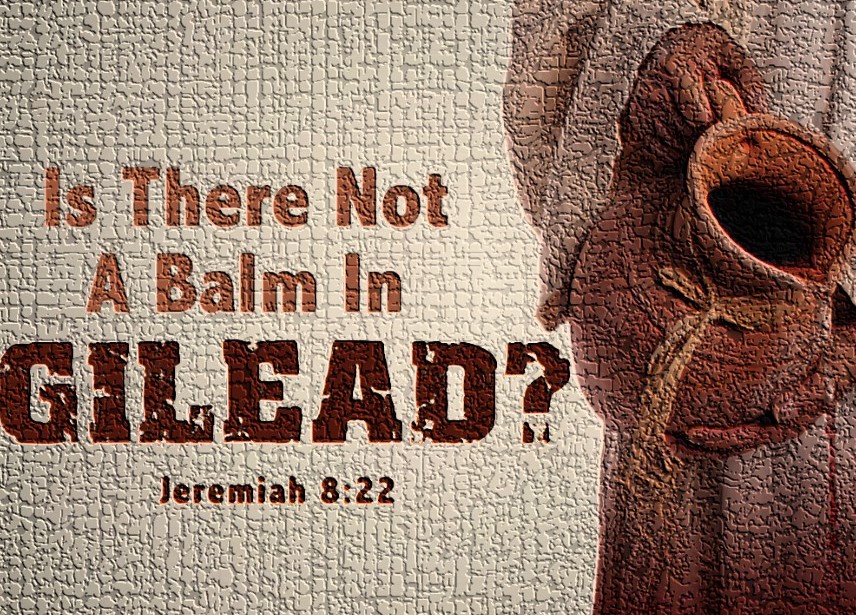
Is there no balm in Gilead? Is there no physician there? Why is the health of my poor people not being attended to? (Jeremiah 8:22)
Jewish poet Leonard Cohen said, “There is a crack, a crack, in everything. That’s how the light gets in.” The Scriptures teach us that when we feel cracked and crushed by the inevitable pains and sufferings and disappointments in this life, we are invited to let God’s light shine through us amid those difficulties so that we may increase our capacity to heal others. We don’t seek out pain and suffering and heartache, but when they come our way, when we feel crushed by those inevitable realities, we are called to respond by looking outward to find ways to heal others and ease other people’s burdens. That’s the sermon today.
In this morning’s challenging parable, a manager receives crushing news from his boss. He’s fired. And then he feels afraid because he has no other employable skills, and this termination will likely blackball him from other similar management positions. He’s crushed; but he chooses to respond to that experience of being crushed by looking outward to help others, to ease their load. Although there’s an element of dishonesty in the manager’s behavior, the rich master admires him for his shrewdness. The manager does not fold inward on himself (incurvatus in se) and cut himself off from others, instead he looks outward to help others. Yes, he does it to help himself in the long run, but that’s the wisdom: he knows that it is by helping other people that he is actually helping and healing himself. He knows how interconnected we are, how our health and wellbeing are dependent on our neighbor’s health and wellbeing. It is through this experience of being crushed that the manager lets God’s healing light shine through him. And Jesus says, “Sometimes dishonest people can let God’s light shine through them more effectively than the people who call themselves the children of light.” The children of light ought to learn that sometimes they need to be crushed and cracked to let the light get in.
And when it comes to being crushed, no prophet understands that experience better than Jeremiah, the wounded and depressed prophet who was ignored by his people and then had to witness their brutal destruction by the violence of the ruthless Babylonian empire. He watched the Babylonians profane the holy temple and make Jerusalem a heap of rubble, to use the language of the Psalm (79:1). Listen to the words of the crushed prophet: “My joy is gone, grief is upon me, my heart is sick…Has God abandoned us? We are not saved. I weep and I mourn. Depression has taken hold of me.” (Jeremiah 8:18 – 21) And then he asks this question, “Is there no balm in Gilead? Is there no physician? Why has the health of my people not been attended to?” (8:22) This is a lament. He’s asking, “Is there no healing? Is there no hope in this situation?” Isn’t this a lament that we all have, at some point in our lives, maybe even right now in face of illness or heartache that seems to crush us? When we consider children’s vulnerability to gun violence in our country and the scarcity of sufficient health care in our county (this rural county with urban problems), don’t we all feel compelled to ask, “Is there no balm in Gilead? Is there no physician available? Why has the health of the people not been attended to?” May we bring these questions of lament to God, like Jeremiah. Jeremiah, who is depressed and morose and even macabre at time, might be the Edgar Allen Poe of the Hebrew prophets; and I use that analogy intentionally because Poe himself quoted Jeremiah in his most famous poem. He asks, “Is there – is there balm in Gilead?—tell me—tell me, I implore! Quoth the Raven ‘Nevermore.’” There is no balm in Gilead. There is no healing.
What exactly is the balm of Gilead? The balm of Gilead was a medicinal salve made from the essential oils and resins of trees in Gilead, which was a region east of the Jordan river.[i] [So here’s another sermon on the healing power of trees]. It was used to treat chest congestion, bruises, swelling, sunburn, and other inflammations of the skin. It was also used as a component of the incense that was offered in the ancient Jewish temple twice a day.[ii] So the balm of Gilead was healing to humankind and a pleasing aroma to the divine.
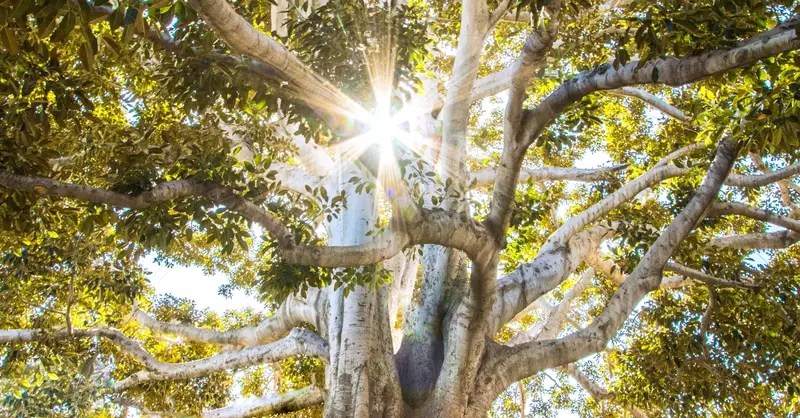
The Hebrew word used in Jeremiah for “balm” is the word tzori, which literally means something that has been crushed and cracked open. That’s how you get the oil from the tree. You have mash it up until the healing oils ooze out, just like the healing blood of the Lamb that poured out from the Tree of Life that is the Cross, from the body of the One who was crushed. The One who was crushed, according to Isaiah, for the iniquities of us all (Isaiah 53:5). The One whose suffering brought us peace and whose wounds brought healing to us all. As Paul said in this morning’s letter to Timothy, “Christ Jesus, himself human, gave himself a ransom for all” (1 Timothy 2:6).
That is the image that empowered and inspired and gave hope to a people who were crushed under the weight of institutionalized racial slavery here in our country. I would personally expect African American slaves to be known for their songs of lament and protest and even anger towards God, which I see and appreciate in Jewish literature and Holocaust literature. I don’t really see that in African American spirituals. What we see instead is this overwhelming sense of hope. So instead of joining Jeremiah and asking, “Is there no balm in Gilead?” the black slaves of the antebellum south looked at the cross and said, “That’s the balm. There is a balm in Gilead! It’s the healing blood of the Lamb pouring out from the one crushed on the tree. It’s God’s Light shining through the cracks of the ultimately crushed one.”
The slaves insisted that there is a balm in Gilead which will make the wounded whole, which will ultimately save us from the consequences of sin, sickness, and death. The balm of Gilead is the blood of Christ which empowers us to look outward and become healers whenever we feel cracked and crushed by life. Again, we don’t seek after suffering, but when suffering comes, we let that experience increase our capacity to heal others and ease other people’s burdens, like the manager in the parable. That’s how we become the true children of light by letting the light shine through the cracks.
So, “if you cannot preach like Peter, if you cannot preach like Paul, you can tell the love of Jesus and say he died for all.” If you feel paralyzed by your inadequacy or insecurity or limitations or health issues or some tragedy, receive those as cracks through which God’s light may shine. Use those experiences to increase your capacity as a healer, as a wounded healer, empowered and inspired and nourished by the balm that comes to us through the one who was crushed on the tree of life for us all. Amen.
[i] The Book of Genesis describes a caravan of merchants from Gilead with camels bearing spices, myrrh, and balm (Gen 37:25). According to 1 Kings 10:10, balsam was among the many precious gifts that the Queen of Sheba gave to King Solomon. Later in Jeremiah, the prophet says, “Go up to Gilead and get balm, O virgin daughter Egypt! In vain you have used many medicines; there is no healing for you (Jer 46:11). According to Talmud tractate Avodah Zarah 3:1, 42c, in the messianic era, the righteous will bathe in 13 rivers of balsam.”
[ii] https://holyshaya.com/the-balm-of-gilead-in-judea-and-the-bible/

 DANIEL DeFOREST LONDON