
Readings for the Eighth Sunday after Pentecost (Proper 13 – Year C – Track 1)
Hosea 11:1-11
Psalm 107:1-9, 43
Colossians 3:1-11
Luke 12:13 – 21
This sermon was preached at Christ Episcopal Church in Eureka CA on July 31, 2022.
Give thanks to the LORD, for he is good and his mercy endures for ever.
He gathered them out of the lands;
from the east and from the west,
From the north and from the south.
They were hungry and thirsty.
He put their feet on a straight path.
Let them give thanks to the LORD
For he satisfies the thirsty
And fills the hungry with good things.
Whoever is wise will ponder these things,
And consider well the mercies of the LORD. Amen.
A few days ago, about 650 Anglican bishops from 165 countries gathered from the east and from the west, from the north and from the south, hungry and thirsty for fellowship and renewal and refreshment. God put their feet on a relatively straight path, a path that has been trod by millions of pilgrims for about a thousand years, a path made popular by Geoffrey Chaucer’s magnum opus, the path to the “Mecca” of the Anglican world: Canterbury Cathedral in England. Every ten years or so (since 1867), the Archbishop of Canterbury invites the bishops of the global Anglican Communion to Canterbury and then to an extended tea party at Lambeth palace in London. This tea party has been called the Lambeth Conference and has functioned as one of the key instruments (if not the key instrument) of our global communion. Basically, you are part of the Anglican communion if your bishop is invited to this tea party. And our bishop, Bishop Megan Traquair, was invited, which means we are part of the communion. Bishop Megan is representing us right now, the Episcopalians of Northern California, and she is one of about 100 female bishops from around the world. The bishops have been worshipping and giving thanks to the Lord as this morning’s psalm urges. And as they have been pondering the mercies of the Lord together, they also are not in denial of the profound disagreements among them, especially around issues of biblical interpretation and human sexuality, issues that sparked the first Lambeth conference over 150 years ago.
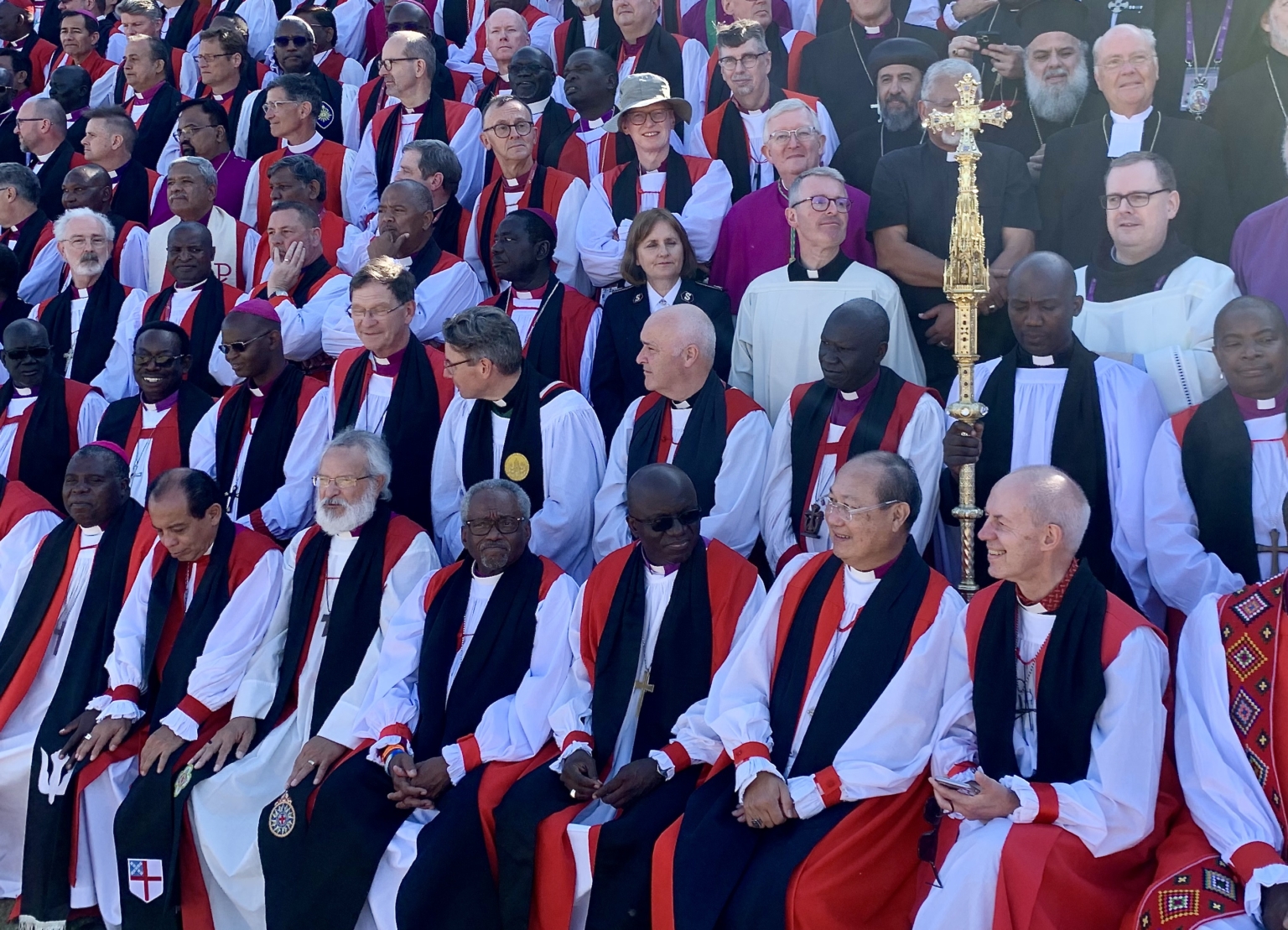
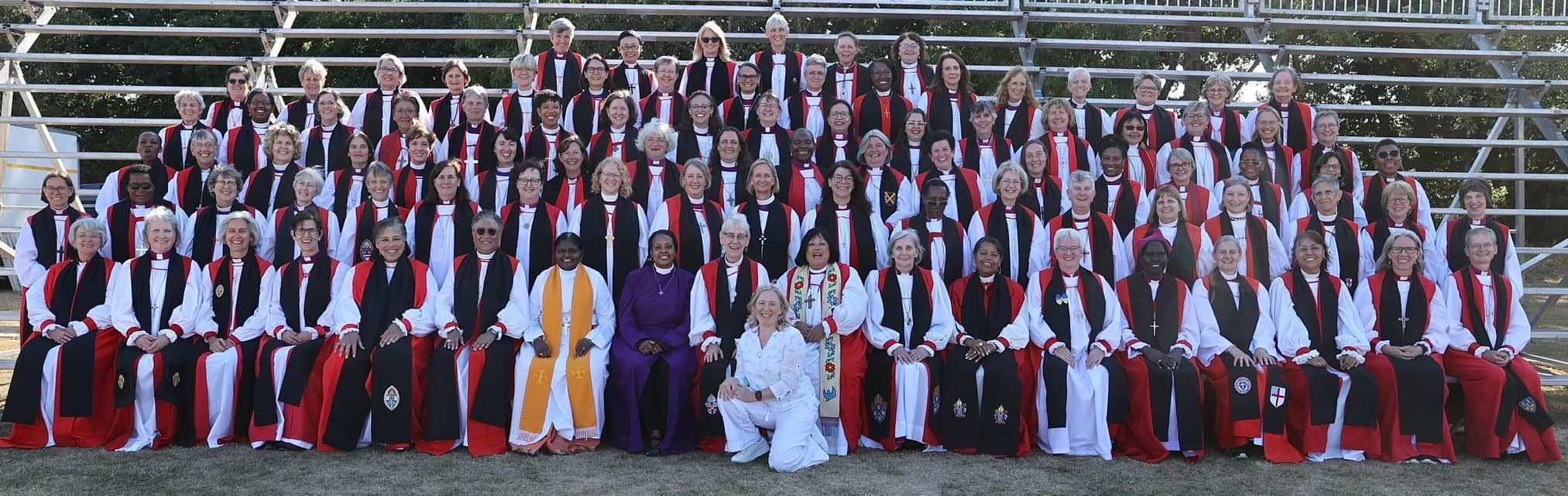
We are one big Anglican family of 80 million members, and like all families, we are not immune to disagreements The current dispute essentially revolves around the full inclusion and affirmation of the LGBTQ community within the church. In the midst of such disagreements, we often try to convince others to join our side over and against the other side. And when it comes to church families, we often try to get Christ on our side. Sadly, many of the bishops caught up in this division right now are trying to get Christ on their side.
In this morning’s Gospel, we realize how futile that approach is when we read about someone who tries to get Jesus on their side of a family squabble about inheritance. Jesus responds by saying, “Dude, who set me up to choose sides in your squabbles?” [And scholars actually do think that the word “Dude” is a better translation of the original Greek and Aramaic than “Friend”]. Jesus says, “Dude, stop trying to get me on your side. Stop trying to use me to gain power and wealth and prestige because life is not about getting God on your side. Life is about getting on God’s side.”
The Christian Life is not about getting God on our side. The Christian Life (and the life of the church) is about getting on God’s side, which is the side of love and compassion and generosity and humility and inclusion, embodied perfectly in Christ who upset religious leaders of his day because of how inclusive he was.[1]
Now Christ does not deny the nuance and complexity of the issues we face as humans and as his followers, which is why he often prefers to tell stories, stories that challenge us and invite us to reflect more deeply and humbly and introspectively. So, in response to the questions we Anglicans face about the authentic inheritance of the Anglican Christian heritage and the Way of Christ, I want to offer a short story, inspired by Christ’s parable, which was his response to a question about a family squabble and family inheritance.
This summer, we’ve been learning about the Anglican provinces for which we pray each Sunday and today we pray for the Church of the Province of West Africa. So, I want to share a brief story about a young man named who was born in in West Africa (in Liberia) and who benefited from the generosity of a church in the Anglican communion after he was cut off from his mother’s inheritance.
This man was born to a young couple out of wedlock and his parents, who had little to no education about sex, pregnancy, or marriage, were not prepared to raise him on their own.[2] His mother tried a couple times to have an abortion because her pregnancy was the source of so much shame and anger in the community. When he was eventually born, Liberia suffered a devastating Civil War, which claimed about 200,000 lives and forced him to live with his grandparents in a refugee camp in Ghana, where he grew up. As a teenager, he returned to Liberia where he met his biological mother who did not seem very interested at all in having much of a relationship with him.[3] Then came the second Civil War in Liberia when he had to seek refuge in Nigeria, but then eventually ended up back in Ghana. When he connected with his biological father back in Liberia, he helped establish a non-profit organization called Peace School, which taught young people computer skills as well as skills in non-violent communication.[4] Throughout his unstable and tumultuous life, this young man named Marvin continued to find solace and stability in his relationship with God.
During this time, his grandmother introduced him to one of her old friends whose name was Lynn Bain. Lynn was a widow who had no children and who had previously worked with Marvin’s grandmother in Liberia through her volunteer work at Peace Corps, and she wanted to support Marvin in his dream to earn a degree in Peace and Conflict Resolution at Cuttington University in Liberia, a dream that Marvin and his family could not afford to make a reality.[5] Lynn Bain not only made that dream a reality she also provided for him to continue his education in the United States, at Chapman University in Orange County, which allowed him to see Lynn more often since by that time she had essentially adopted him as her son. Lynn Bain lived in northern California in a little town called Eureka (; and she attended the 8 o’clock service here at Christ Church. Marvin visited Lynn regularly and they spoke on the phone every day for years. Soon before one of Marvin’s visits and only days before finalizing her will, Lynn tragically died. Lynn’s extended family had very little relationship with her, and they asked Marvin to plan her memorial service, which he did. And at her service, Marvin offered the words of remembrance on behalf of the family, who refused to even give Marvin a hug and who then informed him that he would no longer be supported in his education. A court sent a letter to Marvin asking him if he would like to file a claim against the family since Lynn had signed a legal document saying she would sponsor his education in the US and other people encouraged him to do so, but Marvin refused to get involved in a family squabble that might tarnish the legacy of his beloved mother. Instead of trying to get God on his side against the family, he chose to be on God’s side and he chose to trust in God’s grace and generosity. In his memoir, Marvin writes, “The Lord brought me from Africa, and I knew He would see me through the storm. If it was His will for me to continue my master’s program, I would definitely finish it. If not, I would pack my things and go back home.”[6]
When members of Christ Church Eureka who had known Lynn and Marvin heard about Marvin’s situation, they chose to be on God’s side, which is the side of compassion and generosity and inclusion.[7] They decided to establish an account called the Marvin Davis Education Fund at Redwood Capital Bank that would help ensure Marvin would complete his education at Chapman. When I said that Marvin benefited from the generosity of a church in the Anglican communion, I was referring to this church and specifically to Peg Gardner, Lynne Bean, Elizabeth Harper-Lawson, Archdeacon Pam Gossard and former priest-in-charge Mother Susan Armstrong, who all chose to be on God’s side not by storing up treasures for themselves like the rich fool in Christ’s parable, but by being channels for God’s grace and generosity, which is what it means to be rich towards God.
I just recently connected with Marvin, who now lives in Arlington Virginia with his wife and his two sons Lenny and Lyndon. Lyndon is named after Lynn Bain. He sends his love to you, and he hopes to bring his family here sometime soon so they can meet “the wonderful people at Christ Church who stood by me in the most difficult period in my life.” The wonderful people at Christ Church who chose to be on God’s side, the side of compassion, generosity, and inclusion. May all the followers of Christ in the Anglican Communion choose this side. And may all who are wise ponder this powerful story and consider well the mercies of the LORD. Amen.

[1] The Roman crucifixion of Christ was endorsed by some religious leaders who claimed to be orthodox and who felt that their “orthodoxy” was threatened by Christ’s radical way of healing and love and inclusion.
[2] Marvin Davis writes, “I came into this world because my parents weren’t familiar with ‘safe sex’ and birth control. Because of the traditional ethics in our society, parents never talked to their children about sex, pregnancy or marriage.” Marvin G. Davis, Jr. From Refugee to Prodigy: A Story of Loss, Love and New Life (2014), 5.
[3] Davis, 31 – 38.
[4] Davis, 58. Peace School was located in Buchanan City, Liberia.
[5] Cuttington University in Suacoco, Liberia was founded in 1889 by the Episcopal Church as Cuttington College when Liberia was a diocese of the Episcopal Church. Cuttington is the oldest private, co-ed, four-year, degree-granting institution in sub-Saharan Africa. The diocese of Liberia began as TEC’s Missionary District of Liberia in 1913 and joined the Province of West Africa in 1982. The Province of West Africa, created in 1951, consists of 17 dioceses in the following eight countries: Cameroon, Cape Verde, Gambia, Ghana, Guinea, Liberia, Senegal, and Sierra Leone.
[6] Davis, 86.
[7] Many people learned about Marvin’s story through published articles in the Times-Standard by journalist Clay McGlaughlin in 2012, 2013, and 2014. See https://www.times-standard.com/2014/05/31/from-refugee-to-prodigy-davis-graduates-with-honors/. McGlaughlin also wrote the foreword to Davis’s book From Refugee to Prodigy: A Story of Loss, Love and New Life (2014).

 DANIEL DeFOREST LONDON