
Readings for the Fourth Sunday after Pentecost (Proper 9 – Year C – Track 1)
This sermon was preached at Christ Episcopal Church in Eureka CA on July 3, 2022.
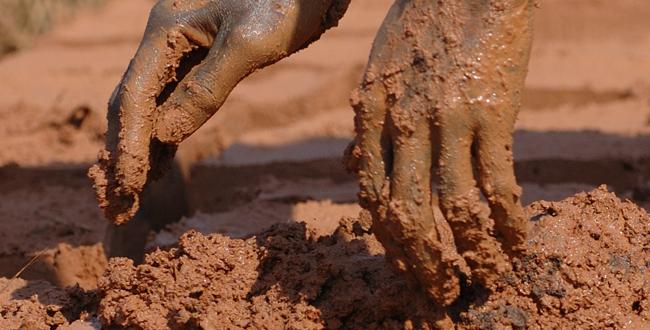
Last week I had the privilege of leading an online retreat on the Gospel of John with the Sisters of the Transfiguration in Glendale Ohio. We had the opportunity to look at one of my favorite passages in John in which Jesus heals a man born blind by spitting on the ground and making mud which he then applies to the man’s eyes. From the disciples’ perspective, it must have seemed like Jesus was making a bad situation even worse. This poor blind beggar already had enough difficulties before having his face smeared with a mess of mud. But it was that mud, when washed off in the Pool of Siloam, that gave him vision for the first time in his life. This story teaches us that when things seem to be getting worse, when things seem to be regressing, God is at work. Even when the situation is confusing and as clear as mud, God’s healing and liberating power is at work. Let us cling to our faith which serves as such a crucial and life-giving and hope-filling resource for us amid difficulty and discouragement. Sometimes it feels like we take one step forward and two steps back, but sometimes we need to take two steps back in order to recalibrate and reorient ourselves in a way that will help propel us much farther than we had previously imagined. Sometimes the apparently bad things that happen in our lives put us directly on the path to the best things that will ever happen to us.
In our reading of 2 Kings, King Naaman is understandably reluctant to immerse himself in the muddy Jordan river, which pales in comparison to the pristine rivers of his home in Syria. He is already suffering from the uncleanliness of leprosy and now he is being asked to wash in mud? seven times? No way. He’s not going to make a bad situation even worse. But fortunately, King Naaman’s humble servants are bold enough to invite him to imagine that God’s healing power may indeed be at work in what seems to be a regression. God may be at work in the confusing instructions of the Hebrew prophet Elisha to wash in mud just as Christ’s healing power was at work when he placed mud on the blind man’s eyes. Naaman was invited to believe that things might appear to get worse before they start getting better.
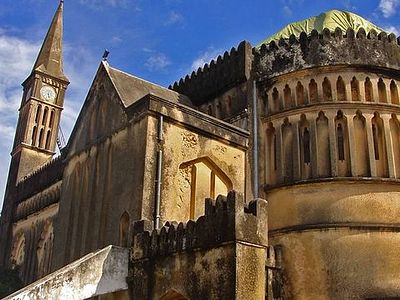
Today we pray for the Anglican Church of Tanzania, a church founded by Anglican missionaries who initially faced enormous difficulty in the form of disease and death. (The first bishop in East Africa James Hannington was assassinated only two years after he was appointed.) But the missionaries did not give up. They embodied the courage to persevere even when things looked like they were getting worse and, as a result of their faith in God’s power amid the mess, the church grew tremendously and is now composed of over 2 and a half million members.
When King Naaman does act in faith by immersing in the Jordan seven times, his crusty, leprous flesh transforms into soft, clean, and fresh skin. The author writes, “his flesh was restored like the flesh of a young boy, and he was clean.”
This story contains the three primary meanings of Christian baptism, which is 1) an act of humble faith as we participate in the death and resurrection of Christ. 2) It’s a cleansing of our sin and of whatever make us unclean like a leper and 3) it’s our birth into the family of God. After being healed, Naaman becomes like a young boy, a new believer in the God of Israel. Although it’s omitted from our reading, he proclaims, “Now I know that there is no God in all the world except the God of Israel” (2 Kings 5:15). There is no God but Yahweh. Naaman has been given the “courage to persevere [even when things look like they’re getting worse]”; and he’s given “a spirit to know and to love God, and the gift of joy and wonder in all God’s works,” which are phrases from the Holy Baptism prayer that we prayed three years ago when we baptized Kamryn Bozzoli on this same day, the Fourth Sunday after Pentecost, when we read these same readings. And in a few moments, we will pray this prayer again for Michael Rothman as he steps forward in humble faith, participating in the death and resurrection of Christ and becoming cleansed of sin and born again. Michael, who was born in Israel where the Jordan River still flows, will now become a full member of the Body of Christ, washed in the Blood of the Lamb of the God of Israel. As we welcome him and renew our own baptismal covenant with him, let us reclaim that courage to persevere even when things look like they’re getting worse, and let us claim the gift of joy and wonder in all God’s works, even in the apparent messiness of mud, even when salvation is as clear as mud.

 DANIEL DeFOREST LONDON