
A brief introduction to The Province of the Episcopal Church of South Sudan for the Anglican Cycle of Prayer
According to North African theologian Tertullian (d. 160), “The blood of the martyrs is the seed of the Church,” a statement that rings especially true for the Northern African Christians of the Sudan.
In the Anglican Cycle of Prayer, we pray for the Province of the Episcopal Church of South Sudan. Although Coptic Christians of Egypt introduced Christianity to the Sudan back in the second century,[1] it was in 1899 when the first Anglican missionaries from the Church Missionary Society (CMS) established the Episcopal Church of Sudan (ECS) in Omdurman. Among them was a Welsh missionary named Llewellyn Henry Gwynne, after whom Bishop Gwynne School of Theology is named, a theological training college located in Juba, South Sudan.[2] The first successful missionary among the Dinka was Archibald Shaw who in 1906 settled in Malek and who shared in the Dinka nomadic life for more than three decades.[3] Shaw became known as the founder of Dinka Anglicanism and his adopted son, Daniel Deng Atong, became the first Sudanese priest in 1943 and then later bishop in 1955.[4]
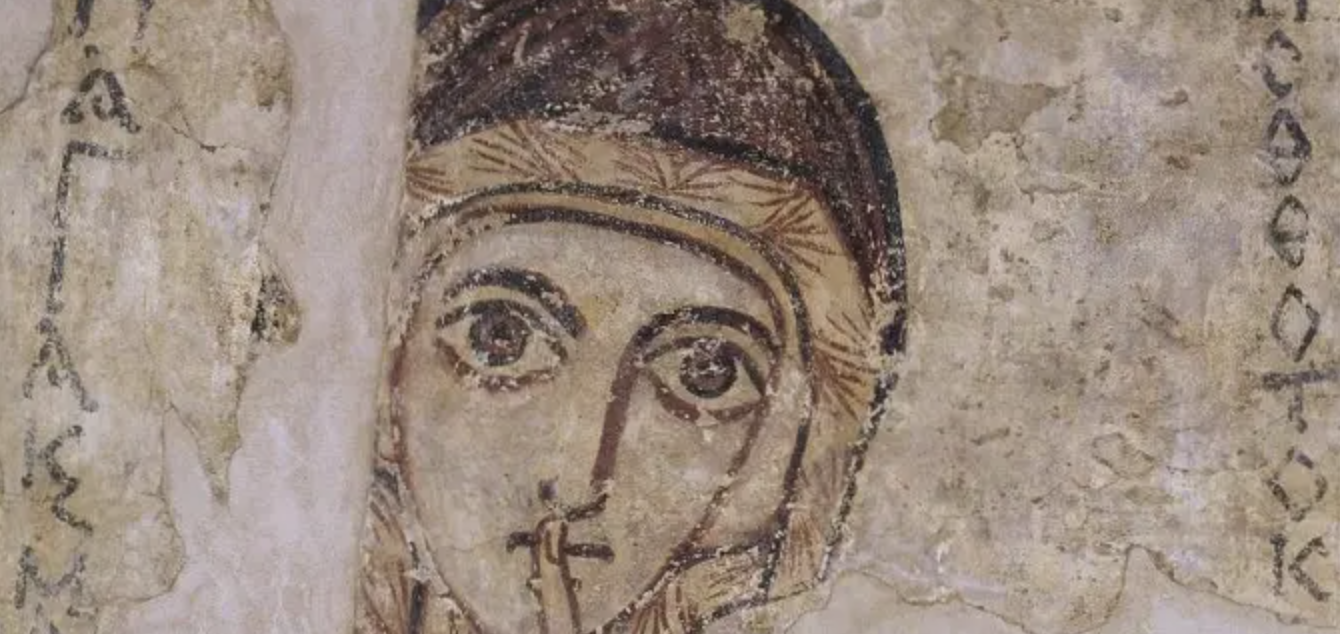

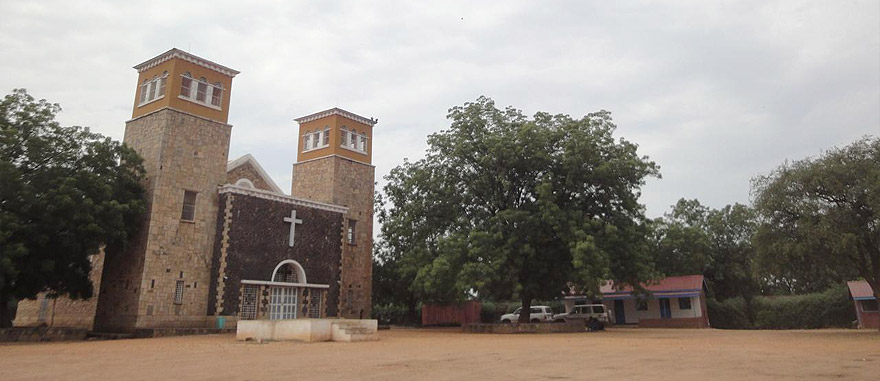
When Sudan gained independence from the British (and Egyptian) colonizers in 1956, the first Sudanese civil war between the north and south erupted and did not end until 1972. The Diocese of Sudan remained part of the Anglican Church of Jerusalem and the Middle East until 1974 when the church reverted to the jurisdiction of the Archbishop of Canterbury. In 1976, the province of the Episcopal Church of Sudan was established.
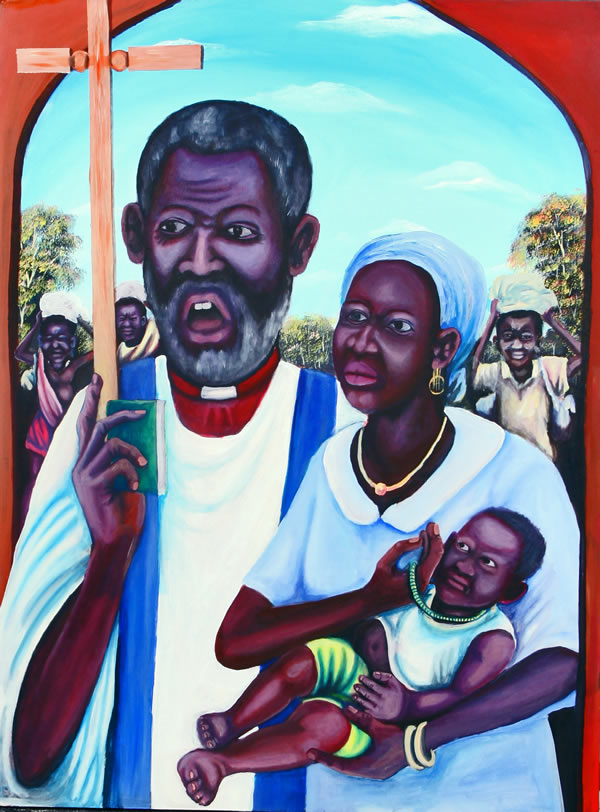
In 1983 the government of Sudan was seized by Islamic fundamentalists who declared sharia law, requiring all Sudanese to convert to Islam on pain of death. On May 16th a small group of Anglican and Roman Catholic chiefs in southern Sudan, together with their bishops, clergy, and laity, declared that they “would not abandon God as [they] knew him,” a bold declaration that set off the second Sudanese civil war. [5] In 2005, a Comprehensive Peace Agreement was signed, but not until after two and a half million Sudanese people had been killed, most of whom were Christian. By the end of the civil war, two thirds of the six million people of southern Sudan were internally displaced, and another million were in exile throughout Africa and the rest of the world, including the bishops of most of the dioceses of the Episcopal Church of Sudan. In 2011, South Sudan gained independence from the Republic of Sudan and in 2017 the province of the Episcopal Church of South Sudan was formed.

In 1983, Christians in South Sudan were estimated to be only five percent of the population, but today have grown to nearly ninety percent, thus affirming Tertullian’s teaching on the blood of the martyrs being the seed of the church. In the words of their bishops, the Sudanese Christians “live only on the mercy of God…whether we live or die we are the Lord’s…we have had nothing else but the grace of God and his guidance.”
Today, the ministry of the province is primarily carried out by native leaders and native missionaries and “the result,” according to Bishop Abraham Yel Nhial, “is an indigenous church.”[6]
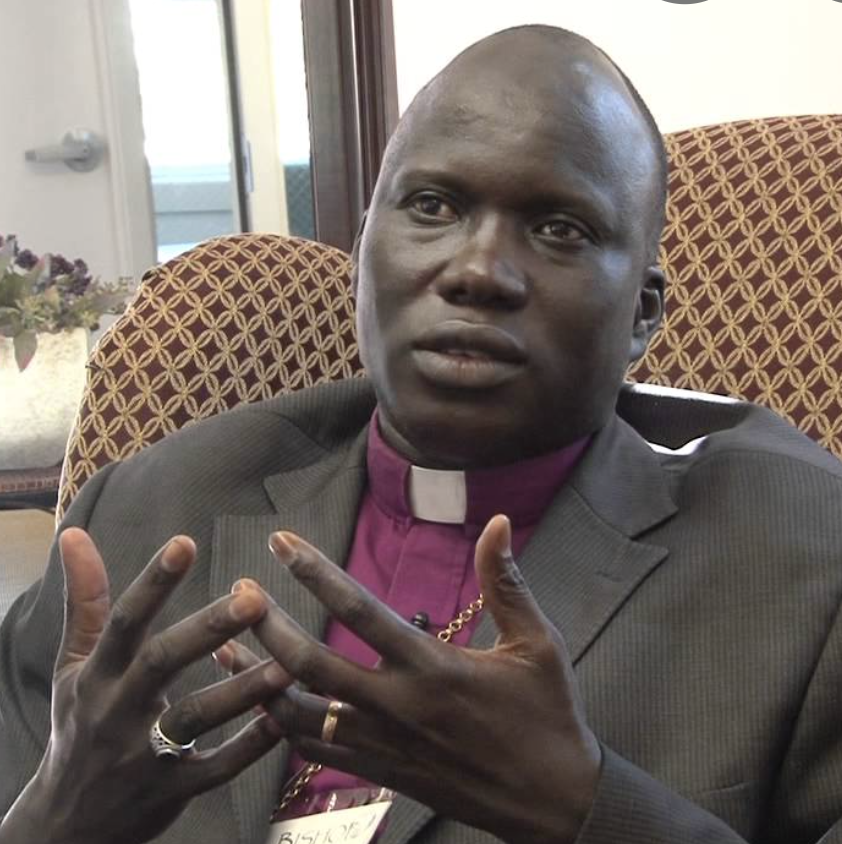
The Anglican Christians in Sudan have endured tremendous persecution, extreme poverty, disease, displacement, and devastating civil wars, and yet they continue to grow and find indomitable strength in their faith. In Christianity and Catastrophe in South Sudan: Civil War, Migration, and the Rise of Dinka Anglicanism, American missionaryJesse Zink explores the ways Christianity has provided powerful resources for a society facing crisis. Zink focuses particularly on the roles of young people and women in Dinka Anglicanism; and the Province of the Episcopal Church of South Sudan is one of the few members of the Global Anglican Future Conference (GAFCON) that ordains women. In January 2018, Archbishop Daniel Deng Bul consecrated Elizabeth Awut Ngor to serve as assistant bishop in the Diocese of Rumbek, a consecration that remains controversial among the provinces of GAFCON.
May we keep all this mind as we hold the Episcopal Church of South Sudan in our hearts.
Let us pray.
O God, steadfast in the midst of persecution, by your providence the blood of the martyrs is the seed of the Church: As the martyrs of the Sudan refused to abandon Christ even in the face of torture and death, and so by their sacrifice brought forth a plentiful harvest, may we, too, be steadfast in our faith in Jesus Christ; who with you and the Holy Spirit lives and reigns, one God, for ever and ever. Amen.
[1] When Christianity was first introduced to the Sudan, the region was called Nubia. In biblical times, Sudan was known as Kush or Cush. The name “Sudan” derives from the Arabic bilad as-sudan, which means “The Land of the Blacks.”
[2] Juba is the capital of South Sudan and the location of the mother church of the province: All Saints’ Cathedral. One can watch a confirmation service at the cathedral here: https://www.youtube.com/watch?v=KXCqXY2_ODM
In his book Backpacking through the Anglican Communion: A Search for Unity, American missionary Jesse Zink describes his experiences teaching at Bishop Gwynne College in Juba in 2010. He writes, “BGC, as everyone called it, was named after the first missionary bishop to Sudan. It was founded in the late 1940s and its history was intertwined with the history of the country. An earlier site in southwestern Sudan [Mundri] was destroyed during the country’s first of two civil wars. The second war forced the college to move to Juba, where it endured the deprivations and oppression of life in what was then a tightly controlled government garrison town” (58). Also in Backpacking, Zink recounts a conversation with a BGC student named Moses who said, “When the missionaries came to the Dinka, to my people, they told us we had to give up polygamy to be Christians. This was very hard for us because when a man had many wives it meant he was rich and important. But we did give it up and now we only have one wife. We changed our culture to be Christian…Why don’t you have to give up homosexuality in the United States to be Christian?” (55 – 56). After Zink explained that sexual orientation was not something that people could choose, he reflected on how “wrenching” the transition from polygamy to monogamy had been for the Dinka and how “culture can be almost as confining as biology” (56).
[3] Also called Jieng, the Dinka are a Nilotic people who live in the savannah country surrounding the swamps of the Nile basin in South Sudan. Archibald Shaw was eventually given his own Dinka name: Macuor.
[4] Kevin Ward, A History of Global Anglicanism, 207.
[5] The Episcopal Church recognizes “The Martyrs of Sudan” on May 16. John Garang was the revolutionary leader who led the Sudan People’s Liberation Army during the Second Sudanese Civil War. The Rev. Robin Denney explains, “A common misconception about the second civil war (that started in 1983) is that it was all about religion. It definitely was about religion, and there were people killed or imprisoned for not converting, but it was primarily about resources. 60% of the oil was in the south when Sudan was a united country, and the north relied heavily on that resource. The first civil war was from 1955 to 1972, so since 1955 there has been nearly constant civil war (with two periods of peace in the 70s and early 2000s). Sudanese-South Sudanese history and politics is incredibly complex. I read a lot about it and lived there, and the more I learned the more I realized how little I really knew, and how difficult it is to summarize. In terms of martyrs, A notable person is Canon Ezra Baya Lawiri, a bible translator and priest who was martyred in the early 90s. There are however so many martyrs, as you noted. Unfortunately the number has continued to increase. In 2014 more than twenty female church workers (5 were priests) were killed in St. Andrews Cathedral in Bor where they were trying to seek refuge.”
[6] Abraham Yel Nhial, “The Episcopal Church of Sudan” in Wiley-Blackwell Companion to the Anglican Communion (Malden MA: Wiley-Blackwell, 2013), 201.

Ezra Baya Lawiri was born in the Sudan in about 1917, and became a teacher and later a headmaster of a school. He was drawn to the priesthood and after attending the London School of Divinity he returned to the theology college where he had been a student and eventually became its first Sudanese principal. However war came and he and his students fled from Sudan to Uganda. He later returned, but war also returned and tragically, Canon Ezra was killed during a battle, along with one of his four daughters. His gift to his people was his translation of the Bible into Moru, the language of Southern Sudan

The Rev. Robin Denney, the rector of St. Mary’s Episcopal Church in Napa CA, lived in South Sudan for two and a half years from 2008 – 2011 serving as a missionary and agricultural consultant. She was living there when the South Sudanese voted to become a new nation apart from the Republic of Sudan. She wrote the following about the Episcopal Church of South Sudan:
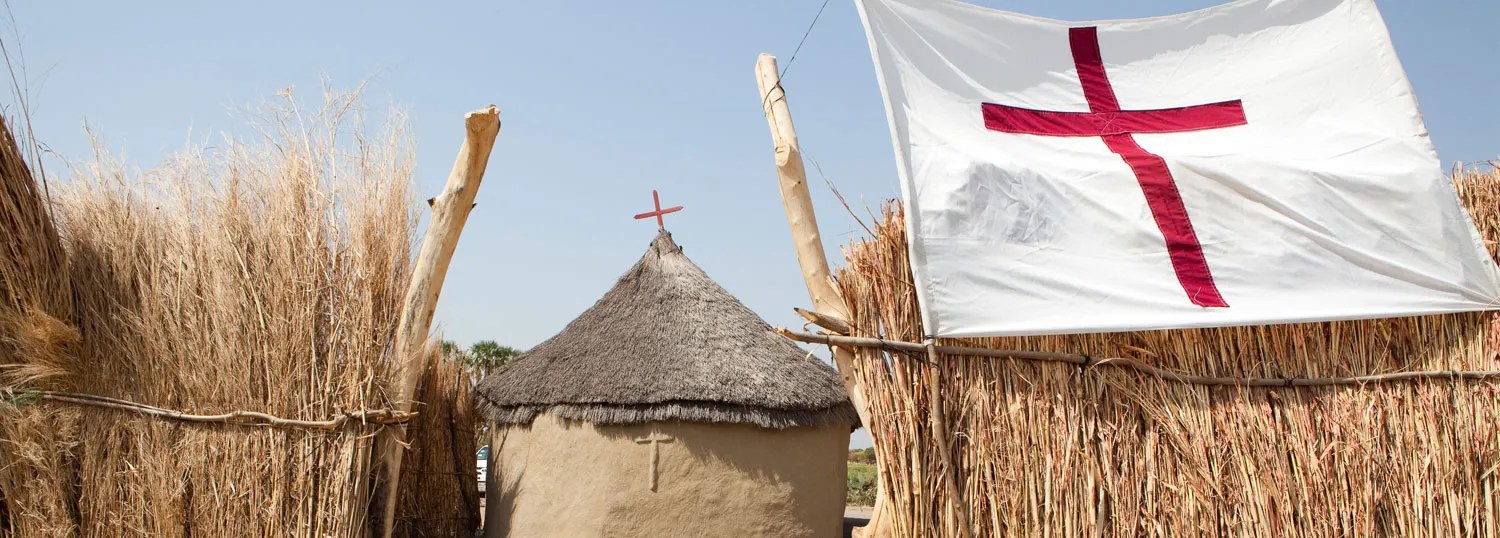
“I think the most important thing to stress is that under incredibly difficult circumstances, the Episcopal Church of South Sudan does incredible ministry. Throughout times of conflict the structures of government and civil society break down, but the church never leaves, it goes with the people whether they remain in their community or are driven into IDP [Internally Displaced People] camps. I visited cathedrals of stone, cathedrals of mud and thatch, and cathedrals made of tarps in IDP and Refugee camps. And in each cathedral, people were singing praise to God, sharing resources, and helping the most vulnerable among them. Anglicans are the second largest denomination behind Catholics, accounting for just less than half the Christians in the country. The ECSS for more than fifty years has been running not only churches, but schools and clinics in communities throughout the country. War or no war, resources or no, they continue. Sometimes the schools are under the shade of a tree with a volunteer teacher, sometimes in beautiful buildings. Sometimes the clinics are hospitals and sometimes hastily formed with volunteers and resources from within the community. The church stands up to violence, calls out the perpetrators publicly even when doing so is dangerous. They were key players in bringing about the peace deal which ended the second civil war and secured a path to independence (CPA) in 2005, and have been key players in peace deals in the last ten years of conflict. It is a vibrant province of the Anglican Communion!”
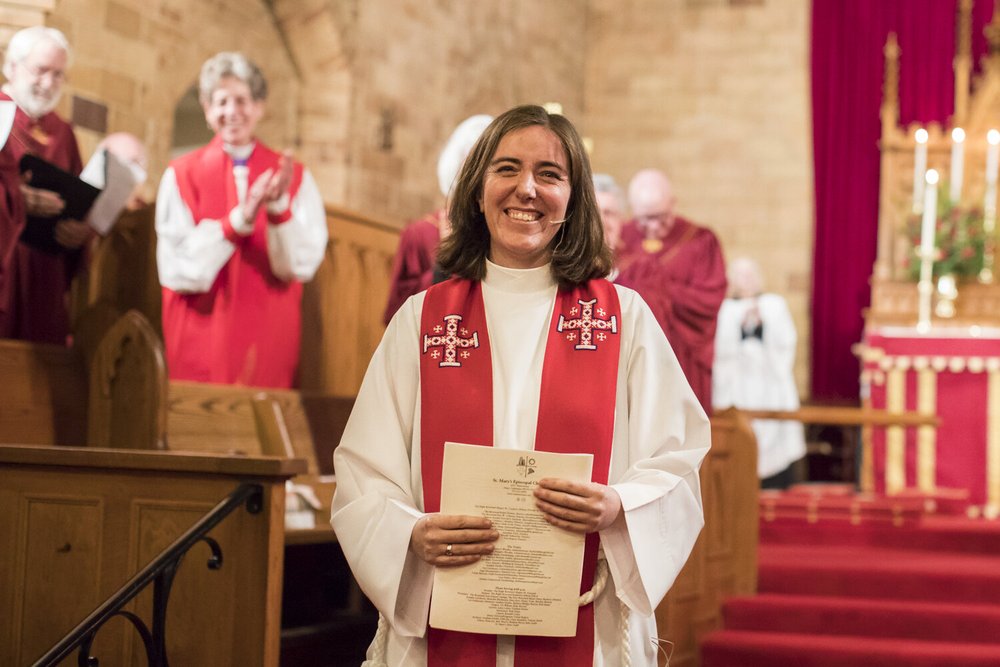
(former Presiding Bishop Katharine Jefferts Schori applauding in the background)

 DANIEL DeFOREST LONDON