
A brief introduction to the Anglican Church of Southern Africa for the Anglican Cycle of Prayer
In the Anglican Cycle of Prayer, we pray for the Anglican Church of Southern Africa, which has its seat in Cape Town South Africa, but its territory extends beyond South Africa to include Eswatini,[1] Lesotho,[2] Namibia, and Saint Helena.[3] There are over 3 million Anglicans in this province, which is about twice the number of Episcopalians.
Originally, the Anglican Church was “established in South Africa to minister to soldiers whose task was to protect a society dependent on slavery for its existence.”[4] Most of the slaves were imported by Dutch colonists from other parts of Africa and India. In 1806, the British permanently took over the colony, a year before Evangelical Anglican William Wilberforce convinced Britain to discontinue their involvement in the slave trade. In the 1830s, Britain abolished slavery altogether in South Africa, although racial injustice continued to plague the region.
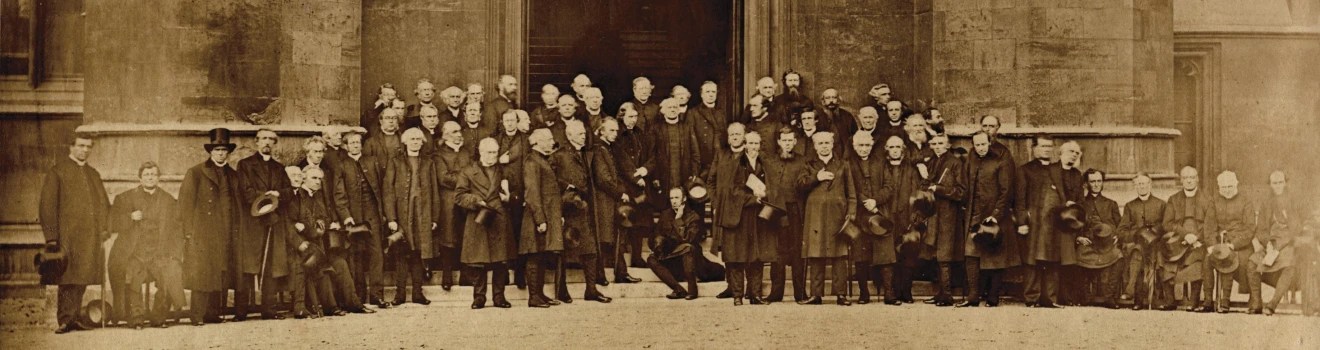
When the first Anglican bishop Robert Gray arrived,[5] he only had 10 churches and 16 priests, but during his tenure, he expanded his one diocese into a province of five, including the diocese of Natal, which was overseen by the notorious Bishop John Colenso. As bishop to the Zulu people, Colenso argued that polygamy should not be a barrier to baptism and that baptized men should not be forced to separate from their wives, which would likely result in destitution for several women and children.[6] Also, while translating the Scriptures into the Zulu language and understanding Christianity anew in light of Zulu culture, Colenso argued that many stories in the Hebrew Scriptures ought to be understood non-literally, as myths; and he scoffed at the idea of a loving God condemning anyone to eternal punishment.[7] Although many of Colenso’s ideas might be considered popular today, he was declared a heretic in 1863 by the Church in South Africa.[8] Several overseas bishops asked the Archbishop of Canterbury to address this controversy and in 1867, the Most Rev. Charles Longley called the first Lambeth Conference, a meeting of bishops at the Lambeth Palace in London. Since 1867, Archbishops of Canterbury have invited bishops to attend this Lambeth Conference every ten years or so and these meetings now function as a key instrument for communion within the Anglican world. For this reason, Colenso has been called the “unwitting architect of the Anglican Communion.”[9]
Despite the controversies concerning Colenso, the church continued to grow, attracting members from both white and black communities, including one black member named Bernard Mizeki who became a catechist, missionary and then martyr during a rebellion in 1896. After being stabbed, his body miraculously disappeared along with the flash of a great light and a rushing sound like the fluttering of giant wings.
In 1948, when the Dutch Afrikaner National Party gained a majority, apartheid laws were institutionalized and enforced by a brutal police state. Apartheid is Afrikaans for “separateness” or “apart-hood” and it not only meant keeping whites and non-whites separate, it also meant denying basic human rights to non-whites. Although the Anglican Church was officially against apartheid, there was some anxiety among the bishops about getting too politically involved. One notable exception was Bishop Trevor Huddleston who was a vocal opponent to apartheid, explaining that “any doctrine based on racial or color prejudice and enforced by the State is…an affront to human dignity and ipso facto an insult to God himself.”[10] When Trevor Huddleston respectfully tipped his hat to a black female domestic servant, the servant’s nine-year-old son witnessed this countercultural kindness with incredulity and deep curiosity. Huddleston eventually mentored this little boy who later became the leading nonviolent opponent of apartheid, a Nobel Peace Prize recipient in 1984, the first black Archbishop of Cape Town in 1986, and perhaps the most well-known and beloved Anglican throughout the world: Archbishop Desmond Tutu. When apartheid ended in the early 1990s, Tutu chaired the Truth and Reconciliation Commission, which “not only [worked] to establish the truth of what happened during [the] years of vicious racial violence but to lay the basis for the start of an ongoing process of national reconciliation.”[11]

The Church of Southern Africa was forced to struggle against a great injustice and emerged from the struggle against apartheid with integrity, which is why Harold Lewis sees South Africa as “the church for the future” and “the crucible for Anglicanism in a new century.” Although the legacy of apartheid left most of the land and wealth to a white minority and many white members feel alienated by the ‘political’ character of the church, the province continues to forge ahead by supporting the ordination of women and the full recognition of gays and lesbians. May we keep all this in our mind as we hold the Church of Southern Africa in our hearts.
Fun facts:
- Bishop Robert Gray’s wife was Sophia Gray, a diocesan administrator and architect, who designed many of the Anglican church buildings in South Africa.
- In 2012, the Anglican Church of Southern Africa consecrated Africa’s first woman bishop: Ellinah Wamukoya, bishop of Swaziland (now Eswatini)
Personal touches:
- In 2009, I was a ghost writer for Desmond Tutu as a Director of Youth Ministries in San Gabriel CA. I wrote Letters of Recommendation from him to students in the youth program who exhibited exceptional faithfulness and courage. I received Tutu’s approval through the Rev. Dr. Michael Battle, who previously served as his chaplain.
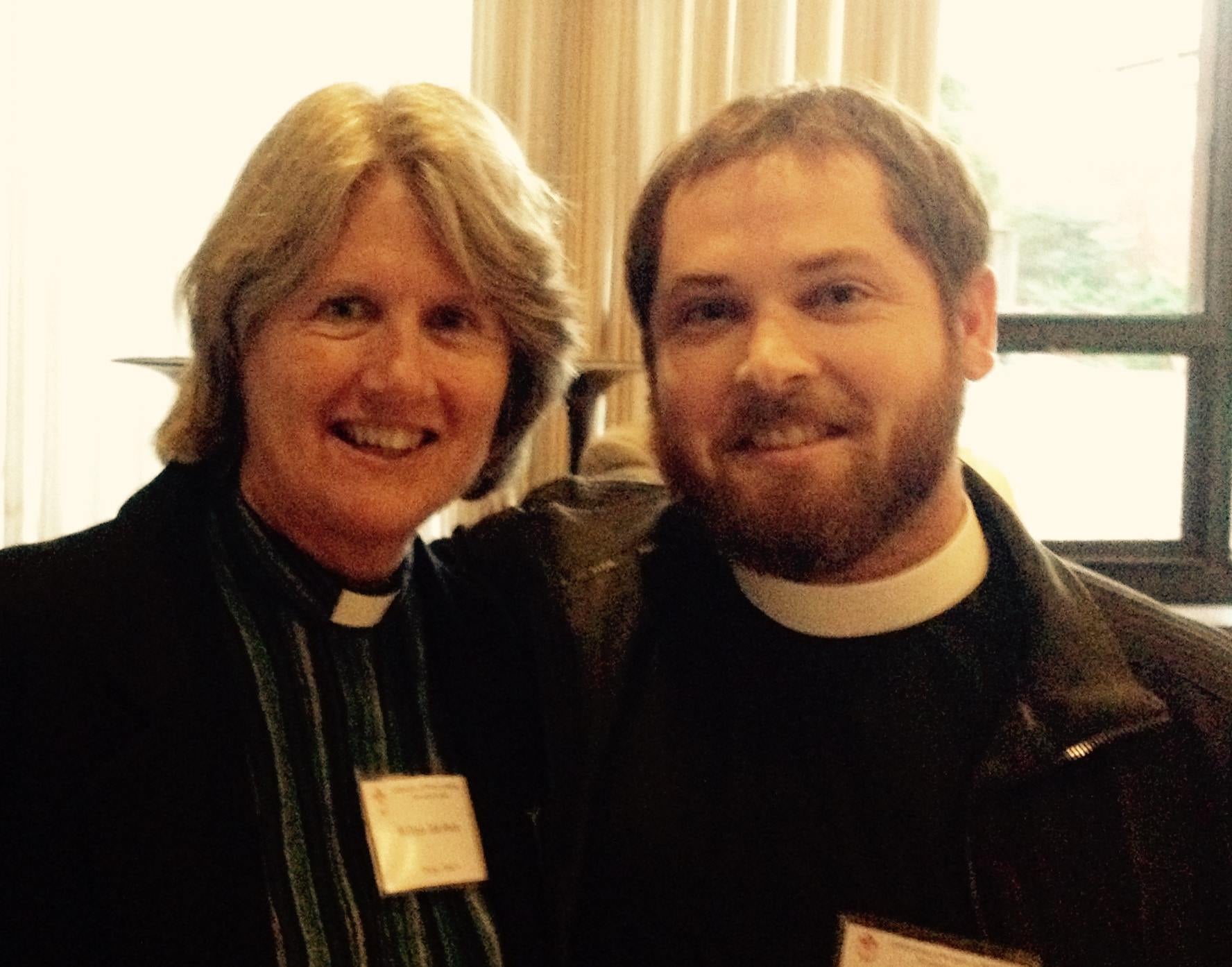
- One of the first Episcopal priests I met was the Rev. Wilma Jakobsen, who was ordained as a deacon by Tutu in 1988 and then as one of the first female priests in Africa in 1992
- In 2005, I received communion from Desmond Tutu at All Saints Pasadena and he later signed my copy of his book God Has a Dream: A Vision of Hope for Our Time.
[1] Formerly Swaziland.
[2] Pronounced “Le-soo-too.”
[3] Saint Helena is an island in the South Atlantic Ocean, off the coast of Angola.
[4] Kevin Ward, A History of Global Anglicanism (Cambridge: Cambridge University Press, 2006), 136.
[5] Gray was a close friend to William Wilberforce’s son Bishop Samuel Wilberforce.
[6] In his Remarks on the Proper Treatment of Cases of Polygamy, he wrote, “Have the Missionaries ever duly considered […]the hideous consequences that must follow, where so many married women, released from the law of their husbands and the strict discipline of their native customs,–with their best feelings outraged, and their passions inflamed, themselves and their children branded, in their people’s eyes, with a name of dishonour,–are turned loose upon their tribes?” http://anglicanhistory.org/africa/colenso/polygamy1855.html. Colenso was also adamant that Christians, once baptized, should not become polygamists. Ward, Global Anglicanism, 139.
[7] Colenso highlighted the absurdity of literal interpretations of Scripture.
[8] As for the fate of Colenso, Ward writes, “Colenso appealed to the British courts, on the grounds that he had been appointed by the queen and that Gray had no jurisdiction over him. Colenso won the court battle and remained Bishop of Natal for the rest of his life. The Church in South Africa proceeded to appoint an alternative bishop, to be known as the Bishop of Maritzburg. Both groups claimed the same cathedral. Farcical scenes followed as the bishop claimed the right to enter his cathedral ‘to discharge the duties committed to me by the Queen,’ and the dean pronounced anathemas from the high altar.” Ward, Global Anglicanism, 140. Also, see Peter Hinchliff, John William Colenso (London: Nelson, 1964), 172, 181.
[9] Harold Lewis, A Church for the Future: South Africa as the Crucible for Anglicanism in a New Century (New York: Church Publishing, 2007), 12, as cited in Ian S. Markham, “The Anglican Church of Southern Africa” in The Wiley-Blackwell Companion to the Anglican Communion, 195.
[10] Trevor Huddleston, Naught for Your Comfort (New York: Doubleday, 1958), 17-18, as cited in Markham, Anglican Communion, 196 – 197.
[11] Alister Sparks and Mpho Tutu, Tutu Authorized (New York: HarperCollins, 2011), 214.

 DANIEL DeFOREST LONDON