

Readings for the Feast Day of Pachomius of Tabenissi
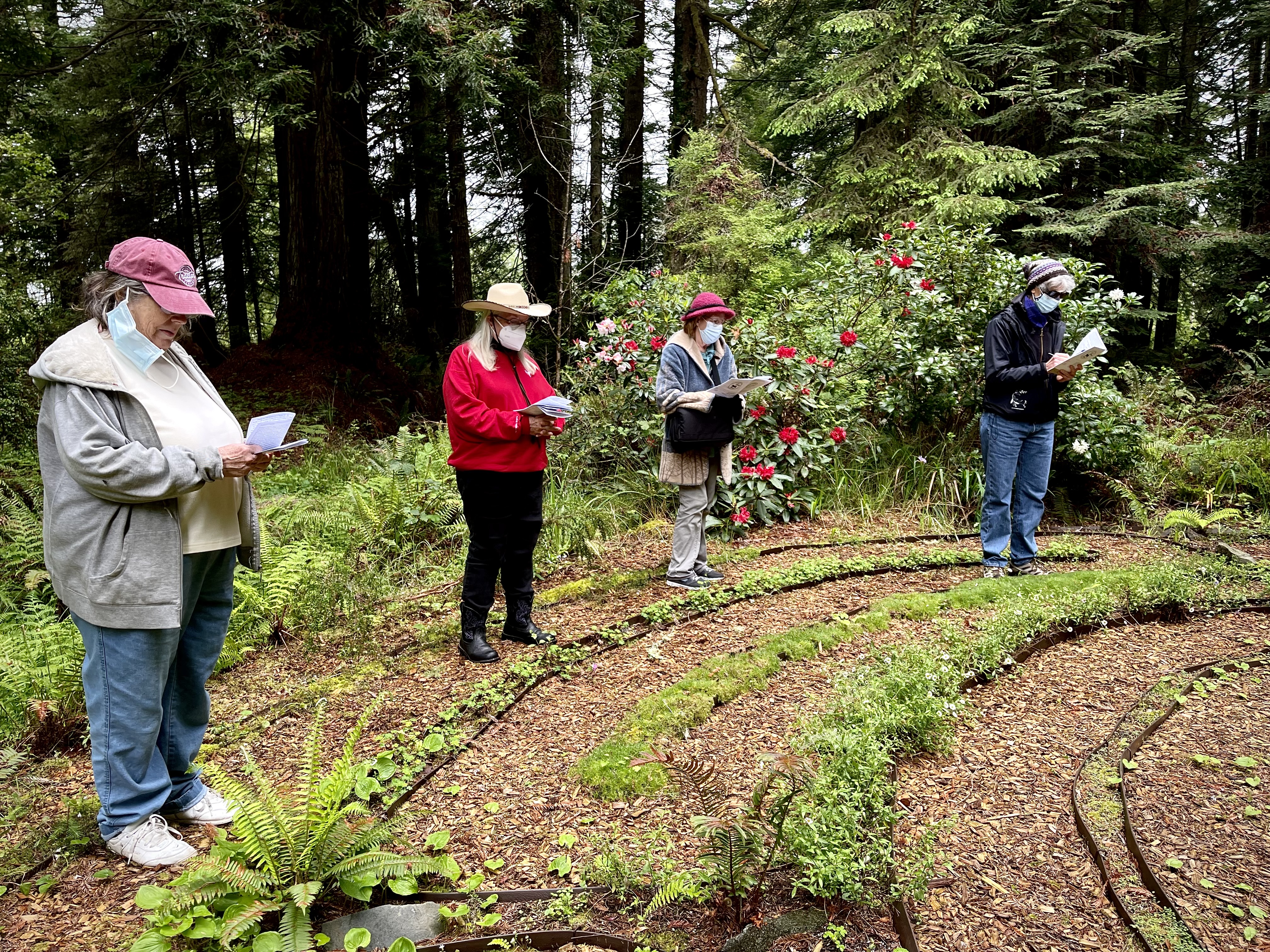
This reflection was shared at Sacred Saunter Outdoor Eucharist on Saturday May 14, 2022 at Freshwater in Eureka.
Pachomius is commonly regarded as the founder of coenobitic monasticism, the form of Christian monasticism in which members live together in community rather than individually as hermits, and was the author of the first formal monastic rule of life. Born to a pagan family in 292, Pachomius first encountered Christianity when he was imprisoned as part of a forced military conscription. The Christians of the city visited everyone in the prison, bringing them food, supplies, and comfort, and Pachomius was astonished. According to his life, he asked the other prisoners, “Why are these people so good to us when they do not even know us?” They answered, “They are Christians, and therefore they treat us with love for the sake of the God of heaven.” When he was released, he was baptized, and began to lead an ascetic life of manual labor, prayer, and care for the poor. In time, a community of people was drawn to Pachomius, they began to build to organize themselves into a formal monastic community. This way of life was particularly attractive to those who were drawn to monasticism but could not withstand the hardship of a solitary life – particularly those who might be elderly or ill or young. Before long, a federation of monastic communities was created, with houses for both men and women, that was organized into a common structure. Pachomius and his disciples wrote the first monastic rules to organize the life of these communities. The new monastic movement was controversial in its day, and was initially opposed by many bishops and priests. When the monks were building their first monastery, the local bishop came with a mob to try to tear it down. Others came to respect the monks and their way of life, but wanted to unite them more closely to official church institutions. The bishops Serapion and Athanasius visited the community with the hope of ordaining Pachomius to the priesthood, but he hid from them until they finally went away. Indeed, the life of Pachomius states that originally “he did not want any clergy in his monasteries at all for fear of jealousy and vainglory.” In time, however, the new monastic movement and the church hierarchy developed a mutual respect for the differing gifts and responsibilities that each of them bore within the church. By the time that Pachomius died, his monastic federation included several thousand monks, and within a generation the monastic movement would spread from Egypt to Palestine, Turkey, and Western Europe.
Pachomius’s Rule of Life influenced St. Benedict’s Rule of Life, which played a significant role in the creation of our Book of Common Prayer. The Daily Office (Morning Prayer and Evening Prayer) were Thomas Cranmer’s attempt to make the monastic hours accessible to Christians living outside of religious communities and monasteries.
The Desert Fathers and Mothers would try to pray without ceasing, often by praying ancient forms of what is known today as the Jesus Prayer: “Lord Jesus Christ, have mercy on me,” while silently engaged in manual labor with repetitive and rhythmic motions, like rope and basket weaving. Instead of praying silently in solitude, Pachomius encouraged communal silent prayer, which I invite us to practice now as we listen to the prayers of the birds and trees and blossoming flowers all around us.




 DANIEL DeFOREST LONDON