
Isaiah 52:13-53:12
Psalm 22
Hebrews 4:14-16; 5:7-9
John 19:1-37
This sermon was preached on Good Friday at Christ Episcopal Church in Eureka CA on April 15, 2022.
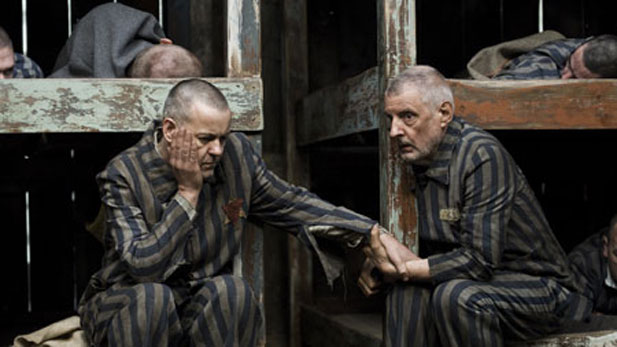
During the first few months of this year (2022), I taught a class online at Church Divinity School of the Pacific in Berkeley. The class was composed of clergy and lay leaders throughout the Episcopal Church, including one of our lay leaders Elizabeth Harper-Lawson and our friend the Rev. Suzanne Guthrie, who guest preached here a few years ago, and the Rev. Jane Snibbe who serves at Good Shepherd in Cloverdale (and several others around the country). The class was called “Arguing with God” and for the first half of the course, we read through examples in Jewish literature of arguing and even protesting against God. A recurring theme in this literature is the trial motif in which humanity places God on trial for the suffering in the world, especially for the suffering afflicted upon God’s Chosen People, the children of Israel. This idea of finite humans putting an infinite God on trial may sound preposterous and pretentious and even blasphemous to us, but I find it very compelling, especially when I see its roots in the biblical books of Job and the Psalms and in some cases, the prophets. Jewish poets and prophets judge God according to the ethical standards set forth in God’s Torah. We see examples of this in the Talmud, in Jewish Midrash, in medieval expressions of Jewish Mysticism, and in the stories of the 18th century Hasidic Master Rabbi Levi Yizhak of Berditchev. (Berditchev happens to be about a 3 ½ hour drive southwest of Kyiv in Ukraine). Rabbi Levi Yitzhak was known as the “defense attorney” for the people of Israel because whenever God accused the people of sin and prepared to punish them for it, the Berdichever would defend the people so vigorously that he ended up presenting the people as innocent and God as guilty, thus turning the tables on God. And according to the stories, God generally did not respond to the Rabbi’s chutzpah with anger and punishment. God would often respond with silence and patience and sometimes even appreciation for the Rabbi’s honesty and wit. The Talmud says, “Boldness [chutzpah] against Heaven is effective.”[1] This Arguing with God tradition and the trial motif reach a fever pitch in the writings of Holocaust survivor Elie Wiesel, who said, “I have not lost faith in God. I have moments of anger and protest. Sometimes I’ve been closer to [God] for that reason.” Wiesel felt closer to God because he was able to honestly express his anger and protest. He tells one story that he himself witnessed at Auschwitz, where a group of Jews put God on trial. Some defended God with some of the classical theodicies [Theodicy means “defense of God” or “justification of God” amidst suffering], but ultimately these theodicies fell flat and felt empty in the face of such horror. In the end, the Jews convicted God as guilty for the suffering afflicted upon them and therefore worthy of death. After a rabbi pronounced the verdict, he looked up and said, “The trial is over. Now, it is time for evening prayer.”
When I hear this story, I imagine that perhaps these Jews understood that, even while they were putting God on trial and blaming him for the horrific suffering in their lives, God was still holding them lovingly like a parent holding an angry and confused child. And after their trial, all they could do was melt into God’s loving arms.
I share all this on Good Friday because the story that is at the crux of our Christian faith (and I use that word “crux” intentionally) is the story that we just heard read from the Gospel of John. The story of Jesus, who is clearly portrayed as divine in John’s Gospel, being put on trial by Jewish people who use their understanding of the Torah to condemn him to death. Now this story is so spiritually charged; and it has tragically been used by Christians throughout history to justify anti-Semitic violence and to call Jews (including my Jewish ancestors who lived in Ukraine) “Christ killers.” The words of John’s Gospel are still being used today to justify violence against Jews as well as the atrocious violence in Ukraine. Because this story of Jesus’s trial is so charged, many Episcopalians think we should stop reading it entirely. But I find this story endlessly compelling, especially when I read it in the light of other Jewish literature in which God is put on trial. In Christ, I see God responding to my own anger and confusion and violence and compulsion to blame. In Christ, I see God responding with patience, with only a few choice words, with love and forgiveness. In Christ, I see God to saying to me and to all of us, “Give me your anger and confusion and your need to blame. Stop directing that destructive energy to others or even to yourself, which will only perpetuate the problem. Give it to me because I will respond with love and forgiveness that will transform you and disarm you.”
And isn’t that exactly what Christ does to Peter who is in complicit in the trial through his denials? Christ does not return riding a warhorse of vengeance. He returns with peace and forgiveness and a simple question for Peter, a question that he asks each of us, a question that he asks you tonight, “Do you love me?” Do you love me? If the answer is yes, then Jesus says, “Feed my sheep. Tend my flock. Take care of those who are most vulnerable to becoming victims of anger and violence and blame.”
One practical way that the Episcopal Church has been embodying our “yes” to Jesus’s question for the last hundred years is by giving generously to the Good Friday Offering, which helps fund ministries of the Episcopal Church in Jerusalem and the Middle East: schools, hospitals, and clinics that serve all the vulnerable people, especially children in such a contentious part of the world. This Good Friday Offering began one hundred years ago, in 1922; and what was said about it then still applies today: “Good Friday evokes the tenderest emotions which require outlet in action, else they become a mere carnival of sentimentality. This outlet, the Good Friday Offering provides.” So just as the Cross can serve an outlet for us to unleash whatever destructive energies are within us so too is the Good Friday Offering an outlet for us to respond to Christ’s disarming and transforming forgiveness, to respond with a full-bodied “yes” to that question he asks you tonight, “Do you love me?”
[1] Sanhedrin 105a

 DANIEL DeFOREST LONDON