
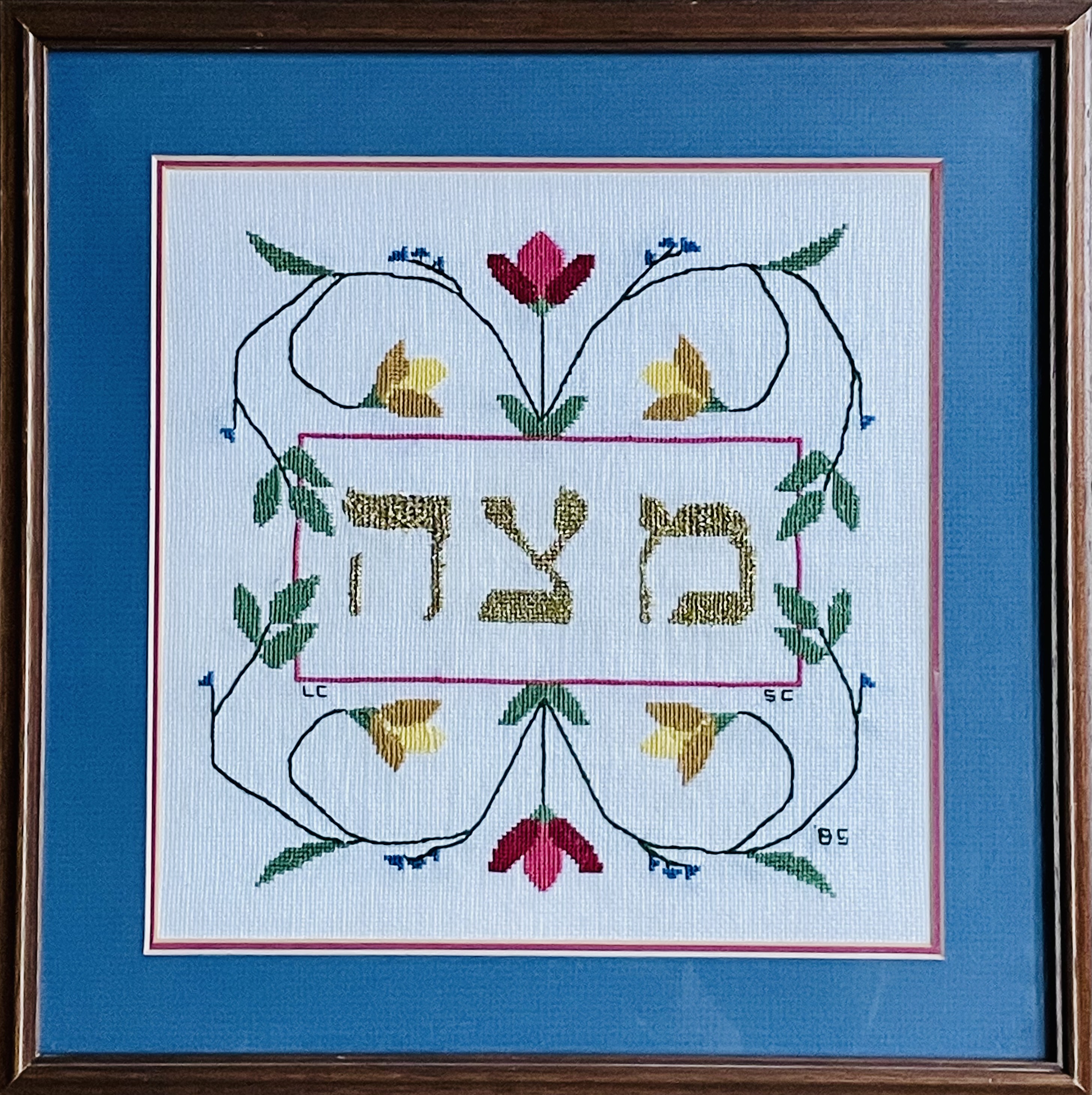
This article was written for the April 2022 Chronicle newsletter for Christ Church Eureka, soon after attending the Solemn Requiem for the Rev. Dr. Louis Weil on Friday April 1, 2022
When I was in Berkeley last weekend to attend my wife Ashley Bacchi’s Borsch-Rast Lecture at the GTU, I had the opportunity to also attend a Solemn Requiem for one of my seminary professors, the Rev. Dr. Louis Weil (May 10, 1935 – March 9, 2022), who was a world-renowned liturgical theologian and one of the primary architects of our Prayer Book.[1] Louis grew up in a non-observant Jewish family in Houston TX and was apparently related to the brilliant French philosopher and Jewish mystic Simone Weil (1909 – 1943). In his youth, he was a victim of anti-Semitism, but as an adult he felt that his Jewish heritage gave him a more profound appreciation for Christianity. I was honored to have been a student in the last “Liturgical Leadership” class he taught at Church Divinity School of the Pacific and to enjoy a one-on-one meal with him at the Bistro Liaison French Restaurant in Berkeley, where he introduced me to the delicious Apple Tarte Tatin.
At the end of the Requiem, we were invited to look through some of Louis’s belongings (pictures, books, etc.), which we may want to take home as symbols of remembrance. I was instantly drawn to a framed cross-stitch image of the Hebrew word “Matzah,” with the three Hebrew letters “Mem,” “Sadhe,” and “He” stitched in golden thread. Matzah is the Hebrew word for the unleavened bread that the Jews in Egypt were commanded to eat along with the paschal lamb, according to Exodus 12:8. Matzah is still used at Jewish Passover Seders today and is often sold at grocery stores around this time of year, since Passover falls on April 15th (Good Friday) this year. I wish I had the chance to ask Louis why he had this word (of all Hebrew words) framed in his apartment. However, my initial response to seeing it was a feeling of affirmation. Specifically, I felt affirmed in my own unique style of praying the Eucharistic Prayer, which includes the Hebrew Blessing over Bread: Barukh atah Adonai Elohenu Melech Ha’olam, hamotzi lechem min ha ‘aretz. (“Blessed are You, Lord our God, Sovereign of the Universe, who brings forth bread from the earth.”) The Hebrew word hamotzi is connected to the word matzah. Hamotzi means to “bring out” while matzah is bread from which the leaven has been “brought out.”
Louis Weil had strong opinions when it came to adding any superfluous words, motions, or gestures to the Eucharistic prayer; and I imagine many of his students would critique me for adding the Hebrew blessing to the prayer. However, my inclusion of the Hebrew blessing emerged initially from conversations with Louis about his identity as “a Jew and a Christian,” conversations that helped me integrate my own Jewish background from my father’s side.[2] Along with consistently encouraging me to complete my PhD (even though it slowed down my ordination process significantly), Louis Weil taught me to “bring out” (ha-motzi) the Jewish roots that inform Christianity as well as the Judaism that whispered in my own blood. This emphasis is especially important as we enter Holy Week and hear Scripture readings that Christians have historically used to justify anti-Jewish violence.
This year, I sense the spirit of Louis Weil urging me to appreciate anew our Christian spirituality in the light of our Jewish heritage. For instance, the consecrated bread of Holy Eucharist derives its meaning from the word that Louis Weil had displayed in cross stitch on his wall. According to the Zohar, matzah is the food of healing; and “whenever one eats matzah, one eats godliness.”[3] Personally, my love for Jesus Christ and my appreciation for Anglican worship in general deepen whenever Jewish meanings like this are brought forth (ha-motzi) and lifted up. Just as the matzah is lifted up at Passover Seder, so too will we lift up the Bread and Wine on Palm Sunday, Maundy Thursday, and Easter Sunday. May we receive this “food of healing” throughout this Holy Week with a renewed sense of gratitude for our Jewish siblings, for the Rev. Dr. Louis Weil, and above all, for God’s immeasurable love in the redemption of the world by our Lord Jesus Christ.
[1] You can view the Requiem Mass (held at St. Mark’s Episcopal Church in Berkeley CA) here: https://www.facebook.com/stmarksberkeley/videos/745093093532714/
[2] I only recently learned that Louis Weil and my father shared the same birthday: May 10. Also, Louis was born in Houston TX and died in March while my father passed away in Houston TX, also in March.
[3] Zohar II, 183b; Rebbe Maharash, Hemshech VeKochah 5637, end of Ch. 60.


 DANIEL DeFOREST LONDON