

Palm Sunday is the first day of Holy Week, named after the palms that were used like confetti when Jesus entered Jerusalem on a donkey. On this day, we carry palms and shout, “Hosanna!” which means “Save!” or “Saviour” to commemorate Jesus’s Triumphal Entry. Palm Sunday is also called Passion Sunday because we read the account of Christ’s suffering from either Matthew, Mark or Luke. This year (Year C), we read from Luke.
Holy Monday is the second day of Holy Week. Eastern Orthodox Christians call this day “Great Monday” and commemorate the cursing of the fig tree (Matt 21:18-22) while Roman Catholics and Anglicans read about the Anointing of Jesus by Mary as told by John (12:1-11). This is a good day to eat a Fig Newton and/or to practice Centering Prayer. Join Fr. David Shewmaker for Centering Prayer on zoom at 6:30 PM on Monday nights here: https://us02web.zoom.us/j/82639812032
Holy Tuesday is the third day of Holy Week. Eastern Orthodox Christians call this day “Great Tuesday” and read the parable of the ten virgins (Matt 25:1-13) while most Roman Catholics and Anglicans read about Jesus foretelling his death when he said, “Unless a grain of wheat falls into the earth and dies, it remains just a single grain; but if it dies, it bears much fruit” (John 12:24).

Spy Wednesday is the fourth day of Holy Week. Holy Wednesday is sometimes called “Spy Wednesday” as a reference to the betrayal of Jesus by Judas Iscariot. Many Christians observe Spy Wednesday by attending a service called Tenebrae, which is Latin for darkness. During the Tenebrae service, all the candles on the altar and in the church are gradually extinguished until there is complete darkness. At the moment of darkness, a loud clashing sound called the “strepitus” is made, recalling the earthquake after Jesus’ death. We will be offering a Tenebrae service in the Chapel of Our Merciful Saviour at 7 PM.
The Holy Triduum or Paschal Triduum begins on the evening of Maundy Thursday. This day commemorates the night that Jesus celebrated the Jewish holiday of Passover with his disciples. Jewish people continue to celebrate Passover today, commemorating the liberation of the Hebrew people from slavery in Egypt. They eat unleavened bread (matzah), charoset, bitter herbs, eggs, lamb, and more. Each item of food has spiritual and historical signficance. For instance, the charoset represents the mortar that the Hebrew slaves used while in Egypt.

On the night, Jesus celebrated Passover with his disciples, he gave a new mandatum (which is Latin for command): “That you love one another as I have loved you” (John 13:34). One way we follow this command is by washing one another’s feet just as Christ washed his disciples’ feet. Also, in medieval England, generous people would follow the mandatum by carrying around purses full of money called “maundy purses” and give them to the poor. Finally, Jesus instituted the sacrament of the Eucharist on Maundy Thursday, a sacrament that nourishes us spiritually so that we can continue to follow his mandatum. We will offer foot washing and Holy Eucharist on Maundy Thursday at 7 PM and then we will strip the altar because no Eucharist is to be celebrated on…

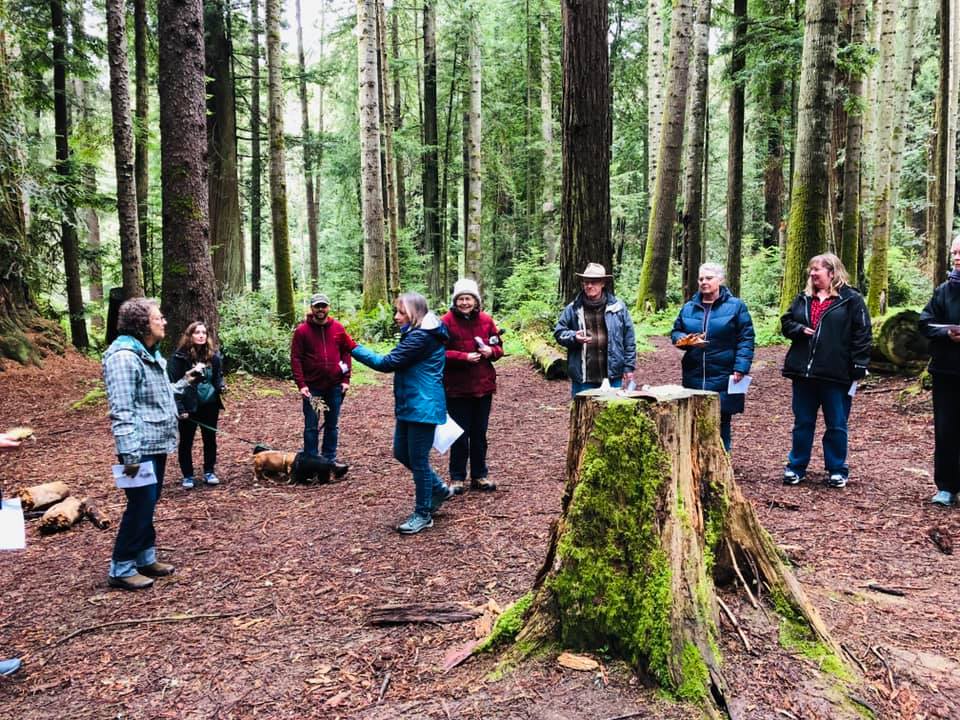
Good Friday, when we remember the crucifixion and death of Christ. We commemorate this central event by praying the 14 Stations of the Cross or listening to the seven last words of Christ or venerating the Cross or following the Good Friday service in the Book of Common Prayer or a combination of all four. This year, we are planning to “saunter” the Stations of the Cross at Sequoia Park at noon; and then at 7 PM, we will hold the Good Friday Solemn Liturgy, which includes the Veneration of the Cross.
Holy Saturday is the last day of Holy Week and has been called “Black Saturday,” “the Saturday of Light,” “Joyous Saturday”, “Great Sabbath” and “Easter Eve.” This day commemorates the burial of Jesus. On Saturday night, Christians participate in the most important ritual of the year: the Easter Vigil. During this service, new Christians are baptized and we once again sing “Alleluia” as we begin to celebrate the resurrection, a celebration that lasts 50 days, starting officially on Easter Sunday, when we often like to hide candy-filled Easter eggs!

 DANIEL DeFOREST LONDON