
Nietzsche and the Kingdom of God: Sermon for the Feast of Christ the King
Readings for the Feast of Christ the King (Year B)
Daniel 7:9-10, 13-14
Psalm 93
Revelation 1:4b-8
John 18:33-37
This sermon was preached at Christ Episcopal Church in Eureka CA on November 21, 2021.
Happy feast day of Christ the King, a feast added to our calendar by Pope Pius XI about a hundred years ago, which is relatively recent compared to other major feast days on our church calendar. This feast day was created by Pope Pius XI as the Western world was reeling from the rotten moral behavior of political leaders who were forming a political cesspool, out of which Hitler and Stalin emerged and rose to power. Today’s feast was created to remind and assure us that Christ ultimately reigns supreme as the holy and just King of kings and Lord of lords (and Judge of judges), a welcome reminder as we continue to witness corruption and injustice in the public sphere. In our Gospel reading this morning, we see Jesus trying to explain this same truth to a political leader of his day by describing the nature and character of his kingdom, which happens to be the most central theme in the teachings of Jesus. Historical Jesus scholars don’t agree on all that much, but they do all agree that the central theme of Jesus’s teachings is the kingdom of God.
So, on this feast day of Christ the King, we are invited to reflect on this central theme of Jesus’s teachings: the kingdom of God. What is it exactly? We all pray for it come on earth as it is in heaven, but what exactly are we praying for when we pray for the kingdom to come?[1] All of Jesus’s parables in Matthew, Mark, and Luke are about the kingdom[2] and the reading today from John includes yet another teaching from Jesus on the kingdom. Jesus explains to Pilate, “My kingdom is not from this world. If my kingdom were from this world, my followers would be fighting to keep me from being handed over to the Jews. But as it is, my kingdom is not from here.” Bishop N. T. Wright explains that when Jesus says, “My kingdom is not from this world,” he is not saying that his “sphere of rule is purely heavenly, leaving earth to stew in its own juice. The saying isn’t about the kingdom’s location, but about its character: this kingdom isn’t the sort that advances by violence [because if it were, his followers would be fighting violently to protect him]. It will come on earth as in heaven, because it is about truth. Pilate, who doesn’t know what truth is…, doesn’t know that there can be a kingdom without violence.”[3] And later on, in this passage, we hear Pilate asking Jesus, “What is truth?” So, we see this contrast between the kingdoms of the world that are built upon and advance by violence and the kingdom of God which is justice and peace and joy. One of the more clear definitions of the kingdom of God actually comes from St. Paul in the Book of Romans, when he says, “The kingdom of God is not a matter of [kosher] eating and drinking, but of justice, peace, and joy in the Holy Spirit” (Romans 14:17). The kingdom of God is justice and peace and joy in the Holy Spirit. Come, Lord, and open in us the gates of your kingdom!
I recently read a book by a scholar whom I met at a religious studies conference in Baltimore several years ago, the same conference in which my wife is now participating (in San Antonio). The author is a Dominican friar and priest named Benedict Viviano and the book I read is called The Kingdom of God in History, which traces and explains the different ways that the idea of the kingdom of God has been understood throughout church history by theologians, biblical scholars, philosophers, and historians. In one chapter, he describes some of the ideas of a famous (or infamous) 19th century thinker named Friedrich Nietzsche, who rejected the kingdom of God as described by Jesus in John and embraced the nature of the kingdoms of this world, which are characterized by violence. He embraced the idea of seeking power for ourselves and grasping for whatever we want, while pushing others out of the way in the process. He was confident that we all wanted power, that we were all jealous of those who enjoyed power and so he encouraged everyone to embrace that jealousy and to let it fuel our will to power; and to not be afraid to use cruelty and violence along the way. He rejected Christianity because he believed it was a set of excuses for poverty, weakness, and cowardice, a way of making the weak and the poor feel good about themselves and their lot in life by assuring them of spiritual riches in the sweet by and by. Nietzsche believed that it was these Christian promises of a future kingdom of justice and peace that made people refuse to take up arms against their oppressors and claim power for themselves. He believed Christianity made cowards of us all, which is why he called Christianity a “slave morality” that helped weak people justify their weakness, the poor justify their poverty and cowards their cowardice. Of course, what he failed to comprehend was the tremendous courage required from those who engage in creative non-violent resistance to injustice.
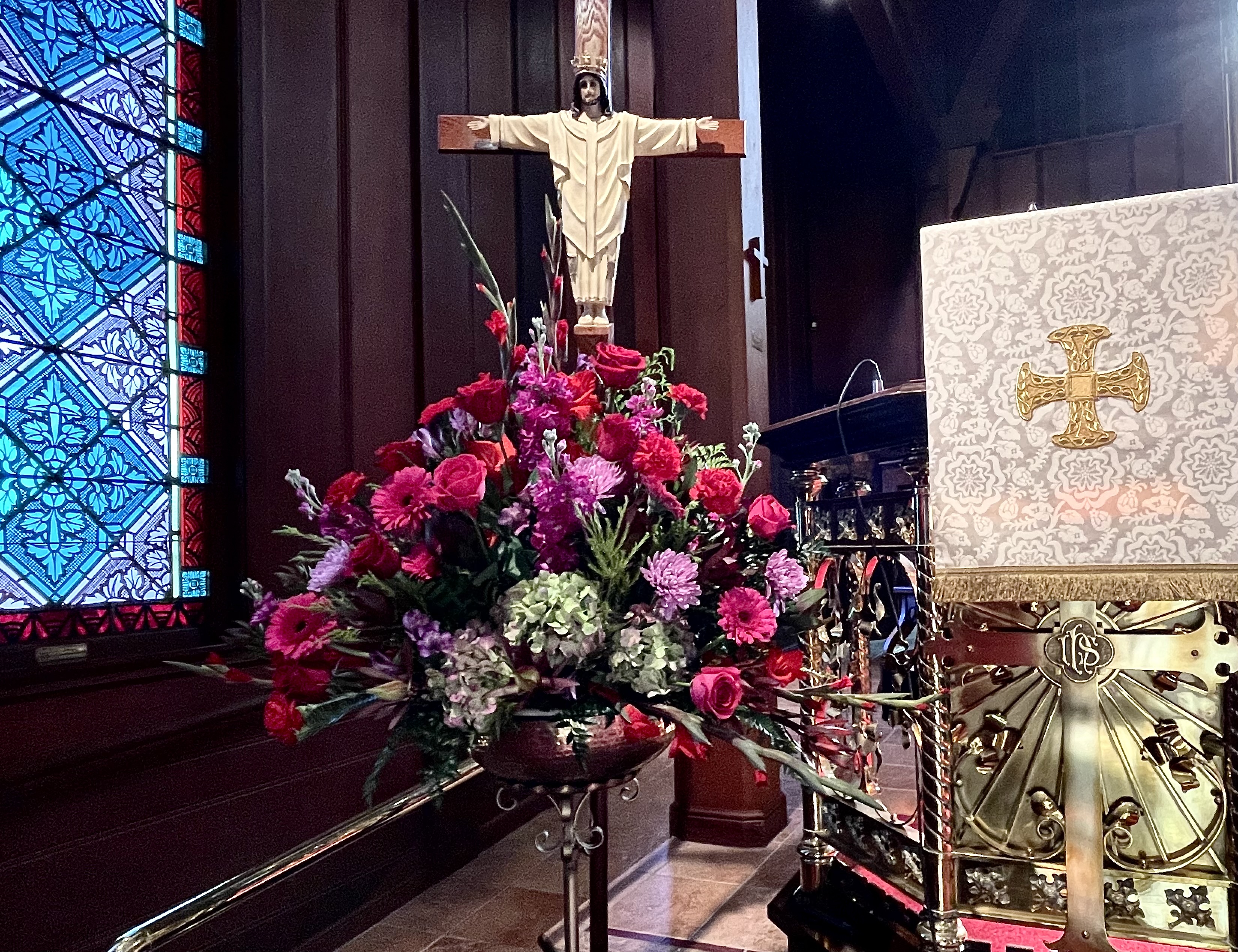
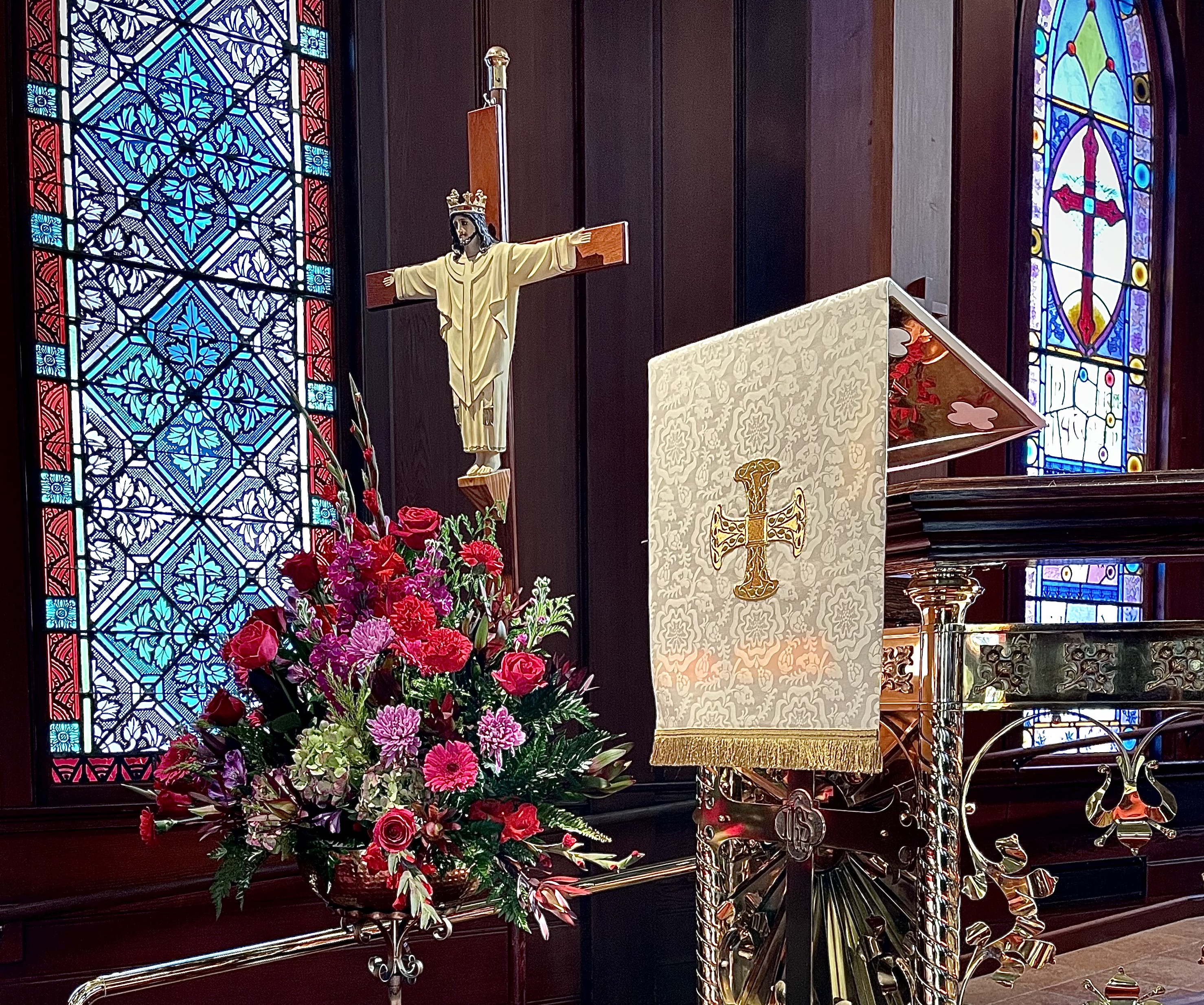
Nietzsche saw that Christianity placed special value upon the weak and the poor and the vulnerable, which is true! It does! In this way, he seemed to understand Christianity better than many Christians. God reveals Godself as one who cares about victims, who became incarnate among us as a vulnerable human, nailed to a cross. On the Cross, Christ embodies God’s compassion and sympathy for and solidarity with those who are poor and wrongfully accused and wrongfully executed. That’s so much what the symbol of the Christus Rex represents: the true power, courage, authority, victory, and true royalty that is found within human compassion and vulnerability. Nietzsche rejected this kingdom of God and much preferred the kingdoms of the world, exemplified in Pontius Pilate. In fact, Nietzsche said that “in the entire New Testament, there is only one person worth respecting: and that is [Pontius] Pilate, the Roman governor [who had Jesus crucified].”
Friedrich Nietzsche had a brilliant mind, but he rejected the God revealed in Christ who is a God who values the weak and vulnerable. By doing this, he also rejected the weak and vulnerable parts of himself and ended up being a (fairly) miserable persons with lots of personal problems. Women kept rejecting him. His books didn’t sell. He wrote that he didn’t like his mother and that it was painful for him to even hear his sister’s voice. He would have had a very difficult Thanksgiving.
And it was at the young age of 44 that he had his mental breakdown, which was precipitated when he saw a horse on the streets of Turin being beaten by its driver. He ran over to embrace the horse, shouting, “I understand you! I understand you!” Perhaps at that moment he had witnessed his own brokenness, weakness, vulnerability, and pain embodied in an animal. Perhaps he finally learned to sympathize with the weak, but that experience had broken him mentally. He never recovered from this episode and died eleven years later, suffering from manic depression and periodic psychosis. I like to imagine that he did eventually experience some form of redemption and healing and freedom to love those weak parts of himself which Christ the true King had always held with compassion.
So, what can the tragic life of Friedrich Nietzsche teach us about the kingdom of God on this Christ the King Sunday? I believe Nietzsche’s example shows how crucial it is for us not to confuse the kingdom of God with the kingdoms of this world, which we can so easily do (the Third Reich was believed by some to be the third manifestation of the Holy Roman Empire, which was believed to be the kingdom of God on earth). The kingdom of God which Jesus taught is one characterized by justice, peace, and joy because the king is one who holds out his arms from the cross (from a place of solidarity with all who suffer) to embrace all of who we are, especially those parts of us that might seem weak and poor. The kingdom of God is ultimately any territory in which God’s voice of love reigns supreme over all other voices (including those voices of jealousy and resentment that seemed to plague Nietzsche). “Everyone who belongs to the truth,” Jesus says, “listens to my voice,” that still, small voice of love that whispers to each of us, “You are my child, my beloved, in whom I delight.”
May we listen to that voice of love in such a way that it becomes enthroned in our hearts; and from there, may that kingdom of God spread out and grow to influence our social and economic and political lives, our communities, and the world, as we continue to pray for God’s kingdom to come on earth as it is in heaven. Amen.
[1] Rudolf Bultmann said, “The message of Jesus belongs to the presupposition of the theology of the New Testament and is not part of that theology itself.” Theology of the New Testament (New York: Scribner’s, 1951), 1.3 retranslated more literally, as cited by Viviano, The Kingdom of God in History (Wilmington DE: Michael Glazier, 1988), 132.
[2] Viviano explains that the idea of the kingdom of God originates from the book of Daniel, from the passage we just heard read, which was originally written in Aramaic. Most of the Old Testament was written in Hebrew, except for some parts of Daniel which were written in Aramaic, the language that Jesus spoke. In verses 13 and 14 of Daniel 7, we read about the prophet’s vision of “one like a human being/a Son of Man coming with the clouds and receiving dominion, and glory and kingship” over all peoples, nations, and languages. This kingship will be everlasting and wholly unified; and this kingdom is given to the Son of Man by the Ancient One, whom we understand to be God the Father. It is this mystical vision of the Son of Man (the true human being) receiving the kingdom of God from God that formed the backdrop of Jesus’s teachings. And this vision is reiterated in Revelation: “Look, the ruler of the kings of the earth is coming with the clouds!” Revelation 1:5,7.
[3] N. T. Wright, Twelve Months of Sundays: Biblical Meditations on the Christian Years A, B & C, (SPCK: New York, 2012), 257.

 DANIEL DeFOREST LONDON