

Inner Rings of Violence and the Divine Circle of Love (or “FOMO – ousios” 😉)
Readings for the Twenty First Sunday after Pentecost (Proper 24– Year B – Track 2)
Isaiah 53:4-12
Psalm 91:9-16
Hebrews 5:1-10
Mark 10:35-45
This sermon was preached at Christ Episcopal Church in Eureka CA on October 17, 2021.
There’s a term that was coined in 2004 to describe the anxiety that stems from the belief that other people are having fun without you. The term is FOMO, which is an acronym for “Fear of Missing Out” and social networking sites (like Facebook and Instagram) create many opportunities for its users to experience FOMO by showing a constant stream of activities in which the user is not involved. Although he didn’t use this term, the great Anglican author C.S. Lewis talked about FOMO in one of his lesser-known essays titled “the Inner Ring.” He writes, “I believe that in all [people’s] lives at certain periods, and in many [people’s] lives at all periods between infancy and extreme old age, one of the most dominant elements is the desire to be inside the local Ring [the inner circle] and the terror of being left outside.”[1] (146). The Inner Ring refers to a select and often exclusive group of insiders within a community: a school, business, college, or church. And Lewis says that although the existence of an Inner Ring is not evil in and of itself (in fact it’s often unavoidable), “the desire which draws us into Inner Rings is another matter. A thing may be morally neutral and yet the desire for that thing may be dangerous.”[2] [As an aside, I can’t help but notice Lewis’s choice of words in using the inner “Ring” since it was his friend J.R.R. Tolkien who converted him to Christianity and who wrote the Lord of the Rings trilogy about a ring that is not necessarily evil on its own but which awakens evil and greed among those who lust after it.) Lewis says, “Of all passions the passion for the Inner Ring is most skillful in making a [person] who is not yet a very bad [person] do very bad things.”[3]
In our Gospel this morning, we read about James and John who are already part of Jesus’s inner ring of close friends, asking for seats within an even more exclusive, inner ring. James and John were chosen to be among the 12 disciples of Jesus and within that group, they were part of a smaller inner circle of disciples along with Peter. In the previous chapter in Mark, it was Peter, James, and John whom Jesus brought with him up the mountain to experience the Transfiguration. But that apparently wasn’t good enough for the Sons of Zebedee. According to C. S. Lewis, that’s exactly how lust for the inner ring works. As soon as we become insiders in one circle, we start seeking membership in another. Lewis says, “The circle cannot have from within the charm it had from outside. By the very act of admitting you it has lost its magic.”[4] It’s like that Groucho Marx quote about not wanting to join a club that would have him as a member. Part of what makes the inner ring so attractive is its exclusiveness. And sometimes members try to maintain the esoteric allure and mystique of the inner ring by keeping others out.
So James and John know that they’re part of Jesus’s inner circle of close friends, but how much better would it be if they were part of a close circle that excluded Peter. “Your genuine Inner Ring,” Lewis says, “exists for exclusion. There’d be no fun if there were no outsiders. The invisible line would have no meaning unless most people were on the wrong side of it. Exclusion is no accident; it is the essence.”[5]
Now notice how Jesus responds to the disciples’ desire for the Inner Ring. He does not get upset with them like he did a couple weeks ago when they were preventing children from receiving his blessing. He seems to be fairly patient with them, saying “You don’t know what you’re asking because in order to be part of my inner ring you need to be prepared to be an outsider, a scapegoat, a lamb led to the slaughter like the Servant described in the Servant Songs of Isaiah.” Jesus then explains the nature of his Inner Ring to all his disciples, including those who became resentful of James and John after their request. The Inner Rings of the world are exclusive groups of people who lord themselves over the outsiders to make themselves feel more superior. But if we want to be part of Jesus’s Inner Ring, we are called to become part of a community that serves the outsider, a community built not upon exclusion but rather full inclusion. It was Archbishop William Temple who said that “the church is one of the few communities that exists for the non-benefit of its non-members.” That’s what Jesus’s Inner Ring looks like, a circle of people looking outward and welcoming others in; a circle of people willing to make sacrifices to help alleviate other people’s pain, a circle of compassionate companions who reject all forms of violence and who embrace prayer, including passionate prayers like the ones Jesus prayed with loud cries and tears.
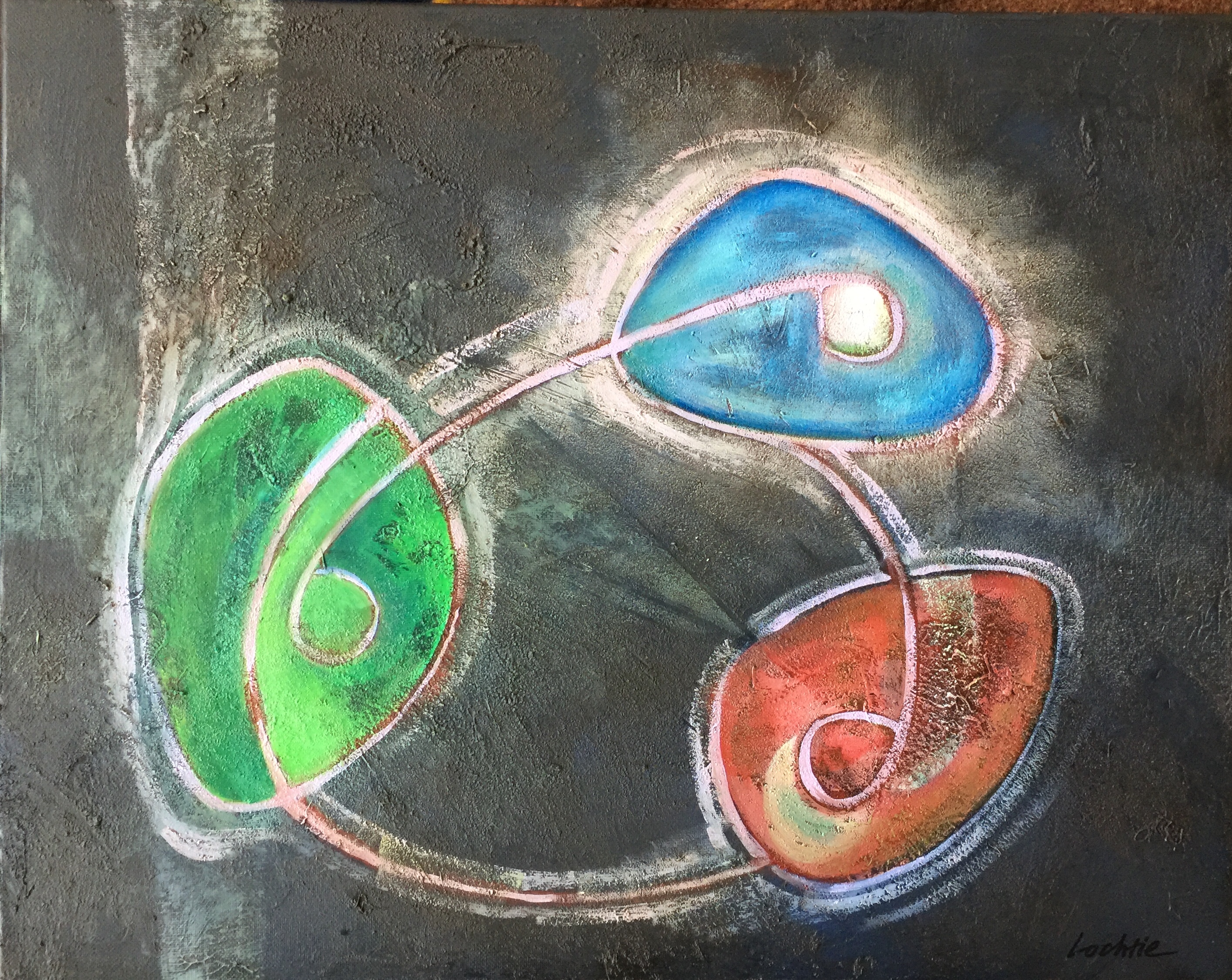
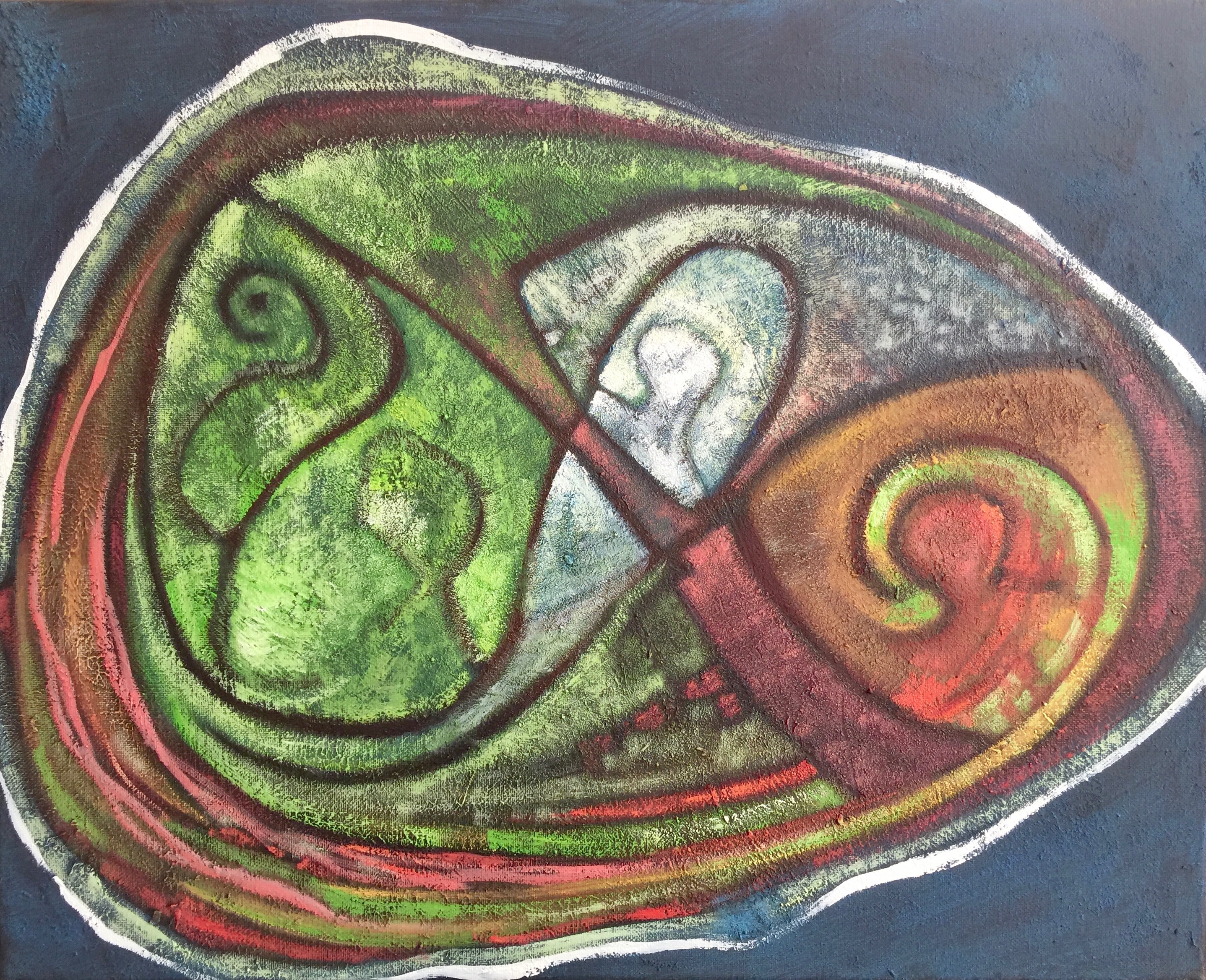
Our lust for the Inner Rings of the world will make us miserable and sometimes make us behave in rotten ways. Christ beckons us to be part of the divine inner ring which is the eternal circle dance of the Triune God, constant flowing with the giving and receiving of love and always open to including and welcoming others into the dance.
At the Cross of Christ we see the collision between the violent lust for the Inner Rings of the world, those inner circles built on scapegoating and exclusion and the vivacious effervescence of the Inner Ring of the Holy Trinity of God. Although it initially looks violence wins the day at the cross, we know that God’s Inner Ring of love absorbs, disarms, and ultimately deflates the inner rings of violence. It is God’s Inner Ring of love that we are being called to embody here at Christ Church. May we follow the flow of the Holy Spirit who is inviting us and all outsiders into the eternal circle dance of the Triune God. Although there are real difficulties and challenges and sacrifices involved with entering more fully into Christ’s inner ring (especially as we bump up against the sin and violence in the world and in ourselves), there is nothing more joyous and fulfilling.
The great German mystic Meister Eckhart described God’s Inner Ring of love in a poem, with which I will conclude and which I hope can deepen our desire for communion with Christ so much so that it supplants all lust for the inner rings of the world. Meister Eckhart writes,
Do you want to know what goes on in the core of the Trinity?
[The Inner Ring that holds together the entire universe?]
I will tell you.
In the core of the Trinity the Father laughs and gives birth to the Son.
The Son laughs back at the Father and gives birth to the Spirit.
The whole Trinity laughs and gives birth to us.
Amen.
[1] C.S. Lewis, The Weight of Glory and Other Addresses (New York: Harper, 1980), 146.
[2] Lewis, Weight of Glory, 149.
[3] Lewis, Weight of Glory, 154.
[4] Lewis, Weight of Glory, 155.
[5] Lewis, Weight of Glory, 156.

 DANIEL DeFOREST LONDON