
Readings for the Eighteenth Sunday after Pentecost (Proper 21 – Year B – Track 2)
This sermon was preached at Christ Episcopal Church in Eureka CA on September 26, 2021.
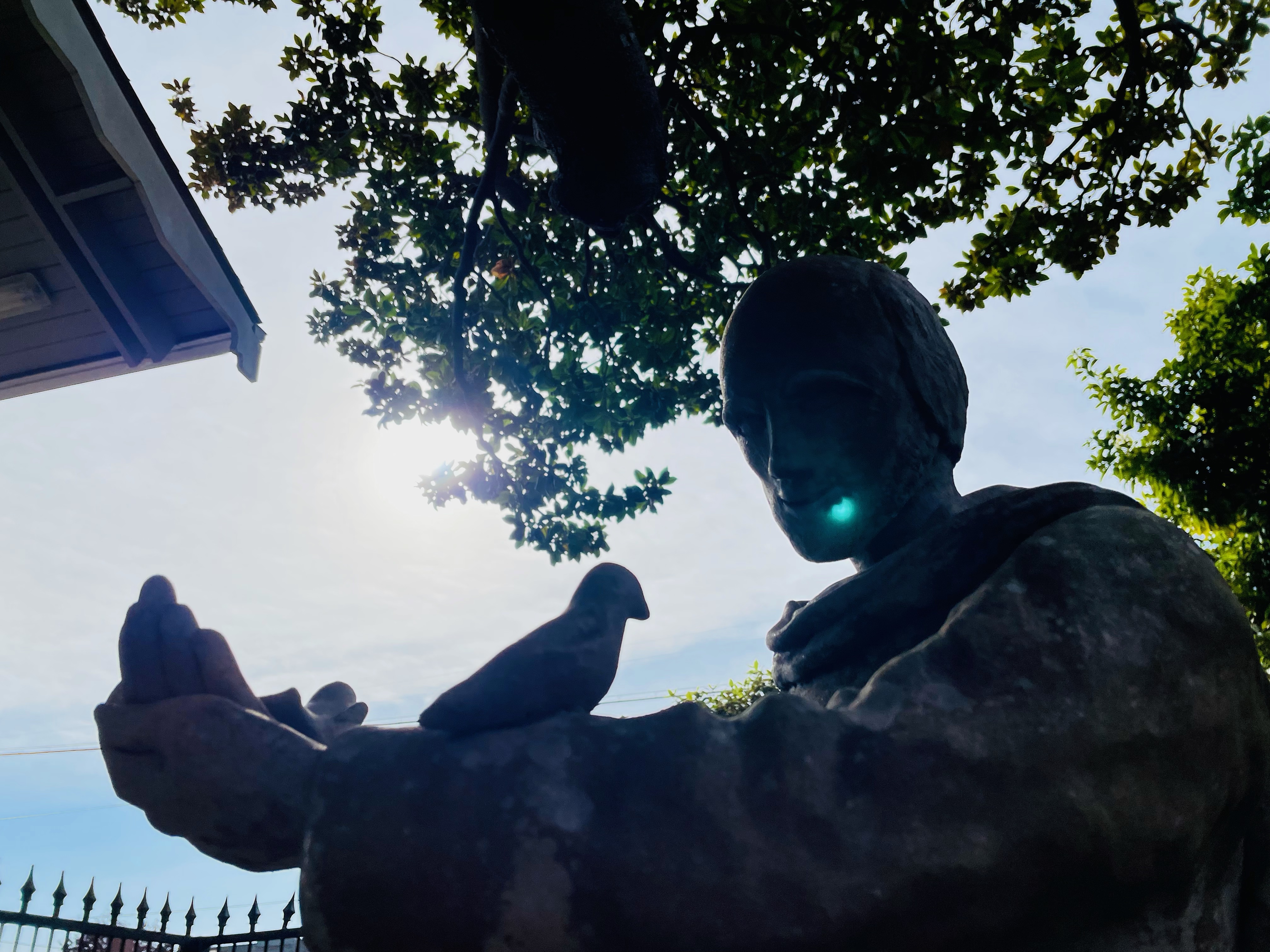
I’ve been reading a beloved spiritual classic from the 14th century titled I Fioretti di San Francesco, which translates from the Italian to the English as The Little Flowers of St. Francis. It’s a florilegium or collection of stories and legends about St. Francis, compiled about a century after he died. Although most historians question the historical validity of many of the stories, everyone agrees that the Little Flowers still convey deep truths about St. Francis and the early Franciscans. The Little Flowers include the story of the Wolf of Gubbio as well as other stories that are meant to not only inspire devotion to St. Francis but also to invite readers to emulate and copy Francis and his radical, saintly behavior. And speaking of Francis and copying, I recently heard a fun joke about St. Francis being the patron saint of copying people on emails. That’s why he’s called St. Francis of a “CC.”
In one story from the Fioretti, Francis is travelling to the village of Cannara to preach in the open air as was his custom, but swallows began chirping and whining and gurgling so loudly that no one could hear him. So he politely asked the swallows to keep silent until he had finished preaching; and, of course, they obeyed him. And everyone in the village was so deeply moved by his preaching that they wanted to abandon the village entirely and join his community of friars. But Francis said, “Slow down. Don’t be in such a hurry. I don’t want this village to be completely abandoned because of me. I’ll arrange something for you.” And that’s when he created the Third Order of Franciscans, Tertiary Franciscans, for those who want to embody the Franciscan way without becoming full-fledged Friars.
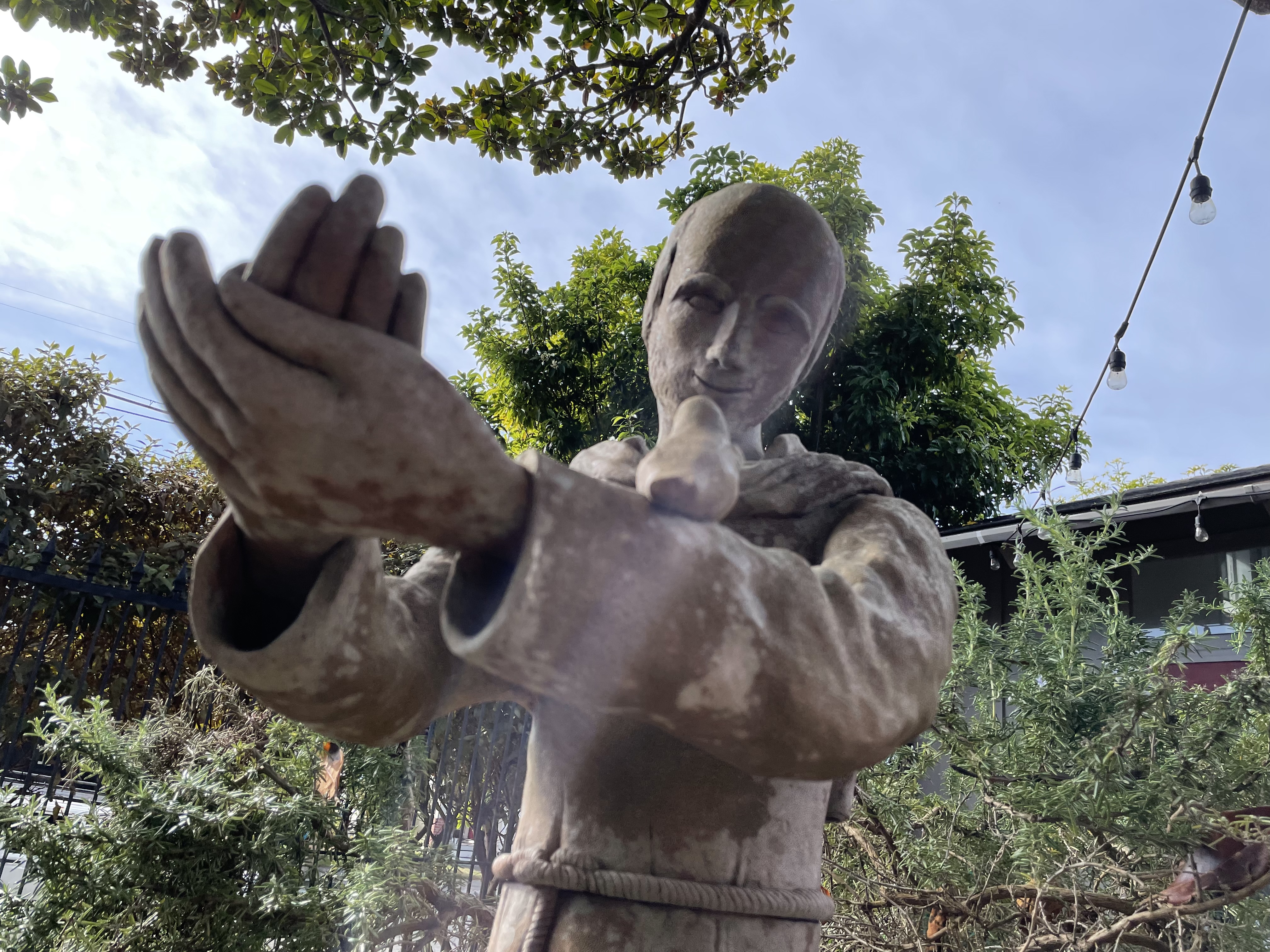
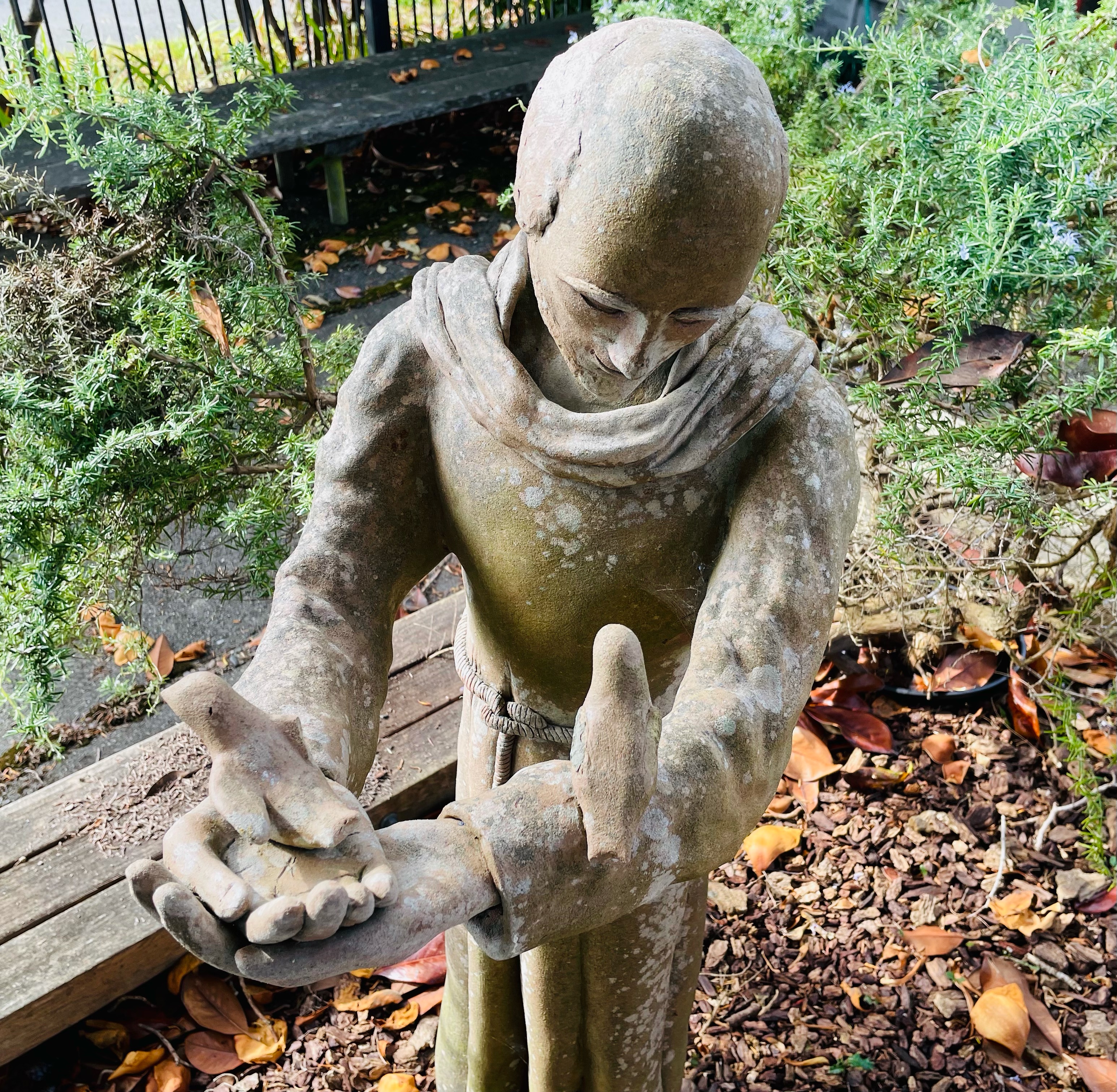
He then left Cannara and headed towards Bevagna and on his way there, he noticed more birds, a vast plethora of birds up in the trees. This time, he didn’t tell them to be quiet. He told his travel companions to wait for him so that he could preach to his sisters the birds. When he began preaching, all the birds flew out of the trees and onto the ground where Francis touched them with his tunic. And it was one of his companions Brother Masseo who witnessed this and heard the words of Francis’s sermon to the birds. Francis said to them, “My sister birds, give thanks and praise to your Creator always and everywhere because he has given you the freedom to fly everywhere. He clothes you and feeds you and gives you rivers and springs for your drink, and mountains and valleys for your refuge; and trees upon which to make your nests. Praise God, my sisters, and beware of the sin of ingratitude.”
As he preached these words, all the birds began to open their beaks, stretch their necks, expand their wings, and reverently bow their heads to the ground, with singing and movements that showed how much they were filled with divine delight. At this, Francis also became full of joy and wonder, and according to the Little Flowers, “he devoutly praised the Creator in them.” And then after he gave them the sign of the cross and permission to leave, they all rose up and divided into four groups, one heading east, one west, one south, one north, forming a cross in the sky while singing their marvelous songs.[1]
This is one of many stories in the Fioretti, but I share it this morning because it helps highlight a theme in today’s readings. That theme is gratitude, which we’re invited to practice and reflect upon as we begin to enter our season of stewardship. But today’s Scriptures teach us about gratitude by showing us the danger of gratitude’s greatest obstacle: jealousy. By jealousy, I also mean envy and covetousness. “Beware,” St. Francis says, “the sin of ingratitude.”
When we begin to list all the things that we don’t have, we so easily become miserable and upset and seek someone to blame. This was the case for the Israelites in the wilderness when they form a rabble and list all the items that they previously enjoyed in Egypt. They whine, saying, “We remember the fish we used to eat in Egypt for nothing, the cucumbers, the melons, the leeks, the onions, and the garlic; but now our strength is dried up, and there is nothing at all but this manna to look at.” All that food sounds pretty good, but they seem to have forgotten the fact that they were enslaved in Egypt. And it’s not like they’re starving to death. There is plenty of manna for them to eat. But they don’t like manna. They can barely tolerate looking at manna.
And we can relate to them, right? How often do we find ourselves listing all those things that we previously enjoyed before entering this wilderness of Coronatide? I know I do that sometimes. I remember the numerous in-person gatherings we used to enjoy and offer throughout the week, Music and Arts Camp, Foster Friday, Coffee Hour, Compline, Forums, and of course, glorious music and singing; but now our strength is dried up and it seems like there is nothing at all but these stupid masks to look at.
I can relate to the tension expressed in this story from the Book of Numbers. Moses was having a hard time. He heard the people weeping throughout their families. They wanted to go back to Egypt, but that’s where they were enslaved. And if we went back to pre-COVID conditions while the virus is still raging, we would be threatening the health of everyone in this parish and the wider community.
When Moses heard the people’s complaints, the Bible says, the LORD became very angry and Moses was displeased. Moses then prays a brutally honest prayer in which he asks God to put him to death because he can no longer bear the heavy burden that his people continue to heap upon him, because they keep listing those things that they used to enjoy that they no longer have, and they become miserable and upset and need someone to blame and Moses is the perfect candidate.
God essentially says to Moses what St. Francis said to the overzealous people of Cannara after he told the whining swallows to be silent. God says, “Slow down, Moses, I’m going to arrange something for you. Gather seventy elders and I will empower them with my spirit to be prophets and to carry the burden of leadership with you. I will make the gift of prophetic leadership more widely available,” just as Francis made the Franciscan way more widely available.
Then poor Joshua, who obviously means well, starts to complain about Eldad and Medad who didn’t follow the proper channels for prophetic leadership; and he starts demanding Moses to stop them. But Moses doesn’t bite. He doesn’t feel threatened by other people’s gifts in leadership.
Last Saturday, the dean of our cathedral in Sacramento was installed and the guest preacher Fr. Paul Fromberg said to Dean Matthew, “One of the most courageous things you can do is to let someone else lead so that you may follow. The goal of leadership is not to be the best you can be. It is to lead your people so that they can be the best that they can be.”[2] And just yesterday, I was in a class with clergy and lay leaders of the diocese and we were talking about volunteers in the church. And we all decided that the term “volunteer” is not really adequate for service in the church because when one serves in the church, they’re being more than a volunteer, they’re being a minister. Ushers are ministers of hospitality. Lectors are ministers of the Word and so on.
Moses was not threatened by or jealous of someone else’s gifts in leadership. And Moses knew that such jealousy is actually just another form of ingratitude, much like that tendency to list all those things we don’t have and then grow bitter and angry and seek someone to blame.
In the Gospel, poor John does the same thing to Jesus when he points out someone who is doing good work but not following the proper channels and should therefore be stopped. Jesus says, “Do not stop him.” And his subsequent teaching addresses the deeper issue behind John’s question. John is jealous of these people who are successfully casting out demons and he wants Jesus to affirm his jealousy as righteous and to perhaps express some jealousy and bitterness as well. Jesus knows that jealousy is the greatest obstacle to gratitude. It is that stumbling block that Jesus is talking about. And Jesus has very harsh things to say about those who try to spread jealousy. All the forces and voices in our culture that encourage people (especially young people) to hurt others and put others down in order to be powerful or popular (and these voices are legion!) should be thrown into the sea with a millstone wrapped around their neck! This is one of the dangers of social media, which so often arouses jealousy among its users and leads to depression and even suicide and homicide. This is why Jesus speaks so harshly about this because he knows that when we give jealousy an inch it can so easily take a mile. The worm of bitterness never dies; and the fire of jealousy is never quenched. So do whatever you need to do, Jesus says, to remove that stumbling block, to remove those ways of thinking that prevent you from practicing and experiencing gratitude.
Without gratitude, we are salt that has lost its saltiness and we so easily become dust and ash burnt to a crisp by the fires of bitterness. But with gratitude, we can become like those birds to whom St. Francis preached, giving thanks and praise to our Creator always and everywhere. Giving thanks for the rivers and springs, the mountains and valleys, and the trees! With a regular practice of gratitude and thanksgiving, we can learn to spread our wings and fly and share God’s blessings with the world (north, south, east, and west) so that when other people see us, they see a reflection of a God whom they want to praise, just as St. Francis devoutly praised the Creator whom he saw in the birds.
Creator God, protect us from the worm of bitterness and the fires of jealousy, especially during this season in the wilderness when we have plenty of reasons to be bitter and upset. Remind us that we have so many more reasons to be grateful. We thank you for your providence, grace, and nourishment. Grant us the joy of your servant St. Francis and the euphoric gratitude of the birds to whom he preached so that others may see a reflection of you and your love in our lives; through Jesus Christ our Lord. Amen.
[1] The Prophet: Volume III of Francis of Assisi: Early Documents, ed. Regis Armstrong, J. A. Wayne Hellman, William J. Short (New City Press: New York, 2001), “The Little Flowers of St. Francis” Ch. 16, 591- 594.
[2] The Rev. Paul Fromberg, Trinity Cathedral Sacramento livestream, September 18, 2021: https://youtu.be/isNC_VpL6Go?t=3217

 DANIEL DeFOREST LONDON