
Readings for the Ninth Sunday after Pentecost (Proper 12)
This sermon was preached at Christ Episcopal Church in Eureka CA on July 25, 2021.
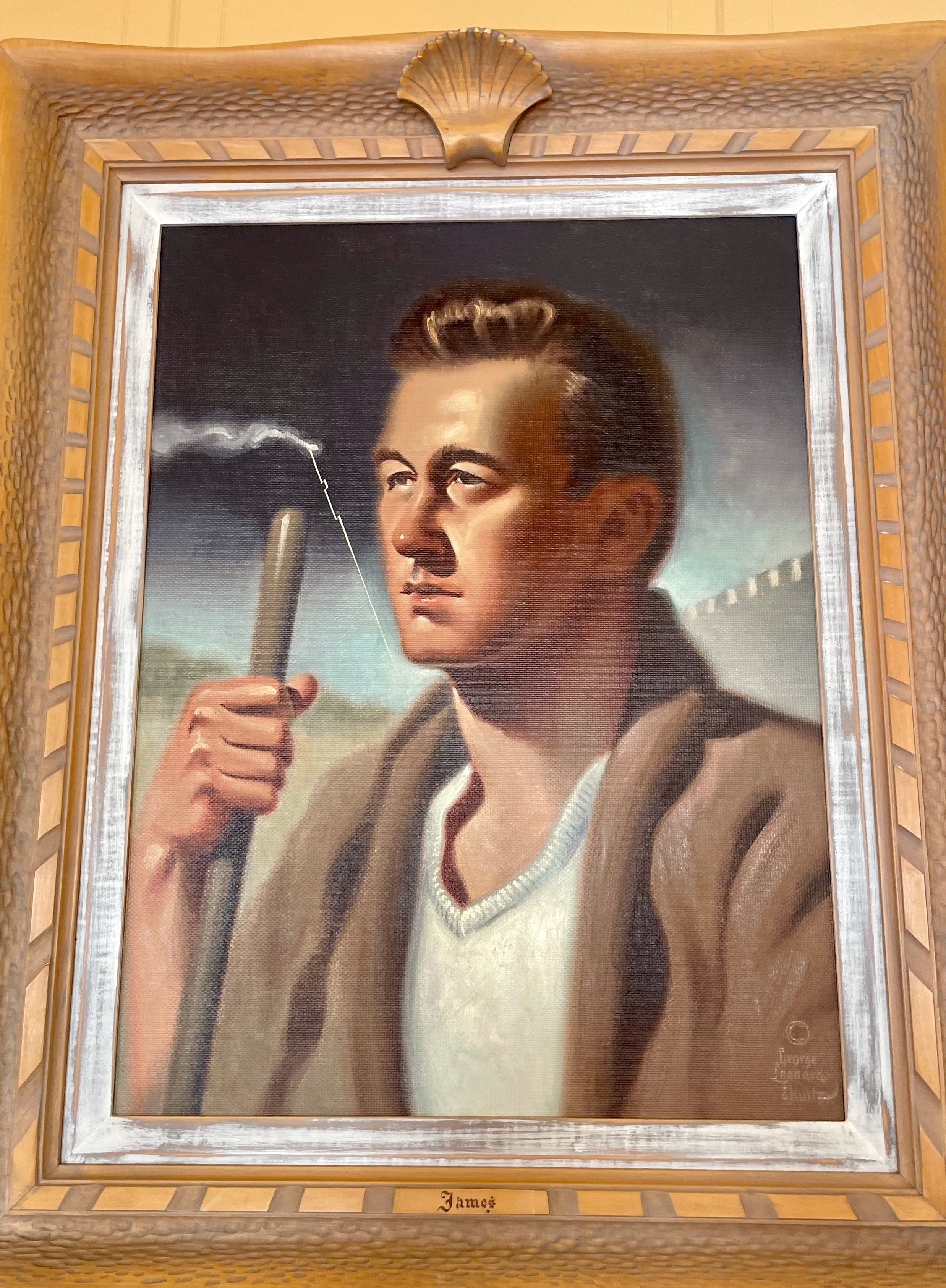
Last Sunday, we celebrated the feast day of a close companion of Christ: Mary Magdalene; and today is the feast day of another close companion of Christ, an apostle who was part of Christ’s inner circle: St. James the Son of Zebedee, also known as one of the Sons of Thunder. Several people here have pointed out that Fr. Shag’s portrayal of him in Lewis Hall looks a lot like James Dean, and although the Apostle James was indeed a rebel in the Roman empire, he was one with a cause: and that was sharing the love of Christ with the world, particularly in modern-day Spain. According to tradition, while evangelizing in Spain, James received a vision from Mary telling him to return to Jerusalem, where his rebellious ways eventually got him beheaded by King Herod Agrippa, thus making him the first apostle to become a martyr (Acts 12:2). Legends claim that his remains were then sent on a ship back to Spain, but the ship crashed. However, the casket of his remains miraculously arrived intact on the Iberian Peninsula because it was covered and protected by scallop shells. And it is for this reason that the scallop shell became the symbol of St. James as well as the symbol associated with the immensely popular pilgrimage in Spain known as the Camino de Santiago, or the Way of St. James. You can see the shell symbol all over Spain and pilgrims carry it along with them as a kind of badge and some even use it as a cup to drink water and wine along the way. I shared this symbol yesterday with the Confirmands because we here at Christ Church use the scallop shell whenever we baptize someone. It’s what I used to pour the holy water over Robin and Nicole as well as Reina and Kamryn. It’s a powerful symbol not only because of the legend of St. James but because of what it has come to mean for so many Christian pilgrims over the centuries.
The ridges of the shell all begin spread out and then converge together into one common point. Pilgrims on the Camino follow many different routes, but they all arrive at the same destination: the Cathedral of Santiago de Compostela. And yesterday, nine spiritual pilgrims, who each came from different backgrounds and who each have their own unique journeys all converged together, like the ridges of the scallop shell, right here to experience the tangible love of God through the sacraments of baptism, confirmation, reception, and Holy Eucharist.
The newly baptized experienced the tangible love of God poured out upon them in the form of that most primal element: water. And it was poured out upon them with the scallop shell of St. James, on the eve of the feast day of the apostle. We know that water is essential for life and a source of life and yet it can also be dangerous and deadly as demonstrated in the legend of the St. James shipwreck as well as in today’s Gospel, which describes the sea becoming rough and the disciples growing terrified as they witness a mysterious human figure walking towards them. And that human figure then speaks to them and says, “Don’t worry. It’s me. Don’t be afraid. I’m with you, walking right alongside you.” That’s what the waters of baptism say to the baptized in a wet and tangible way, “It’s me, Christ. Don’t be afraid. I’m with you. Always. Offering you new life and peace and refreshment. And whenever you may be terrified by rough waters or potential dangers or mysterious unknowns, know that I am with you. I am yours and you are mine.” And then we emphasize that message by anointing the baptized with chrism oil saying, “You are sealed by the Holy Spirit and marked as Christ’s own forever.”
And many of you here promised to do all in your power to support the newly baptized as well as the newly confirmed in their life in Christ. And if you were not here yesterday, I encourage you to watch the service online and participate retroactively. Because that is what means to be the church, the Body of Christ. That is how we fulfill our mission and vision of following Jesus Christ as a community of companions walking together in the way of Christ’s love for all.
Every Sunday, we all converge together, like the ridges of the scallop shell, right here around this altar to support each other in our life in Christ. And we do so as companions, walking alongside each other, reminding one another that Christ is with us, even when we’re terrified. Christ is saying, “Hey, it’s me. Don’t be afraid.”
We support each other not by ordering each other around or guilt-tripping or judging or criticizing or condemning but by being a community of companions, much like the community of companions that Christ created around himself with Mary Magdalene and James and Philip and Andrew and all the apostles. And I use the word “companions” intentionally because of its etymological meaning. Companion is the combination of two Latin words: “com” which means “together, with” and “panis” which means “bread.” A companion is someone who breaks bread with someone else.
In our Gospel this morning as well as in our Hebrew Scripture reading, we see Jesus and Elisha transforming a motley crew of strangers into a community of companions who converge together around a holy meal of bread. The multiplication of the loaves and fishes is indeed miraculous however one might choose to interpret that event, but the point of the story (as Jesus himself will explain) is not so much about the magical appearance of food but the creation of a community of companions who feast together on Christ’s love. It’s not so much about the multiplication of loaves and fishes but the multiplication of God’s mercy, much as we prayed in today’s Collect: “Increase and multiply upon us your mercy.”
In the next four weeks, we will be hearing Jesus unpack the meaning of this miracle in John chapter 6 and we will learn more about the mystery of the Holy Eucharist; and about what it means to be a community of companions walking together in the way (the Camino) of Christ’s love for all. May we experience today the tangible love of Christ as we converge together, like ridges of the St. James scallop shell, around this altar to feast on the one who said, “I am the Bread of Life.” Amen.

 DANIEL DeFOREST LONDON