
Readings for the Seventh Sunday after Pentecost (Proper 10) Year B – Track 2
This sermon was preached at Christ Episcopal Church in Eureka CA on July 11, 2021.
It’s very good to be back after spending time with family in upstate New York and the Eastern Shore of Virginia. While those of you in Humboldt County were enjoying an average daily temperature of 63 degrees, Ashley and I were enduring the sweltering and humid heat back East.
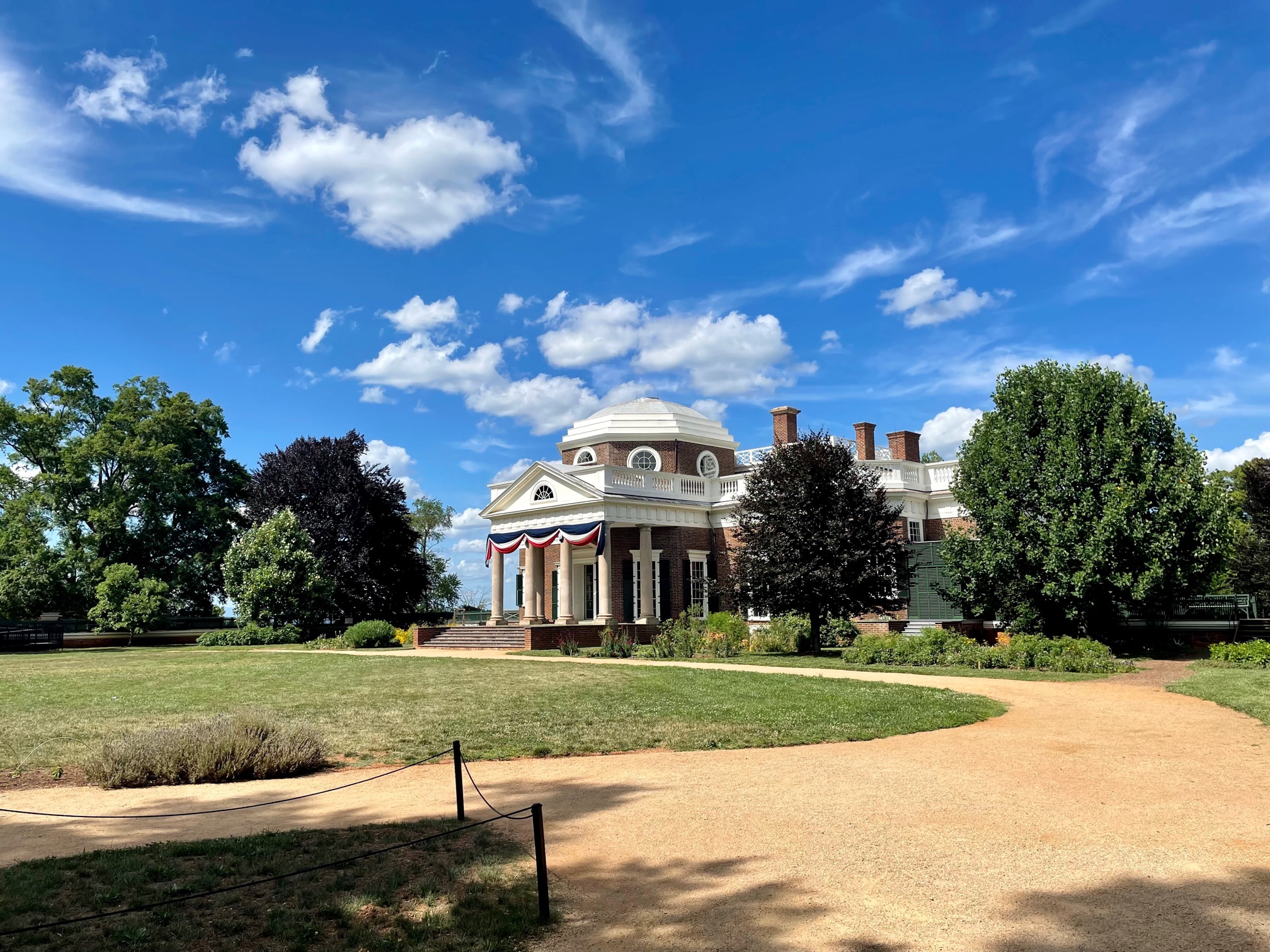
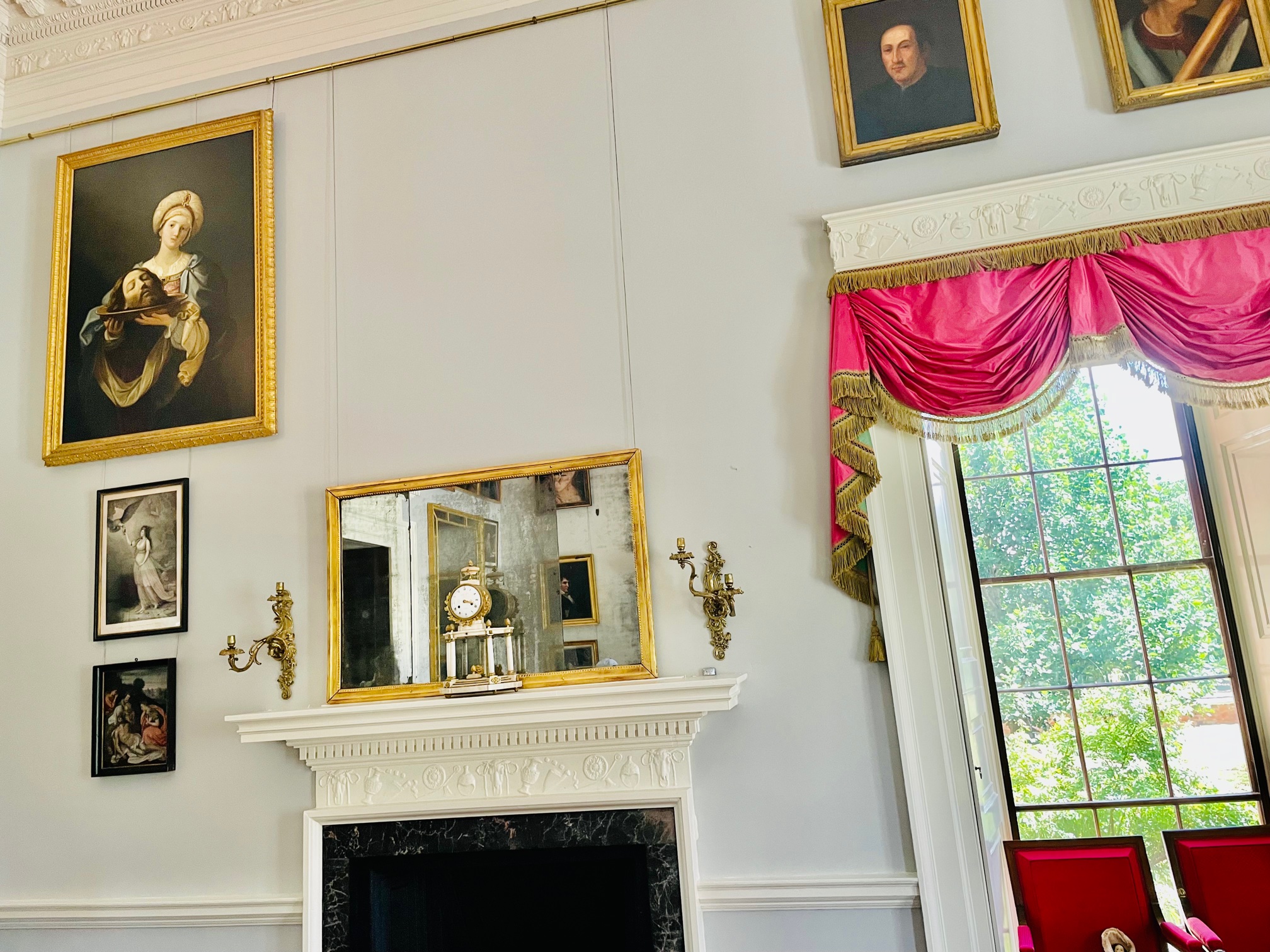
It was life-giving and soul-nourishing to visit my mom and brother (whom I hadn’t seen since my father passed), to visit friends in Virginia (including the priest who married us), and to visit Ashley’s family. And we’re thrilled to be back home, now with two new Yorkshire Terrier puppies, named Gubbio and Seabury, who are proving to be sources of great joy and also great frustration. Gubbio is named after the Wolf of Gubbio whom I preached about on Good Shepherd Sunday and Seabury earned her name because she was born on November 14th, the day that Samuel Seabury was consecrated in Aberdeen Scotland as the first bishop of the Episcopal Church back in 1784. And 1784 also happens to be the year that another famous Episcopalian travelled to Paris, where he eventually purchased a painting that depicts the disturbing conclusion of the story we just heard proclaimed in Mark’s Gospel (of the beheading of John the Baptist.) This famous Episcopalian who later became a Deist and the third president of the United States displayed this painting prominently in the parlor of his Virginia mansion, Monticello, which I visited for the first time, last week. In the painting, Herodias’s daughter (traditionally known as Salome) holds the severed head of John the Baptist on a golden platter with a detached look on her face. The painting by Renaissance artist Guido Reni is titled “Salome Bearing the Head of St. John the Baptist” and, although tourist guides suggest that the painting was displayed by Thomas Jefferson to inspire conversation about the separation of church and state, I was most moved by its proximity to a large window looking out at the Monticello trees. To me, the juxtaposition of this painting of a girl caught up in sinful forces and trees flourishing in a well-tended garden represented the tension in today’s Scripture readings as well as in Thomas Jefferson’s life and in our own lives. Sin, death, and corruption are undeniable and painful and sometimes overwhelming realities in our lives; and yet so too is beauty, especially the beauty embodied in trees whose leaves dance in the wind, reminding us that we are loved and held by a just and loving God.
In our reading from Amos, we learn that this Hebrew prophet had no formal education or training. He was not the son of a prophet nor a member of the prophet’s guild. He was a lowly shepherd and dresser of sycamore trees, and yet he knew God’s message for the corrupt king of Israel (Jeroboam). I like to imagine that he knew God’s message precisely because he was a dresser of sycamore trees, because he spent so much time listening to the trees and receiving their ancient wisdom. I like to imagine God’s Spirit speaking through the fig trees to Amos and showing him that mistreatment of the poor indicates corruption and crookedness of heart just as a plumb line indicates the crookedness of a wall. In an earlier prophesy, Amos used nature imagery to convey God’s justice, saying, “Let justice roll down like waters and righteousness like an ever-flowing stream” (5:24). It’s not hard to image him calling for justice to flow like wind through a sycamore tree.
Bishop Steven Charleston, who is an elder in the Choctaw nation, used to listen for the voice of the Spirit in the trees. He said, “The rustling leaves would whisper their messages but I was not sure I understood them. ‘Listen some more,’ my great grandmother would say, go out and listen some more and one day you will understand it.’” He said, “I have been doing as she said for many decades now. And while I still have a lot to learn, one thing I do know for certain: the wind in the trees knows us by name. If you don’t believe me go out and listen. Close your eyes, listen to the leaves, and hear your name written on the wind.”[1] The Hebrew prophet Amos heard God call him by name while he was harvesting sycamore trees and God empowered him to speak truth to power and to boldly condemn the sin and corruption perpetuated by Israel’s king. John the Baptist followed in the footsteps of the prophet Amos and even referenced trees in his bold prophecies against the political and religious leaders of his day (Luke 3:9). He said, “The ax is already at the root of the trees;” and that prophetic ax caused Herodias to hold a deadly grudge against him and apply a royal ax to his head, through nefarious means that exploited her own daughter. In these stories, the ancient and divine wisdom of trees meets the reality of sin and corruption.
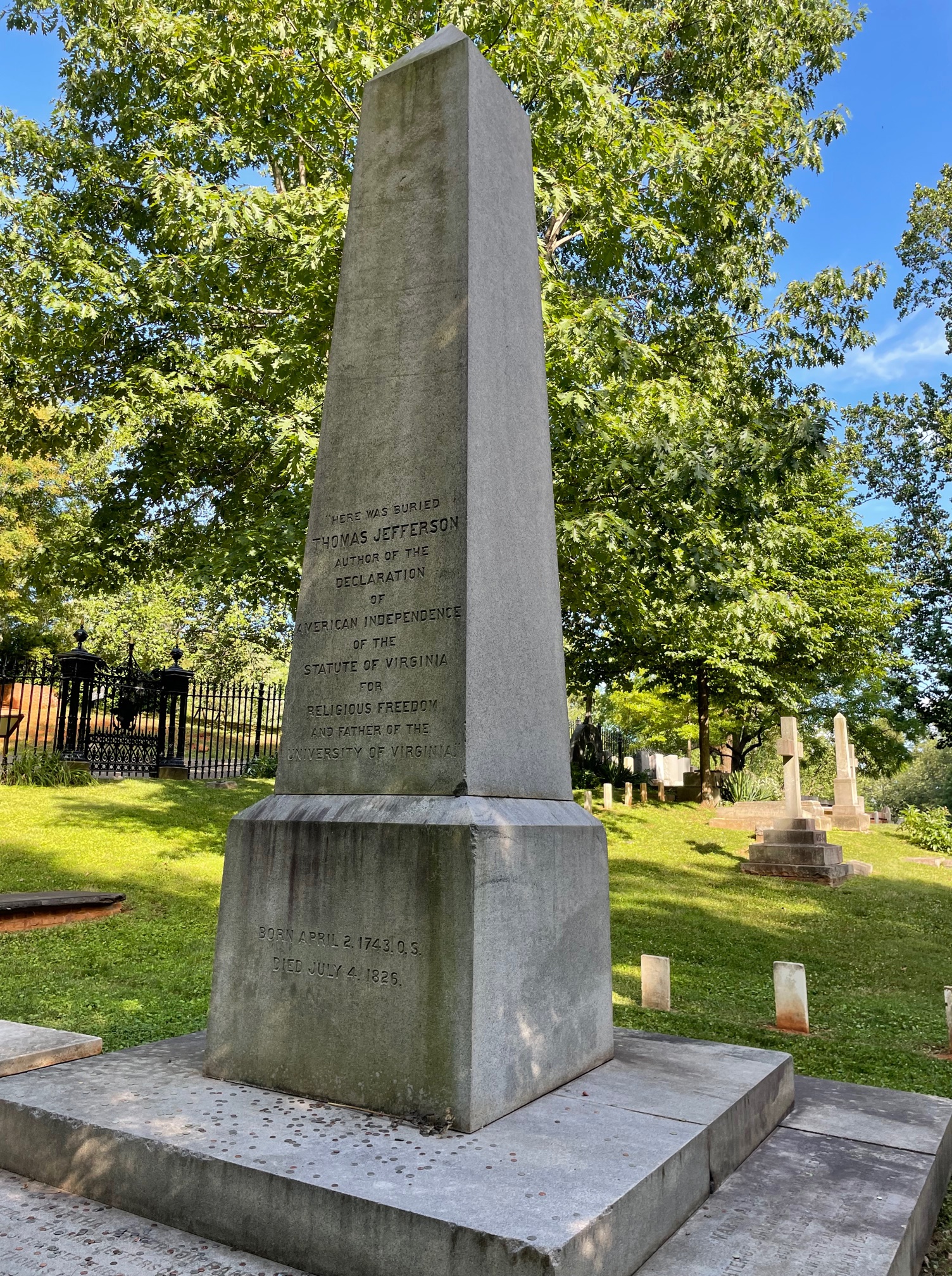
I saw this same tension in the life of Thomas Jefferson; and I appreciated how the museums and guides at Monticello refused to turn a blind eye to the glaring contradiction in the life of this founding father. Thomas Jefferson owned over 600 slaves throughout his life, he had an enslaved concubine in Sally Heming with whom he fathered several children, and he benefitted enormously from the institution of slavery, which he himself criticized as oppressive. He criticized slavery because it clearly contradicted those truths that he held as self-evident in those words that might be considered the most influential words written over the last 300 years: “We hold these truths to be self-evident that all men are created equal; that they are endowed by their Creator with certain unalienable Rights, that among these are life, liberty and the pursuit of happiness.” His words have proven to be far more powerful and far-reaching and consequential than even he could have imagined. The musical Hamilton speaks to this when a character says, “We hold these truths to be self-evident that all men are created equal / And when I meet Thomas Jefferson, I’m a compel him to include women in the sequel.” His core ideas of equality and liberty resonate deeply with our Christian values, values upon which our nation was founded, values that our flag symbolizes, and values that we celebrated last week on the 4th of July, a day that derives so much of its meaning from the wisdom and courage of Thomas Jefferson, who not only wrote the Declaration of Independence (which was officially adopted on the 4th of July in 1776) and who not only doubled the size of the country with the Louisiana Purchase in 1803, but who also died on the 4th of July in 1826, exactly fifty years after our nation declared independence. I visited his grave and learned there that he insisted on being buried underneath a great oak tree, which he had admired as a young child.
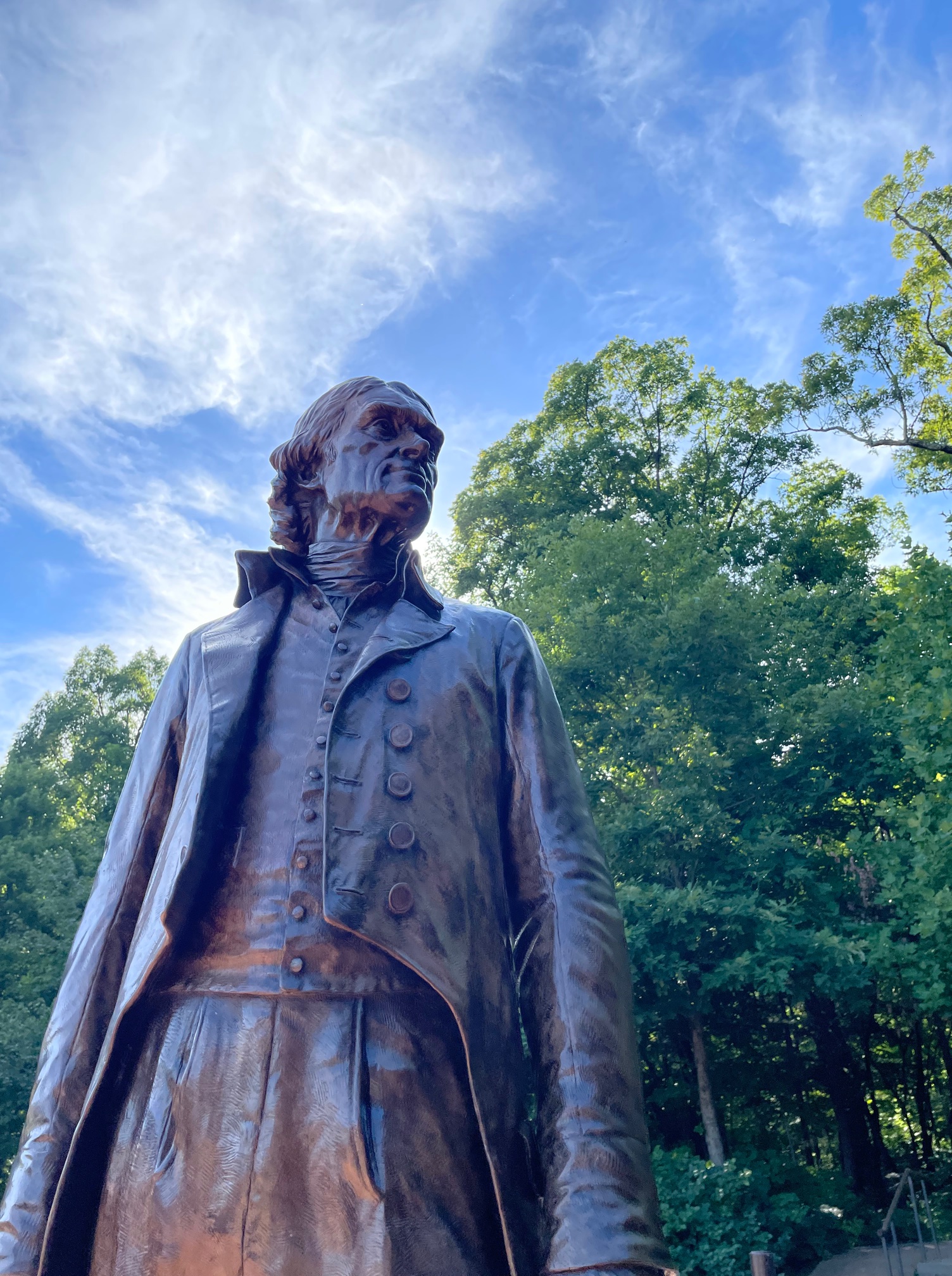
As I walked a short trail through the whispering leaves from the mansion to the museum, I learned how much Jefferson admired trees. In a letter he wrote to his daughter, he said, “I never before knew the full value of trees. My house is entirely embosomed in high plane-trees, with good grass below; and under them I breakfast, dine, write, read, and receive my company. What would I not give that the trees planted nearest round the house at Monticello were full grown.”[2] Today many of them are full grown for visitors to enjoy and it is because of his love for trees that Jefferson has been called “the father of American forestry.” He adored his mulberry and honey locust trees, his sugar maple and pecan and peach trees, his Catalpa and Cedrela trees, many of which are still standing today and can be seen through that window that is right next to the painting of Salome and the head of John the Baptist, reminding me of Jefferson’s own shameful perpetuation of sin and oppression and exploitation. Although Jefferson seemed to have listened to the wisdom of the trees and shared that wisdom with the world (not unlike Amos and John the Baptist), he also failed miserably in fully embodying that wisdom in his life and proved to be guilty much like Herodias, who exploited her own daughter to murder a prophet. The life of Thomas Jefferson and the readings today invite us to ask ourselves: in what ways are we listening to and embodying the wisdom of the trees like the prophets Amos and John the Baptist? And in what ways are we complicit in systems of oppression, exploitation, and death, like Herodias?
On the Fourth of July, soon after visiting Monticello, I received a message from an Anglican Benedictine monk, Brother David Vryhof, who said, “All of us have been stirred to pride by parts of our collective history, and all of us have felt the shame of other parts of our story. Experiencing this mixture of pride and shame can root us in a place of humility, where we can acknowledge the great gifts this country has given to the world, and at the same time look honestly and regretfully at its equally great shortcomings and sins.”[3] The mixture of pride and shame, like the juxtaposition of Salome and the Monticello trees, can indeed root us in a place of humility, where we can honestly confess our sins and pray that powerful prayer of St. Paul who said, “Blessed be the God…of our Lord Jesus Christ…in him we have redemption through his blood, the forgiveness of our trespasses, according to the riches of his grace that he lavished on us…for the praise of his glory.” Amen.
[1] Steven Charleston, Facebook, September 9, 2019, https://www.facebook.com/bishopstevencharleston
[2]Jefferson to Martha Randolph (from Philadelphia), 179, https://www.monticello.org/house-gardens/farms-gardens/landscape-features/trees-at-monticello/
[3] Br. David Vryhof, SSJE on July 5, 2021, https://www.ssje.org/2021/07/05/humility-13/

 DANIEL DeFOREST LONDON