
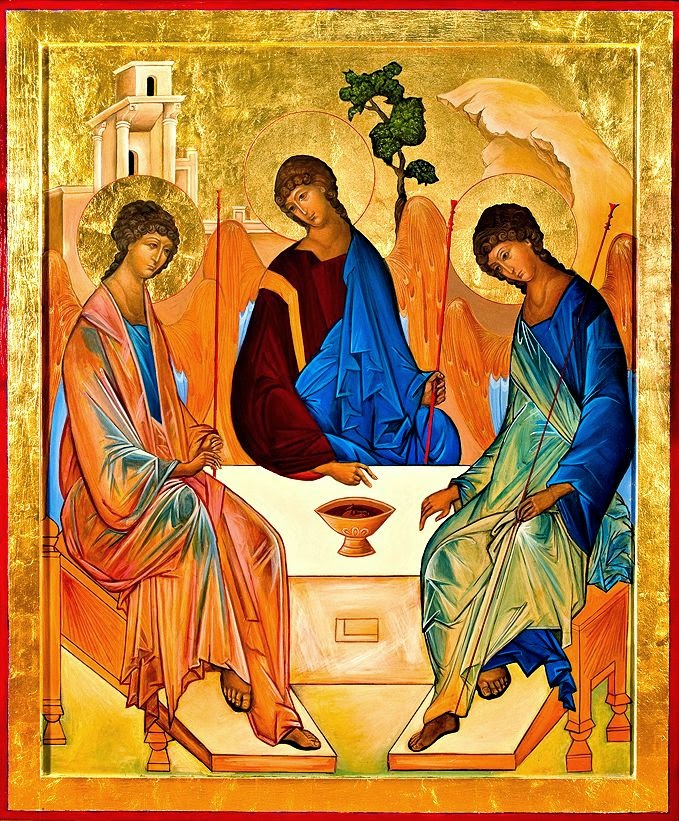
Readings for the First Sunday after Pentecost: Trinity Sunday
- Isaiah 6:1-8
- Canticle 13
- Romans 8:12-17
- John 3:1-17
This sermon was preached at Christ Episcopal Church in Eureka CA on Trinity Sunday May 30, 2021.
Happy Trinity Sunday! At Christmas, we learn that God is with us, as the Father sends his Son, Emmanuel. At Easter, we learn that God is for us, as the Son conquers that which we fear the most: death. At Pentecost, we learn that God is within us, as God lavishly pours out upon us his Holy Spirit, who prays and intercedes through us (sometimes with “sighs too deep for words”). After Christmas and Easter and Pentecost, we arrive on the feast day of the Holy Trinity to celebrate the Father and the Son and the Holy Ghost. The doctrine of the Holy Trinity has been the target of tremendous criticism, especially since the Enlightenment. Thomas Jefferson essentially said that by the nineteenth century no rational human being would believe in the Trinity anymore. And I’ll admit that I previously considered the Trinity to be, at worst a dogma contrived by the empire to enforce compliance and submission to Christian hegemony, and at best, theologically incoherent gobbledygook.[1]
However, after further study, I discovered that there are seeds of a trinitarian understanding of God within ancient Judaism. The Hebrew Scriptures frequently hint at a plurality within the One True God. We see one of those hints in our reading from the prophet Isaiah, who enters the throne-room of God and hears the many-winged creatures crying out, “Holy, Holy, Holy!” Repeating an adjective three times is a Hebrew form of superlative; and as George MacLeod (the founder of Iona community) used to say, “If you think that’s a coincidence, I wish you a very dull life.” [And as an aside, let me point out the fact that we sing “Holy, Holy, Holy” at the altar here because we are entering the very presence of God, the very throne room of the Almighty.]
The Holy Trinity was not a dogma created in order to solidify the power of the patriarchy. No, the Trinity is far too subversive for that. In fact, the Trinity challenges and subverts the Greek and Aristotelian concept of God as the Unmoved Mover, as a detached and solitary deity who glares disapprovingly at us from a distance. The Trinity declares that God is a community! A community of passionate lovers. It almost sounds scandalous. The ancient theologians described the Trinity as a community of lovers dancing together in a circle, constantly giving and receiving to one another and thus giving birth to all of creation. This is how theologians in Cappadocia understood God in the fourth century. And what I find so fascinating is the fact that scientists today know that creation is composed of atoms and an atom is most simply understood as the orbiting structure of three subatomic particles in a constant dance with each other. It is not a mere coincidence that Dr. Robert Oppenheimer named the detonation site of the atom bomb Trinity. And according to atomic scientists, the power of the atom bomb is not found in the proton nor the electron nor the neutron, but rather, the terrifying and awe-inspiring power of the atomic bomb is found in the interaction between the subatomic particles, in the energy that flows (and sometimes explodes) between them.
Even before the Cappadocian Fathers were writing about the Trinity as a circle dance in the fourth century, the authors of the New Testament already understood the key to the mystery of the Holy Trinity. The author of 1 John summed up the Trinity perfectly when he said, “God is love” (1 John 4:8). And St. Augustine eloquently expanded upon this when he said that the Father, the Son, and the Holy Spirit are the Lover, the Beloved, and the Love Overflowing.
The Father is the Lover, the source and font of all creation; and the Son is the beloved, the Father’s gift to us so that we too may be among God’s beloved children. And the Holy Spirit is the love overflowing, the endless exchange of love between the Lover and the Beloved. That is the key to mystery of the Holy Trinity: God is Love. What a shame it would be if we ever dismissed the importance of the Holy Trinity? We would be dismissing the importance of divine love.
Last Sunday, Presiding Bishop Michael Curry preached at the National Cathedral in Washington D.C. and he said that the love expressed in the Holy Trinity “is bigger than any religion.” He said, “Let me be clear….Love is ecumenical. Love is interfaith. Love is bipartisan. Love is multi-ethnic. Love embraces and includes us all because the source and the origin of love is not any of us. The source and the origin of love is God. And when we live in love, we live in God. And the God who created this world the first time can make a new creation.”
This trinitarian understanding of God is at the heart of what makes us unique as Christians and it is the very doctrine of the Trinity that opens us up radically to the presence of God beyond the boundaries of our faith tradition, beyond the boundaries of doctrine itself! Because the doctrine of the Trinity makes it abundantly clear that God is love. The Triune God is love. It would not be inappropriate to call Trinity Sunday “Love Sunday.”
“When we live in love, we live in God. And the God who created this world the first time can make a new creation.” And speaking of a new creation, let us take a brief look at this morning’s Gospel in which Jesus speaks of being born again or born from above. Many Christians have used this passage to claim identity as a “born again Christian” and that’s fine as long as we don’t use that identity as a weapon to divide and clobber; because when I read this passage in light of the Trinity, it becomes clear to me that when Jesus speaks of being born from above he means finding our fundamental and foundational identity in God’s love. He says, “What is born of the flesh is flesh, and what is born of the Spirit is spirit.” Remember the Spirit is the love that flows between the Lover and the Beloved. Although we may find our identity in our ethnic background, our tribe, our religion, our political party, our family or our ancestry, Christ calls us to find our fundamental identity in something deeper than all of that: in the love of God. What is born of the flesh is flesh but what is rooted and born in God’s love is spirit and is eternal. And whoever trusts that their ultimate identity lies in God’s love will have eternal life.
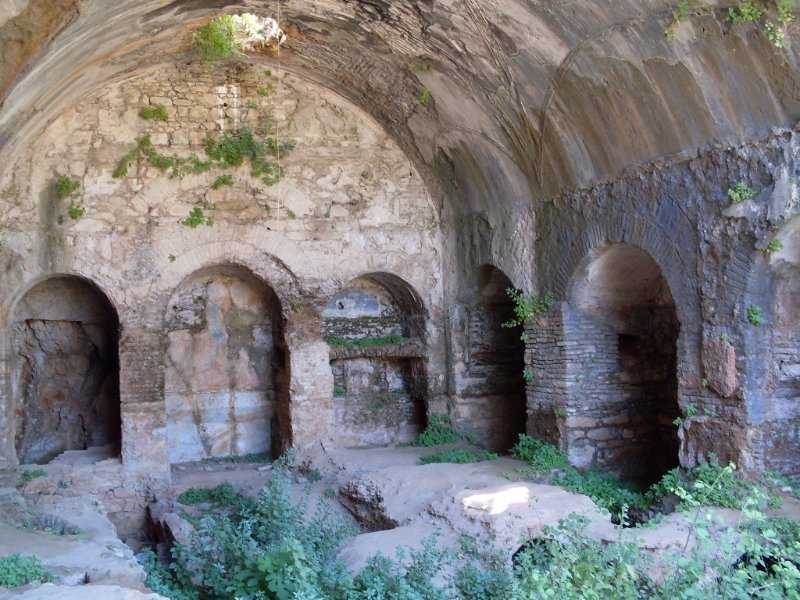
During Lent this last year, I participated in an online Bible Study with scholars and students from around the country through the Center and Library for the Bible and Social Justice in New York. The leader (who was a Buddhist-Christian nun) invited us to engage in a contemplative practice associated with St. Ignatius of Loyola in which we imagine ourselves fully present at the event described in the Gospel. And the Gospel we were using was this morning’s passage from John 3; so, we were invited to imagine ourselves fully present to the sights and smells and sounds of this conversation between Jesus and Nicodemus. However, a couple of us who had studied John’s Gospel in some depth pointed out that there’s a significant shift in the narration of the story right after verse 15, when the voice of Jesus seems to change into the voice of the narrator. So instead of imagining myself listening to a conversation between Jesus and Nicodemus, I began to imagine myself listening to the author of the Gospel (perhaps the Apostle John himself) preaching and telling the story of Jesus and Nicodemus at a gathering within a candlelit cave in Ephesus (where the Gospel was most likely written). I imagined the aroma of the Eucharistic bread and wine wafting in the air and the presence of the Spirit among us. And then I imagined the preacher doing something that I often do while preaching (and my wife thinks I do it too often) and that is go off script and go on a little bit of tangent or add a quick side comment here and there. Sometimes those comments are superfluous but other times I think those unscripted comments might be the most important message that the Spirit wants to speak through me from this pulpit. And I like to imagine that was the case with the author of John in this passage because when he seems to go off script here he ends up saying the most popular (and perhaps significant) verse perhaps in the entire Bible, a verse that so perfectly sums up the entire Gospel message: John 3:16: “For God so loved the world that he gave his only begotten Son that whosever believes in him shall not perish but have everlasting life.” Perhaps the most memorized Bible verse of all.
I imagine the preacher telling the story of Jesus and Nicodemus and then getting carried away on a tangent by the Spirit. I imagine the preacher essentially saying, “Hold on, before you get too confused and overwhelmed by this conversation about being born from above and the Son of Man being lifted up like a serpent in the wilderness, let me just back up and make very clear to you what this is all about: All of these stories of Jesus and all the teachings of Jesus are about God’s love and God’s invitation to us to find our fundamental identity in that love. God did not send his Son into the world to condemn the world but in order that the world might be saved through him, through love, and through our participation in the Holy Trinity.” I imagine those were the unscripted words of the preacher who went on a beautiful, Spirit-led tangent and whose words were eventually recorded in the Gospel of John. And his words are an invitation for us today on this Holy Trinity Sunday: to participate in the relationship of the Lover, the Beloved, and the Love Overflowing, as a community of companions walking together (and perhaps sometimes dancing together) in the way of Christ love for all. Amen.
[1] There’s a story I often share on Trinity Sunday of Jesus asking the disciples, “Who do you say that I am?” and Peter responds, “Thou art the Logos, existing in the Father as His rationality and then, by an act of His will, being generated, in consideration of the various functions by which God is related to his creation, but only on the fact that Scripture speaks of a Father, and a Son, and a Holy Spirit, each member of the Trinity being coequal with every other member, and each acting inseparably with and interpenetrating every other member, with only an economic subordination within God, but causing no division which would make the substance no longer simple.” And Jesus said, “What?” Rational explanations of the mystery of the Holy Trinity are admirable and I’m grateful for the theologians who have taken up that task, but ultimately it seems about as effective as trying to catch the wind.

 DANIEL DeFOREST LONDON