

Readings for the Third Sunday in Lent (Year B)
This sermon was preached at Christ Episcopal Church in Eureka CA on March 7, 2021
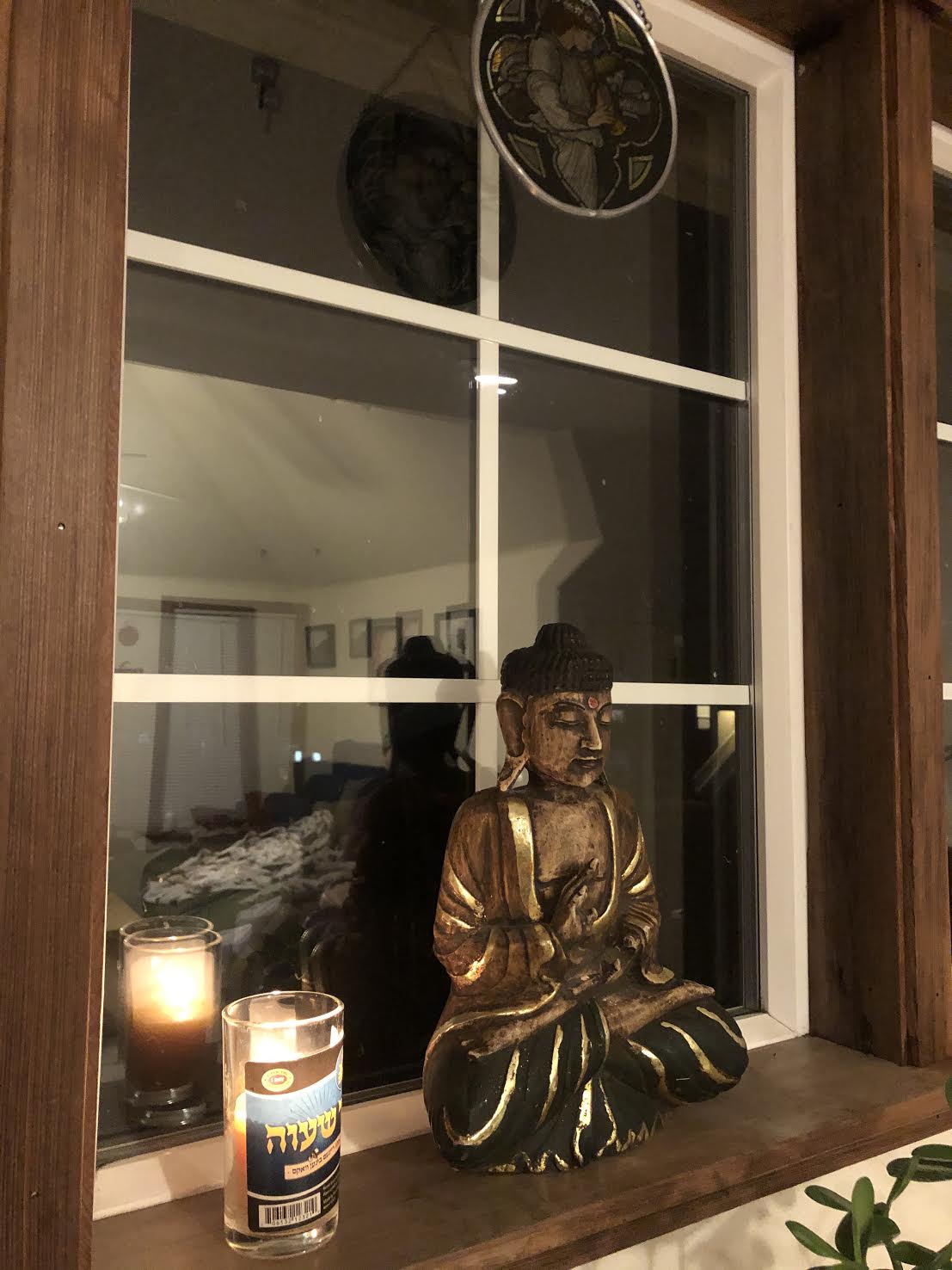
According to the Jewish calendar, today is my father’s yahrzeit, which is the anniversary of his death. Although he died on March 19th according to our calendar, this year his yahrzeit falls on the day after my birthday (today). Last night at sundown, I lit the yahrzeit candle in his memory, and it will remain lit until sunset tonight. The light of the yahrzeit candle represents the spirit (the neshama) of my father, which is no longer within his body but with me and with those who loved him and, of course, with God. Last year, I sat shiva for my father, which means staying at home for seven days and praying the Mourner’s Kaddish each day. God apparently really wanted me to sit shiva because it was at that exact time last year that we were all given stay-at-home orders here in Humboldt County. My homily that week functioned as a kind of eulogy; and in it, I mentioned the book of Ezekiel, which my father used to read aloud to my brother when he was a baby. The Jewish rabbis strongly recommend not reading Ezekiel until one is at least 30 years old, but my dad thought his three-month-old son could handle it. The rabbis recommend a certain level of maturity in reading Ezekiel because some of the content in it is so gritty and risqué that if it were a movie it would be rated R or NC-17.

During Lent this year, I’ve been participating in an online class sponsored by our diocese’s Center for Bible Study. I taught a class for the Center last Fall on the Gospel of John and this spring, Dr. Lindy Williams from Fuller seminary is guiding us through the Book of Ezekiel (and I’m pretty confident that we are all at least 30 years old). Now Ezekiel was a prophet in the 6th century BCE when the Babylonian empire sacked Jerusalem and destroyed the Jewish temple on Mount Zion. Thousands of the Jewish people were deported to Babylon, where they lived in exile for 70 years. It was during this time of exile that a Jewish poet wrote the famous words of Psalm 137: “By the rivers of Babylon, we lay down and wept for Zion.” Now, like most cultures at the time, the Jewish people believed that the only way to worship God was in the temple. So when the temple was destroyed, they felt like they could no longer worship God at all. In fact, they actually thought that their God had been defeated by the Babylonian god Marduk because, for them, God and the temple were so intertwined. If the temple was demolished, then that meant God was defeated and maybe even dead.
Ezekiel’s job as the prophet was to teach the Jewish people that God was very much alive; and that God’s presence was not limited to a temple. Just as my father’s spirit lives on and can even shine through the light of a simple yahrzeit candle so too does the Holy Spirit of God live on and shine in the hearts of God’s people, even when there is no temple at all. Ezekiel also had to explain to God’s people the many ways in which they had already corrupted the temple long before it was physically taken away from them. They had failed to obey the Law of Moses, which can be distilled in this morning’s reading from Exodus 20: the Decalogue, the Ten Doozies or the Ten Don’t-zies. Now obviously we have all fallen short of the Law’s holy standards, which is why we devote an entire season of our liturgical year to repenting, to confessing our sins and to admitting our need for a Savior in Jesus Christ. And thanks be to God, through Jesus Christ, we receive forgiveness. We Christians are sinners who are saved by grace.
But there’s one sin that Jesus himself says cannot be forgiven. And that’s the sin of refusing to ever repent, refusing to ever admit you might be wrong. You can’t expect to be forgiven if you never apologize. It’s the sin of refusing to ever repent and then using God’s Name to justify your sinful behavior. That is considered the “wrongful use of the name of the Lord your God” and, according to our reading today, “the Lord will not acquit anyone who misuses his name.” That’s the sin that was corrupting the temple in the 6th century BCE. Many of the temple priests and leaders were failing to care for the Jewish people who were poor and in need; and these leaders used the Name of God and their status as priests to justify their sinful and corrupt behavior. Ezekiel had to explain to God’s people that they had already corrupted the temple before it was destroyed because they were misusing God’s Name. And in order to effectively teach God’s people to repent (in order to wake them up), God commanded Ezekiel to engage in what we today would call bizarre performance art or street theatre. He publicly cut off his beard and scattered his hair, he wrote words on sticks, he prophesied against the mountains while stomping his feet and clapping his hands, he constructed mini replicas of Jerusalem, and he even lay on his side for 390 days (and I’m not even going to tell you how he cooked his food because it’s so unappetizing, but if you want to read about it, check out Ezekiel chapter 4, which will never appear in the Sunday lectionary). It was through this kind of bizarre performance art that Ezekiel tried to teach God’s people that they had corrupted the temple by misusing God’s Name; and now that the temple was destroyed, they needed to learn how to experience and worship God outside of the temple. They needed to learn how to experience God in the temple of their own bodies.
I share all of this background on the prophet Ezekiel because I believe that’s the most helpful way of understanding what the prophet Jesus is doing in this morning’s Gospel reading, when he cleanses the Second Temple (the temple that had been rebuilt after Ezekiel). More than anything else, Jesus identifies as a prophet, following in the line of Ezekiel, whom he references quite often. Like Ezekiel, Jesus in this morning’s Gospel is engaging in a powerful form of performance art in order to communicate a remarkably similar message. In fact, the whip of cords Jesus made was a reference to Ezekiel 45, which describes the ancient Jewish priests cleansing the temple in whip-like motions with a kind of ancient aspergillum, like I use when I remind you of your baptism. It wasn’t used violently. Jesus’s message was much like Ezekiel’s: “Stop corrupting the temple by using God’s Name as a tool for your power and wealth. Stop making God into an object for your own selfish gain. Stop putting God into a box as if you were stuffing an animal into a cage. And stop limiting God’s power and presence to the walls of this temple. Start paying attention to the ways God is present outside of the temple, within my body and within your body.” As the Gospel says, Jesus was speaking of the temple of his body.
This message is so crucial for us today. Many people on January 6th used the Name of God and the Name of Christ to justify their violent behavior. Many people were carrying signs that said “Jesus Saves” and “Jesus 2020” and many felt like they were emulating Jesus when they stormed the US Capitol, because Jesus himself stormed the temple. These people not only misunderstood what Jesus was communicating by cleansing the temple; they were, in fact, engaged in the very sin that Jesus was railing against: using God’s Name to justify ungodly behavior, without a hint of remorse. Some of these same people were demanding that all Christians rush back into church buildings during a pandemic even though one of the most foundational Christian teachings, which Jesus communicates in this morning’s Gospel, is that God is not limited to temples and church buildings. And by rushing back into church buildings during a pandemic, we are putting at risk the very thing that Jesus calls the temple: our bodies. Your body and my body. Temples of the Holy Spirit.

Now don’t get me wrong. I love this building and I feel God’s presence here so powerfully. And we take good care of this place. You can read about one example of our tender, love, and care for this place in yesterday’s Times-Standard, but let’s not limit God’s powerful and life-giving presence to a church building because when we do that, we commit idolatry. During this season of Lent, may we repent of the ways we have misused and continue to misuse the Name of God and may we learn to experience God’s presence in the safety our rooms so that God may “keep us both outwardly in our bodies and inwardly in our souls” (as we prayed in today’s Collect). May we experience God’s presence through computer screens, among the redwoods, at the beach, by the rivers of Babylon, and in the temple that is our body. And when we all return here in the not-too-distant future, we will have a renewed relationship with each other, with this church building, and with the Holy Spirit who connects us now through our bodies and who will keep us connected to the divine source of love, even after we shuffle off this old temple of our body like a bag of dry bones and receive the heavenly body, the eternal temple, promised by Ezekiel and manifested perfectly in Jesus Christ our Lord and Savior. Amen.

 DANIEL DeFOREST LONDON