
Readings for the Second Sunday after the Epiphany
This sermon was preached at Christ Episcopal Church Eureka on Sunday January 17, 2021.
Last Sunday, I began my sermon with a quote from the Rev. Dr. Martin Luther King Jr: “Darkness cannot drive out darkness; only love can do that. Hate cannot drive out hate; only love can do that.” As we approach MLK Day this Monday (which also happens to be the birthday of Fr. Shewmaker), it seems appropriate to offer another quote by the Reverend Doctor, who said, “We have flown [in] the air like birds and swam [in] the sea like fish, but have yet to learn the simple act of walking the earth like brothers [and sisters].”
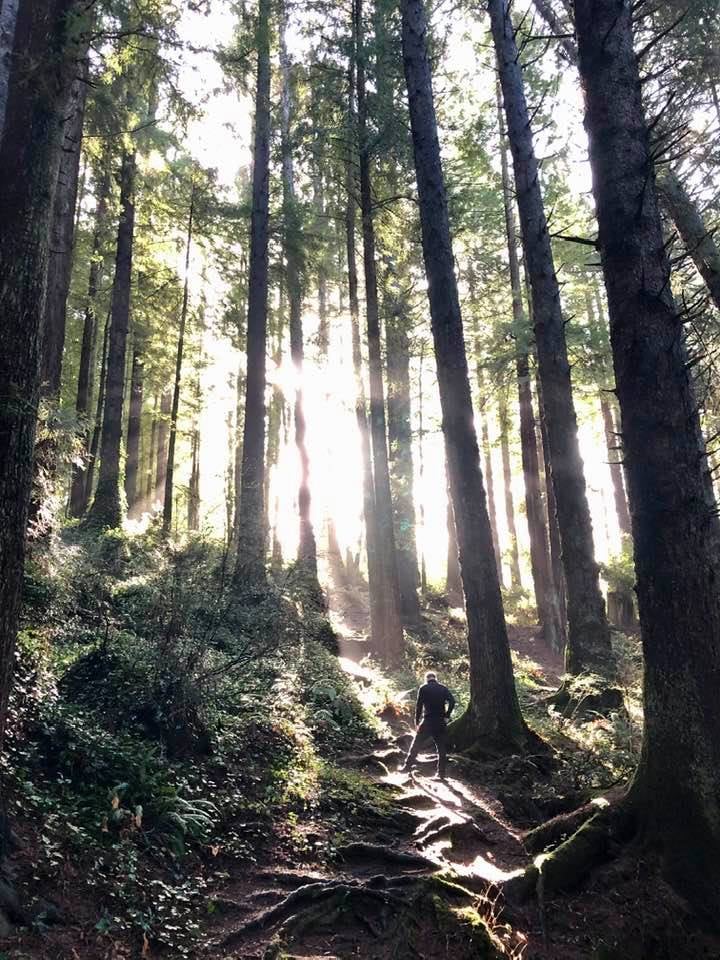
The members of the vestry have been working on and talking about a vision statement for Christ Church. A vision statement describes what we envision our community to look like when we are fulfilling our mission, which is to glorify God, follow Jesus Christ, and serve all people through the power of the Holy Spirit. We’re still in the process of discussing the vision, but so far, we have been returning to this idea and image of us as a community of companions who are walking together in the way of love. That’s what we look like when we glorify God, follow Jesus, and serve others through the Spirit: a community of companions walking together in the way of love. Walking the earth like brothers and sisters. I personally appreciate the image of walking because it conveys one of the unique ministries of Christ Church Eureka: our Sacred Saunter Outdoor Eucharists, which we have continued to offer in limited ways during this COVID crisis. I also hope for and envision parish pilgrimages in our future, perhaps to Iona or England.
Regardless of whether or not this becomes our vision statement, I invite us to reflect together on what it means to walk together in the way of love during this challenging time. How can we learn the simple act of walking the earth like brothers and sisters when we are so deeply divided as a nation? Our Scripture readings this morning offer us some wisdom here.
Our reading from the Hebrew Scriptures describes the calling of the prophet Samuel while he was essentially serving as an intern for the high priest Eli. One evening, when the lamp of God had not yet gone out, Samuel heard a voice. The Lamp of God, by the way, was the menorah, the Jewish candelabra, much like the candelabra that we keep up throughout the season of Epiphanytide. When Eli realized that the voice that was calling Samuel was the voice of God (YHWH), he told him to respond by saying, “Speak, for your servant is listening.” In this way, Samuel lived up to his name, which in Hebrew is Shemuel, a combination of the word Shema, which means “listen,” and El, which means “God.” In the original Hebrew, this passage is packed with puns. For example, when God calls “Shemuel, Shemuel,” the young prophet says, “I am shomeah,” (“I am listening”). And here we learn a key piece of wisdom that will help us walk together in the way of love: that is, the invitation to listen; to be like Shemuel who said, “Here I am. I am present. I am with you and I am listening. I am shomeah.”
I honestly don’t see this as an invitation for us to listen to each other’s political viewpoints and perspectives. There may be a time for that, but I don’t believe this is that time. Instead, the readings invite us to listen to each other’s stories, to listen like Samuel to the voice of God and the presence of God in each other’s lives. To listen compassionately to each other’s pain and sadness and confusion and grief and loneliness and joy and hope. That is how we can walk together in the way of love, walk on the earth like brothers and sisters.
When some of us were sauntering together at Deacon Anne’s home during Advent, I shared a quote by Buddhist monk Thich Nhat Hanh who said something quite similar to MLK. He said, “People usually consider walking on water or in thin air a miracle. But I think the real miracle is not to walk either on water or thin air, but to walk on earth. Every day we are engaged in a miracle which we don’t recognize: a blue sky, white clouds, green leaves, our own two eyes [that reveal grace to us at every glance.]” After sharing that quote, we stood together under the massive redwoods and listened to God in our communal silence and enjoyed the beauty that we can so easily take for granted.
African American novelist Alice Walker said, “I think it pisses God off if you walk by the color purple in a field somewhere and don’t notice it. People think pleasing God is all God cares about. But any fool living in the world can see [that the world is] always trying to please us back.” God orchestrates a glorious and miraculous spectacle for us every day, if only we took the time to look and to listen, if only we were to say with Samuel, “Here I am. I am listening.”
In his book God of Dirt, Old Testament teacher Thomas W. Mann writes about the artist Georgia O’Keefe who “is famous for her paintings of flowers seen as if from a bee’s eye view. But, as she has said, most people find it difficult to attend to the world around us because ‘really it takes time.’ The failure to take time,” Thomas Mann writes, “produces the incapability of experiencing an epiphany.”[1] May we take the time to look and to listen with these Holy Spirit temples that are our bodies; and thus make ourselves amenable to experiencing an epiphany.
And this leads me to our Gospel reading today in which Philip walks alongside his friend Nathaniel and tells him about the prophet promised by Moses, Jesus of Nazareth. Nathaniel, who is from the podunk town of Cana, has a hard time imagining that anything good can come out of another backwater town like Nazareth. But Philip invites Nathaniel to be like Samuel, to look and listen, to come and see, to practice withholding judgement, to hear this person’s story and remain open. And the following interaction between Nathaniel and Jesus indicates that Nathaniel previously had some kind of powerful experience or epiphany under a fig tree. We don’t know exactly what happened, but I wonder if he was simply paying attention to the miraculous beauty that was all around him under that fig tree, just like many of us were doing at Sacred Saunter last month, under the redwoods; simply looking and listening, like Samuel, and sensing the presence of God. According to Jewish philosopher Martin Buber, if you become attentive enough to a tree you can actually sense the tree becoming attentive to you. And you can sense the presence of God, which permeates all things, infusing the tree and looking back at you. This is actually a deeply orthodox Christian truth known as pan-entheism: God in all things, not pantheism (which states that God is all things), but pan-entheism. We see this truth described beautifully in our Psalm (Ps. 139) in which God is within us, creating our inmost parts, knitting us together in our mother’s womb (139:12). And I wonder if Nathaniel, in his solitary attentiveness under the fig tree, experienced this pan-entheism and felt the presence of God in the tree and even felt God looking back at him through the tree. So when Jesus says to him, “I saw you under the fig tree,” Nathaniel has an epiphany about the divine identity of this prophetic rabbi: “You must be the Son of God and the King of Israel, if you were the one looking at me under the tree!” And then Jesus says, “You ain’t seen nothing yet. If you keep looking and listening, you will see heaven open up before your very eyes; and you will see the angels that hover over every living thing on earth.” According to the Jewish Talmud, there’s an angel watching over every single blade of grass, whispering, “grow, grow, grow!” If we take the time to look and listen, perhaps we can see and hear them.
As we learn to simply walk on the earth as brothers and sisters, may we follow the way of love together by listening to the voice and presence of God in each other’s stories; and may we take the time to look and listen to God’s presence all around us, when we see the color purple in a field, when we hear the birdsong, when a shaft of light beams upon us through the ancient redwood branches.
Tomorrow we celebrate the birthday of Martin Luther King Jr (who was actually born on January 15th), but today is the unofficial feast day of the great Episcopal poet Mary Oliver who died on January 17, 2019. Like St. Francis and the early Franciscans, she preferred to pray to God in the woods. She said, “For me the door to the woods is the door to the temple.”[2] In one poem, she compares a black oak tree to a pope making the sign of benediction over her and her walk.[3] And in another poem, with which I will conclude this sermon, she describes her experience of looking and listening to trees, perhaps in the same manner that Nathaniel looked at the fig tree, the way Samuel listened to God, and the way that we can walk together on this earth lovingly as companions. The poem is called “When I am Among the Trees.”
When I am among the trees,
especially the willows and the honey locust,
equally the beech, the oaks and the pines,
they give off such hints of gladness.
I would almost say that they save me, and daily.
I … never hurry through the world
but walk slowly, and bow often.
Around me the trees stir in their leaves
and call out, “Stay awhile.”
The light flows from their branches.
And they call again, “It’s simple,” they say,
“and you too have come
into the world to do this, to go easy, to be filled
with light, and to shine.”
And in closing, let us pray again today’s Collect:
Almighty God, whose Son our Savior Jesus Christ is the light of the world: Grant that your people…may shine with the radiance of Christ’s glory, that he may be known, worshipped, and obeyed to the ends of the earth; through Jesus Christ our Lord, who with you and the Holy Spirit lives and reigns, one God, now and for ever. Amen.
[1] Thomas W. Mann, God of Dirt: Mary Oliver and the Other Book of God (Lanham MD: Cowley, 2004), 13. Georgia O’Keefe quote from Frederick and Mary Ann Brussat, Spiritual Literacy (New York: Scribner, 1996), 164.
[2] Mary Oliver, Winter Hours, 98
[3] Mary Oliver, “A Blessing,” Twelve Moons, 75.

 DANIEL DeFOREST LONDON