
This sermon was preached at Christ Episcopal Church Eureka on Sunday November 8, 2020.
Readings for the Twenty Third Sunday after Pentecost (Proper 27 – Year A)
In his Second Inaugural Address, the first Republican president acknowledged the deep division within our nation. And in the wake of perhaps the most stressful and divisive presidential election in our lifetimes, I invite us today to “read, mark, learn, and inwardly digest” these words of President Abraham Lincoln, who said, “Both [parties] read the same Bible and pray to the same God, and each invokes [God’s] aid against the other. It may seem strange that any[one] should dare to ask a just God’s assistance in wringing their bread from the sweat of other [people’s] faces, but let us judge not, that we be not judged. The prayers of both could not be answered. That of neither has been answered fully. The Almighty has His own purposes. ‘Woe unto the world because of offenses; for it must needs be that offenses come, but woe to that man by whom the offense cometh.’ . . . Fondly do we hope, fervently do we pray, that this mighty scourge of [division] may speedily pass away. Yet, if God wills that it continue…, so still it must be said ‘the judgments of the Lord are true and righteous altogether.’
“With malice toward none, with charity for all, with firmness in the right as God gives us to see the right, let us strive on to finish the work we are in, to bind up the nation’s wounds, to care for [the] widow and … orphan, to do all which may achieve and cherish a just and lasting peace among ourselves and with all nations.”[1]
With malice toward none, with charity for all.
Some say that we may be just as divided today as a country as we were when these words were first uttered, during the Civil War. That may be true, but I believe we can all agree with Abraham Lincoln’s call for us to have malice toward none and charity for all. We can all agree on the primacy of love, which is exactly what our Presiding Bishop and Primate of the Episcopal Church Michael Curry emphasizes so often in his words to us. Whenever Bishop Curry preaches, he roars the message of love like a mighty lion. And that is the message for us today.
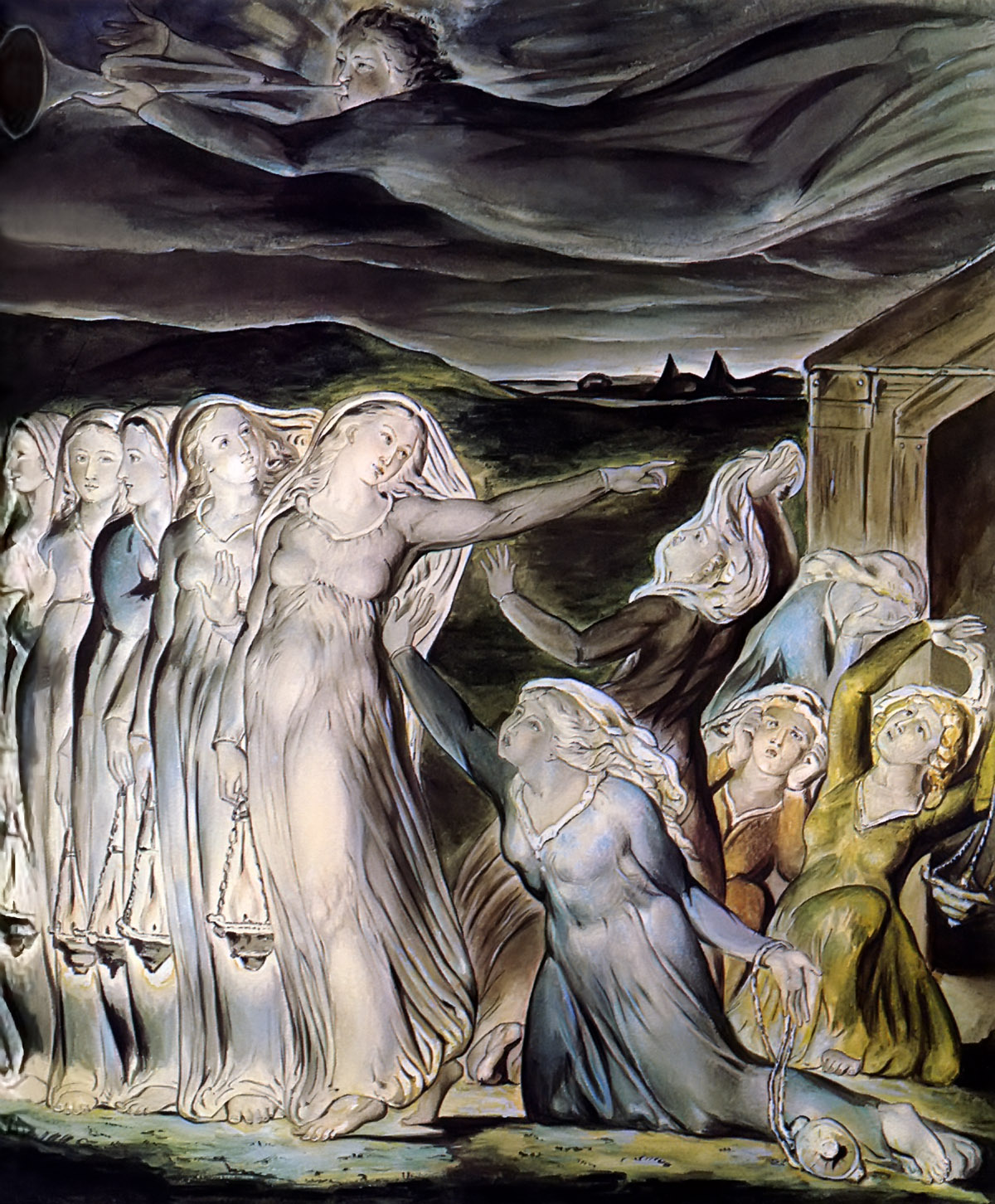
Some of us read this morning’s parable of the Ten Bridesmaids on Election Night during Lectio Divina, when the whole country and the whole world was waiting with nerve-wracking, nail-biting anticipation; and many of us stayed awake, as Jesus urges to do in our Gospel, for we knew neither the day nor the hour when the final results would come in. This week, I imagine many of us could relate to these ten bridesmaids as they grew weary and worried in the midst of a long delay. On Election Night, we also saw how our country seemed to be split almost 50/50, just like the ten bridesmaids, of which five were wise and brought extra oil and the other five were foolish and unprepared. We often feel like our side is wise and the other side is foolish, but when it comes to partisan politics, let’s remember what Lincoln said when he quoted Jesus: “Let us judge not, that we be not judged.”
At the same time, partisan neutrality does not mean moral neutrality; and so we must call out immoral behavior. And I must say that it is immoral and indeed foolish for either side to spread lies and false claims that attack the most fundamental institutions of our democracy: the right for citizens to vote and to have those votes counted fairly. And when we do call out immoral behavior, may we do so without malice but with charity. And may we continue to pray for our President Donald Trump; and may we pray for our President-elect Joseph Biden. That’s what we do, as Episcopalians. With malice toward none, with charity for all.
When it comes to this morning’s parable of the Ten Bridesmaids, I agree with St. Augustine of Hippo (and other early Church Fathers) who believed that in order to understand its meaning and message, we need to learn what the oil symbolizes. In ancient times, oil was used to keep a lamb burning (as we use in many of our candles here). Oil was also used for healing and anointing. We still use it today in the holy sacrament of unction, which requires oil. Just a couple days ago, I anointed the head of our brother Jim Diebold with holy oil as his wife Caren and I commended his soul into the hands of our Merciful Savior. And with the help of oil, Jim was received into the arms of God’s mercy, into the blessed rest of everlasting peace, and into the glorious company of the saints in light. Oil heals and oil helps smooth the transition from this life to the next. Oil was necessary for the anointing of priests, prophets, and kings. Remember that the name Christ means “anointed one” and that we as Christians are anointed ones, anointed with the healing oil of the Holy Spirit.
Oil keeps the lamp burning and the light shining in the darkness. Oil brings healing. Oil smooths transition from one life to another. Oil anoints and makes Jesus the Christ. Oil anoints and makes you a Christian. St. Augustine of Hippo asks this question: “What happens when you mix oil with water?” It doesn’t mix, but where does it go? It always goes to the top. Augustine says, “Oil swims above all liquids. Pour in water, and pour in oil upon it; the oil will swim above. Pour in oil, pour in water upon it; the oil will swim above. If you keep the usual order, it will be uppermost; if you change the order, it will be uppermost.”[2] Oil never fails to be on top. With his rhetorical creativity and spiritual brilliance, Augustine uses this analogy to make it clear that the oil in this parable symbolizes love, which never fails to be on top. He quotes St. Paul who says, “Faith, hope, and love remain but the greatest of these is love,” which is always primary, always on top, like the oil. Other church fathers agree and say that the oil symbolizes charity and compassion.
So you might be wondering: if the oil represents love and compassion, then why don’t the wise bridesmaids gladly give their oil to the foolish bridesmaids? Because the love was part of who they were just like the oil that has anointed you is now part of who you are (as one with Christ forever). They couldn’t just give that away. The wise bridesmaids had done the hard work and spiritual preparation of cultivating love and compassion in their hearts. They let the oil of God’s love heal their wounds so that they stopped spreading bitterness onto others. They let the oil of God’s love move them smoothly out of a life of selfishness into a life of community and service. The let the oil of God’s love anoint them and empower them to live a life in which love and compassion reign supreme and always remain on top, so that they have malice toward none and charity for all. It was that oil of God’s love that helped them see Christ even among the poor and the hungry and the sick. It was that oil that kept their lamps burning and their light shining so that they could receive the Bridegroom and enter into the Bridal Chamber.
The foolish bridesmaids had some oil, but because it was not a top priority for them, they ran out when they needed it most. They wanted to receive the Bridegroom and enjoy all the benefits of being with him and calling him “Lord,” without cultivating love and compassion as the primary values in their lives. Elsewhere in Matthew’s Gospel, Jesus says, “Not everyone who says to me, ‘Lord, Lord’ will enter the kingdom of heaven.” (Matt 7:21) In fact, to some who will call Jesus “Lord,” he will respond by saying, “I never knew you; go away.” (Matt 7:23). The Bridegroom says the same thing here to the foolish bridesmaids, “Truly I tell you, I do not know you” (Matt 25:12), because you have not made love and compassion the most important thing in your life.
The wise and foolish bridesmaids have been compared to the wise and foolish builders described at the end of the Sermon on the Mount. The wise man built his house upon the rock, which takes a lot of work and preparation. When the rains came down and the floods came up, the house remained steadfast and resilient. Jesus said the wise man is like someone who not only listens to Jesus and gives the proper lip service by calling him “Lord,” but who actually does what Jesus says to do: to love and to make love and compassion top priorities in life.
The foolish builder, on the other hand, built his house on sand; and when the rains came down and the floods came up, the house fell, and it fell hard. Jesus said the foolish builder is like someone who listens to Jesus but doesn’t actually make love and compassion top priorities in life.
That’s how we remain steadfast and resilient when “sorrows like sea billows roll.” And that’s how we will recognize Christ “when the clouds be rolled back as a scroll.” And when “the trumpet shall sound and the Lord shall descend,” we will receive him then because we have learned to receive him now among the poor and among all those who need compassion, because we have made love a priority in our soul.
No matter what your politics might be in the wake of this election, we can all agree to cultivate and prioritize love and compassion; and to let the oil of God’s Holy Spirit anoint us and empower us and enlighten us to have malice toward none and charity for all. And ultimately, we as Christians don’t place our deepest faith in presidents or any politicians at all. We place our faith in the love that always ends up on top, the love that was perfectly embodied in Jesus Christ our Lord, the Solid Rock upon which we stand, because we know that all other ground is sinking sand; all other ground is sinking sand. Amen.
[1] https://avalon.law.yale.edu/19th_century/lincoln2.asp
[2] Augustine of Hippo, Ancient Christian Commentary on Scripture: New Testament Ib: Mathew 14-28, ed. Manlio Simonetti (Downers Grove IL: InterVarsity Press, 2002), 216.


 DANIEL DeFOREST LONDON