
This sermon, which is the first in a sermon series on the Book of Exodus, was preached at Christ Episcopal Church Eureka on Sunday August 23, 2020. Worship Program here.
Readings for the Twelfth Sunday after Pentecost (Proper 16 – Year A)
Exodus 1:8-2:10
Psalm 124
Romans 12:1-8
Matthew 16:13-20
This summer I’ve been inviting us to read and pray the Psalms: psalms of lament, psalms of hope and psalms of praise, etc.. I’ve been especially encouraging us to read and pray the great psalm: Psalm 119. In early July, I started making short videos on Wednesdays that included teachings on the 22 stanzas of Psalm 119 and the Hebrew letters associated with each stanza. In the last videos I discussed the final letters of the Hebrew alphabet: Shin and Taw. I’ve been thinking about both of these letters recently. The letter Shin represents fire and it actually looks like three flames. The letter Shin makes two different sounds in words (depending on how it’s written) and it has a kind of dual nature, which is appropriate because fire itself has a dual nature. It can be both life-giving and death-dealing. It shines in paradise, it gathers people together around the hearth, it cooks food, and the fire lit on the candles here provide a sense of holiness (and I encourage you to light a candle in your homes as you worship with us). But fire also burns in hell and it destroys homes and it ruins lives, as is the case for so many of our brothers and sisters here in California during yet another devastating season of wildfires, adding one more awful crisis to the already overwhelming list. So let us continue to pray for God’s protection and salvation. In the final stanza of the psalm, the poet says to God, “I long for your salvation, O LORD” (a verse that inspired English composer William Byrd to write “I have longed for thy saving healthy, O Lord”). The letter that dominates this stanza is the letter Taw, which in its most ancient form resembles a cross (+). And the word for salvation in Hebrew is Yeshua, which is the Hebrew name for the one who died on a Taw cross for our salvation: Jesus Christ our Lord, Yeshua Hamashiach. So may we continue to intercede for others and cry out to our God who gives himself fully to us, who promises to save us and to protect us and to guide us safely through these trials and tribulations, the God who is our salvation, our Yeshua.
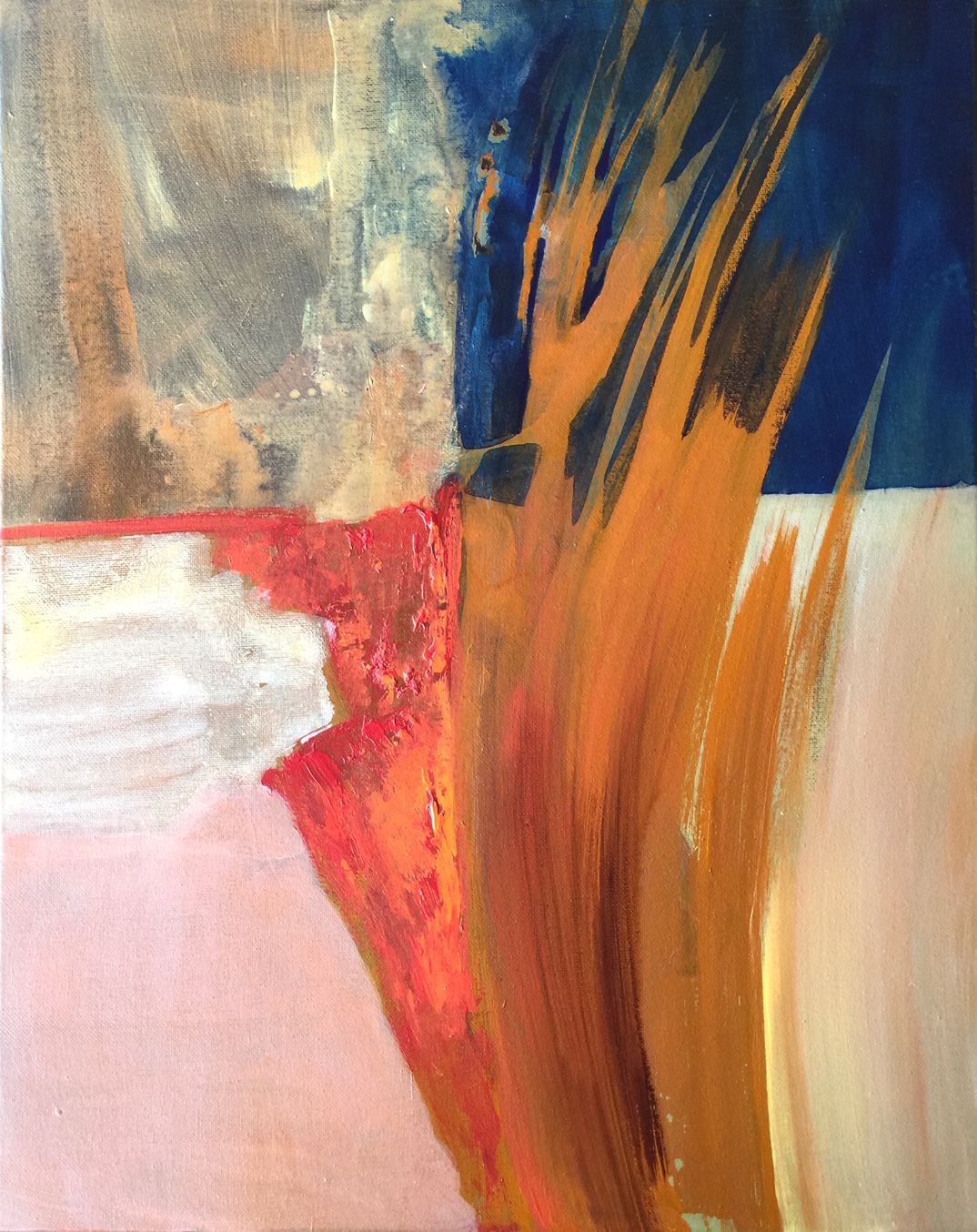
“God’s Name is Salvation” – mixed media painting by David Lochtie, 16″ by 20″
That is the message for us today, that foundational message that we need to keep hearing over and over again, especially during these difficult times: that God will save us. God will see us through. That is what Peter understood when he recognized Jesus (“Yeshua”) as the Messiah, the Son of the Living God. In one sense, he was affirming that key and foundational truth that God is our salvation, our Yeshua. As this morning’s Psalm says, “Our help is in the Name of the Lord,” and the name of the Lord, when he became incarnate among us, was “salvation,” or more literally “God will save us,” Yeshua, the Name above all Names.
Jesus loved names and loved giving special names to his disciples. He gave Simon the name Peter, which means “Rock” or “Stone” because Peter remained steadfast in his belief that God will indeed save us, no matter terrible or terrifying things appear to be. Peter “the Stone” lived up to his name by affirming that foundational truth. And 19th century English poet Samuel John Stone lived up to his name when he wrote the hymn we just sang: “The Church’s one foundation is Jesus Christ her Lord.” The Church rests on the foundational truth that God will see us through. Our help is in the Name of the Lord and that name is salvation.
Today, the lectionary launches us on a nine-part series of readings from the book of Exodus, a book replete with plagues, violence, oppression, and climate catastrophes (all of which sound way too familiar). Even the name “Exodus” which means departure and evacuation can easily resonate in a very disturbing way for us today, in light of all those who have had to evacuate from their homes (with the fear of not ever returning!). But the story of Exodus is a powerful and dramatic affirmation of that same foundational truth that God will save us, God will see us through, even in the midst of the most overwhelming crises.
The reading from Exodus this morning describes how horrifying and seemingly hopeless life must have felt for the Israelites in Egypt as they became the target of the Pharaoh’s bigotry and bile. The Israelites endured the bitter ruthlessness of oppression and injustice while having their own children ripped away from them because those in power felt threatened by their growing numbers. [Those in power felt threatened by the growing number of a minority]. The Israelites were the innocent victims of imperial scapegoating violence and usually victims like that don’t stand a chance. But their help was in the Name of the Lord, who used two courageous and feisty women named Shiphrah and Puah to save innocent lives. Shiphrah means “beautiful” and is connected to the word “sapphire” and “Puah” means “little girl” or “little spark,” like a spark that starts a revolution.
The meaning of the names is important here because the book of Exodus was not originally called Exodus. The books of the Bible were originally named after the first major word written in the book; and if you look at verse 1 in chapter 1, you see the phrase “These are the names…” Exodus was originally called “The Book of Names” (Shemoth in Hebrew) and that’s actually what it is still called in the Jewish Bible today. So it’s important to pay attention to the names in the Book of Names.
The beautiful midwives that spark the revolution helped pave the way for the great liberator and prophet, the one who was given the name Moses. Now Moses was actually an Egyptian name, but the author of the Book of Names brilliantly re-imagines the meaning of the name and gives it a Hebrew spin in light of the promise that God saves God’s people. According to the text, “She named him Moses ‘because,’ she said, ‘I drew him out of the water.”[i] In the original Hebrew it’s ki min hamayim mishitihu; mishitihu from the verb mashah which means to “draw out” or “to rescue from danger” or “to deliver” or “to save.” The baby who was drawn out from the dangerous waters of the Nile would later draw God’s people out from the dangerous waters of the Red Sea and thus live up to his name. Moses.
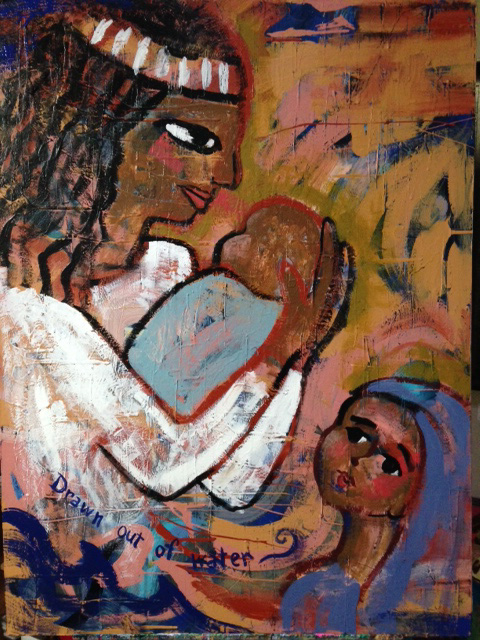
“Drawn Out of Water” – painting by Mollie Walker Freeman, 30″ by 40″
One Jewish scholar named Jerome Segal sees the author of Exodus connecting Moses’s name not only with the liberation from slavery and the waters of the Red Sea but also with another earlier biblical figure who was delivered from the treacherous waters of a catastrophic flood. Segal associates the name of Moses with the story of Noah, specifically with the end of the story when God draws Noah out of the waters and then promises to never again destroy the earth with a flood, a promise for us to hold onto most tenaciously in the midst of our terrifying climate crises. God gives Noah a sign as a physical, visual reminder of his promise of love and protection and salvation, a sign which he also seems to draw out of the water and into the clouds. The sign is the rainbow and God says, “When the rainbow is in the clouds, I will see it and remember the everlasting covenant between me and all flesh that is on the earth” (Gen 9:17). Segal writes, “Moses, named by Pharaoh’s daughter to signify ‘I drew him out of the water,’ is to function as God’s rainbow,” as a reminder of God’s salvation.
The readings remind us that God will save us. God will ultimately protect us and see us through. Although we are experiencing many frightening storms right now, we remember that whenever there’s rain, there’s bound to be a rainbow. Or as Samuel Stone puts it in his hymn, “Saints their watch are keeping, their cry goes up, ‘How Long?’ And soon the night of weeping shall be the morn of song.”
So let us live up to our name Christ Church (a church named after Jesus, Yeshua, God’s salvation) and may we prayerfully discern ways that we can each share our individual God-given gifts with the Body of Christ, with the wider community; and thus contribute our beautiful and colorful sparks of light to God’s glorious rainbow, and be a living reminder to the world that God saves God’s people and God will see us through and God’s name is salvation. Amen.
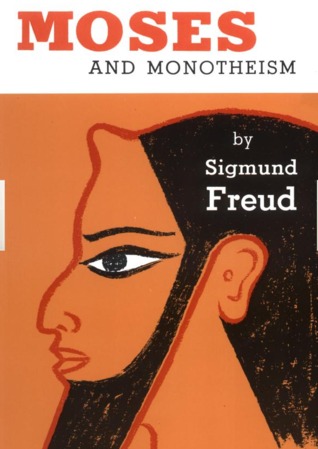
[i] Moses is an Egyptian name that means “son” (s – o – n). Egyptian pharaohs had names like Thothmosis which means “son of Thoth” (the Egyptian god of wisdom and the moon) and Ramses which means “son of Ra” (the Egyptian sun God). The fact that Moses is an Egyptian name has actually inspired all kinds of creative and bizarre historical claims about Moses’s true identity. Perhaps the most famous or infamous of these claims are those of Jewish psychoanalyst Sigmund Freud who basically conflates Moses with a Pharaoh named Akhenaton, who abandoned the traditional pantheon of Egyptian gods and introduced the worship of only one God: Aten. You can read more about these imaginative claims in his book Moses and Monotheism, which Rowan Williams called “painfully absurd” and which ultimately reveals more about Freud than it does about Moses. But I highlight it because so much of Freud’s argument hinges on the fact that the name Moses can indeed be understood as an Egyptian name. Names can hold tremendous meaning. The Book of Names, however, seems to dismiss the fact that Moses can be an Egyptian name and instead gives Moses a Hebrew meaning.

 DANIEL DeFOREST LONDON