
Readings for the Eleventh Sunday after Pentecost (Proper 15 – Year A)
Genesis 45:1-15
Psalm 133
Romans 11:1-2a, 29-32
Matthew 15: (10-20), 21-28
This sermon was preached at Christ Episcopal Church Eureka on Sunday August 16 2020. Worship Program here.
Oh, how good and pleasant it is when brethren live together in unity!
Every time I read this verse from Psalm 133, I think of the words in the original Hebrew: Hine ma tov uma nayyim shevet achim gam yachad, which translates more literally to “Behold, how good and how beautiful it is when brothers dwell together as one.” In my Hebrew class, I learned a Jewish folk tune based on this psalm, which was popularized by Jamaican-Jewish American singer Harry Belafonte. And I love the imagery of this relatively short Psalm as it compares unity and harmony among brothers to fine oil running down Aaron’s beard and onto the collar of his robe. (It sounds kind of messy). Those of us who have experienced and participated in this kind of harmonious unity across diverse differences can understand its healing power. It is indeed like healing oil poured out upon us, like the dew of Mount Hermon (and sometimes it can be a little messy). It is a beautiful thing to see and to experience; and I know a lot of us have experienced that healing power here when we gathered in person.
As we now gather virtually as members of this unified community (Christ Church Eureka), members who have been part of this community for decades or for a few years or for a few months or those who might be tuning in for the first time today, let us remember that we are one in Christ. All of our differences take a back seat as the healing and self-giving love of Christ comes to the forefront. Let’s let that love and unity wash over us now like oil running down Aaron’s beard, like the dew of Mount Hermon. May it wash over you now .
Our Scripture readings emphasize this unity among brothers. We see that most clearly in our reading from Genesis as Joseph reconciles with his brothers who had previously plotted to murder him, but then decided to capitalize on his suffering by selling him to slave traders. Through his ingenuity, insight, and practical wisdom, Joseph rose from the shackles of slavery to the royal courts of the Pharaoh where he essentially served as the Prime Minister of the entire Egyptian empire. When his brothers began to suffer famine in their land, they were forced to go to Egypt to purchase food, not knowing that the brother whom they had sold into slavery would be the one who would receive their request. They didn’t recognize him at first and Joseph wanted to know whether his brothers were still stuck in their sinful behavior or whether they had learned to grow up. Although Joseph remains at the center of this narrative, there’s another brother (another son of Jacob) named Judah whose powerful transformation is described in Genesis; and whose behavior convinces Joseph that his brothers have indeed grown up.

The reason why Joseph could no longer control himself and began to weep so loudly (at the beginning of our reading today) is because he just learned that his older brother Judah was willing to risk his own safety and life to protect his younger brother Benjamin. Judah was previously a violent and greedy person who sold his younger brother (Joseph) as a slave, but was transformed into a courageous hero, willing to become a slave for the safety and wellbeing of his other younger brother Benjamin. Judah’s transformation is described in chapter 38 of Genesis (which our lectionary unfortunately leaves out). In this chapter, we learn that Judah suffered the tragic loss of his own two sons and then, out of fear, tried to abandon and even burn to death his daughter-in-law Tamar, who strategically found a way to help Judah humbly acknowledge his own selfishness and prejudice and sin. Because of Tamar’s temerity and Judah’s willingness to learn and grow and change, the brothers of Joseph (the sons of Jacob) eventually embrace each other as tears of forgiveness flow, anointing them all like healing oil. Hine ma tov umanayim shevet achim gam yachad.
In the Gospel of Matthew, we learn that Tamar is one of the great, great, great, great grandmothers of Jesus; and in our reading today from Matthew, Jesus confronts someone with the same kind of temerity of his grandmother. Now this challenging conversation between Jesus and the Canaanite woman can be interpreted in different ways: it can be seen as Jesus testing the Canaanite woman or Jesus using this conversation as a kind of parable to teach his disciples; and/or we can acknowledge that although Jesus was fully divine, he was also fully human and part of being human involves learning and growing. In Matthew’s Gospel, Jesus himself admits that there are some things he doesn’t know (24:36) and St. Luke describes him as growing in wisdom; so this conversation can be understood as a moment when Jesus grows in wisdom and starts to learn and realize that his ministry may be much more far-reaching than he initially imagined. However we choose to interpret Jesus’s level of understanding here, the lesson is clear: a woman who is considered an outsider and a source of trouble is the one who wakes everyone else up to their own need for humility, their own need to learn and grow. It’s often those people whom we would rather ignore and dismiss and exclude that have something absolutely crucial to teach us, if we are humble enough to learn.
Just as Judah initially wanted to abandon his daughter-in-law Tamar (who was also an outsider), it seems that Jesus and his disciples initially wanted to send this Canaanite woman away. But both Judah and his great grandson Jesus (known as “the Lion of Judah”) had the humility to listen and to grow. To make a mistake is human, but to have the humility to acknowledge that mistake and learn from it and grow is a gift of the divine. The fully human and fully divine Christ makes this so clear in our reading today. By listening and learning from Tamar, Judah was able to reconcile with Joseph and bring unity among his brothers. By listening and learning from the Canaanite woman, Jesus was able to expand his holy community of brothers and sisters to include the Gentiles. So Jews and Gentiles could be brothers and sisters together in Christ. Behold how good and how beautiful it is when brothers and sisters dwell together as one. Hine ma tov uma nayyim shevet achim gam yachad.
In his letter to the Romans, St. Paul’s words remind us of the ways in which Gentiles have failed throughout history and, in some cases, continue to fail today to live in unity with their Jewish brothers and sisters. I wish I didn’t have to keep saying it but clearly we Christians need to keep hearing it: any theology that demonizes the Jews or claims that their blessedness or chosenness has been revoked by God is completely antithetical to the Gospel proclaimed by Jesus Christ and St. Paul, who makes that so clear in our reading today when he says, “Has God rejected his [chosen] people? By no means!… The calling of God is irrevocable.” It is because Christians have failed to read, mark, learn, and inwardly digest these words of St. Paul that antisemitic theology has emerged and fueled some of the darkest and sinful atrocities of church history, perpetuating violence against Jews. And as Christians today, we are called to acknowledge this sinful part of our history and to learn and to grow; and to condemn all forms of violent scapegoating that persist today, and that sadly persist often under the guise of religiosity. Although many people feel a sense of unity when they team up against scapegoats and adopt crazy conspiracy theories, this behavior is exactly what prevents the true unity of which the psalm speaks, that good and beautiful unity that heals and calms like oil and like the dew of mount Hermon, that good and beautiful unity that we need so desperately right now. May the healing power of our beautiful unity in Christ wash over us. May it wash over all who have lost loved ones, sisters, brothers, fathers, and mothers, especially over these last several months and days. May we be humble enough to receive this healing power. Hine ma tove uma nayyim shevet achim gam yachad. Behold how beautiful it is…
One of my friends and spiritual brothers had brain surgery this last week to remove a tumor and he is now recovering. He shared this poem by Leonard Cohen that beautifully conveys some of the themes in our readings and also the healing power of true unity expressed in the psalm. It’s called “Come Healing.” And I invite you to let these words wash over you like oil on Aaron’s beard, like the dew of Mount Hermon.
O gather up the brokenness / And bring it to me now
The fragrance of those promises / You never dared to vow
The splinters that you carry / The cross you left behind
Come healing of the body / Come healing of the mind
And let the heavens hear it / The penitential hymn
Come healing of the spirit / Come healing of the limb
Behold the gates of mercy / In arbitrary space
And none of us deserving / The cruelty or the grace
O see the darkness yielding / That tore the light apart
Come healing of the reason / Come healing of the heart
O troubled dust concealing / An undivided love
The heart beneath is teaching / To the broken heart above
Let the heavens falter / Let the earth proclaim
Come healing of the altar / Come healing of the Name
O longing of the branches / To lift the little bud
O longing of the arteries / To purify the blood
O let the heavens hear it / The penitential hymn
Come healing of the spirit / Come healing of the limb
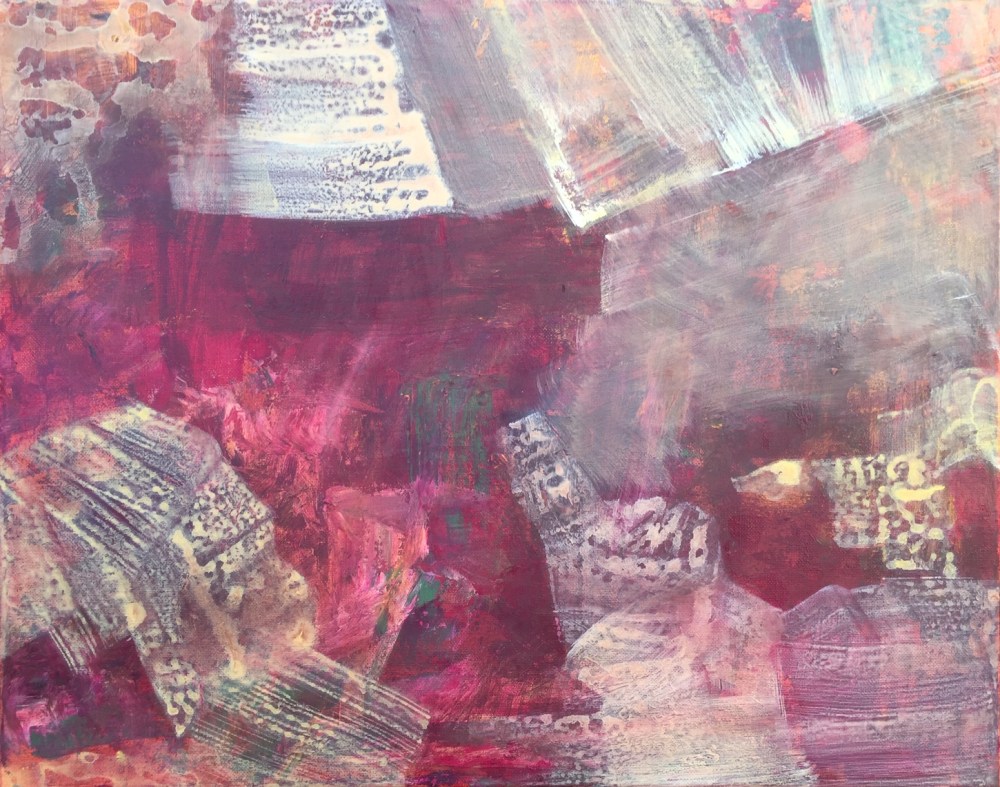
Healing of the Spirit (16″ by 20″ oil on canvas) by David Lochtie
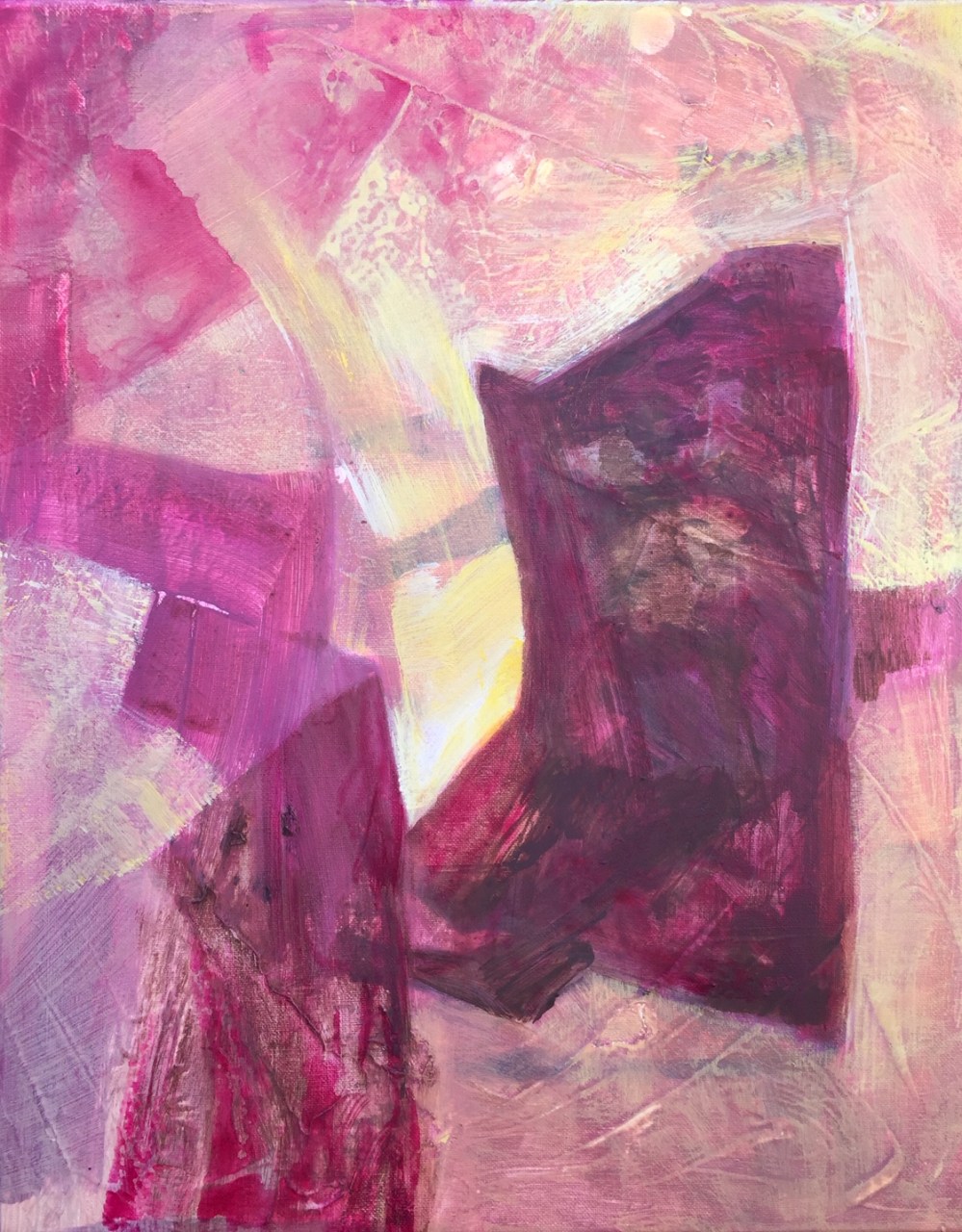
Healing of the Limb (20″ by 16″ oil on canvas) by David Lochtie

 DANIEL DeFOREST LONDON