
Readings for the Ninth Sunday after Pentecost (Proper 13 – Year A)
Genesis 32:22-31
Psalm 17:1-7,16
Romans 9:1-5
Matthew 14:13-21
This sermon was preached at Christ Episcopal Church Eureka on Sunday August 2 2020. Worship Program here. (Homily begins at 28:35 in video above)
There’s a Yiddish story of a man named Chaim Yankel who was having a hard time finding a job in the midst of economic problems. He could not even get an interview. Finally, he secured an interview and, needless to say, he was trying his best to impress the interviewer. The interviewer said, “In this job, Chaim Yankel, we need someone who is responsible.”
“I’m the one you want,” Chaim Yankel replied, “At my last job, every time anything went wrong they said I was responsible.”
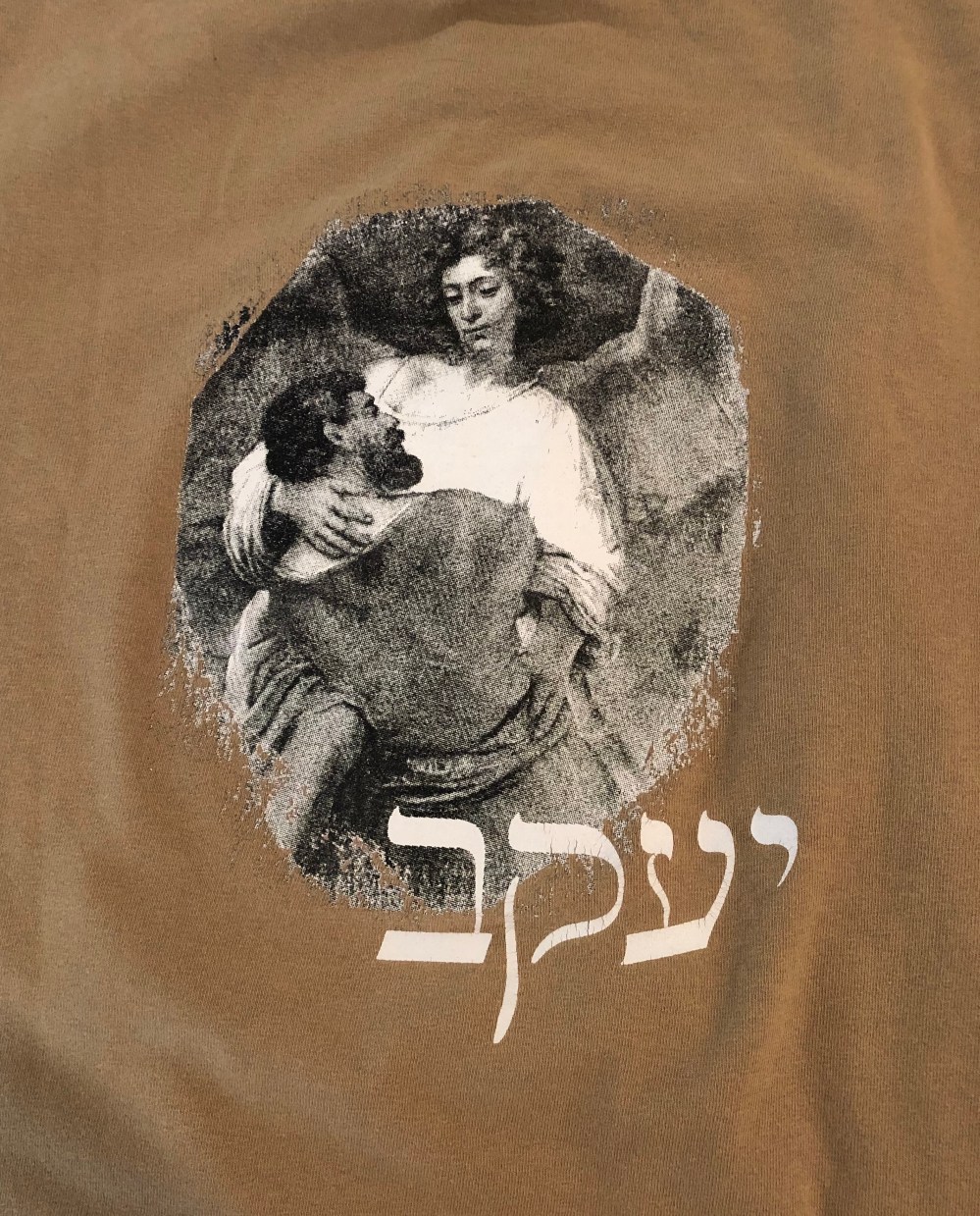
This morning I want to talk about being responsible; and that involves taking responsibility even when things do go wrong. And sometimes it involves repenting and changing our course of direction when the path we are currently on is clearly one of negligence and cowardice. The Scripture readings this morning emphasize this theme of being responsible. In our reading from Genesis, we have what I consider to be one of the most foundational stories of the Western spiritual tradition. I feel it is the pièce de résistance of the Hebrew Bible: Jacob wrestling with God. Former Archbishop of Canterbury Rowan Williams would likely agree with me. He said, “Scripture is the record of an encounter… Often in thinking about scripture we may be more helped by reflecting on the story of Jacob wrestling with the angel than by any images of oracles from heaven.” Scripture is the record of transformative human encounters with the divine, encounters that compel us to take responsibility, even if we’re kicking and screaming along the way; encounters that invite us to be transformed and even renamed (like Jacob) by our own collision with God. This kind of encounter is described perhaps most powerfully in our reading today from Genesis.
We need some context to appreciate the depth of this story. Over the last several weeks, we have heard about some of Jacob’s escapades in Genesis. In early July, we heard about baby Jacob grasping his twin brother’s heel as they both came out of the womb. For this reason, he was given the name Jacob, which basically means “Heel.” And for much of his young adult life, Jacob lived up to his name, a name that Dr. Seuss used in describing the Grinch: “You are a mean one, Mr. Grinch. You really are a heel.” Now I don’t want to say that Jacob was as bad as the grinch, but like the grinch he proved to be a “crooked jerky jockey,” especially when he stole his brother Esau’s birthright and then took advantage of his father’s blindness to lie and steal Esau’s blessing. So from Esau’s perspective, Jacob was indeed as bad as the grinch who stole Christmas and Jacob understandably provoked Esau’s murderous wrath. When their mother Rebekah overheard Esau’s plan to kill Jacob, she told Jacob to run away to his uncle Laban.
When Jacob arrived at Laban’s home, he fell in love with Laban’s first-born daughter Rachel. After working for Laban for seven years to earn Rachel’s hand in marriage, Laban gave Jacob a taste of his own medicine by giving him his other daughter Leah instead. You can almost hear Laban muttering to himself, “You lied to your father about who was the first-born son? Then I’ll lie to you about who is the first-born daughter.”[1] So Laban outsmarted the Heel and out tricked the trickster and taught Jacob the hard lesson that what goes around comes around.
Jacob eventually married both Leah and Rachel, with whom he had eleven children. After accumulating significant wealth, he felt called by God to return to his father’s homeland, where he would need to face his brother Esau. On his way home, he learned that Esau was approaching him with his own caravan of 400 powerful troops. The Bible says that Jacob was terrified and deeply distressed (32:7). He started to prepare for the worst: not only his death, but also the death of his wives and children. And that’s the background of our reading this morning.
Verse 22: “The same night Jacob got up and took his two wives, his two maids, and his eleven children, and crossed the ford of the Jabbok. He took them and sent them across the stream, and likewise everything that he had. Jacob was left alone.” Some suggest that Jacob was thinking about running away. He had learned the lesson well that what goes around comes around and he knew that he would soon be facing the man whom he had wronged the most: his own brother. But he was afraid he couldn’t do it. He wanted to avoid responsibility and run away, just like he did before. And that’s when a “traveler unknown” appeared and wrestled with Jacob until daybreak.
This mysterious wrestler forced Jacob to take responsibility for his actions, to confront his behavior, and to buck up and face his fears which meant facing his brother. And Jacob wrestled and held on for dear life and would not let go until he received a blessing. And when the blessing came, it came along with a broken hip and a new name: Israel. When Jacob started to realize the divine nature of his all-night wrestling partner, he said, “Please tell me your name,” but God did not reveal his Name to Jacob because Jacob also needed to learn that God would not be manipulated or tricked or controlled like others in his life. Instead God gave him the gift of humility as he realized that he had seen God face to face and that his life had been spared. With this gift, he was ready to take responsibility and face his brother Esau. And when the two brothers finally met, they embraced each other and wept. And Jacob said to Esau, “Seeing your face is like seeing the face of God” (33:10). When we begin to take responsibility, we start to see the face of God in those whom we initially pegged as our enemies or as the sources of our problems.
This same theme appears in the Gospel reading. And again it is helpful to have some context here. Jesus has just received news of the gruesome death of his friend and cousin John the Baptist, who launched a grassroots movement that now needed someone else to continue carrying its torch. The words that are omitted from the Gospel reading are the following: “Now when Jesus heard this [‘this’ referring to the death of John the Baptist], he withdrew in a boat to a deserted place by himself” (14:13). Jesus wanted some time to be alone and grieve and process the death of his dear friend. He went looking for an ereymon topon, a place of silence and solitude. Jacob was in his ereymon topon when he was interrupted by a traveler unknown. Likewise, Jesus did not have the luxury of silence and solitude for very long because the crowds heard about where he was and pursued him. So he had compassion on them and cured the sick until evening when the disciples urged him to send the crowd away so they could get food in the villages; so then Jesus and the disciples could finally have some time alone to grieve and process together. But Jesus had already processed enough to know that sending the crowd away hungry was no way to honor his friend John, who taught people to take responsibility and not shirk it. So he told his disciples, “No, they don’t need to go away. You need to give them something to eat.” And then Jesus took what little food they had (five loaves and two fish) and miraculously multiplied it to feed 5,000 people, with twelve baskets full of leftovers for each disciple to take home to their families. Jesus was teaching his disciples and us to not avoid responsibility, but to pay attention to the hungry and needy people in our lives and give them something to eat.
The same theme emerges in the short reading from the Epistle as St. Paul wrestles with his call to be the Apostle to the Gentiles while also knowing that that call does not give him permission to avoid responsibility and care for his Jewish brothers and sisters, from whom the blessing of Abraham, Isaac and Jacob (Israel) has originated and has become available to the world through Christ. Paul understands that the Jewish people remain the chosen people of God and to believe anything else is to make God out to be a liar. And to scapegoat Jews as Christians have done throughout church history (and some still do today) is not only an act of egregious irresponsibility, but an act of flagrant and vile sin. This morning, the readings call us to take responsibility.
The hymn that we sang in between the readings is one of the most beloved hymns of Anglican priest and poet Charles Wesley. It’s called “Come, O thou Traveler Unknown” but another title for it is “Wresting Jacob.” And in this hymn, Charles makes the story of Jacob his own. And we are invited to make all of these biblical stories our own by asking ourselves today: in what ways are we avoiding responsibility as individuals? as a church? as a nation?
This last Thursday, former president Barak Obama delivered the eulogy at the funeral of Congressman John Lewis, whom he compared to John the Baptist. Obama was making these biblical stories his own. He said that John Lewis taught us that real courage comes from “not […] avoiding our responsibilities (to create a better America and a better world), but by embracing those responsibilities with joy and perseverance and discovering that in our beloved community, we do not walk alone.” And John Lewis himself wrote these words shortly before he died and published posthumously: “When historians pick up their pens to write the story of the 21st century, let them say that it was your generation who laid down the heavy burdens of hate at last and that peace finally triumphed over violence, aggression and war. So I say to you, walk with the wind, brothers and sisters, and let the spirit of peace and the power of everlasting love be your guide.”
In his hymn, Charles Wesley writes, “I hear thy whisper in my heart; Pure, universal love thou art.” Charles Wesley realized that the mysterious presence and power that wrestles with us and calls us to take responsibility and to face our fears and to give the hungry something to eat is the holy power and presence of universal and everlasting love, the same presence that transformed Jacob by the river Jabbok and the same spirit that inspired John Lewis and John the Baptist and St. Paul and our Lord and Savior Jesus Christ. That same spirit of universal love is whispering in our hearts now. Are we ready to take responsibility? Are we ready to wrestle?
[1] Arthur Waskow, God-Wrestling (Shocken Books: New York, 1987), 6.

“Ready to Wrestle” by David Lochtie (16” by 20”, oil on canvas)
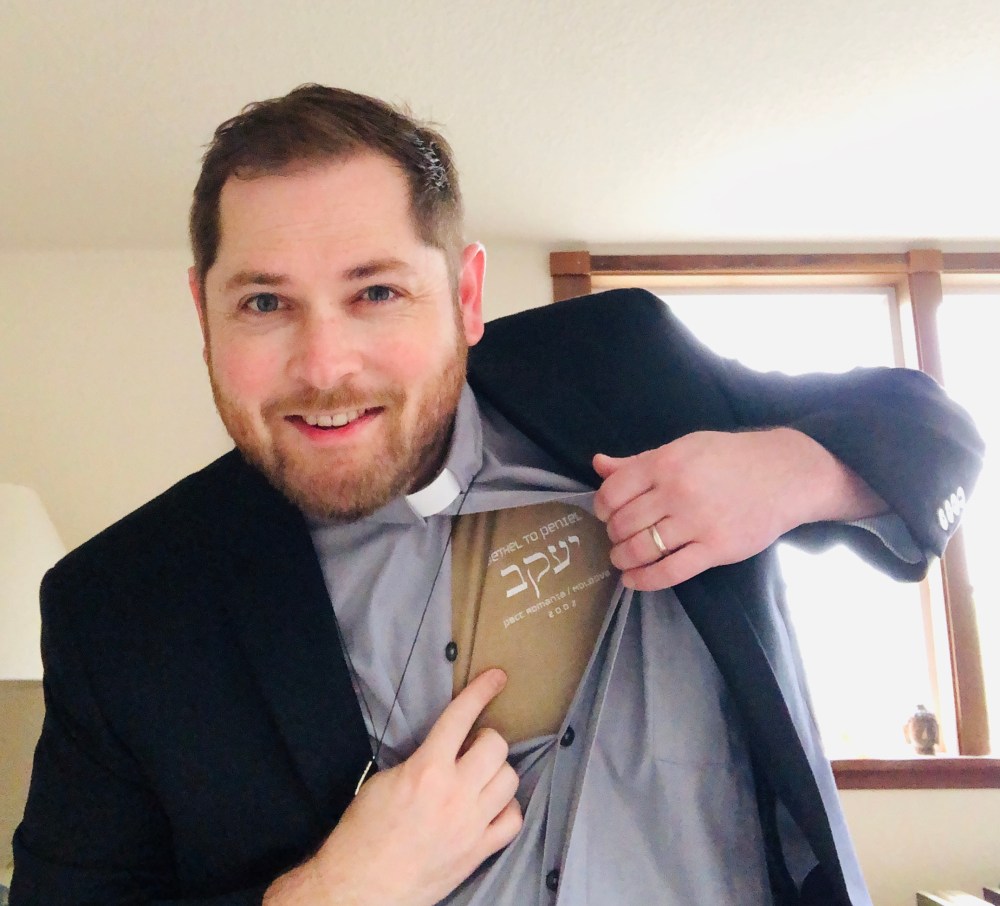

 DANIEL DeFOREST LONDON