
Readings for the Eighth Sunday after Pentecost (Proper 12 – Year A)
This sermon was preached at Christ Episcopal Church Eureka on Sunday July 26 2020. Worship Program here.
May the words of my mouth and the meditations of our hearts be pleasing in your sight, O Lord our Rock and our Redeemer. Amen.
Three years ago, I preached on these readings from Scripture days after a memorial service for a parishioner who was an ardent fan of the singer-songwriter Jimmy Buffet, who wrote the song “Margaritaville.” And I was surprised to discover some striking similarities between Jesus’s parables and Jimmy Buffet songs, but what proved to be the icing on the sponge cake was the fact that when I read the parable of the pearl of great price in the original Greek, I learned that the Greek word for pearl is “margarita.” (I couldn’t help but imagine Sydney and the Holy Spirit smiling and winking at me when I first learned this). So the title of that sermon was “The kingdom of God is like…a margarita.” If anyone wants to hear that sermon, I can make that available, but that is not the sermon for today.
Three years later, I now preach on these same readings the day after participating in an online memorial service for my father, Bob London. I want to thank all of you who participated with my family and me in that service and please know that you are all still welcome to watch that service online. (We can include a link in the comments). Although my father was a huge Bob Dylan fan, I don’t feel inclined to compare Jesus’s parables with Dylan songs this morning (though that would be fascinating). Instead I feel invited to continue delving deeply into the Hebrew poetry of the psalms, a subject that was always very dear to my father’s heart.
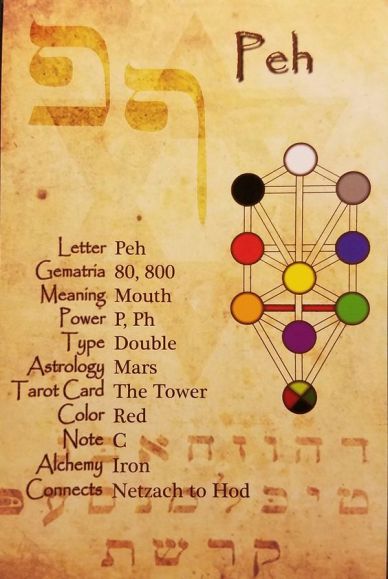
This morning we have yet another portion of the longest psalm and the longest chapter in the Bible: Psalm 119, which as you may recall is poetically structured according to the 22 letters of the Hebrew alphabet. Each letter of the Hebrew alphabet has profound spiritual meaning; and the letter associated with this morning’s portion of the Psalm is the letter Peh, which is akin to our letter “P” except it also sometimes represents the sound of our letter “F.” It’s the 17th letter in the Hebrew alphabet; its numerical value is 80; and it is associated with the mouth. The shape of the letter itself represents a profile of the human mouth. And we see a clear reference to this in the psalm when the poet says, “I open my mouth” (verse 131). The psalm and the letter Peh highlight particular aspects of our Scripture readings this morning as well as aspects of our Moring Prayer liturgy.
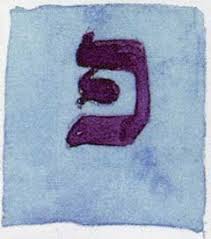
When it comes to our readings, the letter Peh invites us to pay attention to people’s mouths, especially when they seem to be lying through their teeth. In Genesis, we read about characters who apparently like to blow smoke out of their mouths. After Jacob deceives his father Isaac, he gets a taste of his own medicine from his father-in-law Laban. Jacob has a rude awakening when he discovers Laban’s lie while lying next to Leah rather than Rachel the morning after his wedding night.
And honestly, I have a hard time believing the one word that comes out of the mouths of the crowd in the Gospel reading when they respond to Jesus’s question, “Have you understood all this?” with a resounding “Yes!” I highly doubt that the crowd fully grasped the meaning or meanings of these parables. Perhaps they grasped a tiny fraction of their meaning and perhaps that tiny “mustard seed” of understanding is sufficient, as long as there is room to grow and openness to learn more. However, I will admit that I do not fully understand the meaning of these parables, even after many years of study, and honestly that is part of their allure. As St. Augustine said, “If you understand it, then it’s not God.” The teachings of Christ and the Word of God keep me hungry and thirsty for more, for deeper levels of understanding and wisdom.
And that is a key meaning of the letter peh expressed in the psalm when the poet says, “I open my mouth and pant; I long for your commandments” (v. 131). Another psalm says, “As the deer pants for streams of water, so my soul longs for you, O God” (Ps 42:1). My hope and my prayer is that we all hunger and thirst and pant for the Word of God, for the words that proceed from the mouth of God. During this time of quarantine when we are no longer able to experience the Holy Eucharist, no longer able to receive in our mouths the bread and wine made holy, may we feast on the Word of God. Let us remember the words of Jesus when he was in the desert fasting for 40 days, tempted by Satan to turn stones into bread. He said, “One does not live on bread alone but on every word that proceeds from the mouth of God.” (Matthew 4:4).
While we have to remain socially distanced from each other, I invite us – I urge us – to draw closer to God and God’s Word during this time. Although we need to cover our mouths to limit the spread of water droplets, we don’t need to distance ourselves from the words that proceed from the mouth of God. The Psalm describes the Word of God as giving forth light and even causing our eyes to shed streams of joyful tears. When it comes to our closeness to God, let us throw caution to the wind, and let us immerse ourselves completely in the aura and breath of God, the water droplets of God that emanate from our Scriptures. One of the pastors who spoke at my father’s memorial service yesterday shared a church sign with me that said, “Jesus doesn’t have COVID-19. You can get close to him.”
This morning’s portion of psalm 119 encourages deep intimacy with God because it is actually a description of someone on the receiving end of the priestly blessing that I offer at the end of each service, when I say, “May the LORD bless you and keep you; may he make his face to shine upon you and be gracious to you; may he turn his countenance upon you and give you peace.” The word for “face” and “countenance” is the same Hebrew word Panim, which starts with the letter Peh. In the psalm, the poet asks God to be gracious and to shine his face upon us through his Word. The poets asks for an intimacy with God not unlike the intimacy expressed in the Song of Songs, when it says, “Let him kiss me with the kisses of his mouth” (1:2). May we hunger, thirst and pant for this intimacy, for every word that proceeds from the mouth of God.
And then in response to receiving God’s Word, let us open our lips so that our mouths shall proclaim God’s praise. The Hebrew letter peh invites us to pay attention to the references to the lips and mouth in our Morning Prayer service. This morning, we omitted the General Confession, which was not part of the ancient Morning Prayer service but was added later, after the Reformation. We omitted this in order to emphasize the words of the Opening Versicle and Response: “O Lord, open our lips” / “And our mouths shall proclaim your praise.” That is how the ancient monastics would begin Morning Prayer and for them, it was literally true because they would remain silent and keep their mouths shut during the Great Silence from the end of Compline to the beginning of Matins. So the first words spoken in the morning were “O Lord, open our lips and our mouth shall proclaim your praise.”[1] The ancient and medieval monastics understood what the ancient and medieval rabbis understood: that the essence of a person is their mouth since it makes them able to fulfill the ultimate purpose of creation, which is to praise God. And if the mouth does not carry out its mission, then it should remain closed. In fact, the wisdom of the Hebrew alphabet teaches us that the primary purpose of language and letters and mouths is for us to pray and praise God. So may we open our mouths and pant for every word that proceeds from the mouth of God. And may we respond to the Word of God by opening our mouths again to declare God’s praise and thus fulfill the purpose of language itself.
Yesterday was the great feast day of St. James the Apostle, with whom my father was deeply fascinated. In his Epistle, St. James expresses the crucial importance of the mouth and tongue when he says, “With the tongue we praise our Lord and Father, and with it we curse human beings, who have been made in God’s likeness. From the same mouth come blessing and cursing. My brothers and sisters, this ought not to be so. Does a spring pour forth from the same opening both fresh and brackish water? Can a fig tree yield olives, or a grapevine figs?” (James 3:9-12). The purpose of our mouths and of language itself is to pray and to praise God and to share God’s love with others; and we pervert language and our mouths when we use them to spread lies or to curse and demean and dehumanize others. James was the brother of Jesus, who taught something remarkably similar when he said, “Each tree is known by its fruit [the Hebrew word for fruit is p’ri which also begins with peh]. Figs are not gathered from thorns, nor are grapes picked from a bramble bush. The good person out of the good treasure of the heart produces good, and the evil person out of evil treasure produces evil; for it is out of the abundance [the overflow] of the heart that the mouth speaks” (Luke 6:44-45).
So may our hearts overflow with longing for the Word of God and may our lips declare God’s praise. And if the words of our prayer book and the psalms don’t quite express the longing or the joy or frustration in our hearts, then let’s take a page from St. Paul’s playbook and ask the Spirit to intercede with sighs too deep for words. In fact, I encourage us now to ask the Holy Spirit to speak through us with a sigh, because sometimes a spirit-filled sigh is the best prayer we can pray. This is some of the wisdom of Psalm 119 and the Hebrew letter Peh.
Let us pray.
Almighty God, may we open our mouths and pant for every word that proceeds from your mouth. And may we fulfill the purpose of language by praising you and blessing others; and give us such an awareness of your mercies, that with truly thankful hearts we may show forth your praise, not only with our lips, but in our lives, by giving up ourselves to your service, and by walking before you in holiness and righteousness all our days, through Jesus Christ Our Lord. Amen.
[1] Derek Olsen, Inwardly Digest: The Prayer Book as Guide to a Spiritual Life (Forward Movement: Cincinnati OH, 2019), 181.
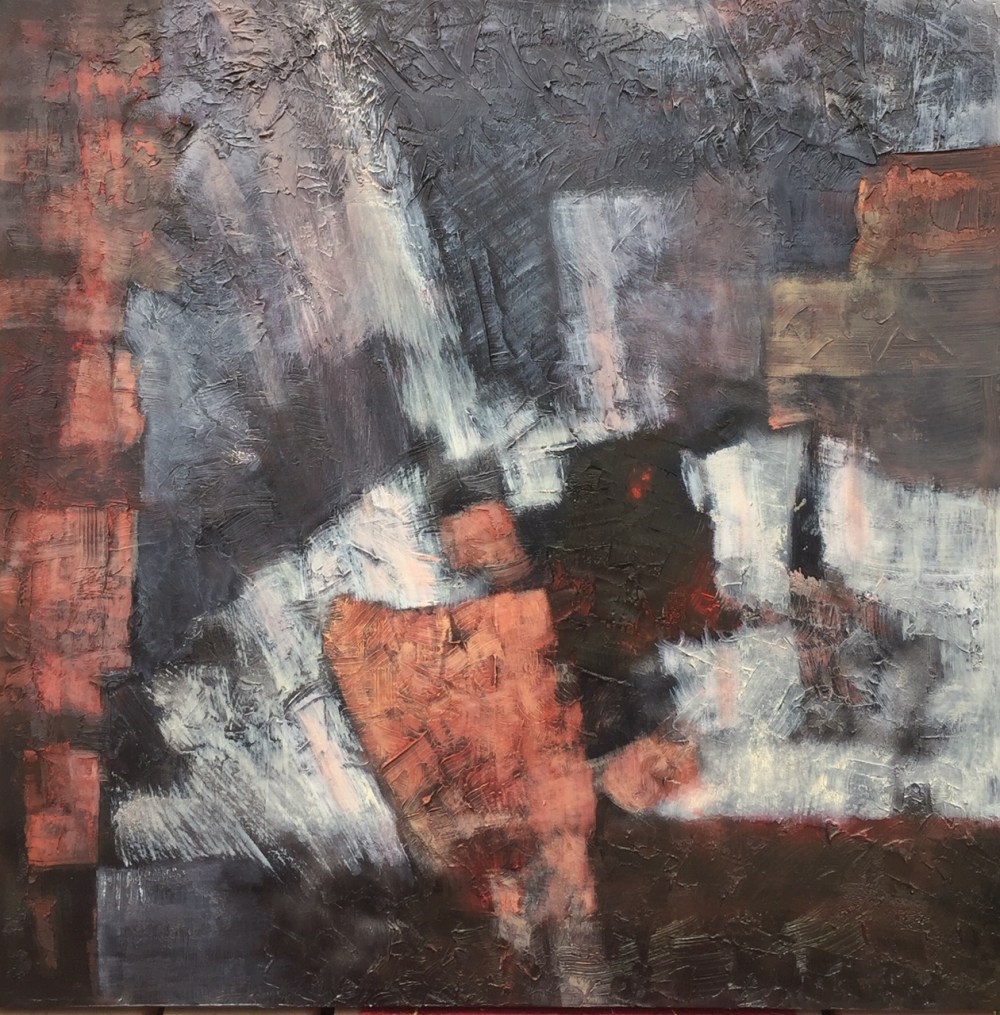
“Sigh of Praise” by David Lochtie (artist in the Christ Church Eureka congregation)

 DANIEL DeFOREST LONDON