
This reflection was shared during Compline at the Transfiguration House on Tuesday July 21, the Eve of the Feast Day of St. Mary Magdalene.
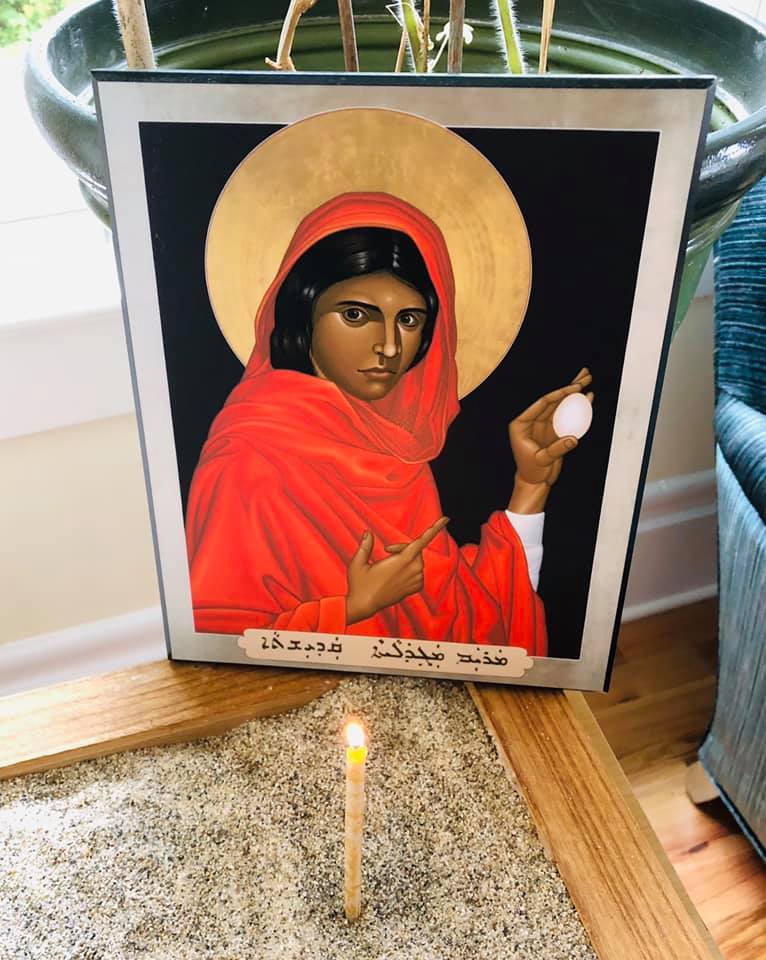
I have been drawn to the spirituality of Christian mystics, especially Christian female mystics, such as the German Hildegard of Bingen, the Spanish Teresa of Avila, and my personal favorite, the English Julian of Norwich. A mystic is someone who has had a profound experience of union with God and then lived to talk about it; and tomorrow is the feast day of one who might be considered the mother of all female mystics (Christian and Jewish): namely, Mary Magdalene.The New Testament clearly sees her as the first woman apostle if not the first apostle altogether. She was the first to encounter the Risen Christ, who then sent her (apostello) to the disciples to share her Easter experience of the Resurrection, making her the “Apostle to the Apostles.” Curiously, she does not show up at all in the Book of Acts or in any of Paul’s Epistles, which makes many scholars wonder if the early male leaders of the church were suppressing her witness and apostolic authority. Over the centuries, church leaders continued to downplay her apostolic status and underscore her identity as a penitent prostitute, while simultaneously praising the perpetual virginity of Mary, the mother of Jesus, as the ideal woman for females to emulate. The truth is that Mary Magdalene is never once called a prostitute in the New Testament. According to the Gospel of Luke, she had been exorcised of seven demons, but this does not necessarily refer to the seven deadly sins or a lust-filled past, as church fathers like Pope Gregory the Great suggest. Instead, according to theologian Jean-Yves Leloup, this means that she has “done her psychological work,” that hard but necessary inner work that most of us need to do, at one point or another in our lives.[1] So according to the New Testament, Mary Magdalene was not a demon-possessed prostitute; but actually a psychologically mature Apostle to the Apostles who was perceived as a threat to the other apostles because of her closeness to Christ.
[1] In fact, there’s an ancient text called The Gospel of Mary Magdalene that traces Mary’s progress through seven stages of spiritual purification thus supporting this interpretation. Jean-Yves Leloup, The Gospel of Mary Magdalene (Rochester VT: Inner Traditions, 2002), 106-9

 DANIEL DeFOREST LONDON