
Readings for Pentecost Whitsunday (Year A)
This sermon was preached at Christ Episcopal Church Eureka on Sunday May 31, 2020. Worship Program here.
I will sing to the Lord as long as I live; I will praise my God while I have my being. May these words of mine please him; I will rejoice in the Lord. Amen.
Today is a major feast day of the church. It is the great feast of Pentecost when we celebrate the receiving of the gift of the Holy Spirit who empowered Christ’s disciples to become apostles and to share the Good News of God’s Liberating Love to the world, to every race and nation. This day marks the birth of the church, which is why we call Pentecost the church’s birthday and we often celebrate with cake and red balloons, red being the church’s color for the Holy Spirit.
Pentecost is the Greek word for “50th” because today is the 50th day after Easter Sunday; and Pentecost is based on and inspired by the Jewish holiday of Shavuot or Shavuos, which takes place 50 days after Passover, and which was one of the three major pilgrimage festivals for the ancient Israelites along with Passover (Pesach) and the Feast of Tabernacles (Sukkot). Shavuot was a time when the ancient Israelites would go on pilgrimage to the temple to offer their first fruits to God. When the temple was destroyed, the rabbis reimagined the meaning of this holiday and begin to see it as an opportunity to celebrate the receiving of the gift of the Torah which was received by the Israelites on Mount Sinai, more than 3,000 years ago.
According to Jewish legend, right before God gave the Israelites the Torah, right before imparting his words of wisdom, God took a deep breath. This legend is based on the Jewish understanding of the letters of the Hebrew alphabet, in which every Hebrew letter has rich meaning and personality. (Aleph, Bet, Gimel, Dalet…I’d love to explore those meanings with you sometime because they can illumine so much of our Scriptures). The first phrase of the Torah which the Israelites heard was “Anochi Adonai Eloheikhem” which means “I am the Lord your God.” And the first letter of that phrase is Aleph, which is kind of like our letter “A” or the Greek letter “Alpha,” but in Hebrew, the Aleph is silent. It’s basically the sound of breath, which is why the Israelites believed God was taking a breath before giving them the Torah.
I personally love this story because the imagery of breath pervades so much the Hebrew and Christian scriptures, including all of our readings this morning. Remember that the Hebrew word for breath is ruach which is also the word for spirit and for wind. So in our reading from the book of Numbers, we learn about the spirit of God that rested upon Moses being given to seventy elders who prophesied, inspired by the spirit of God, the breath of God (Num 11:24-30). In the Psalm, God is described as One who can take away breath and who creates by sending forth his Spirit (104:30-31). And in the great story of Pentecost, it’s a violent wind (a ruach) that sweeps through the house and empowers the disciples to become apostles (Acts 2:1-21). And in our Gospel reading, which is the Johannine retelling of that same story, how does Jesus give the Holy Spirit to his disciples? He breathes on them. He breathes on his disciples and says, “Receive the Holy Spirit. Receive the holy breath.” And then he says, “Now you have the power to let go of what you need to release and you have the power to hold onto what you need to embrace.” This verse is often poorly translated into the English, but in the original Greek, Jesus essentially says, “Let go of what you need to release and hold close what you need to embrace.” In other words, Receive my love and my comfort and give to others my compassion and my mercy. Breathe in my comfort. Breathe out my compassion. Breathe in comfort because the Holy Spirit is the Comforter; and breathe out compassion because the Holy Spirit is also the Paraclete, the Advocate, the One who calls us to stand up and speak out for those who are vulnerable and those who are victims. Breathe in the comfort of the Holy Spirit. Breathe out compassion for the world. On this Pentecost Sunday, I invite us to breathe, to let the Holy Spirit intercede with sighs too deep for words (Romans 8:26). May our breath and our sigh be a prayer. Anglican poet George Herbert described prayer as “God’s breath” (“God’s breath in man returning to his birth”). God’s ruach. So I invite you now to take three deep breaths with me, breathing in comfort and breathing out compassion.
(Take three deep breaths.)
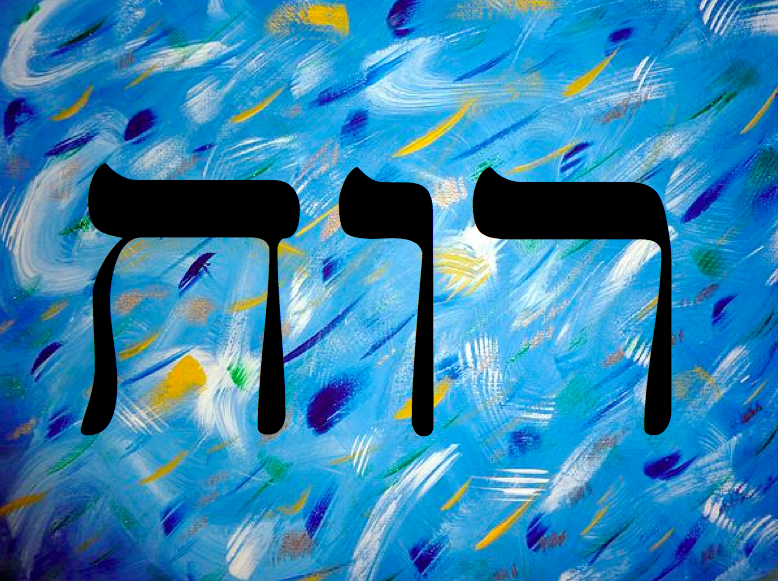
This morning I emphasize the gift of breath because it pervades our Scriptures as well as the story of Pentecost and the story of Shavuot. Paying attention to our breath also contributes to less stress, anxiety, pain, and illness and to more health, wellbeing and compassion. 90% of our body’s energy comes from breathing and 70% of our body’s toxins are released in breathing. Breath is our life force. Without my breath, I am a mere corpse.
I also emphasize breath this morning because we, as a nation and as a global community, are being invited to reflect on the gift of breath. For some, this might be an unwelcome invitation, but it’s an invitation nonetheless. For others, “invitation” might not be the right word at all. On this day usually associated with cake and red balloons, we grieve and we mourn because of COVID-19, a disease that does serious damage to people’s lungs so that breathing often becomes extremely painful if not impossible. Many COVID patients become dependent on ventilators in order to breathe and some lose their ability to breathe altogether. We mourn and we lament because so many of us have stopped breathing. Over 100,000 people in our country alone have stopped breathing. In Humboldt County, where we have over 100 cases now, three of us have stopped breathing as a result of this virus. This is why national faith leaders around the world from Jewish, Christian, and Muslim communities have called for a National Day of Mourning and Lament tomorrow June 1st, when we will ring our church bells and we will observe moments and silence and we will pray.
As we grieve over the deaths caused by a global plague, we also mourn and lament and repent (Lord, may we repent!) as some of us become more painfully aware of the deadly plague of systemic racism that has been infecting America for over 400 years. This systemic racism poisons us all and creates political and social and economic forces that prevent other people from breathing. I speak metaphorically and you all know that I also speak literally when I say that people of color in this country are suffocating under the weight of an unjust system, literally being choked to death. Eric Garner and George Floyd and countless others have stopped breathing because they have been choked to death under the weight of a racist system, as they beg for mercy and compassion, saying, “I can’t breathe. I can’t breathe.”
So my friends, as we breathe on this Pentecost Sunday, let us be aware that our breath is a gift. And may we use that gift to help others breathe more freely, especially those who are suffocating to death from sickness and from racial injustice. May we breathe in the comfort of the Holy Spirit and may we breathe out compassion for the world.
One page 372 of our Book of Common Prayer, there’s a prayer that we often pray in which we ask God to “deliver us from the presumption of coming to [church] for solace only, and not for strength; for pardon only, and not for renewal.” I hope we can all experience some much-needed peace and solace and rest together during this sweet hour of prayer, especially in the midst of such social unrest and political division in our country and even in our county. May we breathe in the comfort of the Holy Spirit who is described as our Comforter.
And our tradition also expects us to be strengthened and renewed by prayer in order to be agents of compassion in the world. In the church in which I grew up, I was taught that the preacher’s job is to comfort the afflicted and to afflict the comfortable. I imagine a lot of us are feeling somewhat “afflicted” right now and I invite us to find comfort in the Holy Spirit on this great feast day of the divine Comforter. And at the same time, may we recognize the ways in which we are already comfortable and privileged, and sometimes comfortable and privileged at the expense of others; and may we learn to use and leverage that privilege to help others, to speak out on behalf of others who are less privileged, those who are vulnerable and those who are victims. Remember: the Holy Spirit is the Paraclete, the Advocate, the One who defends and stands up for the victims of the world, who hears the voice of victims as they cry out for mercy, saying, “I can’t breathe. I can’t breathe.” May we join in the work of the Holy Spirit, the Advocate, and learn to breathe out compassion for the world, especially for those who are struggling for their next breath.
There are many safe and constructive ways for us to practice compassion, but today I want to echo the invitation of my predecessor the Rev. Charles Farrar (1916 – 1931), who served as rector of Christ Church Eureka during the Spanish flu when the church had to close its doors. Father Farrar encouraged everyone to gather in the safety of their homes during church time, “to join in an act of worship to Almighty God with prayers for the needs of the world, the nation and the community.” May we pray and lament and bring our anger, confusion, and sorrow to God, as the psalmists so often do. May we continue to breathe in the comfort of the Holy Spirit and breathe out compassion for the world. May we be guided, empowered, and inspired by the ruach of God.
As I was writing this sermon and trying to dictate some of my words to the computer, the dictation program I’ve been using had a hard time transcribing the word “ruach.” Every time I said, “ruach” it would transcribe it as “rock the roof,” which I think is pretty funny and also kind of appropriate since that what the ruach does: it rocks the roof, just as it did on that first day of Pentecost in Jerusalem. The ruach shakes things up, especially those things that need some real shaking up. So I invite us to “rock the roof” right now by inviting the transformative power of the Holy Spirit to be present with us, as we again take three deep breaths, breathing in comfort and breathing out compassion. After I ring this prayer bowl, let us breathe in the holy ruach together, and then we will renew our baptismal covenant in which we remember our promise to “strive for justice and peace among all people, and to respect the dignity of every human being” in the power of the Holy Spirit. Amen.
(Take three deep breaths.)


 DANIEL DeFOREST LONDON