
Readings for the Seventh Sunday of Easter (Year A)
This sermon was preached at Christ Episcopal Church Eureka on Sunday May 24, 2020. Worship Program here.
“Beloved, do not be surprised at the fiery ordeal that is taking place among you… Cast all your anxiety on God, because he cares for you. Discipline yourselves, keep alert. Like a roaring lion your adversary prowls around, looking for someone to devour. Resist him, steadfast in your faith, for you know that people around the world are undergoing the same kinds of struggle. And after you have struggled for a little while, the God of all grace, who has called you to his eternal glory in Christ, will himself restore, support, strengthen, and establish you. To him be the power forever and ever. Amen.”
I feel like that’s a sufficient sermon in itself. Our Presiding Bishop Michael Curry has invited us, during this “fiery ordeal,” to feast on the Word of God, so I invite us this morning to feast on these words, which are traditionally understood to be the words of St. Peter, the first bishop of Rome, the first pope, the first great shepherd of the early church, who was commissioned by the Risen Christ to feed and care for God’s flock. In this first Epistle of Peter, which Martin Luther called “one of the grandest Epistles of the New Testament” (which is high praise since Luther also called the letter of James “an epistle of straw”), we see Peter offering words of hope and encouragement to his flock, those early Christians whose lives and wellbeing were consistently threatened, because of the irresponsible and reckless and malicious behavior of tyrannical Roman emperors (Nero and Domitian and others) who believed themselves to be gods and who behaved as monsters towards those who refused to adore them; and who often used Christians as pawns for political gain.
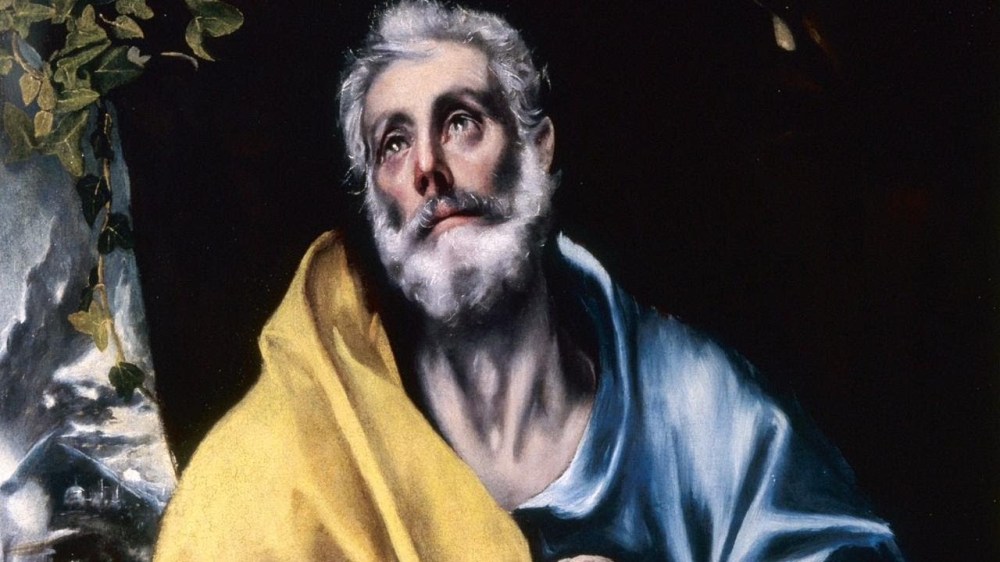
St. Peter knew that, as a shepherd, his main job was to keep his flock safe and never do anything that might jeopardize their health and safety. In the verses that the lectionary leaves out, Peter addresses the pastors and shepherds of Christian communities, saying “I exhort the elders among you to tend the flock of God that is in your charge” (1 Peter 5:2). The original Greek word for “elders” is presbyteros, which is where we get the word “Presbyterian,” so it is very appropriate that we had Presbyterian minister Dan Price read part of this passage for us this morning. Presbyteros is also the Greek word that translates to “priest.” So here Peter is speaking to me and to all the priests of Christ Church Eureka and Humboldt County and beyond, saying, “I exhort you to tend the flock of God that is in your charge. Take care of them. Keep them safe.” Peter continues, “Do not lord yourself over those in your charge, but be examples to the flock. And when the chief shepherd appears, you will win the crown of glory that never fades away.” And then he addresses all Christians, not just the priests, when he says, “All of you must clothe yourselves with humility in your dealings with one another, for ‘God opposes the proud, but gives grace to the humble’” (1 Peter 5:5).
He then urges all Christians to remain steadfast in faith. Here Peter is living up to the nickname that Jesus gave him many years ago when he called him “the Rock,” that steady foundation upon which Christ built his church. The word “steadfast” seems to keep coming up for us throughout this 150th year, which has been marked by the motto “Steadfast and Growing since 1870.” And we have indeed lived up to that description during this year, which has been full of unprecedented challenges: arson, vandalism, power outages, threats, and now a global pandemic that prevents us from gathering together as we normally do in our beautiful church building. In the midst of these challenges, Peter calls us to remain steadfast in our faith, our faith in God’s steadfast love for us. Peter calls us to remain steadfast in our mission to glorify God, to follow Jesus Christ, and to serve all people through the power of the Holy Spirit by upholding our core values of worship, discipleship, fellowship, outreach and hospitality. St. Peter also invites us to realize that our essential mission is not dependent on us gathering in a building once a week (as important as that is). The early Christians to whom Peter wrote his letter understood this. They worshipped secretly in homes and catacombs and frequently spoke in code in order to keep themselves safe. Peter himself speaks in code at the end of this letter when he calls Rome “Babylon” (5:13). Peter reminds us that our ministry is not so much to go to church but to be the church; and one of the primary ways we do that is by caring for the vulnerable among us, even at the expense of our own inconvenience. My friends, we are starting to make plans to eventually regather, but please understand that Christ Church Eureka has never closed. We remain open and we remain steadfast in our mission and we continue to grow as we have since 1870, upholding our core values.
We uphold our primary core value of worship. Throughout the epistle, Peter launches into these beautiful doxologies, these expressions of love and adoration for God’s glory. In the first chapter, he says, “Blessed be the God and Father of our Lord Jesus Christ! By his great mercy we have been born anew to a living hope through the resurrection of Jesus Christ from the dead” (1 Peter 1:3). In chapter 4, he says, “To God belong the glory and the power forever and ever. Amen.” And in the passage we just read, he says again, “To God be the power forever and ever. Amen.” We emulate St. Peter and remain steadfast to our mission when we glorify God by praying and singing along with our gifted cantor David Powell in the psalms and canticles. We are starting to explore the possibility of a virtual choir, but in the meantime, I urge you to join us from your homes by singing and praying aloud with us. I also invite you to kneel during the Confession, to stand during songs of praise, to light candles and incense in your homes as we worship God together in the temple of the Holy Spirit, which is not a building, but which is our bodies. Remember it is with our bodies that we worship God in Spirit and in truth and continue to uphold our primary core value of worship.
When the author of First Peter says, “Discipline yourselves” (which he says three times in this fairly short epistle: 1:13; 4:7; 5:8), he is urging us to uphold our core value of discipleship. As I’ve been saying for over two years now, a crucial part of being a disciple of Jesus Christ means practicing spiritual disciplines, including daily prayer, not just weekly worship. Remember: our Book of Common Prayer was not written to be used only on Sundays, but every day; and I am so encouraged by all of you who have taken that to heart and now practice some form of the Daily Office. Again, I invite you all to join me for Compline on Tuesday nights at 9 on Facebook live or asynchronously; and we will be offering more discipleship opportunities soon, including a weekly contemplative Bible Study with the deacons. We continue to be the church by remaining steadfast in following Jesus Christ through faithful discipleship.
We also continue to uphold our core values of fellowship, outreach, and hospitality. Peter stresses the importance of these values in his epistle as well when he says, “Love one another deeply from the heart” (1:22), “Honor everyone. Love the family of believers” (2:17), and “Above all, maintain constant love for one another, for love covers a multitude of sins” (4:8). We continue to be the church by connecting and expressing love to each other through emails, phone calls, letters, notes, zoom meetings, porch visits and gifts on doorsteps. And we are exploring new ways to fellowship while staying safe and healthy. And we engage in outreach by giving to organizations that know how to help in a crisis while keeping people safe, organizations like the Betty Chinn Foundation, the Eureka Rescue Mission, and the Food Bank.
And finally, we continue to be the church by practicing hospitality. St. Peter says “Be hospitable to one another without complaining” (4:9). Although it seems counter-intuitive, we are actually being more hospitable to others by keeping our doors closed during this time. In the same way, we express love and compassion to others by wearing our masks and by staying at home as much as we can, even when we don’t want to. And even as we keep the doors of our buildings closed, we continue to open wide the doors of our online community, inviting people from all over the world to join us in being the church. And I invite you to practice hospitality by sharing this online community online with your social networks, especially among those who haven’t yet connected to a church. And when many of us do regather, I know that many others will wisely choose to remain at home for quite some time ,which is why we are planning to continue live-streaming our worship every Sunday from now on. It’s going to be a lot of work and we’ll need your help, but we’re not going to rob Peter to pay Paul by keeping those at home at a disadvantage. We are going to uphold our core values of fellowship, outreach, and hospitality.
On this Memorial Day weekend, I believe St. Peter would urge us to not only remember and honor those American heroes who sacrificed their lives for our freedom and well-being, but to emulate them American heroes by sacrificing some of our own comfort and convenience in order to ensure the health and well-being of others. Although we might not like it, we can learn to breathe through masks if that will help prevent others from having to breathe through a ventilator. And although I dearly miss gathering with all of you in our beautiful church building, we will learn during this time like we’ve never learned before that our highest calling is not to go to church, but to be the church; and, in a little while, the God of all grace, who has called us o his eternal glory in Christ, will himself restore, support, strengthen, and establish us. To him be the power forever and ever. Amen.”

 DANIEL DeFOREST LONDON