
Readings for the Fifth Sunday of Easter (Year A)
This sermon was preached at Christ Episcopal Church Eureka on Sunday May 10, 2020. Worship program here. (Sermon begins at 19:13).
Last Sunday was Good Shepherd Sunday, when we read a portion of the Good Shepherd discourse from John chapter 10. As I’ve continued to reflect on that Gospel reading, I realized the obvious truth that the primary job of the shepherd is not so much to gather the sheep together, but to do whatever needs to be done in order to help keep the sheep alive and not threaten their health and wellbeing in any way. That is why Bishop Megan, our diocesan shepherd, has directed us to continue live-streaming worship for the rest of the month of May, which we will be doing from the safety of our homes to your homes. We are in the process of forming a Regathering Task Force whose job will be to create a plan for regathering at church in the weeks to come, a plan that will follow state, local, and diocesan guidelines. Although I’m very eager to see you all again in person, I do not want to rush this process. So we will wisely and prayerfully find a way in which we can open our church doors again.
In the portion of the Good Shepherd discourse that we heard last Sunday, Jesus said, “I am the gate for the sheep. I am the door that brings the sheep in and keeps them safe and protected” (John 10:7, 9). And in this morning’s Gospel, Jesus says, “I am the way. I am the way to the Father in heaven.” These were the very words of Jesus that inspired our founder Thomas Walsh 150 years ago when he wrote his letter to the Humboldt Times, saying, “I propose DEO VOLENTE (God willing) erecting an Episcopal Church in Eureka, to be called Christ Church, which I think is a most appropriate name because Christ is the Way to Heaven, because Christ is the Door to Heaven.”
And I personally think it is very appropriate and serendipitous that our lectionary invites us (twice) to consider Christ as the Door to Heaven on the two Sundays before we celebrate our 150th anniversary with Bishop Megan (next Sunday). Last Sunday, Jesus said, “I am the gate. I am the door for the sheep.” And this Sunday, he says, “I am the way, the door to heaven.” So this morning, let us reflect more deeply on the meaning of these words: “I am the way.”
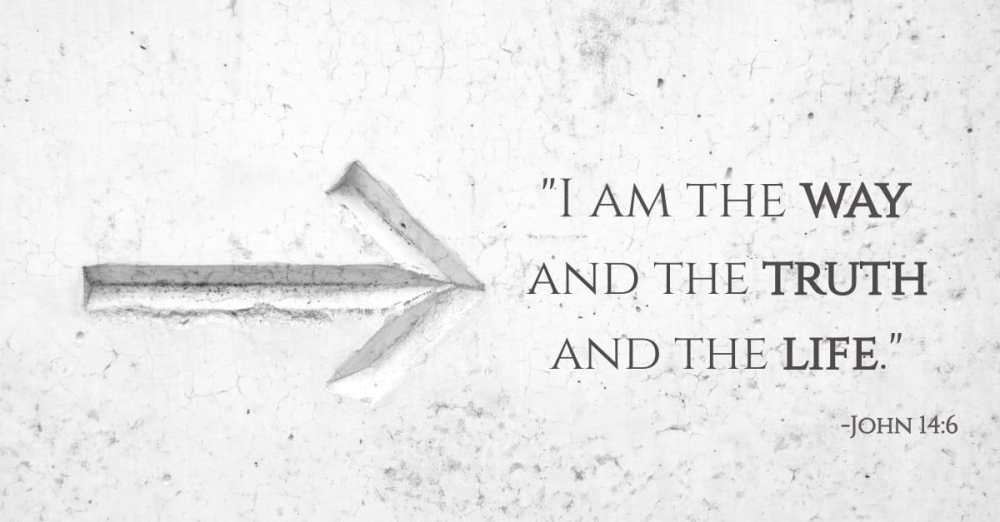
When I was a young boy in Sunday School, I memorized this verse from John’s Gospel: “I am the way and the truth and the life. No one comes to the Father except through me” (Jn 14:6). And I learned to understand this verse as a tool for evangelizing and bringing others to Christ so that they can go to heaven. I also learned to understand this verse as a prooftext for Christian apologetics, defending the truth that Christ is the exclusive means to eternal life. And it certainly seems like that is the case since Jesus himself says, “No one comes to the Father except through me.”
Now I firmly believe in the words of the Nicene Creed, the words that we will say later on in this morning’s service. And I believe Jesus is indeed the Way and the Truth and the Life. However, as someone who cares deeply about interfaith partnership and learning and dialogue, I find this verse, on the surface, quite challenging. I am especially challenged and disturbed by the fact that this verse has been used by Christians throughout history not so much as an invitation to experience the love of Christ, but as a weapon forcing others to “turn or burn.” This verse has been used and is still used today to condemn all non-Christians to eternal damnation; and that way of thinking is really not the most conducive to interfaith dialogue and partnership.
Now some people might argue that Jesus didn’t actually say these words since the Gospel of John was written later than the other Gospels and so we don’t have to take it quite as seriously. But even if Jesus didn’t say these actual words (and I actually believe he did), I still don’t want to be in the business of removing words from our sacred Scriptures. I would rather approach these words with prayerful humility and learn to interpret them with some wisdom and sophistication and hopefully the guidance of the Holy Spirit. And with this approach, I can begin to notice all the extra mental baggage that I bring to the text.
For example, when I hear Jesus say, “No one comes to the Father except through me,” my mental baggage tells me that this is Jesus’s way of saying that the only way to heaven is to express verbal agreement with certain tenets of belief regarding Jesus Christ, the second person of the Holy Trinity. Now again, I believe in everything we say in the Nicene Creed and the Baptismal Covenant, but that’s not what Jesus is saying here because those tenets of belief had not yet been written or formulated. That is called “reading Jesus out of context” and sadly that way of reading has fueled a long litany of sinful behaviors that are actually antithetical to the Gospel message.
So let’s look at the actual context in which Jesus says these words. Jesus is speaking at the beginning of what is called the Farewell Discourse. These are Jesus’s final words to his disciples before he dies. It’s like Jesus’s last will and testament to his closest friends. He says, “I am the way” right after giving his disciples a new commandment, a new maundatum (which is where we get the word “Maundy” in “Maundy Thursday”). The new commandment is what? John 13:34 only a few verses before the passage we just read, Jesus says to his disciples, “I give you a new commandment, that you love one another. Just as I have loved you, you also shall love one another.” (That’s a good verse to memorize).
And Jesus says this right after washing his disciples’ feet (as we do on Maundy Thursday). He shows them how to fulfill this new commandment. He shows them the way of love. Jesus washes the feet of his bumbling disciples who, at this point, have not picked up even a clue about Christ’s divinity or his atoning sacrifice or the mystery of the Holy Trinity. At this point, they probably would not understand very much at all of the Nicene Creed, but Jesus is still washing their feet, affirming them, welcoming them, empowering them, loving them. He even washes the feet of Judas Iscariot who will betray him that very night. This is Jesus teaching and showing his disciples the way of self-giving, sacrificial love.
So when Jesus says, right after this, “I am the way,” he is saying “I am embodying the way to heaven” and it is the way of love. No one comes to the Father except through self-giving love. No one comes to the Father through hatred, anger, violence, and division. So if we ever use these words of Jesus to exclude and condemn others to eternal damnation or to clobber them into conversion, then we are committing a form of blasphemy because we are taking the very words that call us to welcome and love others and using them to exclude and to divide. And sadly, we Christians have been guilty of this blasphemy; and many Christians still blaspheme today.
There’s a Jewish New Testament scholar named Amy-Jill Levine who understands the Jewish context of Jesus’s teachings better than most Christians. She explains that when Jesus says “No one comes to the Father except through me,” we can actually interpret this as Jesus “preventing any individual Christian or any church from determining the verdict [of salvation]. If Jesus is the Way, then only he determines entrance to heaven.” It’s not up to us. Our job is to let Christ embody in us and through us the way of divine love, which he incarnated. That’s how we can live up to our name Christ Church. That’s how we can be the Door to Heaven.
Now you might be thinking that’s all well and good, but how do we actually do that while we’re stuck in our homes with people whom we do love but who sometimes irritate us to the point that we do and say things that aren’t the most loving? And how do we embody God’s love when it comes to people whose actions we feel are reprehensible? Love is indeed the Door to Heaven, but thanks be to God, the Door to Heaven is not dependent on how perfectly we love others. The Door to Heaven is dependent on how perfectly God loves us. And we get to rest and relish in that love, which is exactly what we are doing right now when we pray and worship together.
With this understanding of Jesus’s teachings, we can continue to have different theologies within the same church since we are all covered under the wide umbrella of God’s love, which is our ultimate authority. That’s one of the great gifts of the Anglican church. As Mark Anschutz says, the Episcopal church is “a community where people are encouraged and enabled to cultivate their own theologies” as long as we are guided by the Way of Love. And with this understanding of Jesus’s teachings, we can partner and dialogue with friends from other faith traditions. Although we Christians believe that Jesus is the most perfect embodiment of the Way of Love that leads to Heaven, we don’t have to force that belief down other peoples’ throats or cut them off if they disagree because we know that is not loving. To use a Mother’s Day analogy, I believe that my mom is the best mom in the world (hands down), but I’m not going to insist that you agree with me. We believe Christ is the perfect embodiment of God’s love, but we don’t have to be unloving in how we express that. Instead, we can discover opportunities to walk together in the Way of Love with friends from other faith traditions while remaining faithful and true to our belief (and Thomas Walsh’s) belief in Christ as the Door to Heaven. By doing this, we are following not only in the footsteps of the founders of Christ Church Eureka; we are also following in the footsteps of first-generation Christians like St. Stephen who are described in the book of Acts not as “Christians” but as “Followers of the Way.” Before we were called “Christians,” we were called “Followers of the Way” because we were walking the way of love. So may we continue to walk together in the way of love, with new friends and partners, in the years to come guided and empowered by our Lord Jesus Christ, who is the Door to Heaven. Amen.

 DANIEL DeFOREST LONDON