
Readings for Good Shepherd Sunday (the Fourth Sunday of Easter – Year A)
This sermon was preached at Christ Episcopal Church Eureka on Sunday May 3, 2020. Worship program here.
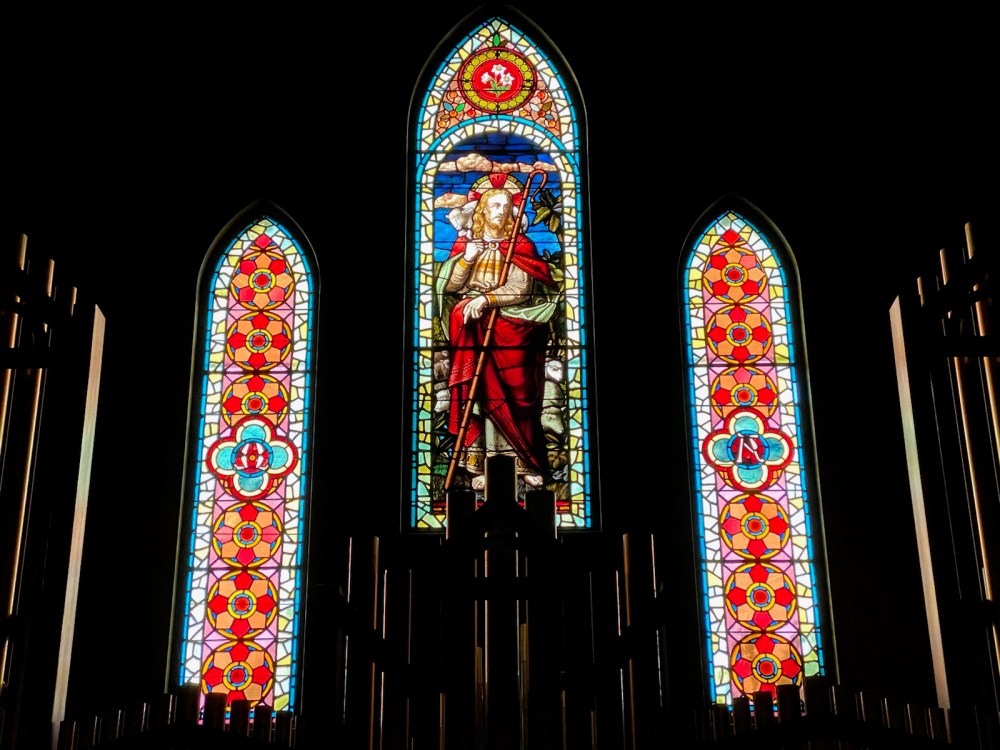
As distance continues to make my heart grow fonder of you and our in-person gatherings, I’ve been reflecting on those holy moments during Communion when I would have the honor of administering the sacrament with the other Eucharistic ministers and often say your name silently or aloud before saying, “The Body of Christ, the Bread of Heaven” or “The Body of Our Lord Jesus Christ keep you in everlasting life.” Those were moments of holy intimacy and sacred vulnerability when our stories came together under the umbrella of the great story of God’s love, as our individual presences came together in the shared presence of Christ our Good Shepherd. As a pastor, my role is to nourish God’s flock with spiritual sustenance just as the Apostle Peter was commissioned by Christ to feed God’s sheep. As a pastor, my role is, in many ways, to be a shepherd. In fact, the word “pastor” comes from the Latin word for shepherd. My privilege as a pastor is to know you by all name (like a shepherd), to know your stories, your joys and your sorrows, your hopes and your prayers. Also, my role is to gather us together as a shepherd gathers his flock so that we might rest together beside the gentle waters of God’s mercy and be replenished by his goodness.
In the Gospel of Matthew, there’s a passage in which Christ sees people who are described as “sheep without a shepherd” (9:36); and I must admit that I sometimes feel, along with my clergy colleagues, a little bit these days like a shepherd without a flock, like a pastor without a congregation. I know that’s not true because we are all still together right now, thanks to zoom and YouTube and Facebook and phone calls and more. But we are not gathering together as we normally do in person and those regular in-person gatherings are so important. I’ve been wondering how I can still serve as a shepherd when the sheep are scattered in separate homes. How can I remain the priest of Christ Church Eureka during this diaspora? How do we stay connected as one body, as one flock while sequestered?
One helpful insight that keeps coming to me in prayer is the reminder that, although I am the priest and the pastor and have been commissioned to enact a Shepherd-like role, my main job is not to point to myself but to be that finger pointing to the moon. My main job is to remind us all that we are still one flock under the Good Shepherd who is Jesus Christ our Lord. It is Jesus the Good Shepherd who holds us together and Jesus is here, present in my home and your home. Although Christ is not present to us in the same way through the tangible sacrament of bread and wine, he still remains present much like he was to the disciples when they met inside their homes, with doors locked, and he appeared to them saying, “Peace be with you.” Christ is with us in our homes just like he was with the early Christians who met mostly in houses, often led by female leaders (which we read about in the book of Acts.)
Christ promises to be present through the sacramental rite of Eucharist and the other sacramental rites, but we also know that God does not limit himself to these rites; they are “patterns of countless ways by which God uses material things to reach out to us.” One of the greatest scholars of sacramental theology was an Anglican woman named Evelyn Underhill (d. 1941), who wrote some of the most important books and studies on worship, liturgy, and spirituality. She said, “God is always coming to you in the Sacrament of the Present Moment. Meet and receive Him there with gratitude.”
I invite us to meet and receive Christ our Good Shepherd here and now in the sacrament of the present moment. I invite us to do this by opening what the Psalmists call “the ears of our hearts” to hear the voice of our divine good shepherd. The sheep follow the shepherd because they know his voice. Let us become more deeply acquainted with our shepherd’s voice, knowing that the voice of the good shepherd is the voice of love saying “You are my beloved child, upon whom my favor rests.” Remember that the kingdom of God is any territory where the voice of love reigns supreme over all other voices. So may the voice of love reign supreme in our hearts so that the kingdom of God may be firmly established within us and all around us.
I invite us right now, in the comfort and safety of our homes, to close our eyes. We don’t need to worry. No one is watching us. We can close our eyes and open our hearts to hear the shepherd’s voice.
Although God often manifests in time and space, God is not limited by time and space so even if you are listening to this asynchronously, please join us in this practice.
Close your eyes and open your heart and imagine Christ, right now, saying your name.
“The good shepherd calls his own sheep by name.”
Jesus Christ is saying your name, right now.
“The good shepherd calls his own sheep by name and leads them out.”
Imagine Christ the Good Shepherd leading you out towards green pastures and then reclining next to you, as you recline beside gentle waters. Imagine the soothing sound of the flowing water. Imagine the voice of your shepherd as he clears his throat and pulls out a stringed instrument from his bag and plays a song for you, a song that reassures you of his care and protection for you, a song that helps you relax your tense muscles and helps you take some leisure in the solace of knowing you are in good hands. Rest in the consoling voice of your good shepherd, who knows you by name, who calms all your cares and anxieties, and who will meet all your needs. He will meet all your needs.
The Lord is our Good Shepherd; we shall not want.
He helps us to lie down in peace upon green pastures, and beside still waters.
He replenishes our souls and guides us and will remain invested in us forever because we bear his image and his name.
Even as we walk through the valley of the shadow of death, we need not let the voices of anger and fear and sorrow grow in our hearts because we are being guided by the voice of our good shepherd, the voice of love that longs to reign supreme in our hearts.
Ultimately, we shall fear no evil for Christ is with us now in the sacrament of the present moment, spreading a table before us, anointing us with oil, and overflowing our cups. Surely the goodness and mercy of our Good Shepherd shall follow us and pursue us relentlessly all our days and we will dwell in the house of the LORD forever.
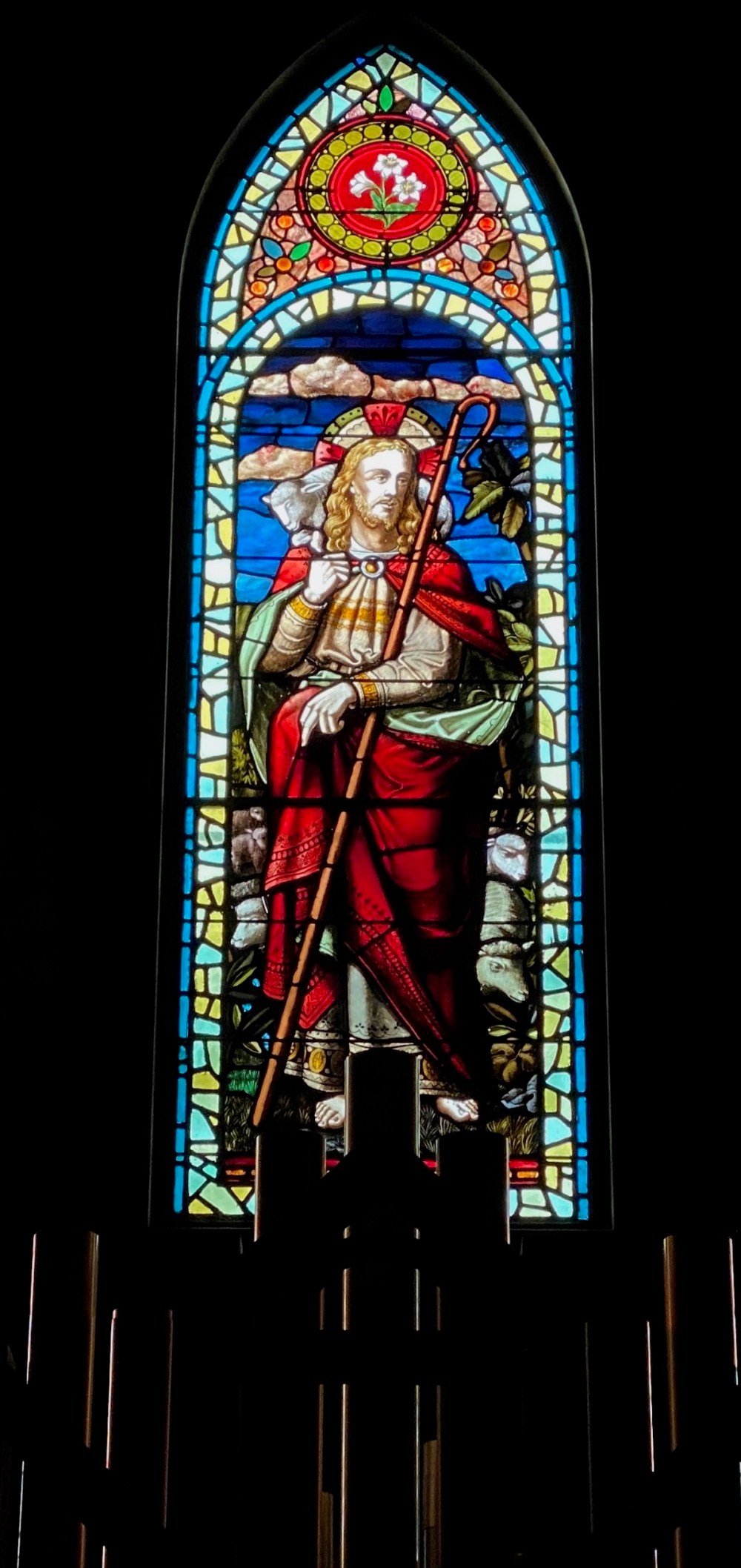
I invite you to open your eyes now.
I encourage us all to spend a few moments each day listening silently to this voice of our Good Shepherd. If this was helpful, you can watch this again. Let’s grow more deeply acquainted with that voice.
Some might be wondering, “How do I know that the voice is God’s voice, and not just my imagination? Or something worse?” One important way to discern whether or not we are listening to the voice of the divine Good Shepherd is by recognizing the fruits of listening to the voice. If the experience of listening to the voice bears the spiritual fruits of love, joy, peace, patience, kindness, goodness, gentleness and self-control, then we are indeed listening to the voice of the Good Shepherd. But if we are becoming more angry and fearful and destructive, then we are not listening to the voice of the Good Shepherd. We are likely listening to another voice. We are likely listening to what Jesus calls the “thief” who seeks to steal, kill and destroy. So then we need to listen more deeply; more deeply to the voice of love, knowing full well that our Good Shepherd may indeed lead us through some frightening valleys and may sometimes call us to seemingly impossible tasks, but always has our best interests in mind (knowing our best interests better than we do ourselves). So let us listen more deeply and more frequently to the voice of the divine Good Shepherd, who promises us not only life, but life of everlasting abundance. Amen.

 DANIEL DeFOREST LONDON