
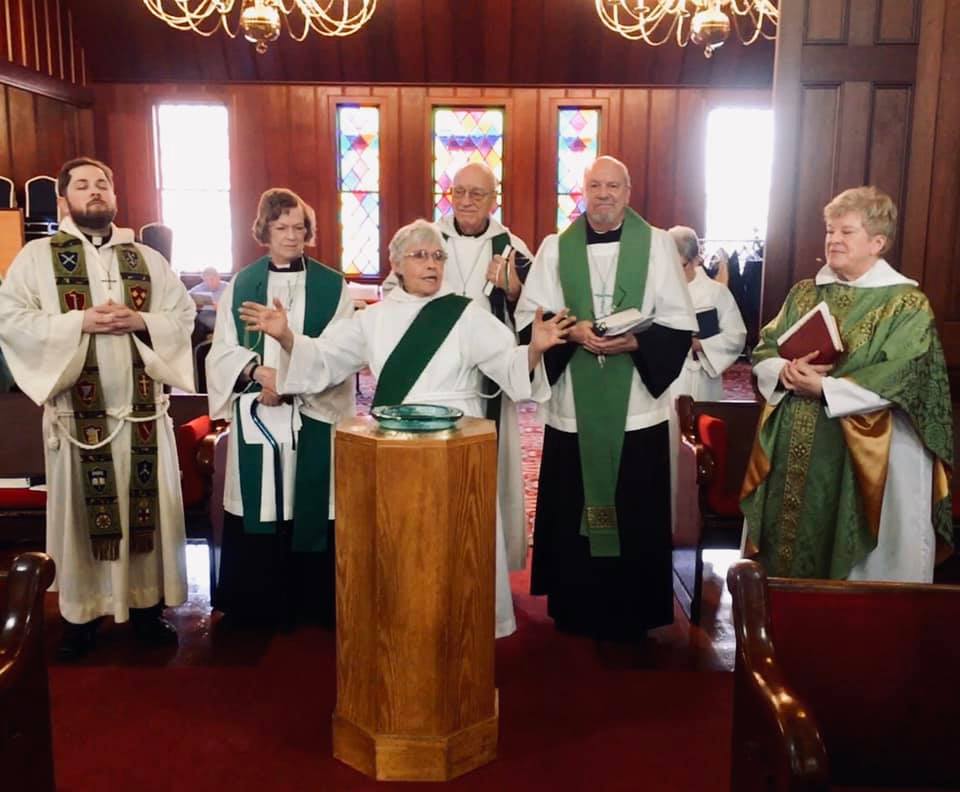
This sermon was preached at Christ Episcopal Church Eureka on Sunday January 26, 2020.
Today, we are celebrating the past clergy of this 150-year-old church. If you take a look at the last pages of your bulletin, you will find a list of all the past rectors, starting with our first rector John Gierlow, who arrived in May 1870. According to this list, I am the 30th rector of Christ Church Eureka and I feel humbled and honored to be included among such prestigious company, company that includes an army chaplain (John Woart), a missioner (Robert Read), a Franciscan friar (Leo Joseph), an Anglican nun (Sister Diana), a college professor (Susan Armstrong), an author (Eric Duff), a Dove Award winner (Ron Griffin), a retired bishop (George Hunt), and a priest who later became a bishop (Jack Thompson) and many others.
This last week, as Ashley and I were both unfortunately bedridden due to some nasty colds, I tried to prepare for this Sunday by learning more about the past clergy of the church and listening to some of their sermons online. There aren’t too many available online, but I was able to listen to a few homilies by the Rev. Guy Sherman (who was interim rector here from 2000 to 2002) and the Rev. Ron Griffin (who was rector here from 2008 to 2012). I even binge-watched the entire television mini-series “Lonesome Dove,” which was the subject of Fr. Ron’s most popular online sermon and one of his favorite films. It’s a great Western film about two retired Texas Rangers Augustus McCrae and Woodrow Call (played by Robert Duvall and Tommy Lee Jones) who travel with friends from Lonesome Dove TX up to Montana, pushing cattle. On their journey, as they confront danger and tragedy, characters tend to seek someone to blame for their crises, but Augustus McCrae or “Gus” is often quick to say that the crisis is nobody’s fault and that playing the blame game is not a productive way of thinking. This stood out to me since I had listened to a sermon from the Rev. Guy Sherman, who said that when it comes to installing a new rector he prefers the title “Installation of Rector” as opposed to “Celebration of New Ministry” because he said, with a wry smile, “When the chips are down and things don’t go well, the rector is the one who gets blamed.”
At my last church, I asked the congregation, “Why do you think we have ordained clergy since we believe as a church in the priesthood of all believers?” Someone said wisely that we need leaders who have studied the Scriptures and traditions well enough to teach and preach and guide effectively. But I also remember someone saying in a kind of tongue-in-cheek sort of way, “Well, we got to have someone to blame.” There was some challenging and disturbing truth in those words. It is indeed a very human tendency to blame others (especially those in positions of leadership) and it is often the weight and burden of blame that so easily wears down and eventually burns out clergy and other community leaders. For this reason, I appreciate the wisdom of Gus from “Lonesome Dove” who invites others to resist playing the blame game.
On the flip side, there is another temptation for clergy that might be just as spiritually dangerous as the temptation to burnout as a result of bearing undue blame. And that is the temptation to expect and crave human praise; the temptation to believe that the church is growing and thriving because of you; that people are coming to church in order to see you and to hear you preach and watch you celebrate and perform the sacraments and to bask in your charisma. I have found this temptation to be much more present and powerful in Bible churches and mega churches in which the preacher’s sermon is at the center of the worship service and everything seems to revolve around the pastor’s personality. I grew up in churches like this and I’ll confess that sometimes my attendance depended on who was preaching that Sunday. If Pastor Gary or Pastor John was preaching I did not feel the same urgency to attend church as I would feel when I knew that Pastor Brian was preaching. I always wanted to hear Pastor Brian, so much so that I felt like I was part of the Pastor Brian camp, as if each pastor of the church had its own fan club, thus making the church into a competition among personality cults.
And it is this mentality that St. Paul is addressing in his letter to the church in Corinth this morning when he says, “I hear that there are divisions and quarrels among you. One of you says, ‘I belong to Paul’ while another says, ‘I belong to Apollos,’ and another says, ‘I belong to Cephas.’ Has Christ been divided?” Paul then explains that his job is not to build up his fragile ego but to point others to the Gospel, which is the powerful love of God revealed in Jesus Christ. He says he doesn’t even do this eloquently. (And anybody who reads Paul in the original Greek would probably agree with that. He’s certainly no Shakespeare.) Paul is telling his friends to not get caught up in the personalities of their faith leaders because the job of the faith leader is not to point to him or herself but to point to the love of God in Christ and to invite others to be empowered by that love. To rephrase an old Zen proverb, the faith leader is to be the finger pointing to the moon saying, “Don’t look at me; look at the moon.”
One reason why I was initially drawn to the Episcopal Church is because I felt that the liturgy provided a kind of safeguard against the formation of a personality cult around a preacher or pastor. I knew that going to church in order to just hear one person preach was a sign of spiritual immaturity, out of which I wanted to grow. I also felt a call to full-time ministry, but did not feel comfortable with my personality being the reason why other people came to church.
And in the Episcopal Church, I discovered a liturgy that included a homily not as the center of the service, but as part of a larger whole and as a kind of preparation for the communal and mystical and intimate and transformative bodily encounter we can all have together with Jesus Christ through the bread and wine made holy. I discovered a liturgy in which the faith leader does not point to himself but rather to the empowering love of God made available through the presence of Christ in the Eucharist. I discovered a liturgy in which the faith leader is expected to be the finger pointing to the moon, saying “Don’t look at me; look at the moon.” (Coincidentally, there’s actually an English poet named Elizabeth Jennings who often compares the moon to the host held up by the priest. She writes, “Tonight the full moon is the Host held up for everybody’s eyes… That Host-like moon shines where all can see him.”[1]) Don’t look at me; look at the moon.
For us, the “moon” represents the love of God embodied in the Eucharist, but it also represents the love of God embodied in all of you who receive the Eucharist and who make up the Body of Christ. As St. Augustine said, “If you receive the Eucharist well, you are what you eat.” You become the hands and feet and face of Christ in this world. So a part of the priest’s job is to be the finger pointing to you, to the potential within each of you to embody God’s love, to be the healing hands and feet and face of Christ in a hurting world.
Returning to that question I asked a previous congregation: “Why do we have ordained clergy since we believe in the priesthood of all believers?” New Testament scholar Bill Countryman, in his book Living on the Border of the Holy: Renewing the Priesthood of All, explains that ordained clergy serve as icons of the common priesthood of all believers. Ordained priests derive their priesthood from the priesthood of the whole people and represent that priesthood to itself.[2] In other words, ordained priests are to be the finger pointing to the priesthood of all the baptized. Our job as clergy is to help you discover and put into practice your gifts as ministers of God’s healing love.
In the Gospel this morning, Jesus doesn’t say, “Follow me and watch how many people I can amaze with my gifts, gaze in awe at how effectively I increase membership in this movement.” If anybody can say that, Jesus can, but he doesn’t. Instead, he says, “Follow me, and I will make you fishers of men and women. I will be the finger pointing to the divine power of love already within you. And in this way, I will empower you to heal the world with God’s all-inclusive fishing net of compassion and grace.” When disciples do watch Jesus perform healings and miracles, they do so in order to imitate him and then do even greater things than him, as Jesus promised they would do (John 14:12).
One of my favorite parts of Catherine Mace’s presentation on the 150-year-old history of Christ Church is a part towards the end when she talks about the unexpected benefits of not having long-term consistent clergy leadership here. She said, “Through these…years of change [in leadership], the congregation learned how to hold the parish together themselves. They became stronger, friendlier, and much better leaders…It was a God-given [time of growth] for the parish.” One of the best ways to celebrate the clergy of Christ Church is to celebrate the ways in which the congregation, the Body of Christ, has been able to discover their own priesthood, their own potential to be the hands and feet and face of Christ in this world. In fact, one of the best ways to celebrate all of the holy orders is to acknowledge that whenever you serve someone else in the name of love, you are being a deacon. Whenever you bring reconciliation in the name of love, you are being a priest. Whenever you embody harmony and unity, you are being a bishop. The ordained clergy are effective insofar as we are able to be the finger pointing to the healing love of God and to the world-changing potential of all of you who are called to be the hands and feet of Christ in the world.
On that note, I will conclude with a blessing written by a Celtic priest and poet named John O’Donohue. This is a blessing for priests, which means this is a blessing for all of you:
May the blessings released through your hands
Cause windows to open in darkened minds.
May the sufferings your calling brings
Be but winter before the spring.
May the companionship of your doubt
Restore what your beliefs leave out.
May the secret hungers of your heart
Harvest from emptiness its sacred fruit.
May your solitude be a voyage
Into the wilderness and wonder of God.
May your words have the prophetic edge
To enable the heart to hear itself.
May the silence where your calling dwells
Foster your freedom in all you do and feel.
May you find words full of divine warmth
To clothe the dying in the language of dawn.
May the slow light of the Eucharist
Be a sure shelter around your future.
[1] Elizabeth Jennings, New Collected Poems, 314 – 315 as cited by Lauren F. Winner in “The Image Turns Back” from Common Prayer: Reflections on Episcopal Worship, ed. Joseph S. Pagano & Amy E. Richter (Cascade, 2019), 31.
[2] L. William Countryman, Living on the Border of the Holy: Renewing the Priesthood of All (Harrisburg PA: Morehouse Publishing, 1999), 44.
Celebrating Past Clergy
Priests who served at Christ Church Eureka:

John Gierlow, Missioner and Rector
1870 – 1872
John S. Thompson, Rector
1872 – 1876
J. E. Hammond, Interim
1875 – 1876
John H. Babcock, Rector
1876 -1877
E. C. Cowan, Interim
Jan – May 1877
W. L. Githens, Rector
1877 – 1878
H. D. Lathrop, Rector
1878 – 1882

John Woart, Rector
1882 – 1888
James Hulme, Rector
1888 – 1889
William Leacock, Rector
1889 – 1898
Caleb Benham, Rector
1899—1903
A.L. Mitchell
temporary 1903
T. W. Crook,
temporary 1903

John Shurtleff, Rector
1903 – 1916

Charles E. Farrar, Rector
1916 – 1931

Charles Leachman, Rector
1931- 1943
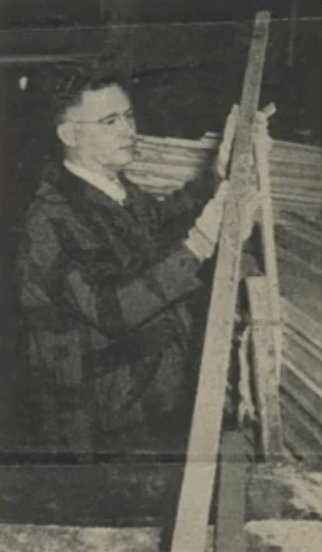
Robert Read, Rector
1943 -1947

J. Thomas Lewis, Rector
1947 – 1959
Richard Tumilty, Interim
1959 -1960

John L “Jack” Thompson, Rector
1960 – 1979
Lloyd Gephart, Rector
1979 – 1981

W. Douglas Thompson, Rector
1982 – 2000
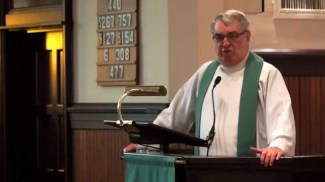
Guy Sherman, Interim
2000 – 2002
James A McKenzie, Rector
2002 – 2005

George Hunt, Retired Bishop
substitute 2005 -2006
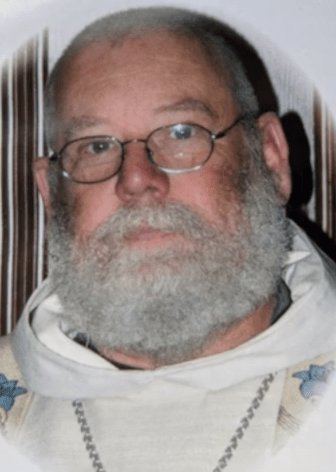
Leo Joseph, Interim
2006 – 2008
Ron W. Griffin, Rector
2008 – 2012

Susan Armstrong, Priest in Charge
2012 -2016
K. Lesley McCloghrie, Interim Rector
2016 –2018

Daniel D. London, Rector
2018 to present
Priests who served as Associates or Assistants at various times:
Kenneth B. Samuelson, Eric Duff, Susan Armstrong,
Nancy Streufert, Sister Diana Doncaster, David Shewmaker, and Lesley McCloghrie
Many thanks to Catherine Mace for compiling this list for our 150th Year Celebrations
Almighty and everlasting God, from whom comes every good and perfect gift, we give you thanks for the ministry of the clergy here at Christ Church and for all those who have served in this congregation. Send down upon them the healthful Spirit of your grace; and that they may truly please you, pour upon them the continual dew of your blessing. Grant this, O Lord, for the honor of our Advocate and Mediator, Jesus Christ. Amen.

From left to right: The Rev. Doug Thompson, The Rev. James Snell, The Rt. Rev. Jack Thompson, The Rev. Kenneth Samuelson, The Rev. Lloyd Gebhart, The Rev. Eric Duff

 DANIEL DeFOREST LONDON