
Readings for the Twentienth Sunday after Pentecost (Proper 25 Year C)
Joel 2:23-32
Psalm 65
2 Timothy 4:6-8,16-18
Luke 18:9-14
This sermon was preached by Fr. Daniel London at Christ Episcopal Church in Eureka CA on October 27, 2019.
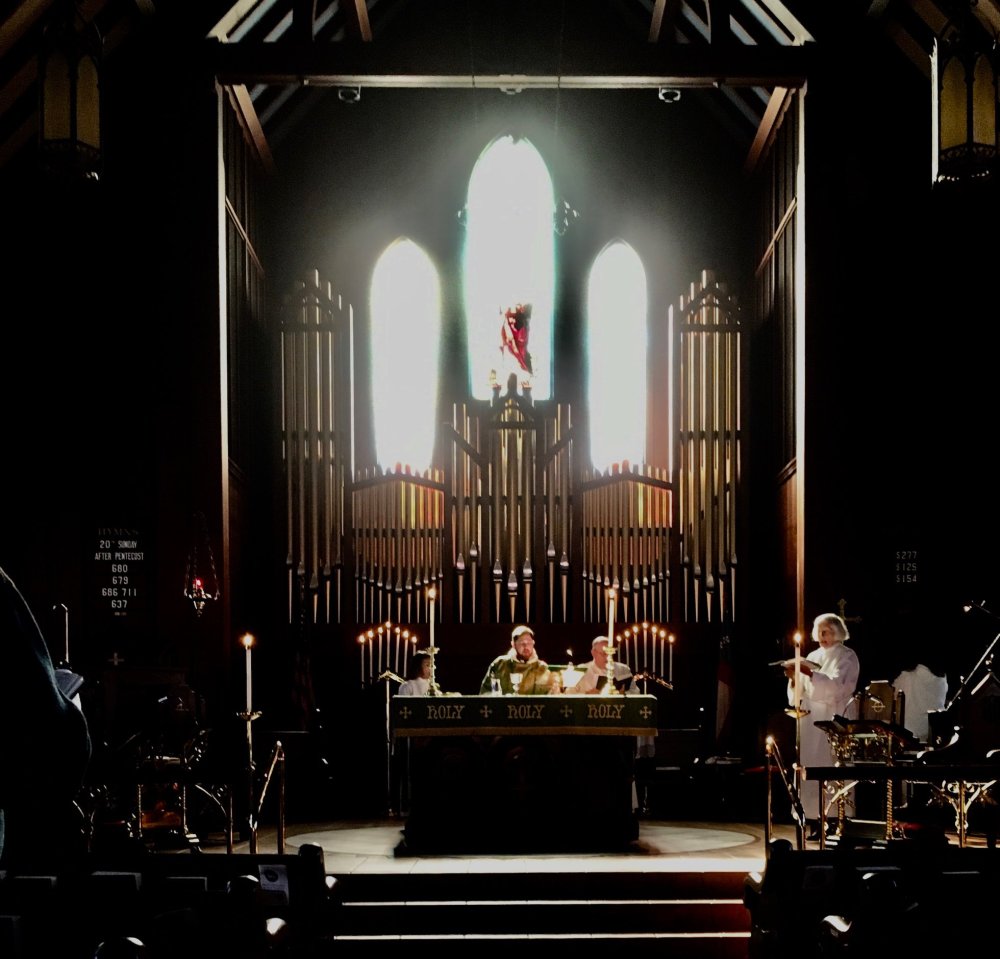
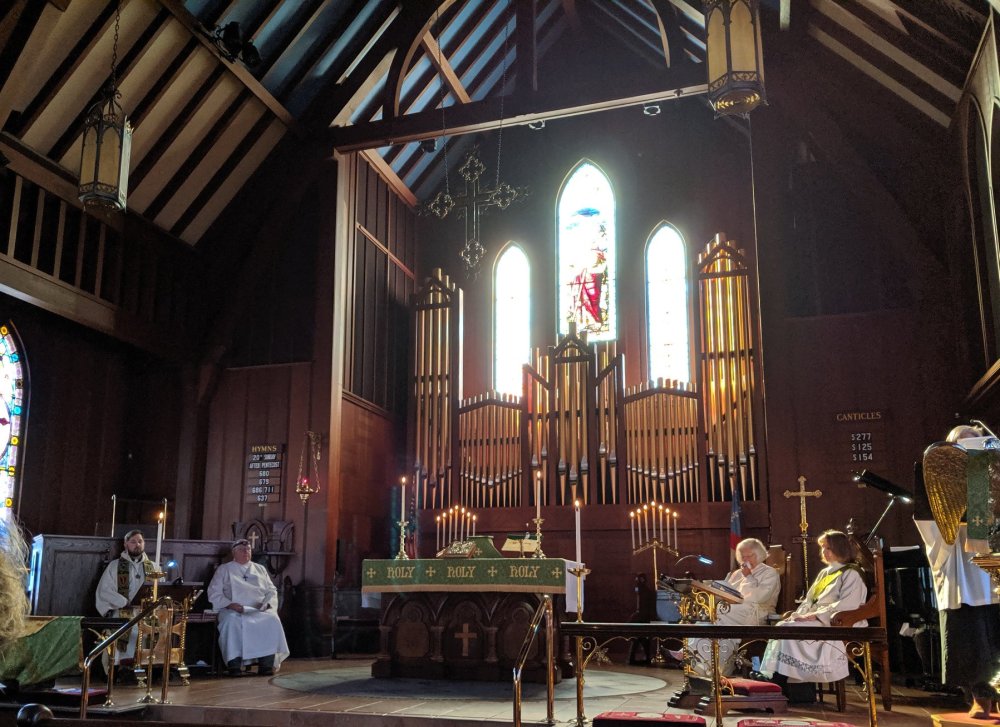
“The sun shall be turned to darkness before the great and terrible day of the LORD comes” (Joel 2:31). These words we heard from the prophet Joel resonate for us in a unique way this morning, (don’t they?) as we experience our power outage, as most of the artificial light, which has become like our indoor “sun,” has turned to darkness. The power outage does not prevent us from remaining steadfast in our mission to glorify God, to follow Jesus Christ and to serve all people through the power of the Holy Spirt. Our church has been striving to fulfill this mission for 150 years now so we won’t let a measly power outage stop us. One hundred and fifty years ago, our church founders managed to glorify God perfectly well without electric light so we certainly can too. In fact, throughout the vast majority of our church history, Christians gathered to glorify God without electric light, which is why candles were used, not so much for symbolism (as we use them now) but for practical reasons: so that we can see well enough to read. So as our artificial, indoor “sun” has turned to darkness (causing us all kinds of challenges and frustrations and disappointments), we are invited now to worship like our Christian ancestors, like the founders of Christ Church Eureka, who worshipped over a decade before electric light became wide spread.
In our reading from the book of Joel, the prophet speaks of the “Day of the Lord,” the great and terrible Day of the Lord, which is a day of judgment, a day when a swarm of locusts will ravage the land, a day when a foreign army will demolish buildings that were considered holy and considered home. It is a day that appears to be inevitable, unless we repent, unless we turn our attention to God.
The books of the Hebrew prophets are generally not the most cheerful books of the Bible. They are often warning God’s people of impending disasters and urging God’s people to pray and to change their ways and to grow up because change is coming, whether we like it or not. The prophet’s message is that “Change is inevitable, growth is optional, so please learn to grow.”[1]
None of us can deny the significant changes that we are experiencing here in California as disastrous wildfires destroy buildings that many consider holy and demolish neighborhoods that many consider home (like the Kincade fire that has caused the evacuation of 50,000 people in Sonoma county). None of us can deny the significant changes that we are experiencing here as power outages become more frequent (with our current power outage affecting as many as 2 million people for who knows how long). The prophet Joel says to us today, “Change is inevitable, growth is optional. Let us learn to grow.” And all the Hebrew prophets invited God’s people to grow by doing two things: by caring for the poor and the vulnerable and by praying.
“The sun shall be turned to darkness, and the moon to blood, before the great and terrible day of the Lord. Then everyone who calls on the name of the Lord shall be saved.” Let us call on the name of the LORD. Not just on Sundays, but every day, let us set apart some time to pray, to pray for those who are vulnerable and victims to disastrous fires and victims to hunger and to violence; and let us ask God what we can do to help, as we did last year in response to the Camp Fire that destroyed the city of Paradise.
The prophet Joel continues saying, “Then afterward [after you have called on my name] I will pour out my spirit on all flesh; your sons and your daughters shall prophesy, your old men shall dream dreams, and your young men shall see visions. Even on the male and female servants, I will pour out my spirit.” We believe this prophesy of Joel was fulfilled at Pentecost when a strong wind swept through Jerusalem, knocking the great power line of the Holy Spirt down into the hearts of the frightened disciples, whose souls served as perfect kindling for God’s wildfire of love to spread around the world. Joel describes the spirit’s outpouring as manifesting in dreams and in visions among people of different ages and social classes. As I’ve said before, variety is the spice of life and the Holy Spirit is full of spice. Although I urge us to use our prayer book as a resource for daily prayer or even hourly prayer, I also recognize and celebrate the wonderfully diverse ways that the Spirit wants to pray in and through each of us. I’ve always been drawn to the Episcopal Church’s openness to the colorful variety of ways that the Holy Spirit will pour herself out among God’s people. Though we are deeply rooted in the Christian tradition, we understand that the Holy Spirit is not limited by our religious boundaries.
Over this last week and a half, I experienced the Holy Spirit’s colorful variety of prayers here at Christ Church and in Humboldt county. Last Friday, Ashley and I celebrated Shabbat with Rabbi Naomi Steinberg in her sukkah beside the Van Duzen river, where we sang and feasted and prayed, with joyful dogs barking in the background.

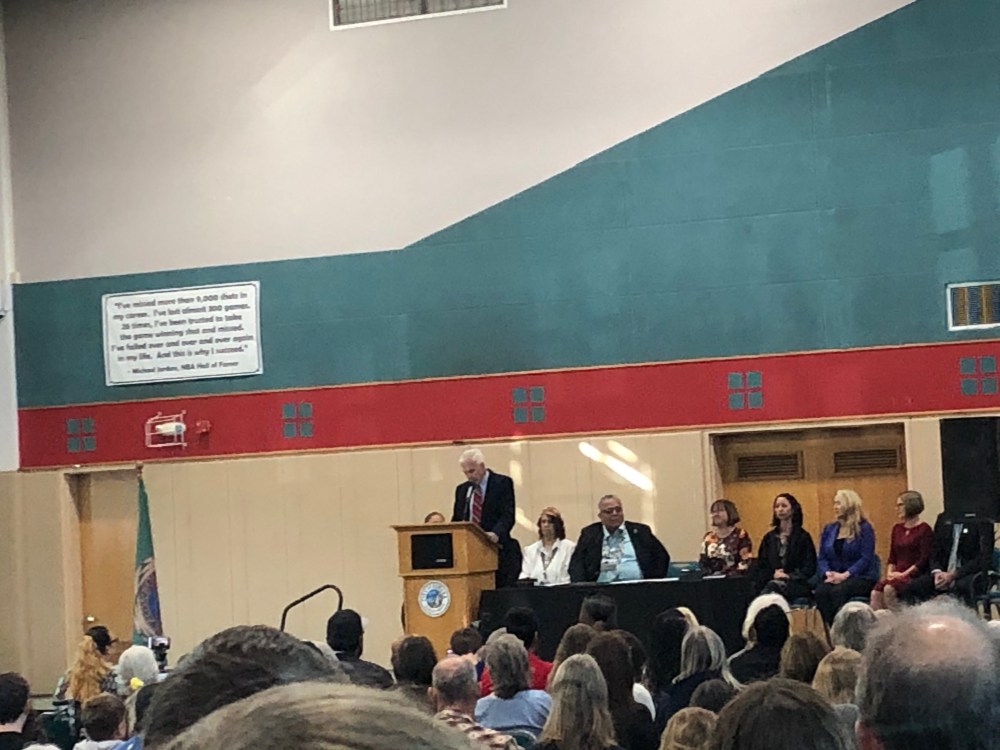
On Monday morning, I prayed at the Adorni Center (with some of you) as the Wiyot tribal members Ted Hernandez and Cheryl Seidner led hundreds of people in a prayer of thanksgiving to our Creator for the blessings of the day, the day (Monday) when they received back land that was stolen from them 160 years ago, after the Wiyot massacre (in 1860): the sacred Tuluwat village on Indian island, where they hold their annual “world renewal ceremony.” It was a beautiful and historic moment and a powerful reminder that this church and most of our homes have been built on Wiyot land.
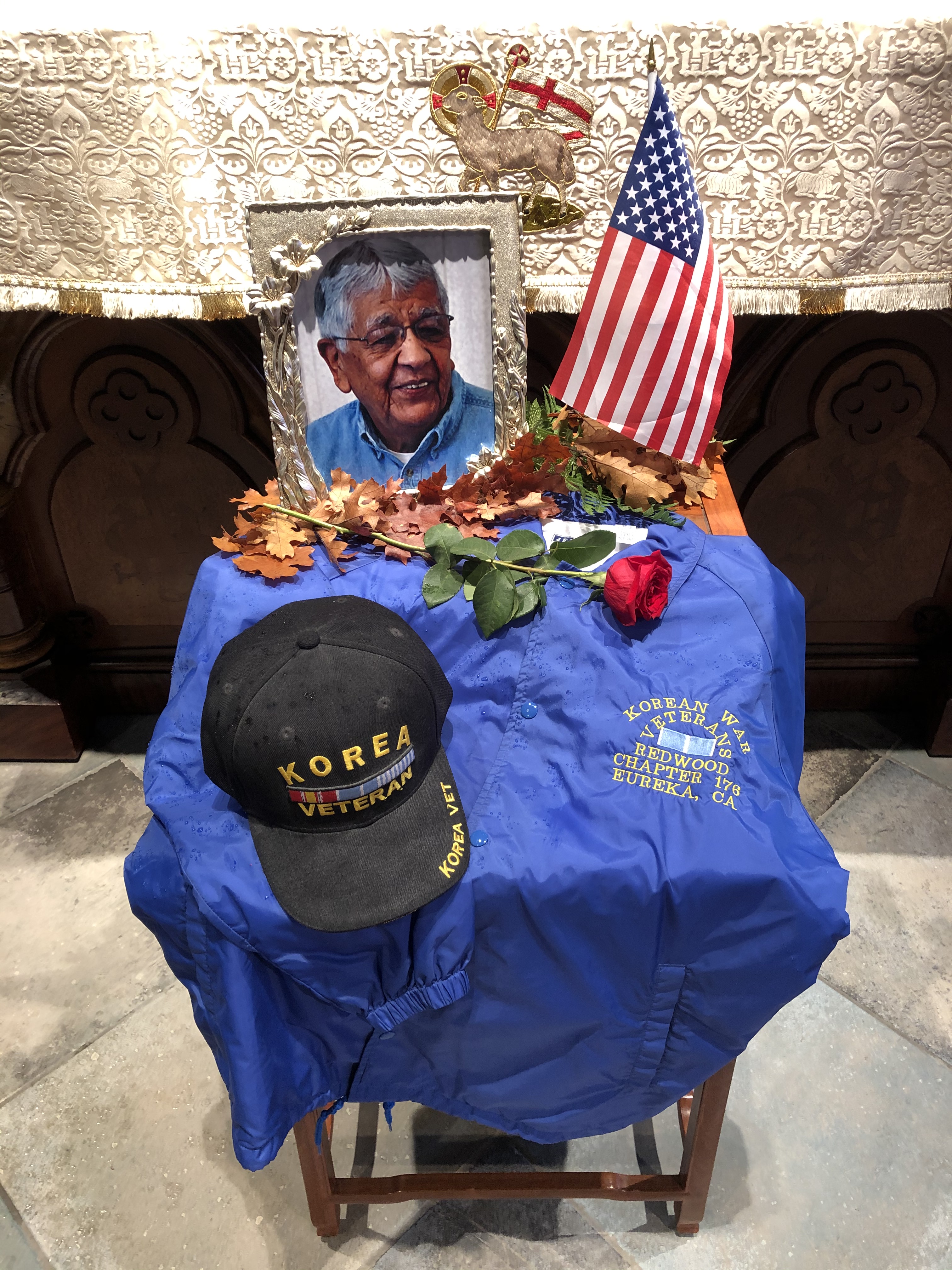
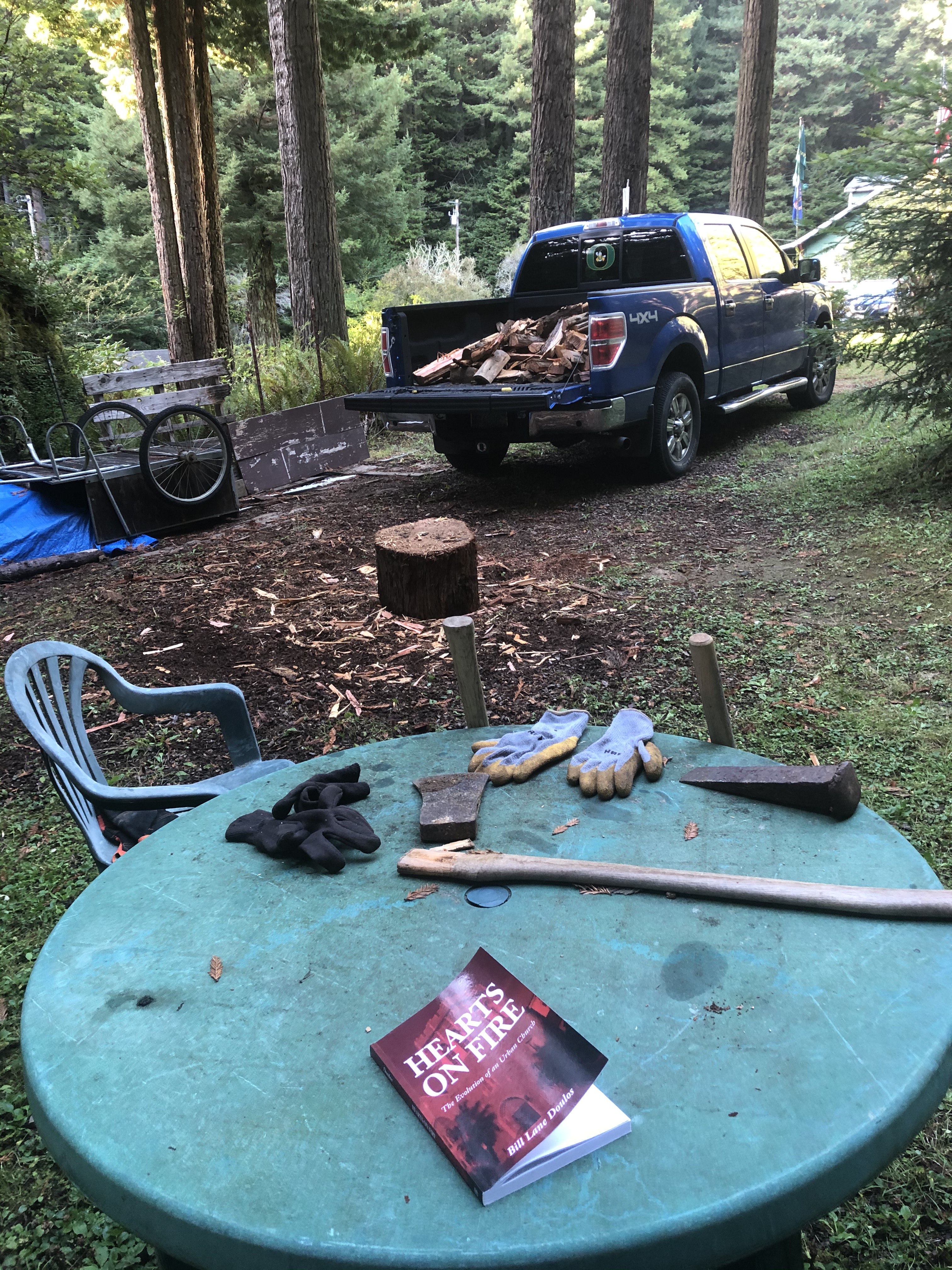
On Tuesday morning, I prayed with some of you at the Blue Lake cemetery as we buried the body of Dan Vega. And on Tuesday afternoon, I enjoyed a magnificent part of this Wiyot land near Freshwater Corners at parishioner Catherine Mace’s house, where I prayed and called on the power of the Holy Spirt to help me chop some firewood (without chopping off my leg).
 And on Wednesday, I prayed Compline in the candlelit chapel. And on Thursday morning, while practicing yoga on the chapel labyrinth, I prayed by chanting in rhythm with my breath the all-inclusive sound of “Aum,” that wonderful vowel sound that is included in our many names for God: Adonai, Hashem, Allah (which is the name our Arabic Christian brothers and sisters use for God), and Yahweh, which some say is the sound we make when we breathe.
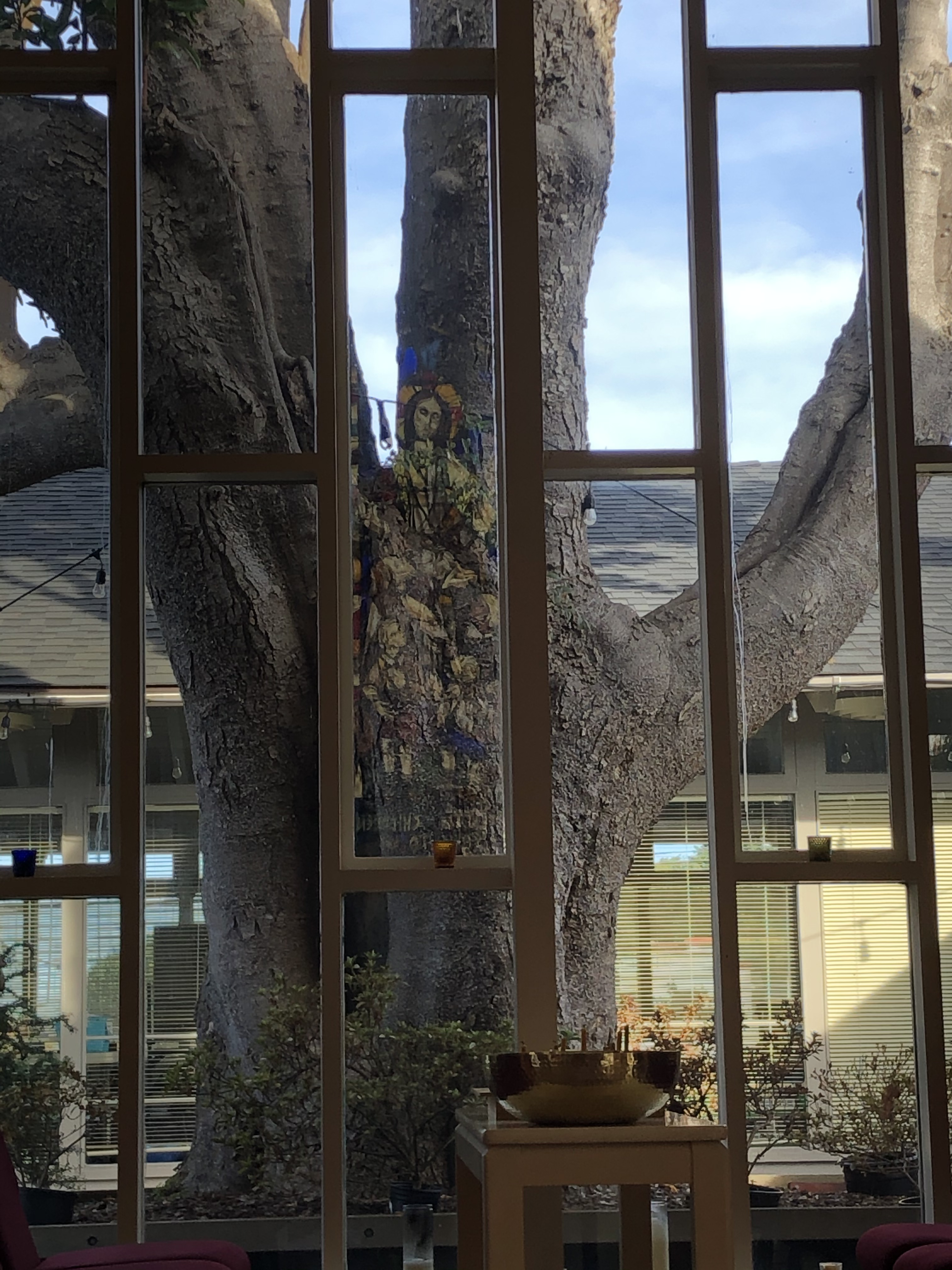
The Holy Spirit pours herself out among God’s people in a colorful variety of ways, not limited by our religious boundaries. The parable in the Gospel this morning is all about withholding judgement when it comes to the different ways in which we pray, the different ways in which the Holy Spirt is poured out like a libation within us. So how does the Holy Spirit want to pray in and through you?
During this power outage, when many of our normal distractions are not as readily available to us, I encourage us to pray intentionally, to call on the name of LORD because although the sun shall be turned to darkness, and the moon to blood, on the great and terrible day of the Lord, everyone who calls on the name of the Lord shall be saved. Change is inevitable, growth is optional, so let us grow together by praying intentionally and regularly and by enjoying the colorful variety of ways that the Holy Spirit is pouring herself out among us here at Christ Church and beyond. Amen.
[1] Quote attributed to American author and pastor John Maxwell

 DANIEL DeFOREST LONDON