
Readings for the Nineteenth Sunday after Pentecost (Proper 24 Year C)
Jeremiah 31:27-34
Psalm 119:97-104
2 Timothy 3:14-4:5
Luke 18:1-8
This sermon was preached by Fr. Daniel London at Christ Episcopal Church in Eureka CA on October 20, 2019.
A couple Sundays ago, our Scripture readings invited us to rest in God’s steadfast love for us, knowing that no matter how much or how little we believe in God, God believes in us. “The steadfast love of the Lord never ceases. His mercies never come to an end. They are new every morning,” these words are the central and hope-filled conclusion to the book of Lamentations. Last Sunday, the Scriptures reminded us of the secret to experiencing instant joy and happiness and abundance: the spiritual practice of gratitude. “It is a right and good and joyful thing, always and everywhere, to give thanks and praise to our God.” Today, our readings invite us to paint our lives in the vibrant colors of consistent and persistent prayer.
In this morning’s Collect, we prayed that we may “persevere with steadfast faith.” (There’s that great word again: “steadfast.”) In the book of Jeremiah, we read about God’s promise to answer the prophet’s persistent prayers. In his second letter to Timothy, Paul says, “be persistent, whether the time is favorable or unfavorable” (2 Timothy 4:2). And the Gospel reading urges us to pray always and not to lose heart in the parable of the persistent widow whose constant pleading eventually wears down the unjust judge, who grants her justice. With this parable, Jesus uses a rabbinic form of teaching known as qal va’chomer which literally means “light and heavy” or “from less to more.” It’s basically a form of logical argument that claims that if a small thing is true, how much more true should the larger thing be? For instance, an example of a qal va’chomer argument would be this: if we are able to practice forgiveness among co-workers in the work place, how much more should we practice forgiveness among fellow members of our church family, which is the mystical Body of Christ? Jesus uses this form of argument quite often. In Luke 11, he asks, “Which of you fathers, if your son asks for a fish, will give him a snake instead? Or if he asks for an egg, will give him a scorpion? If you then, though you are evil, know how to give good gifts to your children, how much more will your Father in heaven give the Holy Spirit to those who ask him!” (Luke 11:11-13). In the parable of the unjust judge, Jesus clearly seems to be using this same argument by essentially saying, “If this unjust judge can execute justice, how much more will God grant justice to those who pray to him day and night?” If a judge who has no fear of God and no respect for people can listen and respond to the consistent pleas of a widow, then surely God will listen and respond to the persistent prayers of his beloved children, who pray to him day and night.[1]
And this morning’s psalm, Psalm 119, has been a major source of inspiration for consistent and persistent prayer throughout church history, perhaps more than any other psalm. Not only is Psalm 119 by far the longest psalm in the entire Bible (with 176 verses), it also contains verses that have inspired the daily rhythm of prayer for millions of Christians throughout history who have committed their entire lives to prayer. In verse 164, the psalmist says, “Seven times a day I praise you for your righteous laws.” This verse has inspired what is called the canonical hours, which are seven scheduled times a day for prayer. Monks, nuns, friars and other prayer warriors throughout history have followed these canonical hours, which often begin at around 3 AM with the first hour known as Vigils. Can you imagine getting up every morning at 3 AM to pray? Millions of Christians have done this throughout history and thousands still do it today. This canonical hour is also inspired by Psalm 119 in which the psalmist says in verse 62, “In the middle of the night, I rise to give you thanks.” So next time you find yourself awake at 3 AM, take it as an opportunity to observe Vigils and to pray. Some refer to this hour as the “prayer office for pious insomniacs.”[2]
The next hour is Matins (around 6 AM), when we wake up and give thanks for the new day, full of new joys and new possibilities. Some say that this office is greatly enhanced by coffee.[3] (74) And then at nine o’clock in the morning is the hour known as Terce, the “golden hour” or “the hour of the Holy Spirit,” the same time of day when the Holy Spirit swept through Jerusalem like a wildfire on Pentecost, transforming the frightened disciples into powerful apostles. After Terce is the hour of Sext, which is at noon, when the angelus bell is rung reminding us to be open to what the Holy Spirit longs to give birth to within us. Our friends, the Sisters of the Transfiguration, observe this practice of ringing the angelus bell at noon every day as they pray the canonical hours. After Sext is None at around 3 o’clock in the afternoon, followed by Vespers, which is Latin for “evening.” And then finally, the day of prayer is not complete without Compline, the bed-time prayer, which we pray by candlelight every Wednesday night here at Christ Church.
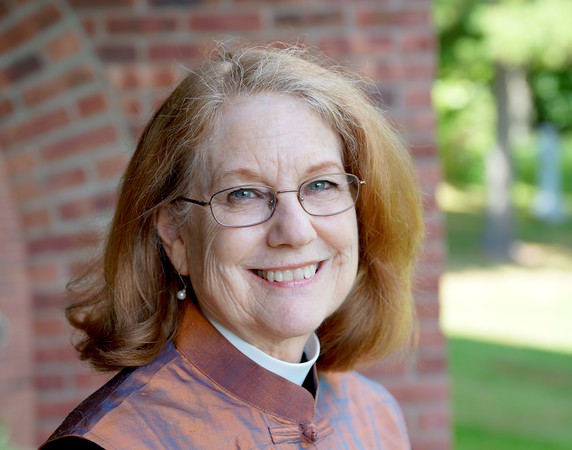
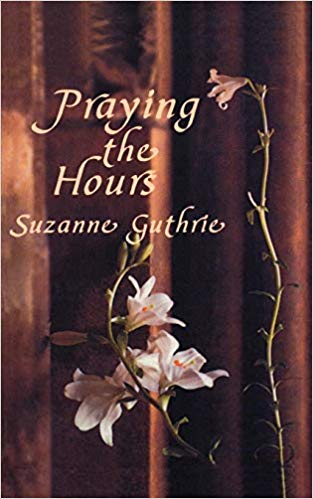
These last few weeks, I’ve been reflecting on these seven psalm-inspired canonical hours (Vigils, Matins, Terce, Sext, None, Vespers, and Compline). I’ve been reading this delightful little book titled Praying the Hours by our next special guest the Rev. Suzanne Guthrie, who has been described as an artist whose medium is prayer itself.[4] Suzanne Guthrie says, “Prayer takes the material of life and signs our soul’s own signature in offering everything back to God.”[5] “Prayer,” she says, “can make a home a small paradise out of the kind of profound contentment that comes from the practice of gratitude.”[6] Like the Scripture readings this morning, Suzanne Guthrie invites us to pray night and day with persistence.
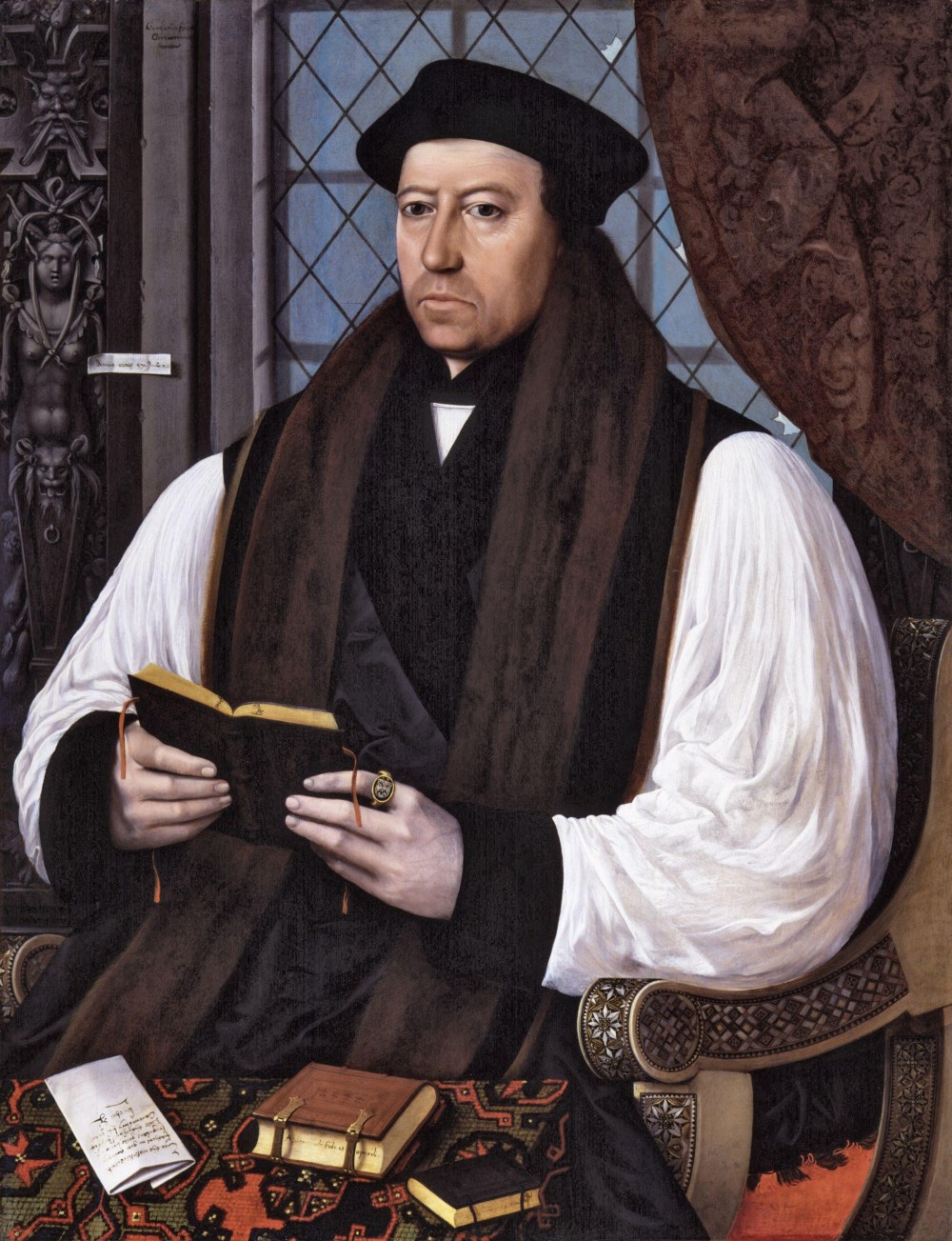
We don’t have to become monks or nuns to integrate a practice of consistent prayer into our daily lives. And we don’t have to pray the seven canonical hours either to enjoy the blessings of a prayerful life. You may be surprised to learn that the original author of our prayer book, Thomas Cranmer, intended to make the canonical hours accessible to those who lived outside the walls of the monastery. Morning Prayer, Noon Prayer, Evening Prayer and Compline were Cranmer’s attempts to combine and abbreviate the seven canonical hours and make them available to farmers and merchants and other busy members of the working class. He wanted everyone to pray, not just monks. And his desire gave birth to our prayer book, which is not to be used just on Sunday, but every day. Cranmer wanted us all to pray like the persistent widow, like the psalmist of Psalm 119 and like the prophet Jeremiah.
My invitation to us all is to set apart some time each day to pray. I know many of you are already doing this, and I encourage you to keep it up, to “be persistent,” as Paul says, “whether the time is favorable or unfavorable.” For those who feel unfamiliar with the prayer book, I want to introduce you to four pages that could potentially change your life: pages 137, 138, 139 and 140. These are the Daily Devotions for Individuals and families. Each page is an abbreviated canonical hour: morning prayer, noon prayer, evening prayer and compline. I challenge you to try praying through at least one of these each day. I try to pray the abbreviated Morning Prayer every day, which includes a portion of Psalm 51, a short Bible verse, a period of silence, the Lord’s Prayer and a Collect. That’s it. You can do it all in less than 2 minutes. So I encourage you to experiment with these four prayers and figure out what works best for you and for those with whom you pray. And I invite us to paint our lives with the vibrant colors of persistent prayer and to let prayer take the material of our everyday lives and sign it with our soul’s own signature in offering it all back to our loving God, who promises to listen and to respond. Amen.
[1] Amy Jill-Levine, Short Stories by Jesus: The Enigmatic Parables of a Controversial Rabbi (Harper Collins: New York, 2014), 232.
[2] Suzanne Guthrie, Praying the Hours (Cowley Publications: Lanham MD, 2000), 61.
[3] In describing Lauds, which I folded into Matins, Guthrie writes, “my gratitude is clearly enhanced by coffee.” Guthrie, Praying the Hours, 74.
[4] In her endorsement for Guthrie’s book Grace’s Window, Professor of Bible and Practical Theology at Duke Divinity School Ellen Davis says, “Suzanne Guthrie is an artist, and her medium is prayer itself.” Grace’s Window: Entering the Seasons of Prayer (back cover).
[5] Guthrie, Praying the Hours, 124.
[6] Guthrie, Praying the Hours, 126.

 DANIEL DeFOREST LONDON