
 Readings for the Feast Day of St. Francis
“[There is] a bronze statue of St. Francis, located in the upper basilica of Assisi, Italy. Created by a sculptor whose name is hidden, the statue shows Francis gazing down into the dirt with awe and wonder, which is quite unusual and almost shocking. The Holy Spirit, who is almost always pictured as descending from above, is pictured here as coming from below —even to the point of being hidden in the dirt! I’ve made sure I go see this statue whenever I return to Assisi, but I fear most people miss it, because it is small and set off to the side—just like the Christ message itself. “Truly, you are a hidden God,” Isaiah says (45:15). God is hidden in the dirt and mud instead of descending from the clouds. This is a major transposition of place. Once you know that the miracle of “Word made flesh” has become the very nature of the universe, you cannot help but be both happy and holy…


“…I doubt if you can see the image of God (Imago Dei) in your fellow humans if you cannot first see it in rudimentary form in stones, in plants and flowers, in strange little animals, in bread and wine, and most especially cannot honor this objective divine image in yourself. It is a full-body tune-up, this spiritual journey. It really ends up being all or nothing, here and then everywhere.

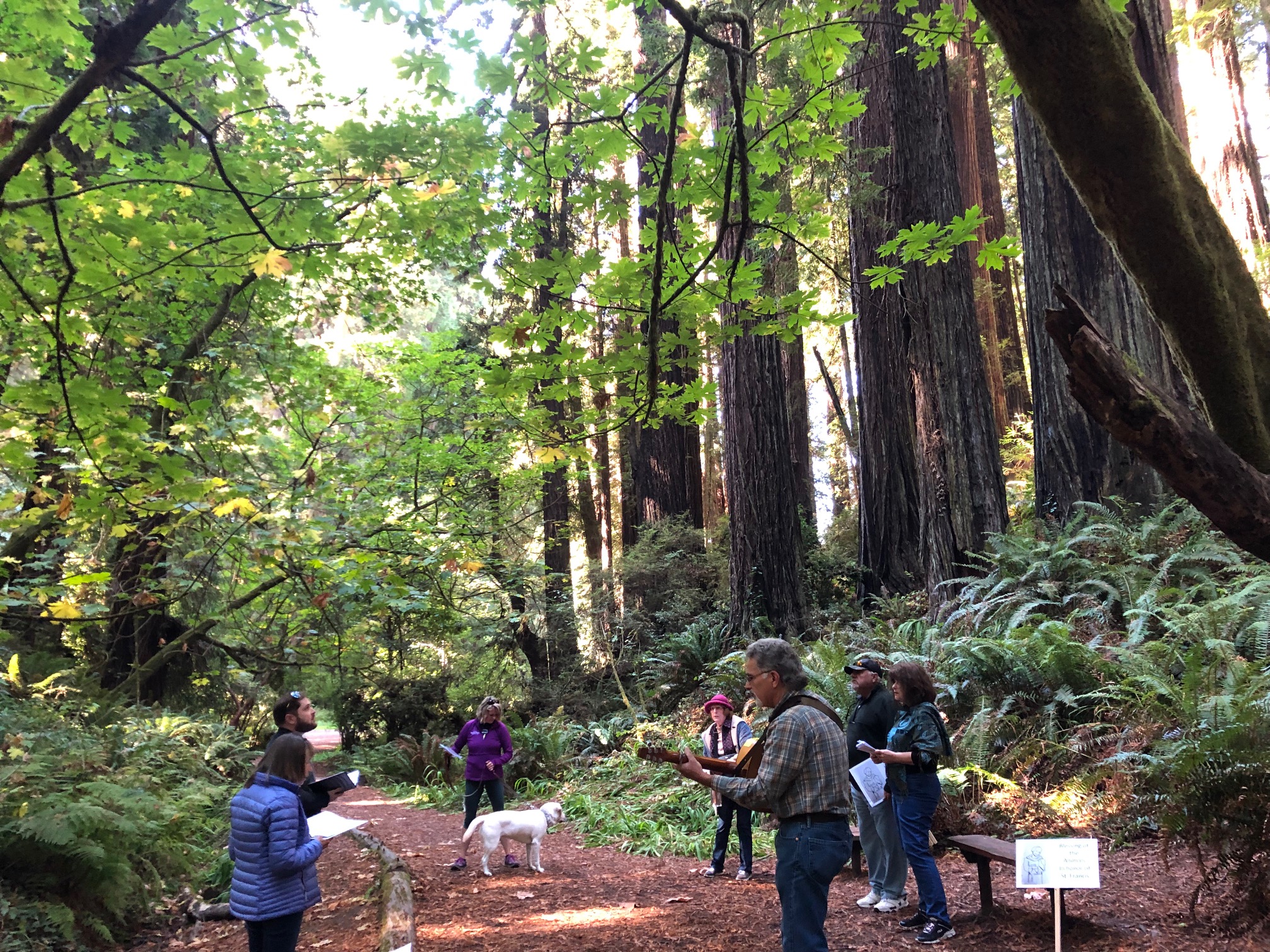
“This change of perspective, to bottom up or inside out, can take the form of religious language or totally secular language. Words are not the reality itself (the Ding an sich, as the Germans say). We all know respect when we see it (re-spect = to see a second time). We all know reverence because it softens our gaze. Any object that calls forth respect or reverence is the ‘Christ’ or the anointed one for us at that moment, even though the conduit might just look like a committed research scientist, an old man cleaning up the beach, a woman going the extra mile for her neighbor, an earnest, eager dog licking your face, or an ascent of pigeons across the plaza.

“All people who see with that kind of contemplative gaze, all who look at the world with respect, even if they are not formally religious, are en Cristo, or in Christ. For them, as Thomas Merton says, ‘the gate of heaven is everywhere’ because of their freedom to respect what is right in front of them—all the time.” (Richard Rohr, 118-120).



 DANIEL DeFOREST LONDON