
Readings for the Celebration of New Ministry
Joshua 1:7-9
Psalm 133 and 134
Romans 12:1-8
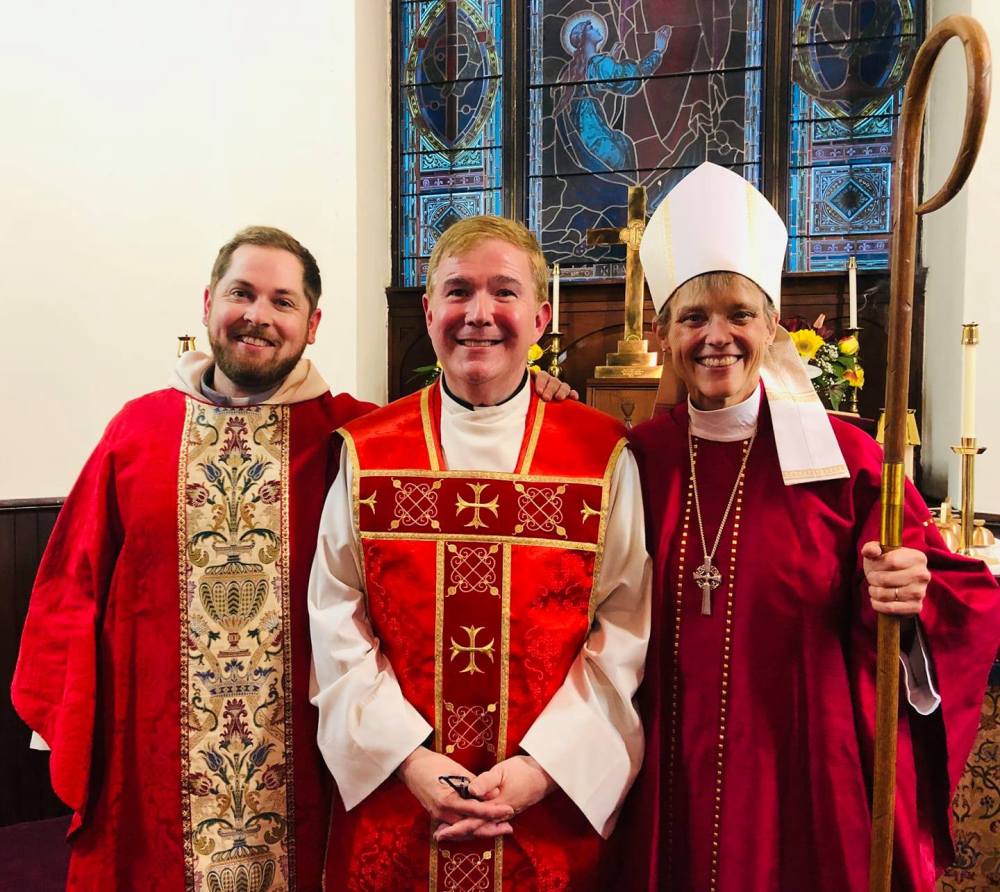
This sermon was preached by the Rev. Dr. Daniel London at St. Paul’s Baden MD on September 29, 2019.
I am deeply honored to be here at St. Paul’s Baden on the special occasion of the installation of my friend, the Rev. Christian Anton Lehrer. I have enjoyed reading about the history of this historic parish and this parish’s famous former rector, the Right Rev. Thomas John Claggett, who became the first bishop consecrated on American soil back in 1792. According to William Wilmer (the first rector of St. John’s at Lafayette Square), Bishop Claggett had an “affability” and kindness that “made [people] forget that [they were] in the presence of a superior, by making [them] feel that [they were] in the presence of a friend.”[1]

When I first met Christian Lehrer, I felt like I was in the presence of a friend. We met in a classroom in 2011 at the Jesuit School of Theology in Berkeley California, where we both enjoyed the privilege of studying under Professor Sandra Schneiders, an esteemed scholar of the Gospel of John. I remember Christian offering home-baked cookies to Professor Schneiders during a class break and saying something about how home-baked cookies are the real secret to church growth. I got to experience more of Christian’s affability and kindness in other classes and at his parish in the small town of Crockett CA, where he invited me to lead the congregation of St. Mark’s in the reading of the Psalm when I was a layperson, to preach when I was deacon, and to celebrate Eucharist when I was a priest. And when I was instituted as the rector of my parish, Christian took the 8-hour bus ride all the way from San Francisco to Eureka CA to be the first guest and friend in our new home.
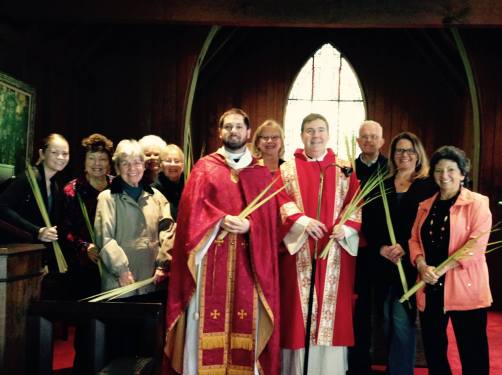
Throughout the 8 years of our relationship, Christian and I have moved through various positions in the hierarchies of the church and the academy. We were both students when we met, but he was a deacon-in-charge of a parish, while I was a postulant for holy orders. When I became a transitional deacon, Christian had already been a seasoned vocational deacon for many years. Then I became a priest while Christian remained a deacon; and I served as a mentor for Christian on his path towards the priesthood. Christian became a priest around the same time I earned my PhD; and then, after some more movement on the ecclesiastical and academic ladders or merry-go-rounds, we are now both enormously blessed to be rectors of beautiful historic parishes. (My parish is now celebrating its 150th anniversary, which is fairly special in California, but we are babies compared to you all who are enjoying your 327th year.) Throughout all of our movement through these academic and ecclesial orders, our primary relationship has been one of friendship. Although we take our ecclesiastical orders very seriously, they seem to fade into the background in the overarching context and equalizing power of our friendship. Like Bishop Claggett’s relationship with all those whom he met, our friendship has been blessed with an “affability” that makes us forget the ecclesiastical structures in which we have found ourselves as we primarily feel that, when in each other’s presence, we are in the presence of a friend.

What I appreciate so much about William Wilmer’s description of Bishop Claggett is not only how it speaks to the bishop’s social warmth, but also how it speaks to the way that friendship can challenge and even subvert power structures of superiority and inferiority. Appropriately, Christian and I met in a class devoted to the study of the Gospel of John which presents Jesus as consistently challenging structures of hierarchical oppression by disarming everyone with his loving presence, which made others feel they were in the presence of a friend.
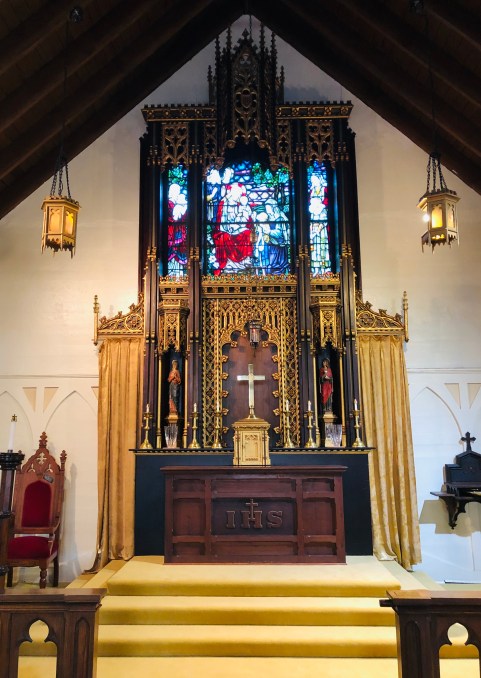
As I went on to write my dissertation on the Gospel of John (inspired by Sandra Schneiders class), I discovered how much the Gospel tends to challenge and subvert dichotomies and dualistic structures. On the surface, the Gospel of John seems rife with dualisms: Above and below, heaven and earth, flesh and spirit, darkness and light, etc.[2] However, a closer look indicates that the Fourth Gospel is full of subversions that challenge its apparent dualisms and dichotomies: the dichotomy between God and the world (8:23; 18:36; cf. 15:19; 17:14, 16) topples in light of John 3:16, which declares the world as the object of God’s love; the flesh vs. spirit dichotomy (1:12–13; 3:6; 6:63) topples in light of John 1:14, which states that the “Word became flesh”; even the belief and unbelief dichotomy (1:11; 6:30; 7:5, 12:37–41; 14:17; 20:30–31) topples in light of John 12:32 in which Jesus says, “I will draw all people to myself.” In our Gospel reading this evening, Jesus challenges yet another dichotomy, the dichotomy between master and disciple / student and rabbi (or “Rabboni” as Mary Magdalene called him in John 20:16 as portrayed in your beautiful altar window). Jesus challenges this dichotomy between student and teacher by saying, “I now call you my friends.”

In fact, many scholars of John suggest that the Gospel was written to challenge the hierarchy that was emerging in the early church as the Twelve Apostles rose to prominence. Scholars cite the fact that John’s Gospel never provides a formal list of the twelve apostles (as the other Gospels do), but moreover, they cite the very chapter from which we just read: John 15, in which Jesus uses the image of the vine and its branches to illustrate our source of power and authority and fecundity. We are all branches connected to the one vine. And our connection to the vine is a symbol of our friendship with God through Christ. It does not matter if we are at the top or the bottom or the middle of the vine. All that matters is that we are connected to the vine and thus to one another.
With this beautiful image of the equalizing power of friendship, Jesus challenged the hierarchy that can easily become interlocked with systems of domination and oppression. With the friendship he offers to everyone, Jesus subverts power structures by giving all people the power to become children of God and thus begins to shift our community of inequality to a community of equality.
The orders of the church are extremely important for organization and administration and they connect us to the rich tradition of the universal church. Bishop Claggett certainly understood this and so does Father Christian. However, the Gospel of John and perhaps Bishop Claggett invite us to hold these power structures lightly, to never grasp them in an exploitative way, but to always lay them at the altar of love and friendship. As Paul says, “Do not think of yourself more highly than you ought, but rather think of yourself with sober judgment” (Romans 12:3), think of yourselves as friends.
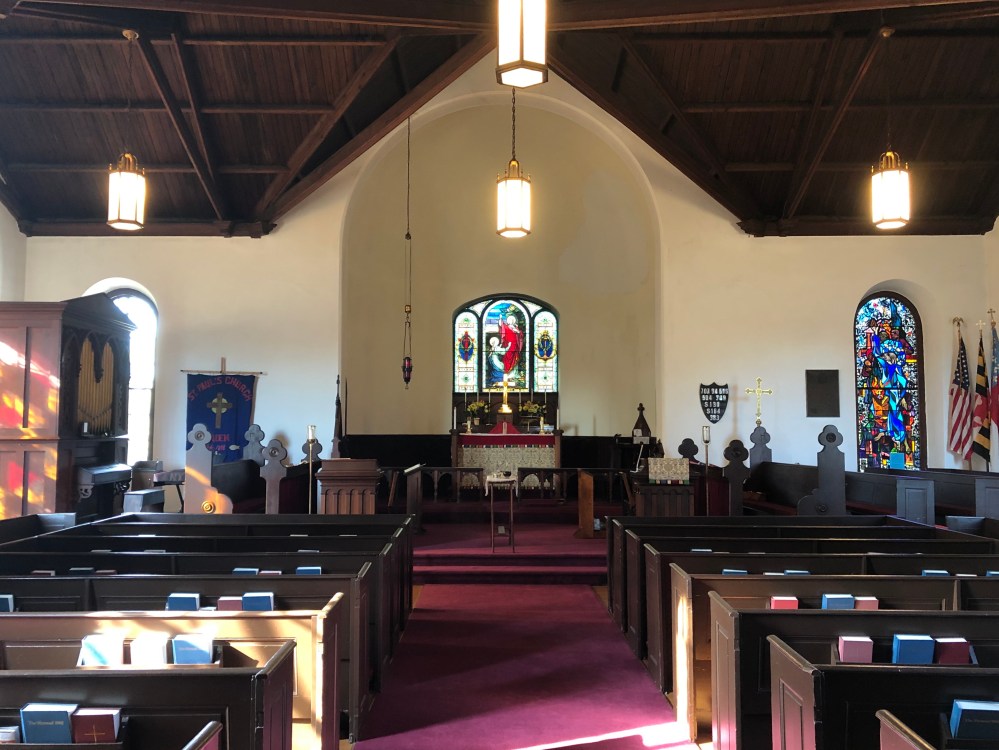
The great Catholic theologian St. Thomas Aquinas insisted that the ultimate goal, the summum bonum, the highest good of life is friendship with God. And this is exactly what the Gospel of John offers its readers. John’s Gospel was written for this expressed purpose: so that we may enter into a friendship of transformation and trust with God through his Son Jesus Christ and thereby experience life in all of its abundance (John 20:31). The Gospel of John has remained a foundational text, if not the foundational text, for the Christian church throughout the years, because it consistently reminds us of our purpose as the church, as your purpose here at St. Paul’s Baden and St. Mary’s Aquasco: to bring all people into friendship with God, to make all people feel that whenever they are in the presence of Christ they are in the presence of a friend. We express and grow in our friendship with Christ by extending this friendship to others. As Jesus said, “Love each other as I have loved you…You are my friends insofar as you love one another and grow in friendship with each other” (15:12 – 14). By offering this friendship, Jesus invites us out of a community of division and painful disagreement into a community of friendship that respects and celebrates differences.
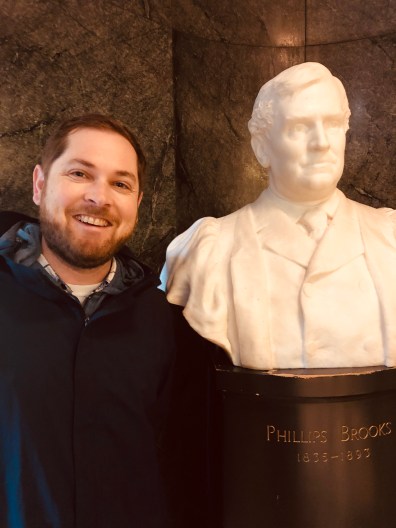
As you all celebrate new ministry with your new rector, I encourage you to deepen your bonds of friendship with Christ as you deepen your bonds of friendship with each other and your rector. These bonds will hold you together through thick and thin. It is these bonds of friendship and affection that have been, for the most part, holding together the Episcopalians throughout the country and beyond, in the face of some profound political differences. And it is these bonds of friendship and affection that have been, for the most part, holding together the 80 million Christians of the Anglican Communion around the globe, in the face of some profound theological differences. And it is these bonds of friendship and affection with each other and God that will continue to make you fruitful and attract many others outside these walls to experience what Phillips Brooks called the “tingle and thrill which comes from a friendship with the Father.” I encourage you to cultivate these bonds of affection and friendship by encountering Christ together in the Word and Sacraments, by praying together, breaking bread together, and enjoying home-made cookies together.
If and when challenges or disagreements arise, you will work together through them because your friendship will be strong and because you will find courage and inspiration in the friendship you all share with the God who said to Joshua, “Be strong and courageous. Do not be afraid; do not be discouraged, for I the LORD your God [am your friend and] I will be with you wherever you go.” (Joshua 1:9). And may you find strength and fecundity in your shared heritage and legacy of friendship with God and one another, a legacy that goes back to the kind and affable Thomas John Claggett who offered these words of blessing, which I offer to you today: “May God grant that you never become barren fig-trees; may the Storms and troubles of this life cause you to fix your roots deeply in the only foundation that can support you [which is our friendship with God], & may those deep roots bring forth fruit one hundred fold!”[3] May it be so. Amen.

[1] Thomas John Claggett quoted by Charles Hoffacker, “Thomas John Claggett: Maryland’s First Bishop,” Living Church, January 4, 2015 (18 -21), 20.
[2] Darkness and light (1:4–9; 3:19–21; 8:12; 9:4–5; 11:9–10; 12:35–36, 46), above and below (3:3,7, 31; 8:23), heaven and earth (3:12, 31; cf. 6:31–33, 50–51, 58), “not of this world” and “of this world” (8:23; 18:36; cf. 15:19; 17:14, 16), flesh and spirit (1:12-13; 3:6; 6:63), truth and falsehood (1:17; 8:44; 14:6; 15:26–27; 16:8–11), belief and unbelief/receive and not receive (1:11; 6:30; 7:5, 12:37–41; 14:17; 20:30–31), and life and death (1:4–5; 10:10; 11:25–26; 14:6; 20:3).
[3] Thomas John Claggett quoted by Charles Hoffacker, “Thomas John Claggett: Maryland’s First Bishop,” Living Church, January 4, 2015 (18 -21), 2.


 DANIEL DeFOREST LONDON
Yes! Home-baked cookies are the real secret ..
Nice one overall and wonderfully subversive in parts 😉
Loving the vine imagery for unity in a community of equally important individuals – each individual branch, one vine.
This section moved me –
“I encourage you to deepen your bonds of friendship with Christ as you deepen your bonds of friendship with each other.”
“It is these bonds of friendship and affection that have been, for the most part, holding together the Episcopalians throughout the country and beyond, in the face of some profound political differences.”
(👍🏻)
“And it is these bonds of friendship and affection that have been, for the most part, holding together the 80 million Christians of the Anglican Communion around the globe, in the face of some profound theological differences. ”
☝️🧐
Ok, here, or somewhere soon,
I would love to see you mention President Trump’s profound UN call to protect all people, of all faiths, from religious persecution all over the World
🙏🏼
Thanks for sharing your travel experiences with us, and for sharing us, with those you meet traveling.
With much friendship, love & affection,
Mike ❤️