
Readings for the Second Sunday after Pentecost (Proper 7 Year C)
1 Kings 19:1-4, (5-7), 8-15a
Psalm 42 and 43
Galatians 3:23-29
Luke 8:26-39
This sermon was preached by Fr. Daniel London at Christ Episcopal Church in Eureka CA on June 13, 2019.
Now there was a great wind, so strong that it was splitting mountains and breaking rocks in pieces before the Lord, but the Lord was not in the wind; and after the wind an earthquake, but the Lord was not in the earthquake; and after the earthquake a fire, but the Lord was not in the fire; and after the fire a sound of sheer silence.

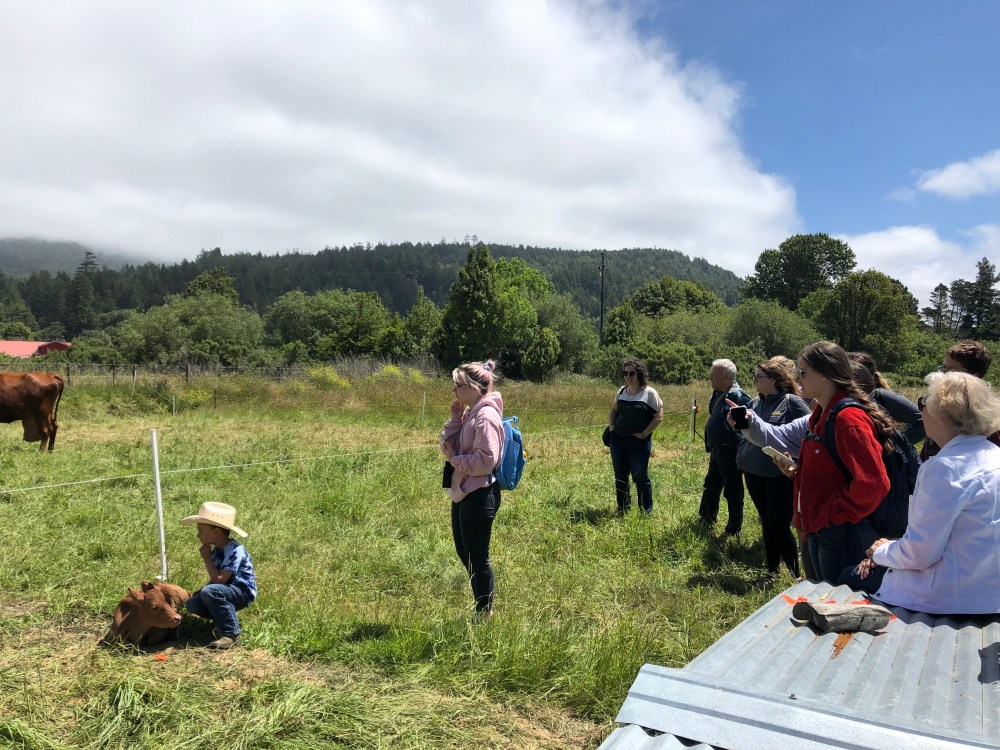
This last week, Paul Gossard and I helped lead worship for the Pathways Youth Pilgrimage, a diocesan program that focuses on equipping young people to be agents of truth, peace and reconciliation. We learned about sustainable living at the Shakefork Community farm in Carlotta, the effective homeless outreach programs of Betty Chinn in Eureka, the troubling history of the Wiyot Massacre on Indian island, and the community efforts of the True North Organizing Network which strives to uphold indigenous rights in Humboldt county, for the Karuk, Yurok, Wiyot, and Hupa tribes. The young people experienced Humboldt county not as tourists but as pilgrims; and the main difference between tourists and pilgrims is that tourists go somewhere and ask questions about the place they are visiting while pilgrims go somewhere and let the place ask questions of them.
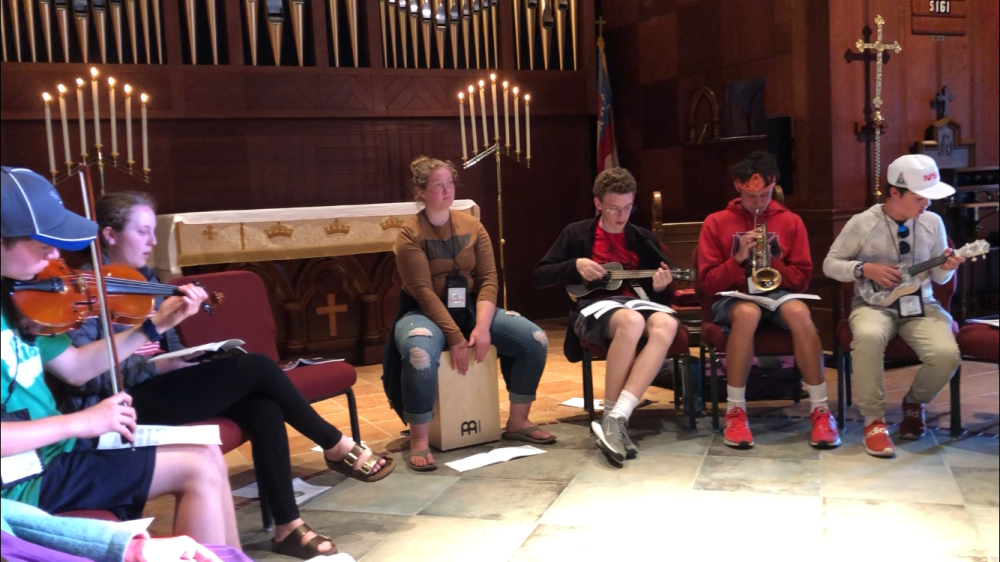
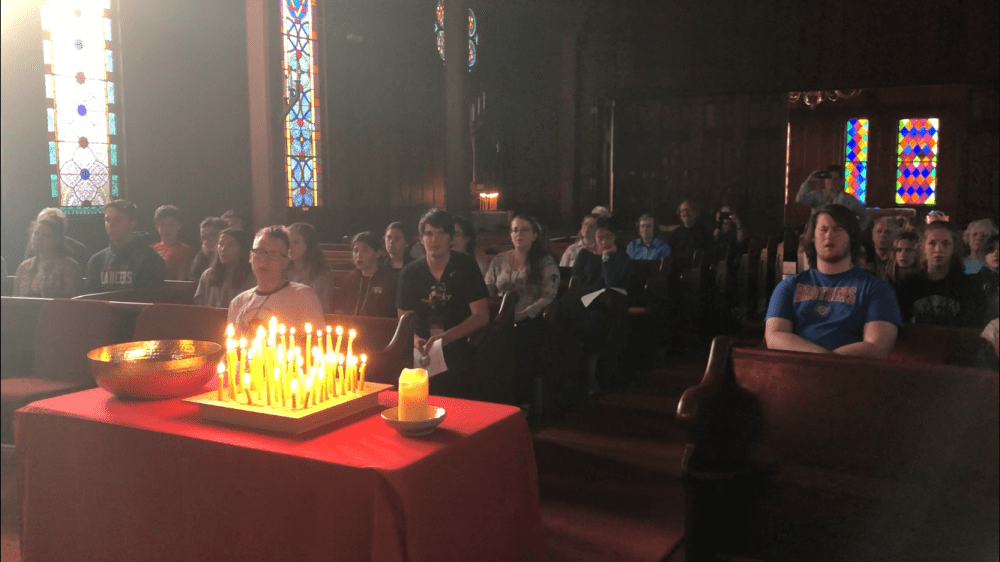
Paul and I had the opportunity to help create safe and sacred spaces for the young people to process and consider the questions that were emerging for them. During Morning and Evening Prayer, we played some fun, campy worship songs, along with some Taizé chants and Leonard Cohen’s “Hallelujah.” The young people were so gifted and engaged that some of them formed an ad hoc worship band that played with us throughout the week. They called themselves the “Psalty Crew” with the word “Psalty” spelled with a “P” as a reference to the book of Psalms. The Psalty Crew included a violinist, a trumpet player, two ukulele players and a percussionist on a cajón that Paul had made. They actually helped lead over 75 people in prayer and worship right here on Tuesday night during our Compline service. The young pilgrims as well as other visitors who were here on Tuesday night described that Compline service as one of the major highlights of the entire week. For some, it was a highlight of their entire month. For others, it was a highlight of their entire year. Thank you to all who were able to join us for that powerful and prayerful night.
For me personally, the highlight of the entire week were the many moments of prolonged, sacred silence that we shared together, including the 20 minutes of silence we shared here after Compline. I told the youth many times that “Silence is God’s first language. Everything else is a poor translation.” So if we want to listen to God we need to be silent. And these young people knew how to practice silence.
I have been involved in youth ministry in one way or another for at least a decade and a half now; and I will confess that I find much of it pretty exhausting. And what I find most exhausting about it is the church’s attempts to make worship and prayer cool and flashy and slick and trendy. I’ve been to way too many youth groups and church services in which the praise team performs like a rock band, making worship almost indistinguishable from a pop show. Now some megachurches can actually pull this off pretty well, but this is generally not the strength of the Episcopal Church. And I thank God for that. I joined the Episcopal Church to get away from worship that revolved around flashy power point displays, strobe light shows, hipster pastors and personality cults. I wanted something deeper. I wanted to experience a liturgy rooted in an ancient tradition, a community that cared about social justice, and a worship service that was open to moments of prolonged, sacred silence. I discovered that and so much more in the Episcopal Church. And I feel honored and excited to offer the contemplative gifts of the Episcopal Church to the young people of this diocese, who really don’t need any more flashy distractions, but seem to be genuinely craving safe and sacred spaces to simply be silent in God’s presence.
In our reading from First Kings, the great Hebrew prophet Elijah has just come down from a kind of mega-church, mountaintop experience. He just challenged 450 prophets of Baal to a great cosmic showdown between their god and his. Elijah set up a wooden altar and said to the prophets, “You call on your god and I’ll call on mine. The true god will be the one who answers by sending fire upon this wooden altar.” The pagan prophets called on their god all day to no avail, but Elijah drenched the altar with water just to rub it in their face when he called on his God, who instantly sent a mighty fire down from heaven that burned everything to a crisp. The humiliated pagan prophets suffered from what the youth today call an “epic fail.” Elijah then responded with rage by violently slaughtering all 450 of the pagan prophets.
That is why our reading today begins with the line, “Ahab told Jezebel all that Elijah had done, and how he had killed all the prophets with the sword” (1 Kings 19:1). After slaughtering the prophets, Elijah becomes deeply depressed, asking God to take away his life. Anglican bishop Tom Wright says in reference to Elijah’s depression: “If your weapon in God’s service has been destructive anger, don’t be surprised if, when things get tough, it turns back on yourself.”[i]
God responds to Elijah’s depression by telling him to go out and stand on the mountain, where he will encounter the divine. First, there is a great, stone-shattering gust of wind, but God is not in the wind. Then there is an earthquake (perhaps like the one we had last night), but God is not in the earthquake. Then there is a fire (perhaps like the fire from heaven that had just humiliated the pagan prophets), but God is not in the fire. And then, there is a sound of sheer silence, or what other translations call a “gentle whisper” or a “still small voice.” And this is where God appears to be present. In the silence. I wonder if this is God’s attempt to teach Elijah to avoid confusing the divine with whatever seems to be most flashy and loud and trendy. I wonder if this is God’s way of saying to Elijah, “Don’t get too excited and attached to the mighty fire that I can send down from heaven and the great power I can display. I want you to hear me in the silence. I want you to listen to my still small voice.”
When we gather to worship, we often do this weird thing: and that is, simply sitting together in prayerful silence. And although that silence may sometimes be slightly awkward, isn’t it mostly refreshing and nourishing and soothing like the sound of God’s still small voice? I really believe that young people are craving this kind of prayer and worship today.
The late millennial author Rachel Held Evans wrote, “If young people are looking for congregations that authentically practice the teachings of Jesus in an open and inclusive way, then the good news is the church already knows how to do that. The trick isn’t to make church cool; it’s to keep worship weird.” And part of that weirdness is practicing communal silence.
She then says, “You can get a cup of coffee with your friends anywhere, but church is the only place you can get ashes smudged on your forehead as a reminder of your mortality. You can be dazzled by a light show at a concert on any given weekend, but church is the only place that fills a sanctuary with candlelight and hymns on Christmas Eve. You can snag all sorts of free swag for brand loyalty online, but church is the only place where you are named a beloved child of God with a cold plunge into the water. You can share food with the hungry at any homeless shelter, but only the church teaches that a shared meal brings us into the very presence of God.”[ii] I would add, you can listen to amazing sermons or inspiring TedTalks online anytime, but church is the only place where you gather weekly with others to sit in silence and listen to the still, small voice of God.
I invite us to practice silence together now. And the question I invite you to consider is, “What do you hear God saying to you in his still small voice, when you listen in the silence, when you listen to God speak in his first language?”
[i] N.T. Wright, Twelve Months of Sundays: Biblical Meditations on the Christian Years A, B & C, 340.
[ii] https://www.washingtonpost.com/opinions/jesus-doesnt-tweet/2015/04/30/fb07ef1a-ed01-11e4-8666-a1d756d0218e_story.html?noredirect=on&utm_term=.46d054822fb6

 DANIEL DeFOREST LONDON