

Readings for Christmas Day
This sermon was preached at Christ Episcopal Church in Eureka CA on December 25, 2018.
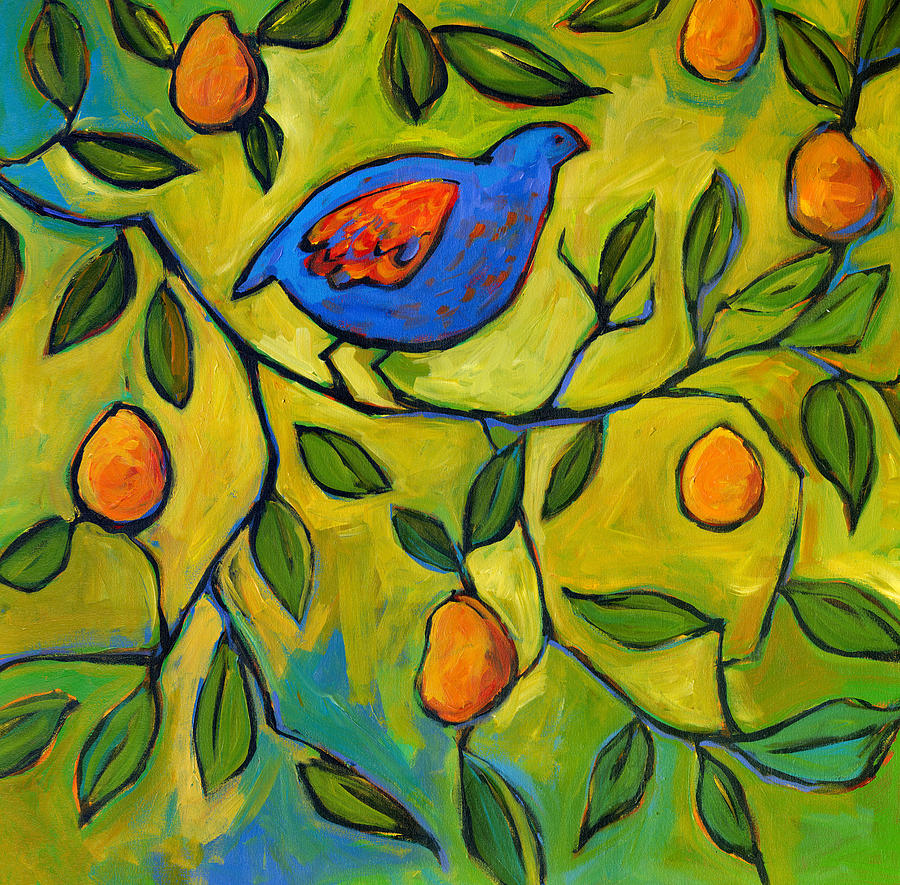
Merry Christmas! Merry Christmas on this first day of how many days of Christmas? Twelve! Many of us know that from the song “The Twelve Days of Christmas” and this year I wanted to give my true love, Ashley, a toy partridge to place in our beautiful pear tree, but I haven’t found one yet. The reason we have twelve days of Christmas is to mark the span of time between the birth of Christ and the coming of the Magi, the wise men from the East, whose arrival we celebrate on January 6th, the Feast of the Epiphany! Some Christians (especially Anglicans) like to mark the twelve days of Christmas by celebrating the feasts of saints on each day. For instance, tomorrow is the feast day of St. Stephen, the first Christian martyr. The fifth day of Christmas is the feast of St. Thomas Beckett, the great Archbishop of Canterbury of the 12th century; and the eighth day of Christmas (January 1st) is the feast of St. Mary the mother of Jesus.
The third day of Christmas (the day after tomorrow) is the feast of perhaps my favorite saint, the saint who is traditionally considered to be the author of the Fourth Gospel, including the poetic prologue we just heard.[1] The third day of Christmas is the feast of St. John the Evangelist. So today, on this great feast day of the Incarnation, I invite us to contemplate and consider the invitations of St. John the Evangelist, whose Gospel revolves around the mystery of the Incarnation, the God who became incarnate in Jesus Christ.[2]
Some people have described the portrayal of Jesus in John as a detached “god who seems to glide across the face of the earth,”[3] almost like a ghost. However, after studying John’s Gospel in depth for several years, I personally began to see how much the Gospel actually affirms the flesh. Although I wasn’t looking for it, I kept noticing how much John’s Jesus seems to take great delight in earthly pleasures. For instance, he inaugurates his ministry by miraculously bringing more wine to a wedding party (2:10). He offends his listeners with a very bodily and fleshy description of the bread of life (6:60-61). It is only in John that he makes mud out of dirt and saliva to heal a blind man (9:6). He receives a very expensive foot anointing from a female friend (12:1-8). And he himself strips down to almost nothing as he washes his disciples’ feet (13:1-11). There is much more as well.
John’s Jesus is a human who enjoys and celebrates the flesh, understanding and using the five senses and sensuality as a vehicle for divine self-expression. One of my favorite Anglican commentators on John is the former Archbishop of Canterbury William Temple, who said “The Word made flesh” is the most important phrase in all of Christianity.[4] He also said, “Christianity is the most materialistic of all great religions…. [‘materialistic’ not in the economic sense but ‘materialistic’ in its affirmation of matter]. Based as it is on the Incarnation, [Christianity] regards matter as destined to be the vehicle and instrument of spirit, and spirit as fully actual so far as it controls and directs matter.”[5] God loves physical matter. He made it, he became it and he wants us to experience him through it.
Author Alexander Shaia also observes these “elements of earthiness and sensuality” in John and believes that the Gospel invites its readers to appreciate the beauty and wonder of the matter that is all around us and the matter that is us. He says the Gospel invites us to notice the “buzzing of the bees and the rustling of the wind through the leaves…[to] become aware of the remarkable artistry in the veining of every leaf and bird feather…[to] sense the musculature beneath our own thin skin that miraculously holds us at 98.6 degrees in both snow and blistering sun…[to] wiggle our toes and stretch our arms and enjoy the sun or perhaps the taste of a raindrop on our tongue. This,” he says, “is God’s gift of sensuality awakening—becoming more sensitive and appreciative.”[6]
On this Christmas day as we celebrate the mystery of the Incarnation (the Word made flesh), John and his Gospel invite us to receive this gift of sensuality awakening, to practice appreciation of our bodies and to experience our flesh (and the earth!) as sacred vessels for divine life and expression.
What would receiving this gift of sensuality awakening look like for you today and during these twelve days of Christmas? Would it involve exercising more and eating less, as many of us try to do in the New Year, with our ambitious resolutions? Or would it involve perhaps exercising less and eating more, (and enjoying the decadence of holiday treats)? Maybe drinking less wine this New Year or maybe drinking more wine? As the poet Mary Oliver says, “Let the soft animal of your body love what it loves.”[7] How will you let the soft animal of your body love what it loves this Christmas and this New Year and thereby experience the divine life pulsing through your flesh?
In John’s Gospel, Jesus invites his disciples and the readers to “Abide in me” and “Rest in me” (15:4, 7). One way that I plan to let the soft animal of my body love what it loves this Christmas is by resting. St. John himself embodies this resting and abiding in Christ as he reclines next to Jesus during their last night together. Traditionally identified as the “Beloved Disciple” or the “Disciple whom Jesus loved” in the Fourth Gospel, St. John rests upon Jesus’ breasts and, according to the Celtic Christians, he was listening to the heartbeat of Christ.[8] How will you listen to heartbeat of Christ in your own flesh this Christmas day and season? How will you rest and abide in the incarnate Word?
The 18th century German poet and philosopher Johann Gottfried Herder (1744-1803) wrote a poem about St. John, when the saint was supposedly living in solitude in his old age; a poem that exemplifies St. John’s resting and abiding in Christ, which I want to share with you.
Do you want to strive long,
Don’t strive all the time!
Otherwise, your faint soul will fail.
Alternate rest and work so that the work
May be faithful to you and quicken your soul.
Saint John, now in old age,
Lived at Ephesus and rested
After and between the stresses of his office.
So he played with a tame partridge
To which he daily gave food and drink,
Which slept in his bosom. He stroked
Its feathers occasionally, spoke to it,
And it listened to him, chirped thanks to him cheerfully.
Once a stranger stepped out of the forest
Bloody of countenance. Over his shoulder
Hung his quiver, on his arm hung
The unstrung bow. For a long time he wanted
To see this holy man, and he saw him—
Playing with a partridge [There’s that partidge again!]. Greatly surprised
He stood before him, called finally, exasperated:
“Blessed John! Having come far
To see a saintly man, I see
A man who fritters away the time.”
And the old man answered him in this way, gently:
“Kind stranger, why is it that your bow
Hangs there unstrung?” “Unstrung,” he answered,
“Because it serves if I now stretch it
Purposefully. Can the string of the bow
Always be stretched, so that it never relaxes?”
John answered, “Can the string of life
Always be stretched, so that it never relaxes?”[9]
St. John and his Gospel have been stretching me for years; however, this Christmas morning, the Gospel of the Incarnation invites me and us to relax, to abide in Christ, to rest and to be refreshed by the Word made flesh. And I pray we may all find ways this Christmas to slow down and listen to the heartbeat of God in our holy flesh as we let the soft animals of our bodies love what they love. Amen.
[1] For a detailed analysis of this tradition and its skeptics, see R. Alan Culpepper, John Son of Zebedee: The Life of a Legend (Minneapolis MN: Fortress Press, 2000).
[2] Just last night, I opened up one of my Christmas gifts, which was a book of selected writings of the Anglican poet and theologian John Donne and I read something in it that I want to share with you on this feast of the Incarnation. In the preface, I read: “In The Spirit of Anglicanism, William J. Wolf writes of ‘an incarnational piety’ that has always dominated Anglicanism. Anglicanism has, in a way, appropriated the Feast of the Nativity as a celebration of its own particular ethos. [Lancelot] Andrewes, for example, preached more sermons for Christmas day than for any other occasion. Of Donne’s 160 surviving sermons, the Christmas sermon for 1621, on John 1:18, is one of the most eloquent.” P.G. Stanwood, John Donne: Selections from Divine Poems, Sermons, Devotions, and Prayers (Mahwah NJ: Paulist Press, 1990), 3.
[3] Ernst Käsemann, The Testament of Jesus: According to John 17, trans. Gerhard Krodel (Philadelphia: Fortress, 1968), 75.
[4] “[Christianity’s] own most central saying is: ‘The Word was made flesh,’ where the last term was, no doubt, chosen because if its specially materialistic associations” from Nature, Man and God: Gifford Lectures, Lecture XIX: ‘The Sacramental Universe” (London: Macmillan), p. 478 as cited in Christ In All Things: William Temple and His Writings, ed. Stephen Spencer (Norwich: Canterbury Press, 2015), 130.
[5] William Temple, Readings in St. John’s Gospel (London: Macmillan, 1945), xx-xxi. Also in Lecture XIX of the Gifford Lectures, he says, “[Christianity] is the most avowedly materialist of all the great religions” as cited in Christ In All Things: William Temple and His Writings, ed. Stephen Spencer (Norwich: Canterbury Press, 2015), 130.
[6] Alexander John Shaia, Heart and Mind: The Four-Gospel Journey for Radical Transformation (Preston Australia: Mosaic Press, 2013), 218.
[7] From Mary Oliver’s poem “Wild Geese” from Mary Oliver, Wild Geese: Selected Poems (Northumberland UK: Bloodaxe Books, 2004)
[8] See J. Philip Newell, Listening for the Heartbeat of God: A Celtic Spirituality (Mahwah NJ: Paulist Press, 1997). Also see Bede, Ecclesiastical History 3.25 in which “the blessed evangelist John” is described as “worthy to recline on the breast of the Lord.”
[9] Johann Gottfried Herder, Herder’s Werke, BDK (Berlin: Aufbau-Verlag, 1969), 1:54-55. My translation of Culpepper’s translation in Culpepper, John Son of Zebedee: Life of a Legend, 260. Culpepper explains, “The story of the partridge can be traced back to the fourth or fifth century, and was attached to the Acts of John by the eleventh century.” Culpepper, John Son of Zebedee, 260.

 DANIEL DeFOREST LONDON