
Readings for the Second Sunday of Advent
This sermon was preached at Christ Episcopal Church Eureka on Sunday December 9, 2018.
Merciful God, who sent your messengers the prophets to preach repentance and prepare the way for our salvation: Give us grace…that we may greet with joy the coming of Jesus Christ our Redeemer. Amen.
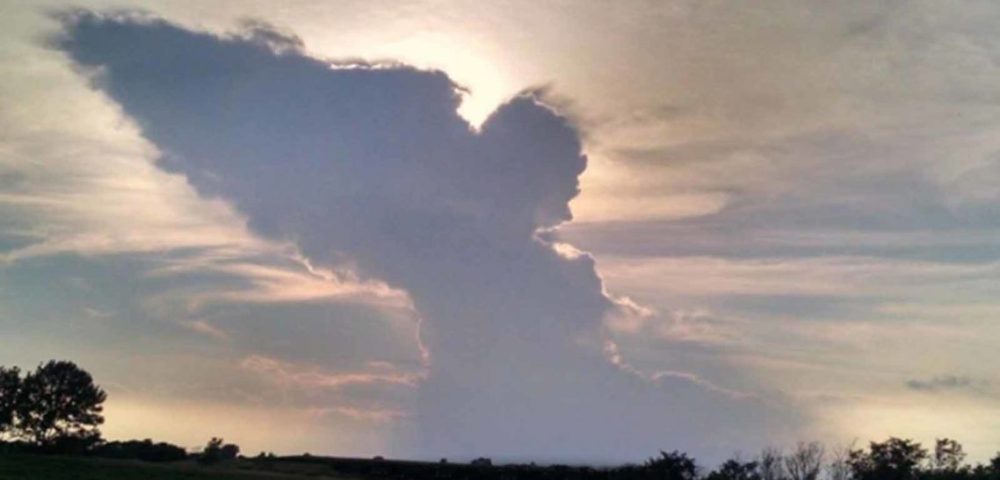
In this morning’s Collect, the prophets are called God’s messengers. In Hebrew, the word for “messenger” is mal’ach, which is translated into English as “angel.” According to Jewish legend, any person who delivers God’s message to God’s people becomes an angel. [Medieval Jewish Rabbi Moses Maimonides said, “Everyone who is entrusted by God with a message and delivers it is an angel” and Jewish midrash says, “Before the angels have accomplished their task they are called men, when they have accomplished it they are angels.” (Bereshit Rabba 1:1).] In Christianity, we generally believe that we eventually become something greater than angels, after we have fulfilled God’s mission and shared God’s message.
If there is any group of people in the Bible who clearly fulfilled God’s mission and shared God’s message it was the prophets, prophets like Isaiah, Jeremiah, Ezekiel, Daniel, Malachi, Zechariah and then later, John the Baptist, those prophets whom are Collect refers to as “God’s messengers.” If anyone ever became an angel or something greater than an angel, it was God’s prophets, whose words make up more than one third of our Bible.
So what was the message of God’s prophets? This is important for us to know because this message is still God’s message for us today to heed and obey and then to share with others so that we ourselves can be prophets or angels or perhaps greater than angels.
In general, the biblical prophets had two main messages. The first was the message for God’s people to stop worshipping idols and the second was to care for the poor and the vulnerable. Stop worshipping idols and care for the poor. That was the message of the prophets.
Today, most of us are not tempted to worship idols by carving graven images of ancient Near Eastern deities and then bowing before them. However, we are still very prone to committing idolatry, especially during this time of year, when we can so easily get caught up and tossed to and fro by the whirlwind forces of the false gods of materialism and commercialism. We commit idolatry whenever we find our ultimate security in our money, our possessions, our property, our technology, our smartphones. These are the idols of our day and the prophets would urge us to be very careful.
Just a few days ago, the deacons and I attended a conference and an Advent Clergy Quiet Day at Bishop’s Ranch in Healdsburg. During part of the day we had some time to simply walk around the beautiful grounds of the conference center in prayerful silence. It was really wonderful; however, I will admit that I felt some sadness and disappointment in myself and in some of my fellow clergy. During that time devoted to intentional prayerful silence, I found myself checking my iPhone to read texts and emails (mostly to stay connected with church business). When I eventually caught myself and put my phone away, I looked up and then saw about five other clergy staring at their phones. Now it’s very possible that they could have all been using their phones to read Scripture or to pray, but it still felt like we were all bowing our heads to this false god. I know that I too often do that. And I know that John the Baptist would have some choice words for me and for us. He would urge us to repent, to put our phones away and to reorient ourselves. That’s what repentance really means: reorient yourself. Reorient yourself by letting go of all these false sources of security because they are idols.
The second message of the prophets is to care for the poor and vulnerable. All the prophets shout this message loud and clear. The prophet Zechariah (who shares the same name as John the Baptist’s father) says, “Do not oppress the widow or the fatherless, the [immigrant] or the poor” (Zechariah 7:10) And our reading from the prophet Malachi this morning unfortunately omits the most important part of Malachi’s entire message. God sends his messenger to prepare the way for God and for God’s judgment. Now some of us get uncomfortable hearing about God’s judgment (which is probably why the lectionary omits the next verse) but God is a powerful judge indeed. The next verse, right after our reading, is verse 5 which reads, “Then I [the Lord of hosts] will draw near to you for judgment; I will be swift to bear witness against those who oppress the hired workers in their wages, [against those who oppress] the widow and the orphan, [against] those who thrust aside the [immigrant], and [against those who] do not fear me, says the Lord of hosts [angelic armies].” Malachi 3:5. God’s Word comforts the afflicted and afflicts the comfortable. In the Gospel of John (ch. 12), people think they are hear God’s voice. Some hear it as an angel bringing comfort and healing and others hear it as thunder bringing judgment. God’s Word comforts the oppressed and judges the oppressor.
Whenever we serve the vulnerable (like the beautiful children who were here at our Foster Friday event or like those who are homeless or precariously housed or hungry or refugees at our borders or even vulnerable parts of ourselves), whenever we serve and attend to those who are vulnerable, we are fulfilling God’s mission and obeying the message of God’s angelic prophets. In this way, we are preparing the way for our salvation because Christ reveals our God as a God who always shows up not among the rich and powerful but among the poor and vulnerable. God shows up in that dry desert wilderness where the wild-eyed John the Baptist the son of Zechariah shouts, “Every valley shall be filled, and every mountain and hill made low.” The lowly are lifted up and the lofty are brought low. God shows up in a smelly and messy feeding trough in Bethlehem as a vulnerable human baby. These are the places where God and God’s angels gather: among the poor and vulnerable. And these are the people whom God’s angelic prophets call us to serve.
By virtue of our baptism we are called to be God’s angelic prophets. To fulfill God’s mission and share God’s message. At our baptism, we made vows to seek and serve Christ in all persons, to strive for justice and peace among all people, and to respect the dignity of every human being. We are called to be God’s messengers, like the prophets and like the angels, to preach repentance (to reorient ourselves by letting go of our idols) and to prepare the way for our salvation (by serving and attending to the poor and vulnerable, among whom Christ and his angels always seem to show up). So may we continue to fulfill God’s mission and share the message of love that God has entrusted to each of us so that we may eventually be prophets and angels and perhaps even greater than angels. May it be so. Amen.
Merciful God, who sent your messengers the prophets to preach repentance and prepare the way for our salvation: Give us grace…that we may greet with joy the coming of Jesus Christ our Redeemer. Amen.

 DANIEL DeFOREST LONDON