
Readings for the Thirteenth Sunday after Pentecost (Proper 15) – Track 2
Proverbs 9:1-6
Psalm 34:9-14
Ephesians 5:15-20
John 6:51-58
This sermon was preached at Christ Episcopal Church in Eureka CA on August 19, 2018.
This last Tuesday was the feast day of a modern-day martyr named Jonathan Myrick Daniels. Throughout the week, I have been reflecting on the life and death and witness of this young martyr. On Tuesday morning, some of the Associates of the Community of the Transfiguration and I gathered at Anne Pierson’s beautiful home to celebrate Eucharist and to observe this martyr’s feast. Later that evening, several of us gathered for candle-lit Compline in the chapel (as we do every Tuesday night at 7 PM) to reflect more deeply and prayerfully on the story of young Jonathan, which I want to share with you this morning. For those who have already heard the story, it is worth hearing again, especially when we consider the issues facing our world and country today.
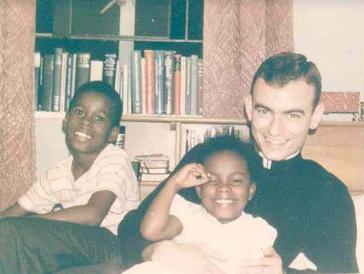
Jonathan Daniels was an Episcopalian who graduated from the Virginia Military Institute and then studied English literature at Harvard University. He was a second-year seminarian at the Episcopal Divinity School in Cambridge MA when he felt called to travel down to Alabama to become more actively involved in the Civil Rights movement, to help Dr. Martin Luther King Jr. secure voting rights for African-Americans. In Alabama, Jonathan befriended several black families with whom he lived and he got to know the inside of a prison cell quite well after being arrested for his efforts as an activist. On one occasion, after being released from prison in Hayneville AL, Jonathan Daniels and his friends (a Catholic priest and two African-American girls, Joyce Bailey and Ruby Sales) walked towards Varner’s Cash Store to purchase a soda after several days in a hot Alabama jail cell. On the steps of the store, they were confronted by an unemployed highway worker named Tom Coleman, who yelled obscenities at them; and then aimed a shotgun at seventeen-year-old Ruby Sales; and then pulled the trigger. Jonathan pushed Ruby Sales out of the line of fire and took the shotgun bullet, which killed him instantly. He was 26 years old. Tom Coleman was later acquitted on a plea of self-defense by an all-white jury and Jonathan Daniels has been rightly recognized as a hero and martyr in the Episcopal Church’s Calendar of Saints, which honors him on August 14th, the day he was arrested. He was actually killed on August 20th, so 53 years ago tomorrow. He would have been 79 years old today. Martin Luther King Jr said, “One of the most heroic Christian deeds of which I have heard in my entire ministry was performed by Jonathan Daniels.”
The encounter between Daniels and Coleman challenges me to consider what I would do in that situation. Would I run away in fear? Would I let my friend get shot? Would I attack Coleman? And if I would attack Coleman, I also have to ask, would I or could I be Coleman in that situation, wielding the shotgun in fear; afraid of people who are changing the way things have been for years and wanting to get rid of them, even violently? Or would I offer my life to my friend in a profound act of self-giving love, in the way that Jonathan Daniels did?
Thomas Coleman was driven by a fear that turned him violent while Jonathan Daniels was inspired by a faith that empowered him to be courageous and heroic. Before his arrest and death, Daniels said, “I lost fear … when I began to know in my bones and sinews that I have truly been baptized into the Lord’s death and resurrection, that in the only sense that really matters I am already dead, and my life is hid with Christ in God.” Jonathan understood baptism as a kind of death that brings about new divine life. He understood the sacraments as a source of courage, self-giving love and life-giving wisdom.
The Scripture readings for this morning (for this 13th Sunday after Pentecost) all revolve around life-giving wisdom. Paul says, “Be careful how you live, not as unwise people but as wise” (Eph 5:15). The Psalmist offers wisdom in the form of teachings, saying, “Come, children, and listen to me; I will teach you [wisdom].” And in Proverbs, Wisdom is personified as a woman who invites everyone into her home to eat of her bread and drink of her wine so that they can “lay aside immaturity, and live, and walk in the way of insight” (9:6). The Book of Ecclesiasticus develops this image from Proverbs of Lady Wisdom and describes her as one who nourishes her guests with the “bread of understanding” and refreshes them with “the liquid of wisdom” (Ben Sira 15:3). All of these images culminate in the Bread of Life discourse in John’s Gospel where Jesus offers himself—his very flesh and blood—as the bread of understanding and the wine of wisdom. But I have been wondering: what does this Bread of Wisdom have to do with the martyrdom of Jonathan Daniels?
Last week, I explained that Jesus had been preaching a very challenging message, which caused his listeners to complain and kvetch. This message, which is generally known as the “Bread of Life” discourse, is so difficult and dense that the lectionary slices it up into four weeks, thus giving us ample time to reflect, ruminate and inwardly digest these words of wisdom, one bite at a time. One of my colleagues refers to these readings as the “Olive Garden unlimited breadsticks” of the lectionary. I prefer to think of these readings as a multi-course meal that is meant to be enjoyed and digested slowly and mindfully.
One important way to start inwardly digesting these words of Jesus is to understand the first-century context of the original Jewish listeners and readers, especially regarding their theology around temple worship and bread. I will share more on this next Sunday, but for now, I want to introduce us to something called the Showbread or the Bread of the Presence, which was twelve loaves of bread that the ancient Jewish priests kept in the temple all throughout the year. The priests understood this bread as a symbol of God’s self-giving love and, three times a year, they would present this bread to the people and say, “Behold God’s love for you.” After this presentation to the people, the priests (and only the priests) would consume this bread, which was understood to nourish them spiritually, to impart wisdom and to strengthen them to embody God’s self-giving love in the world.
So when Jesus offers himself as the Bread of Life he is simultaneously embodying the self-giving love of God as well as the Bread of the Presence, which nourishes and strengthens his priests to embody the self-giving love of God in the world. So the feeding of the five thousand (which Deacon Anne preached on a couple week ago) was not just about feeding the hungry. Jesus was feeding the five thousand with the new Bread of the Presence, which was bread reserved only for the high priests. The feeding of the five thousand was about extending the high priesthood and the high priestly wisdom beyond the temple and empowering thousands of people to be high priests and to embody the self-giving love of God in the world. [This is partly why the listeners got upset with Jesus because he was challenging the exclusivity of the priesthood].
Baptism initiates all of us into this priesthood while the Eucharist nurtures and empowers us to continue and grow in our priestly ministry. Obviously, ordained clergy fulfill specific and important liturgical and administrative roles as priests and deacons, but Jesus was about empowering all of his followers to be the self-giving high priests. Jonathan Myrick Daniels understood this in “his bones and sinews.” He understood that the sacraments of Baptism and Eucharist empowered him with the high priestly wisdom of self-giving love.
The bread that we will break and eat together today is that same Bread of the Presence. It is bread that causes us to know and to understand—not just intellectually but in our bones and sinews—God’s self-giving love and life poured out and broken for us. By receiving this spiritual food into our bodies we become strengthened, nourished, empowered and transformed to be God’s self-giving high priests in the world, embodiments of God’s self-giving love.
And that self-giving high priesthood will likely look different for each of us. For some of us, it might look like risking our own comfort and safety in order to protect the safety of others. It might mean volunteering at our next Foster Friday event (Sept 7). It might mean visiting our new Take Action Table, after worship. It might mean donating money for disaster relief or working to help communities prepare for possible disasters. It might mean volunteering to help out on a Work Day here, as so many of you self-giving high priests did yesterday.
For most of us, our high priestly ministry will (hopefully) not result in martyrdom as it did for Jonathan Daniels, but by feeding regularly on the bread of life-giving wisdom, we become more like the heroic seminarian and less like the violent Tom Coleman so that if we do find ourselves in such a dangerous situation, we might act less out of violent fear and more out of self-giving love. By feeding on this bread of wisdom, we allow God’s life and love to transform us so that we might be willing to perfectly fulfill our baptismal vocation, even to the point of martyrdom.
The Bread of Life discourse has given us the opportunity to start peeling away and peering at all the rich layers of theological meaning associated with the Mystery of the Eucharist. The sacrament which we will experience this morning calls us to share whatever we have, to work towards the healing of the whole world, to draw near to the One who hears and responds generously to our kvetching and also, to be like Jonathan Myrick Daniels, like the self-giving high priests who embody God’s love in the world through the nourishing, transforming and enlightening power of the lechem shol chochmah, the bread of wisdom. And this is only scratching the surface of what we do and what God does to us when we celebrate the Eucharist.
In the end, the bread of wisdom reveals the limits of our understanding and moves us to a place of profound unity, silence and awe, where we are, in the words of Jonathan Daniels, held together with “the invisible communion of saints” by our God in whom “we are indelibly [and] unspeakably One.” Amen.

 DANIEL DeFOREST LONDON